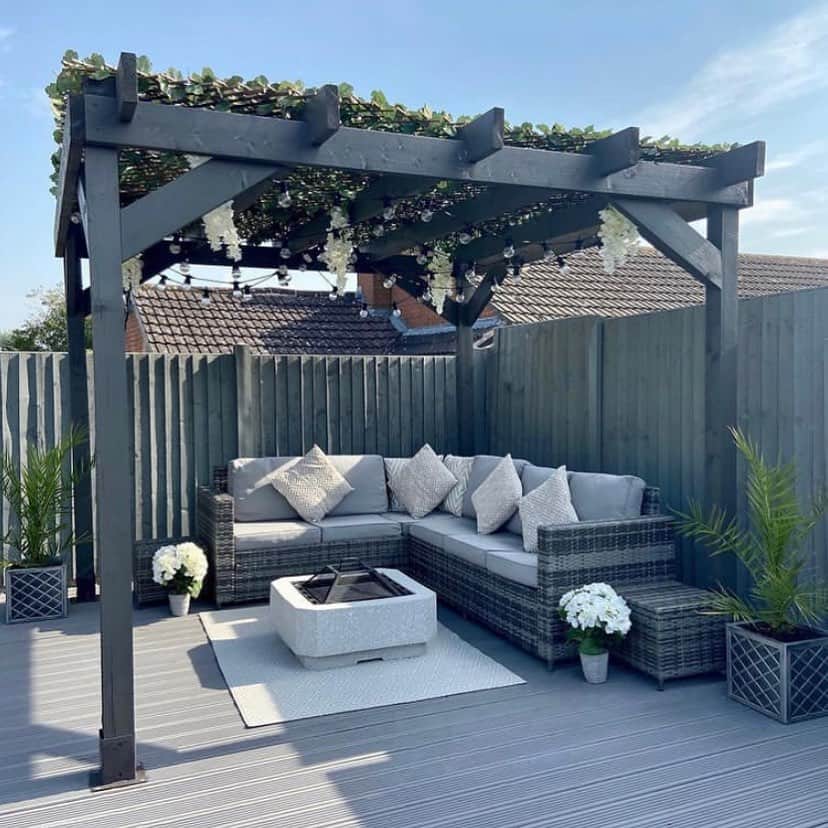
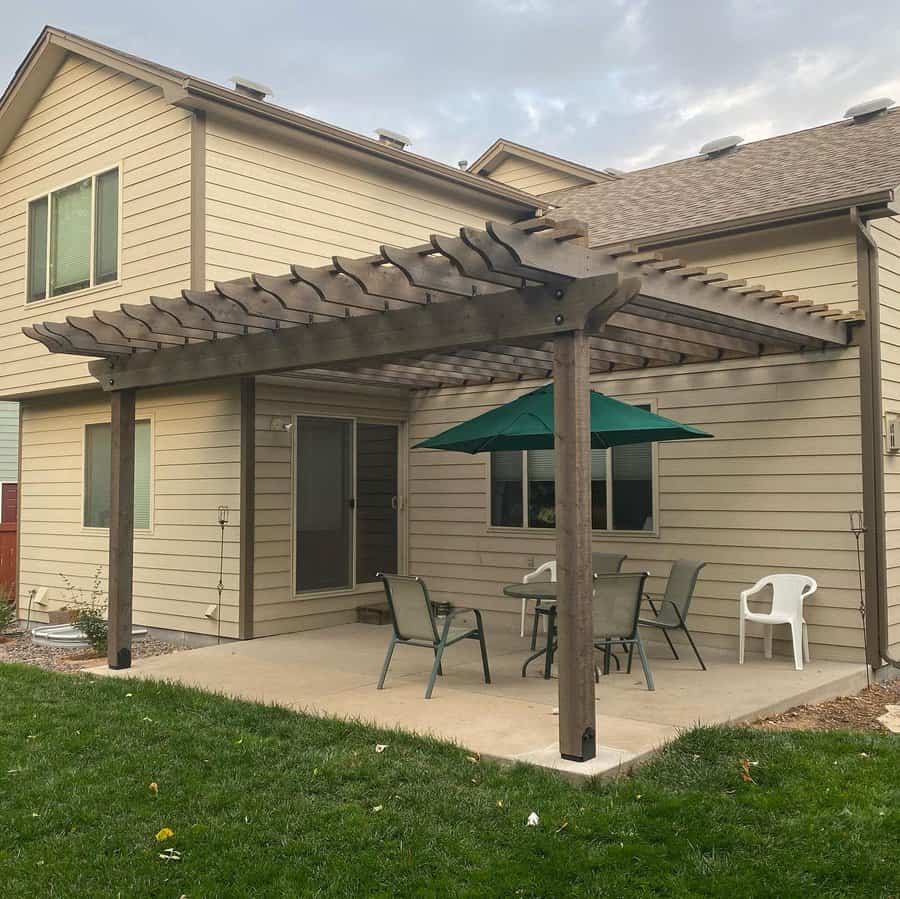
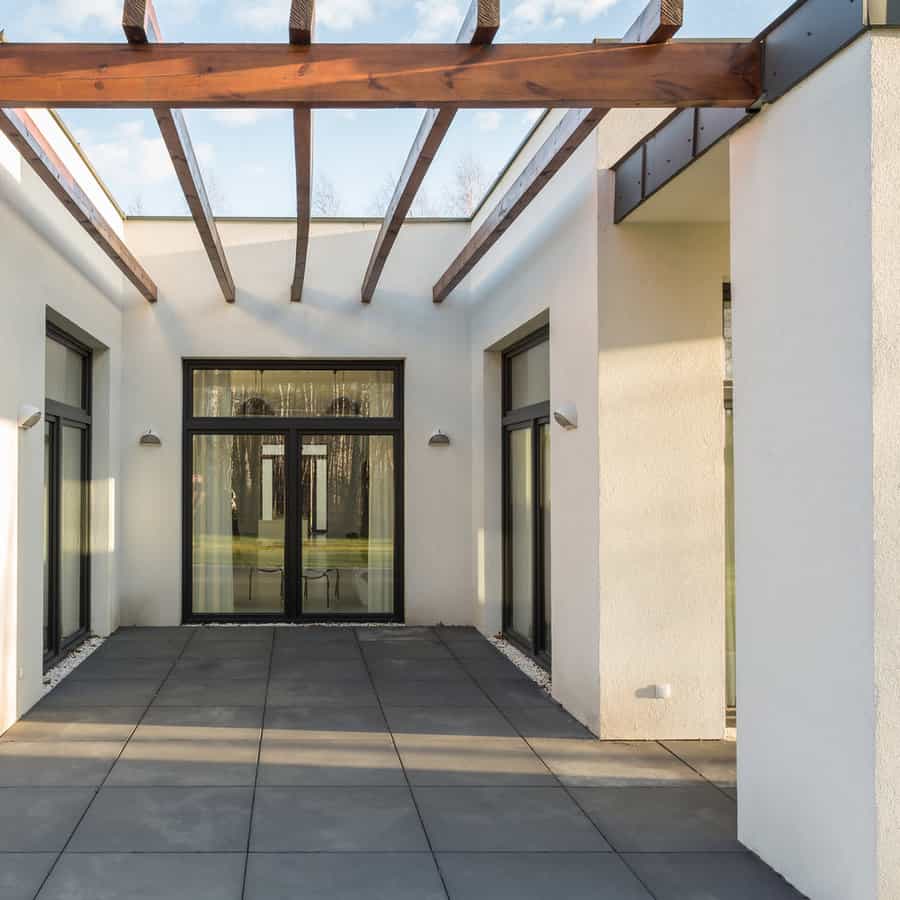
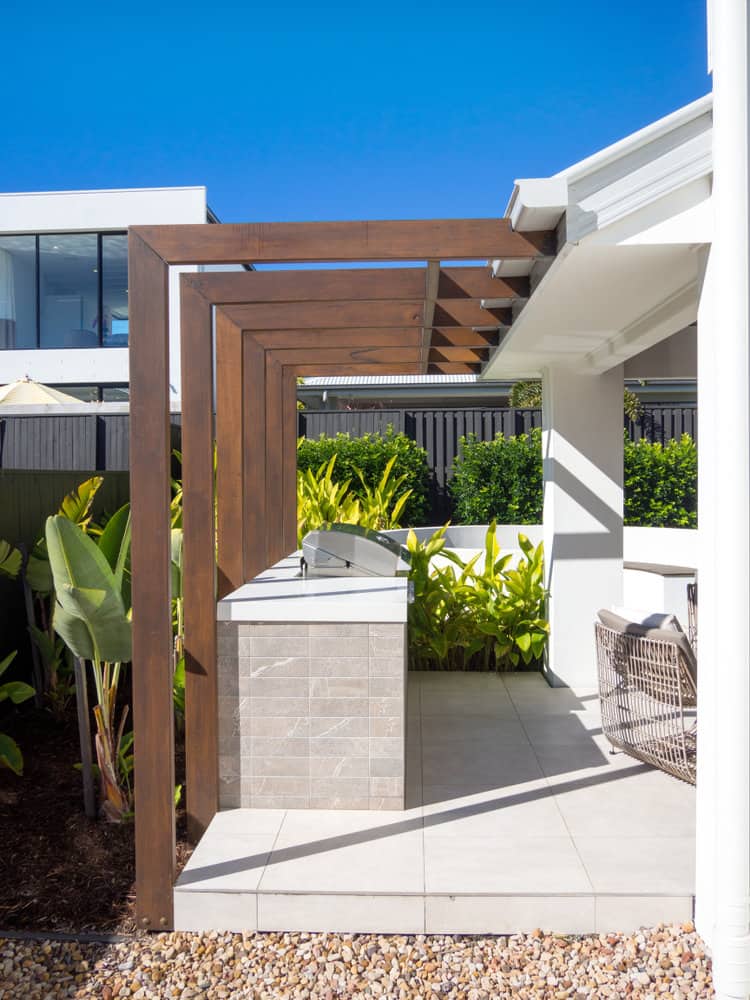
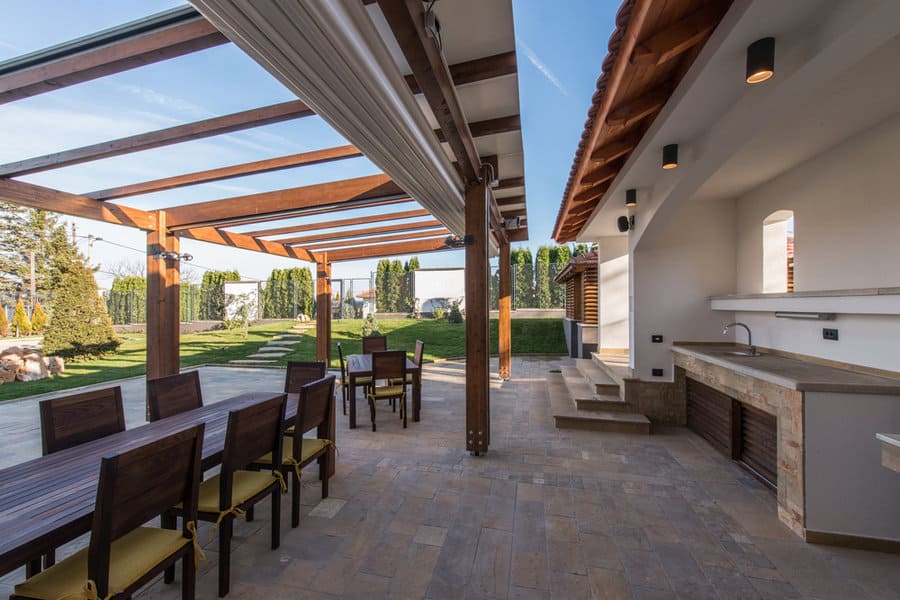
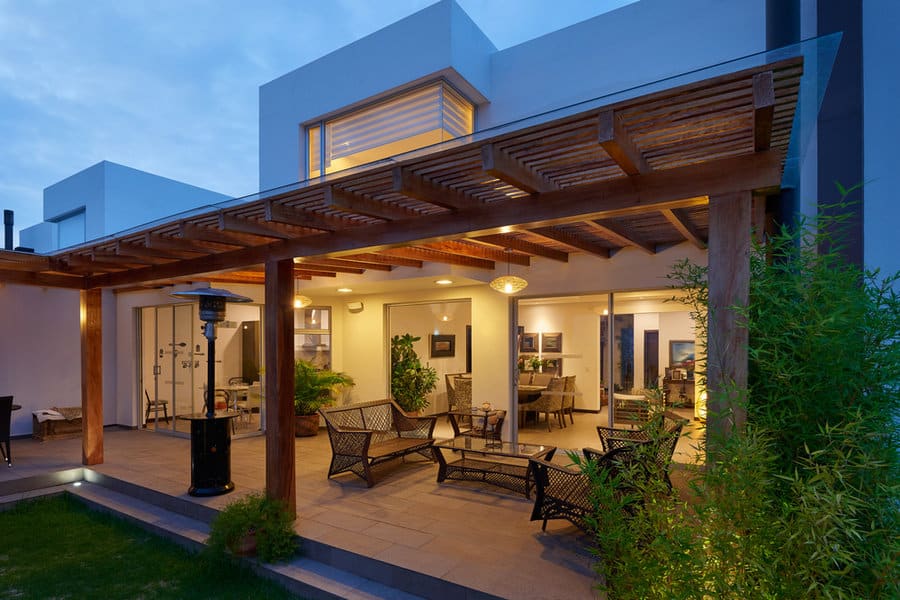
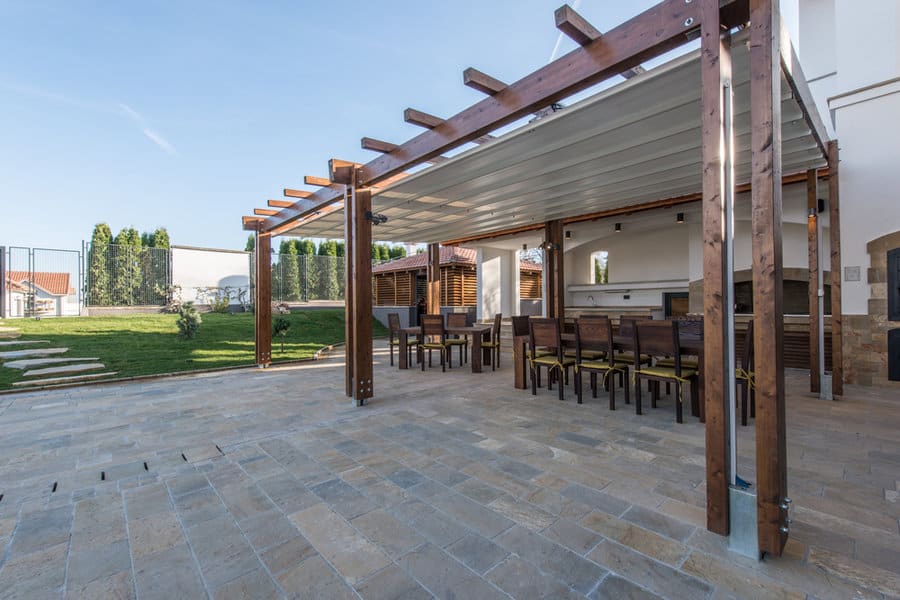
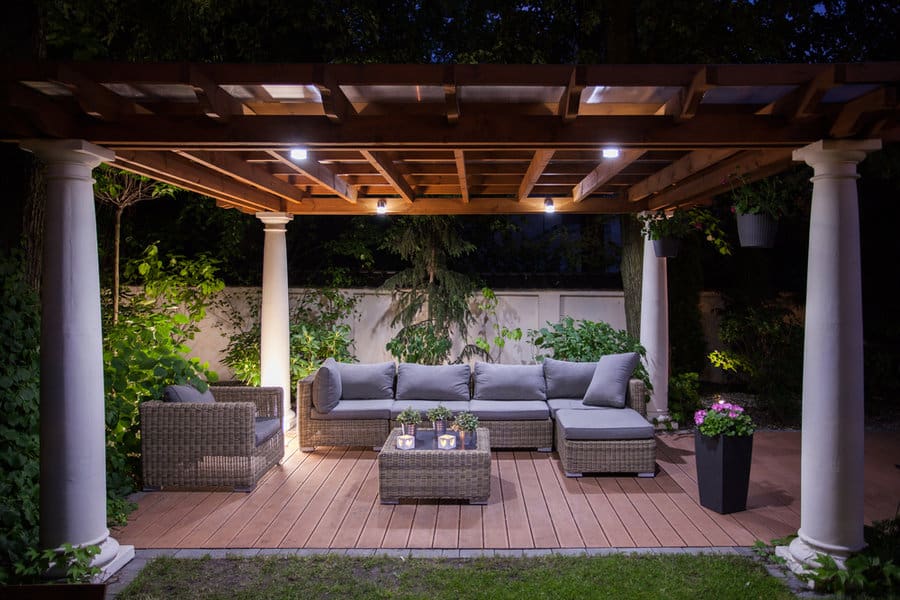
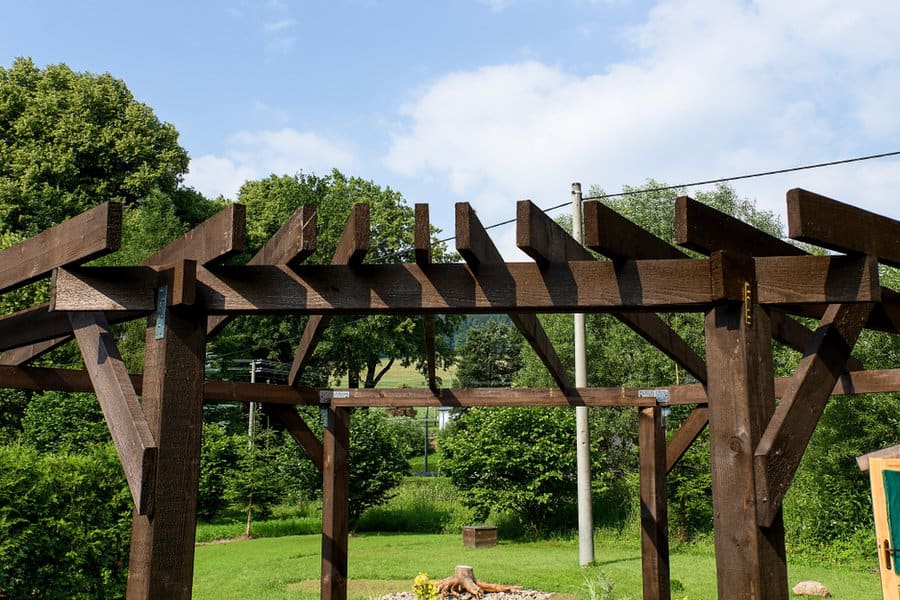
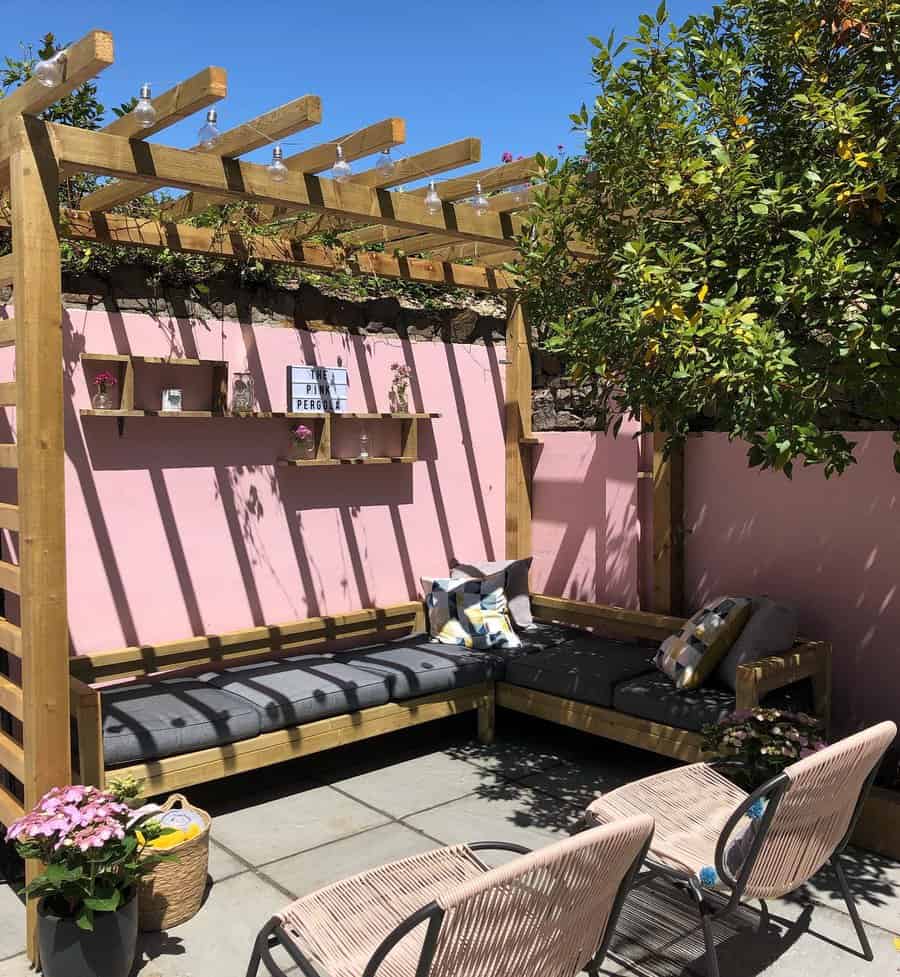
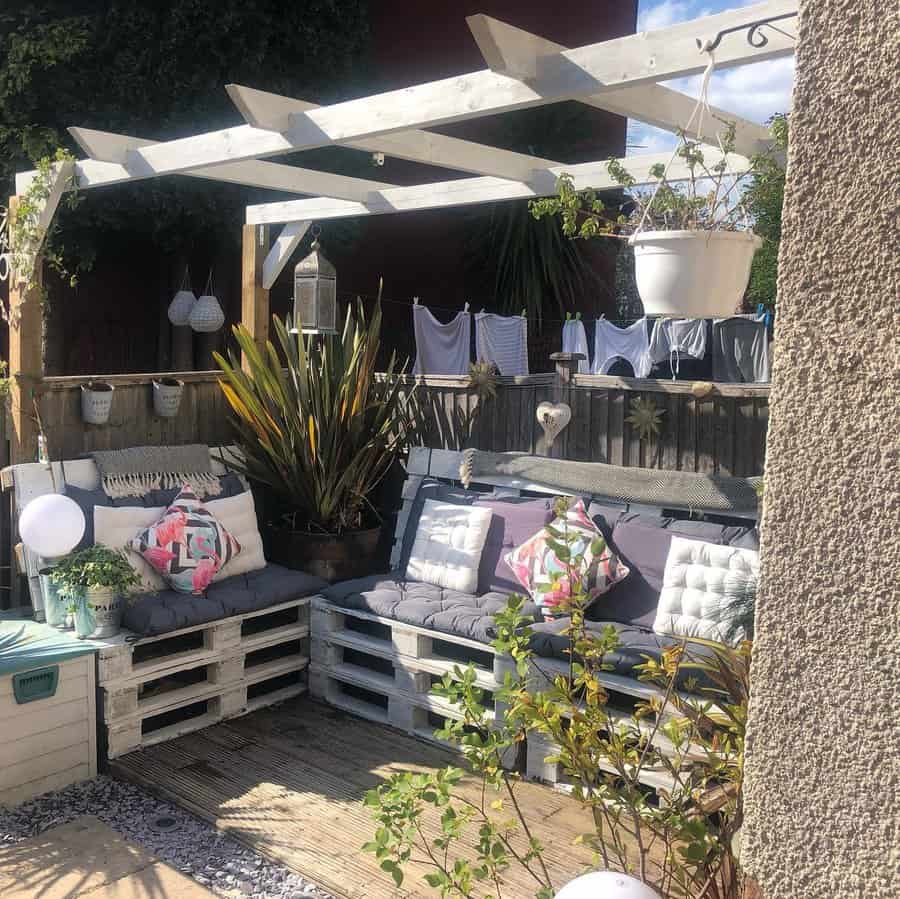
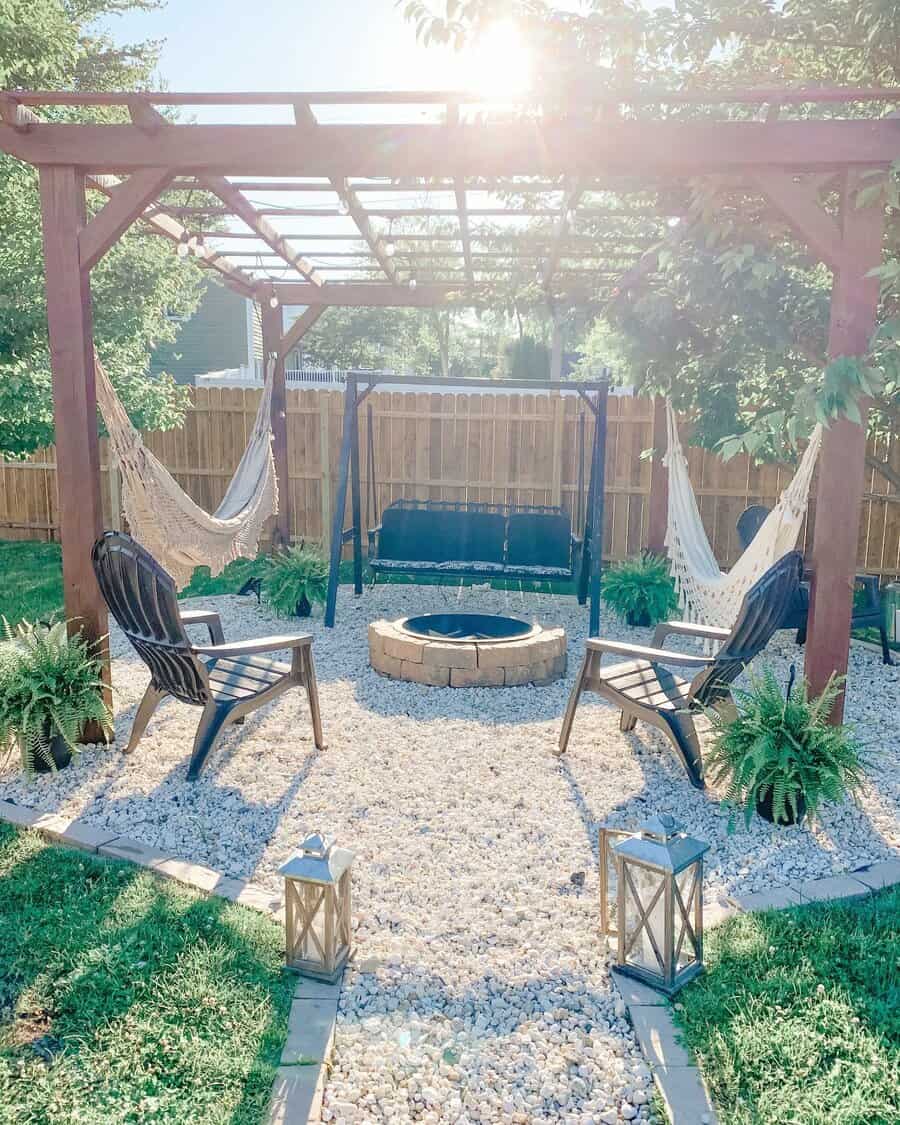
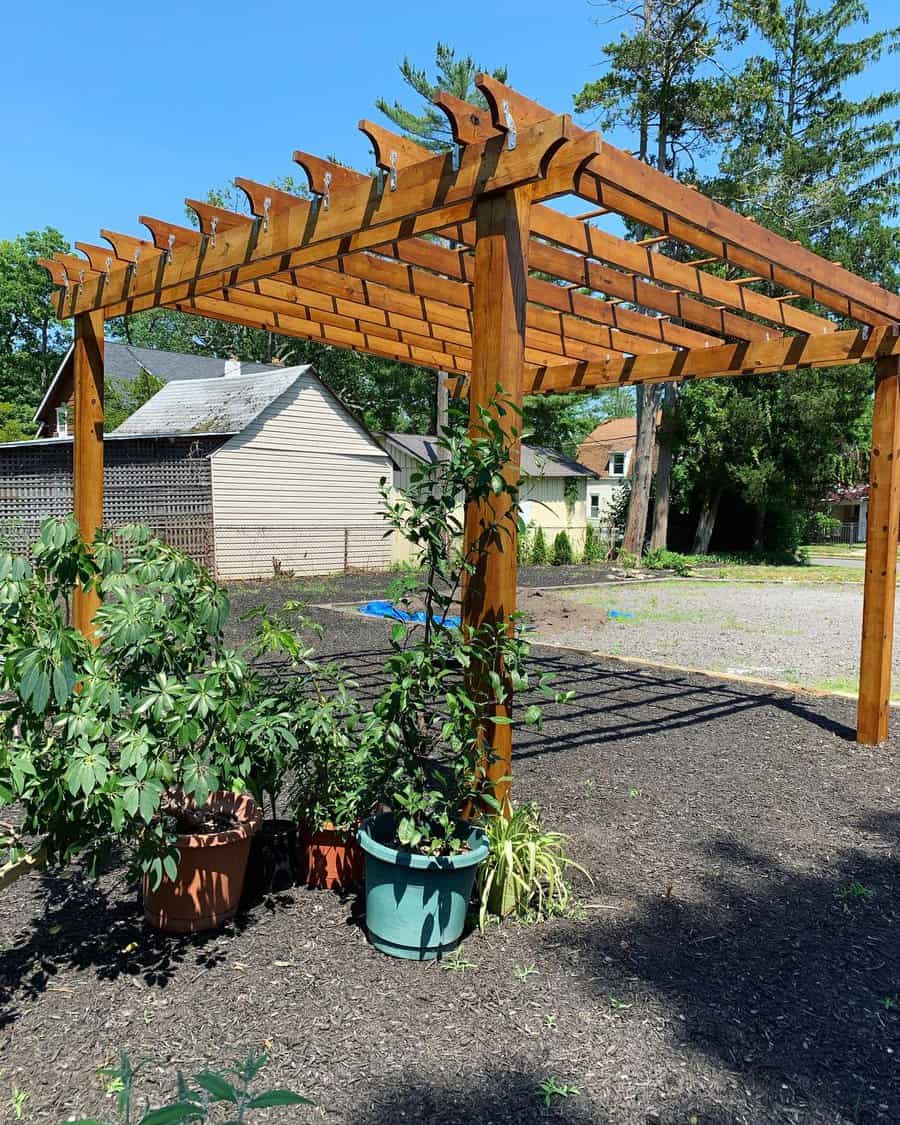
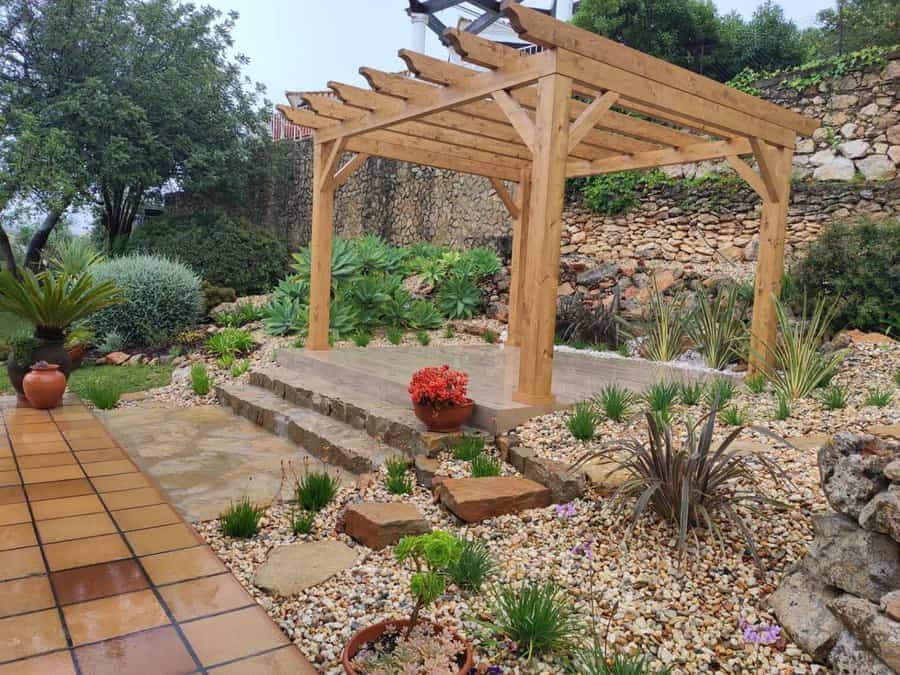
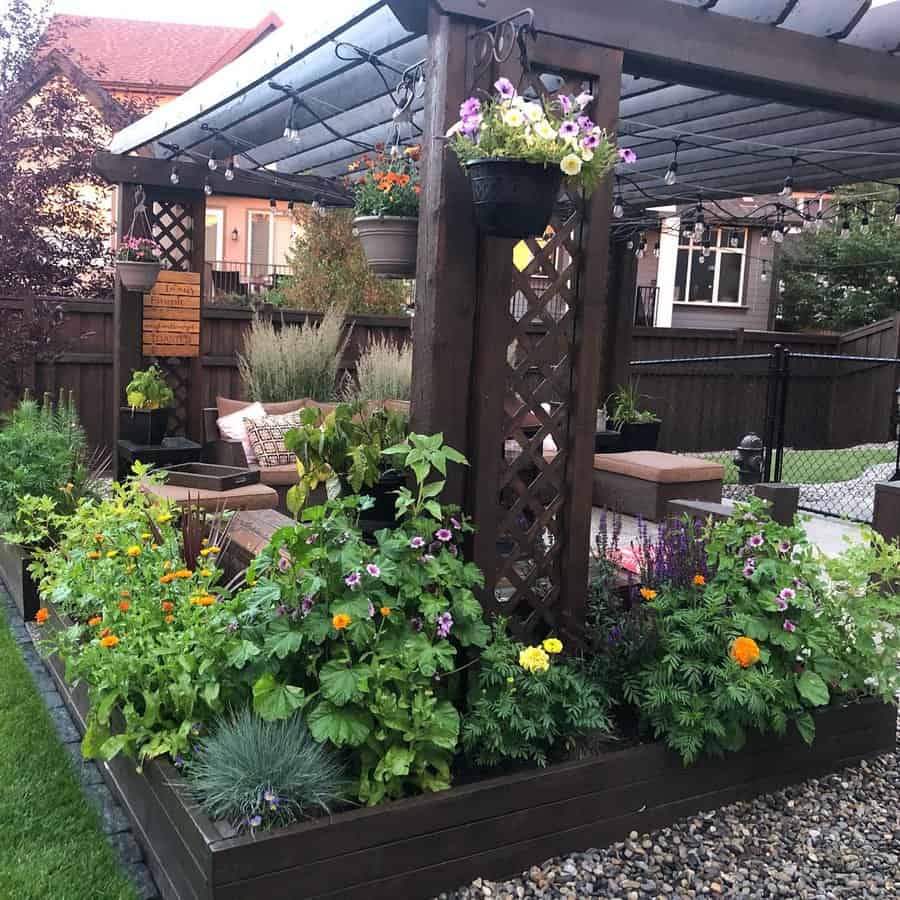
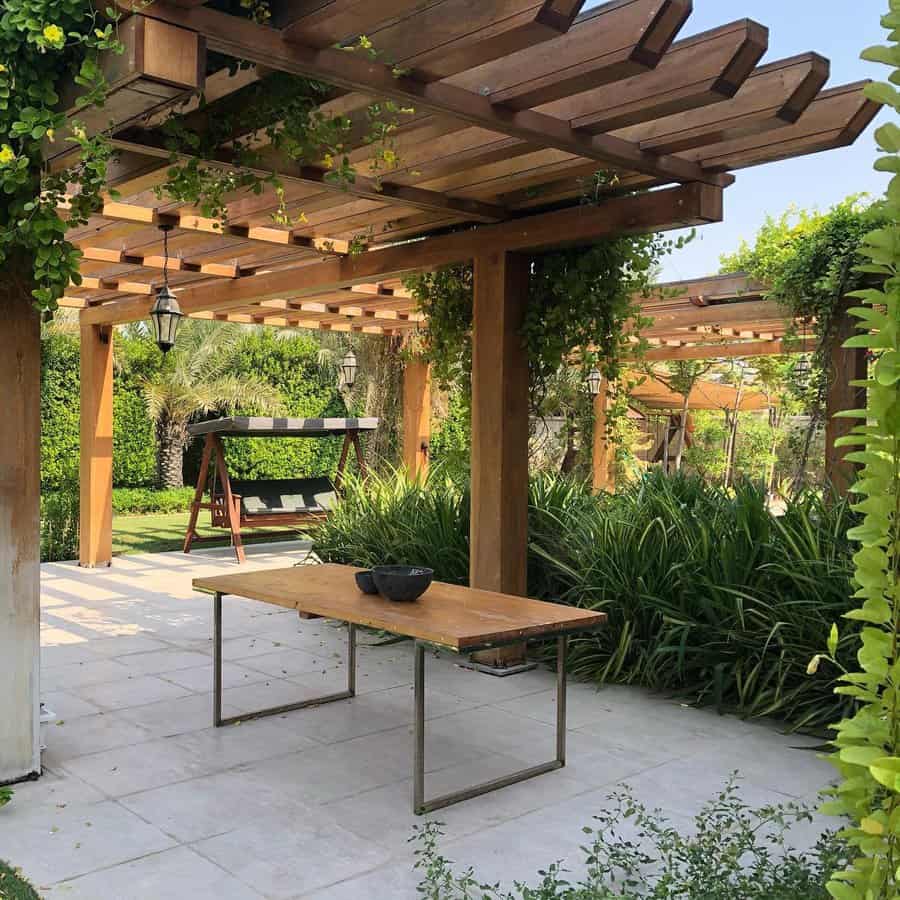
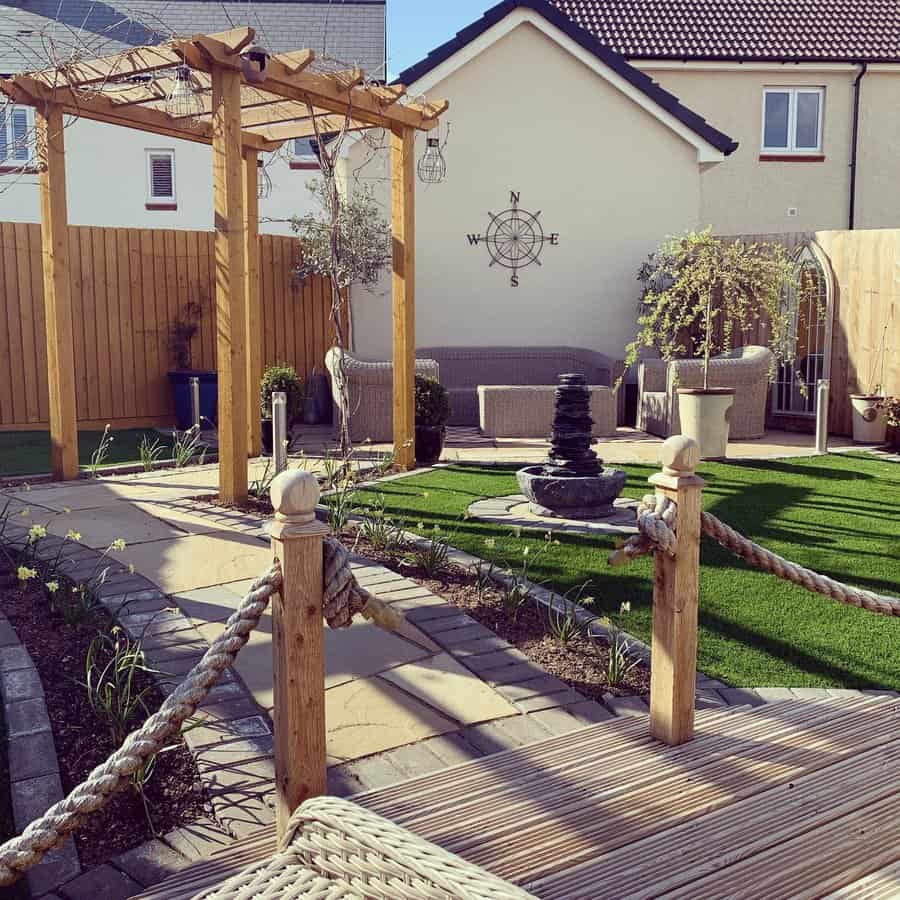
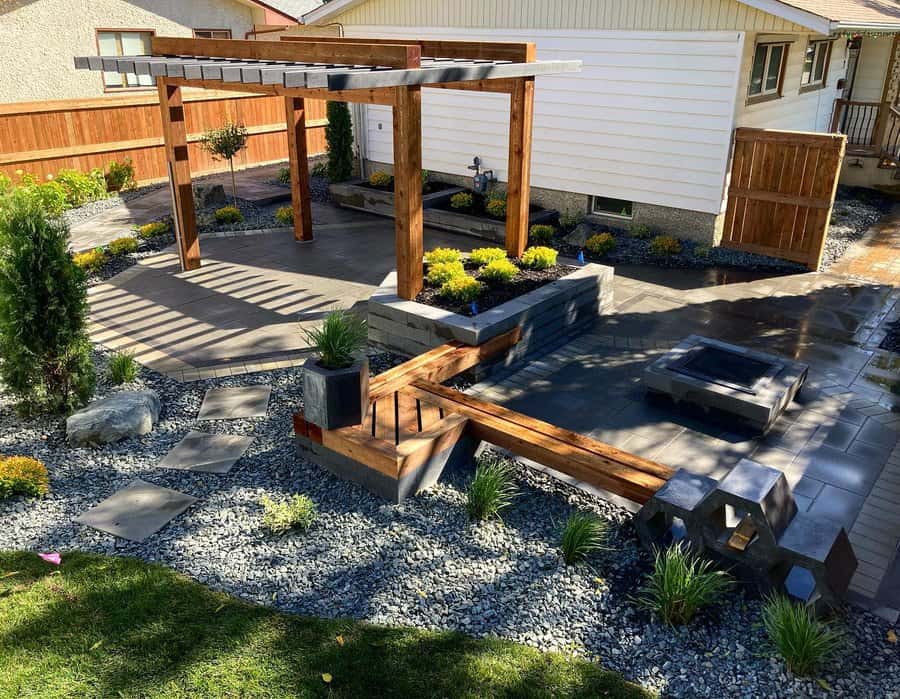
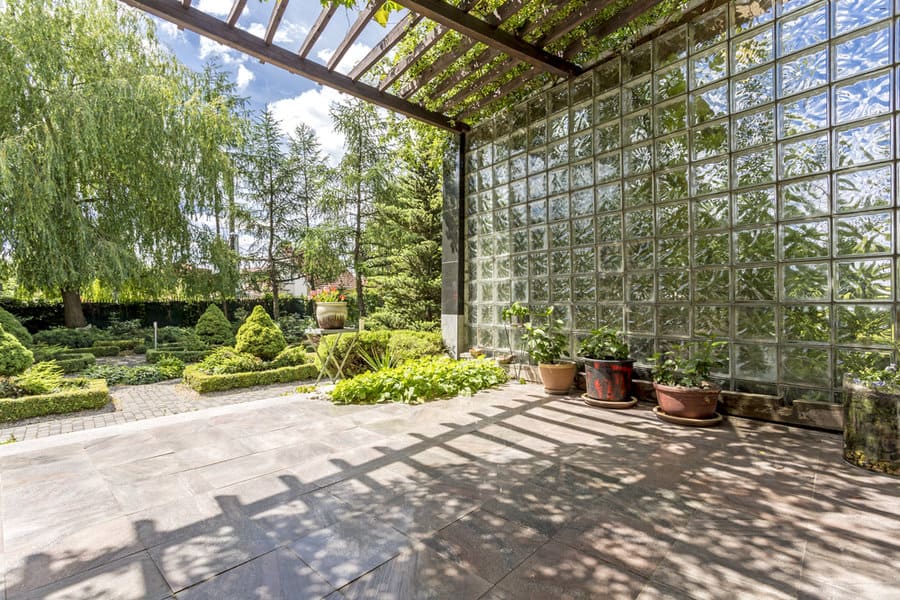
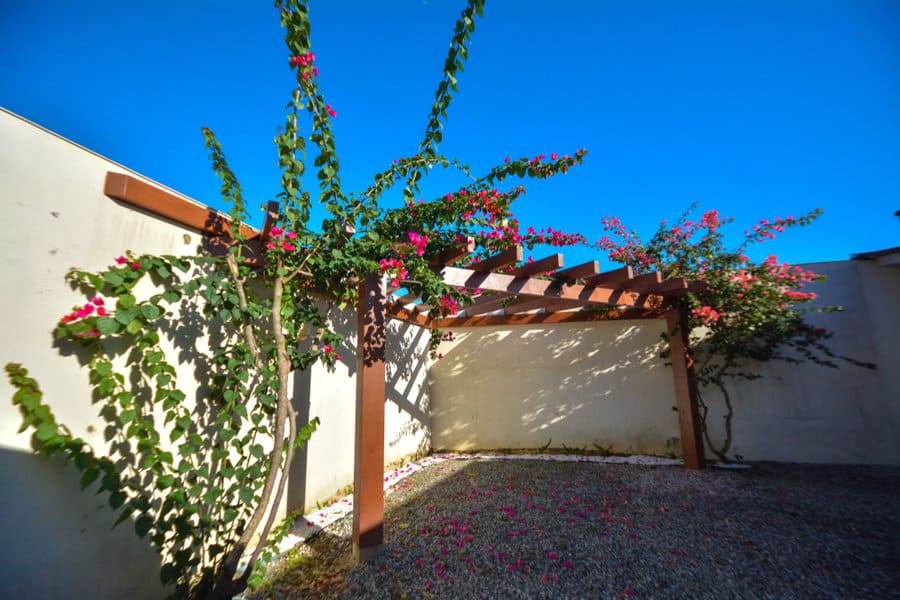
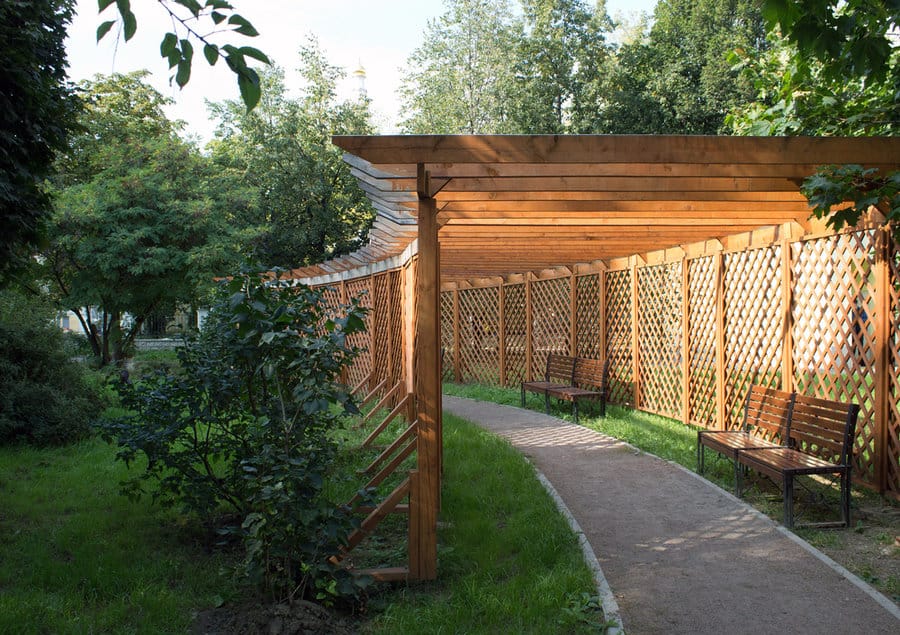
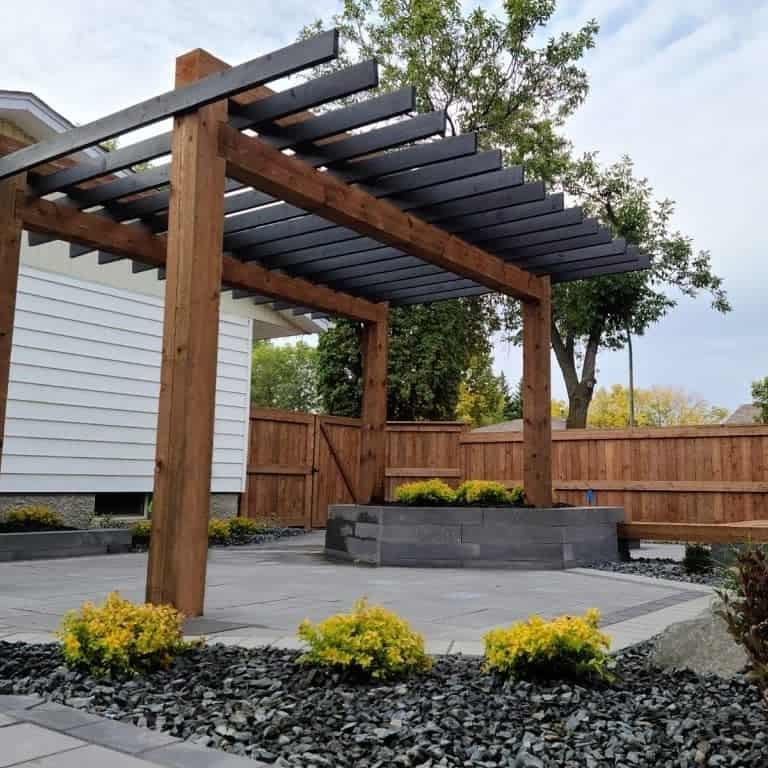
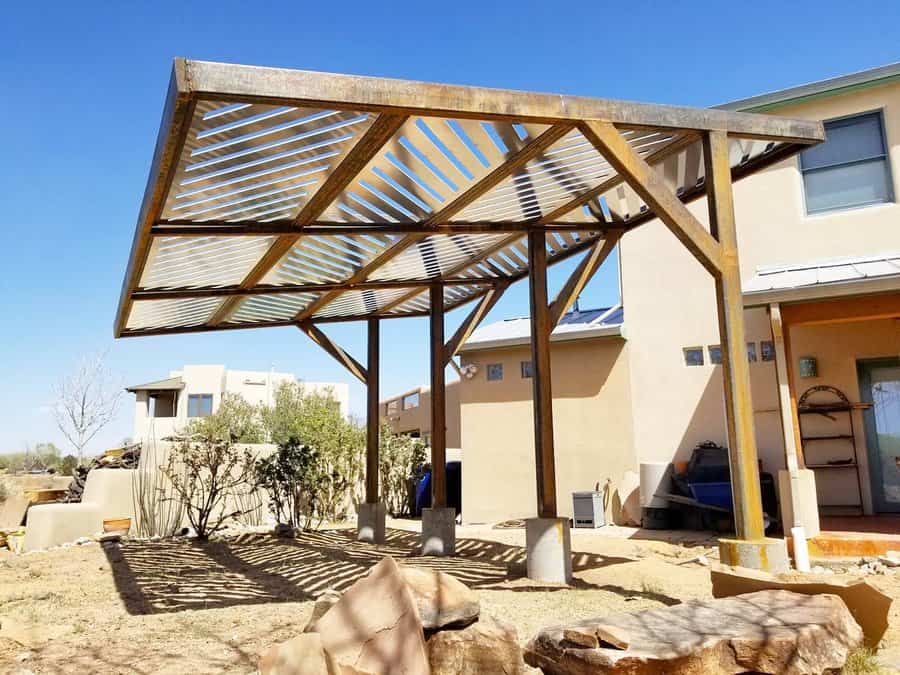
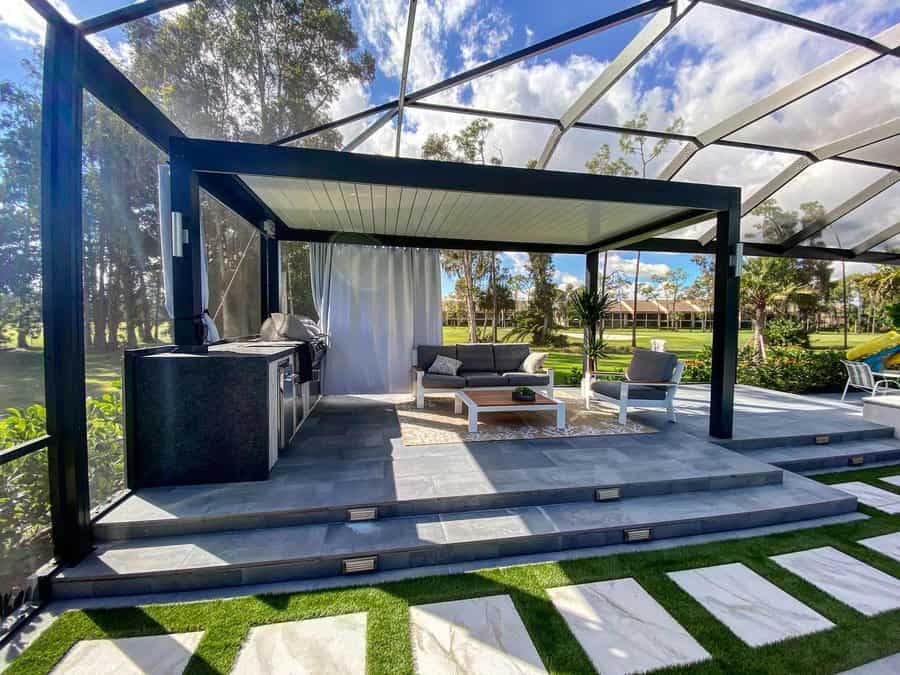
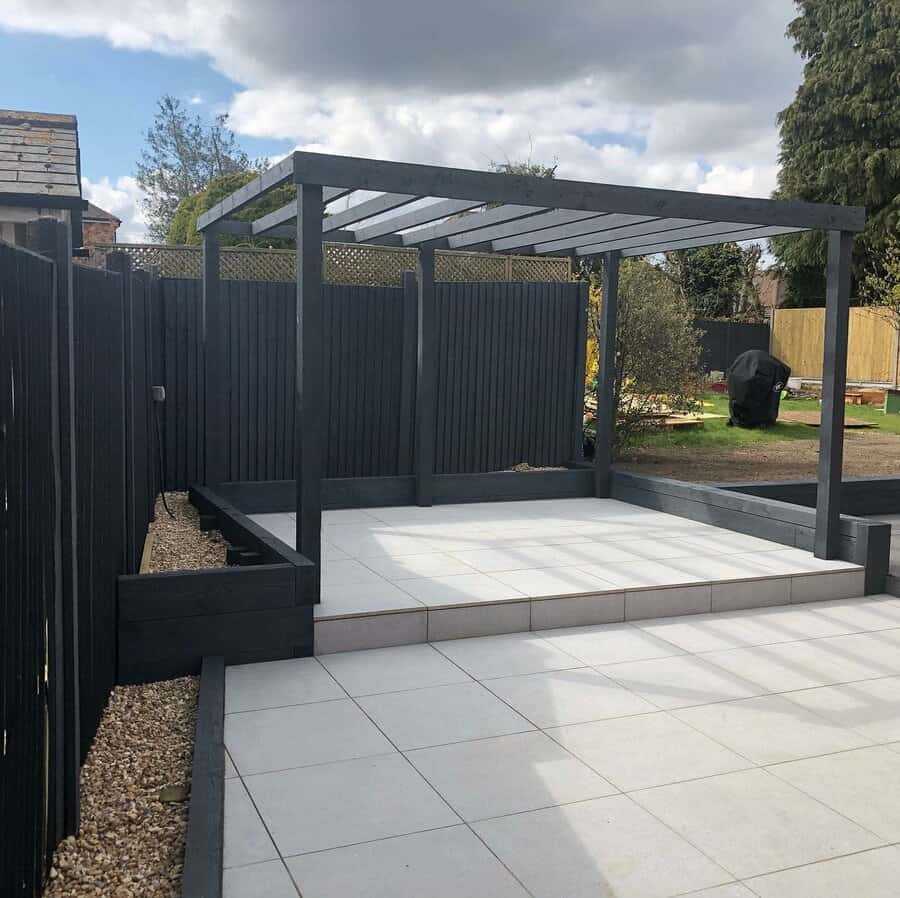
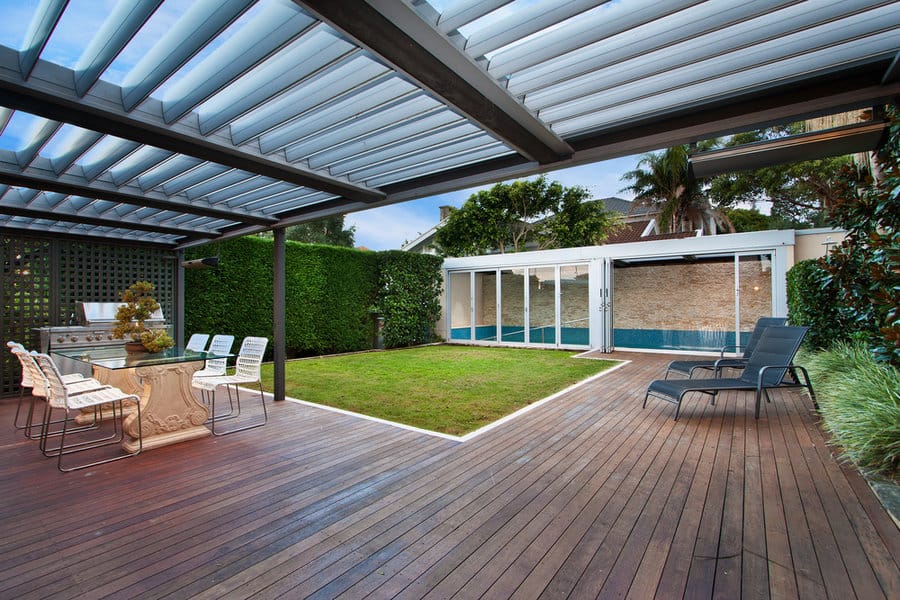
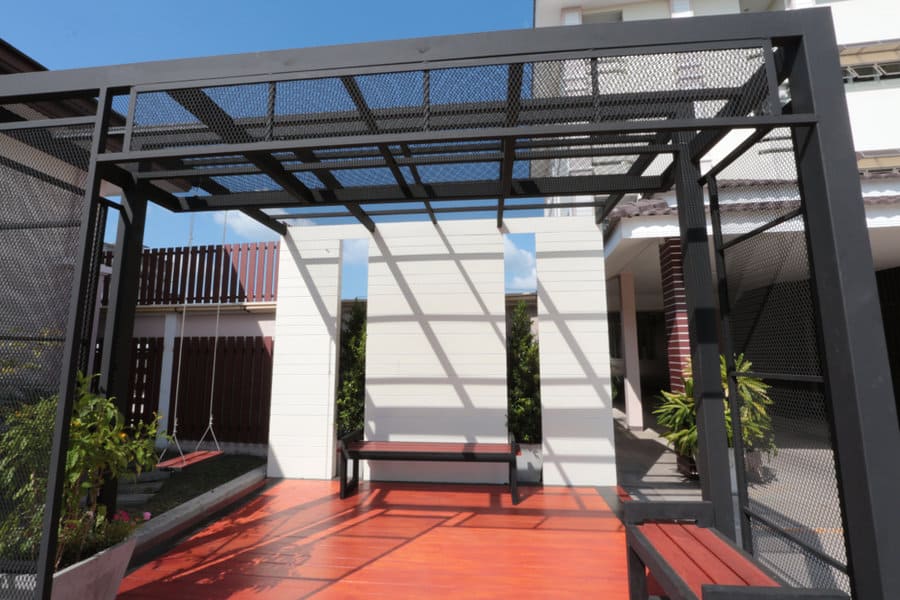
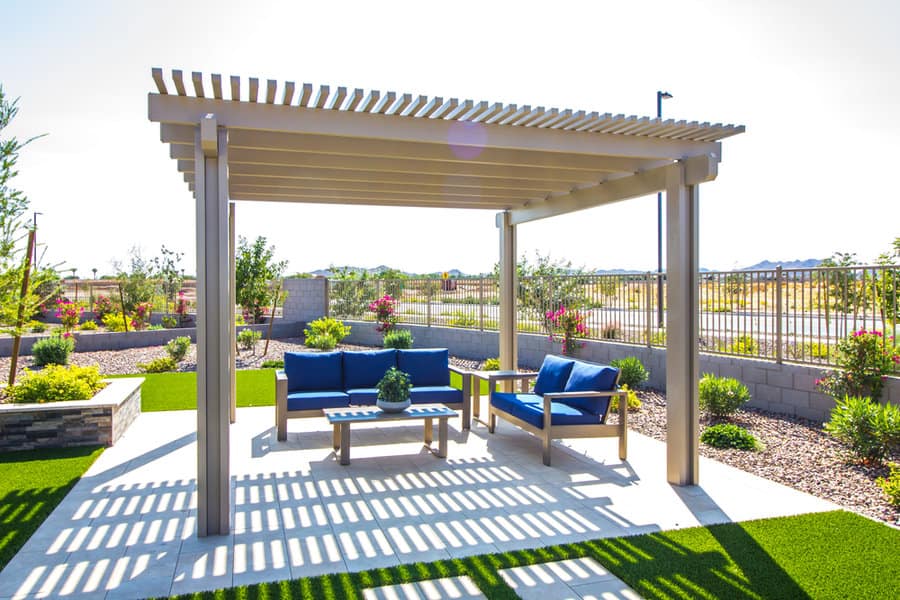
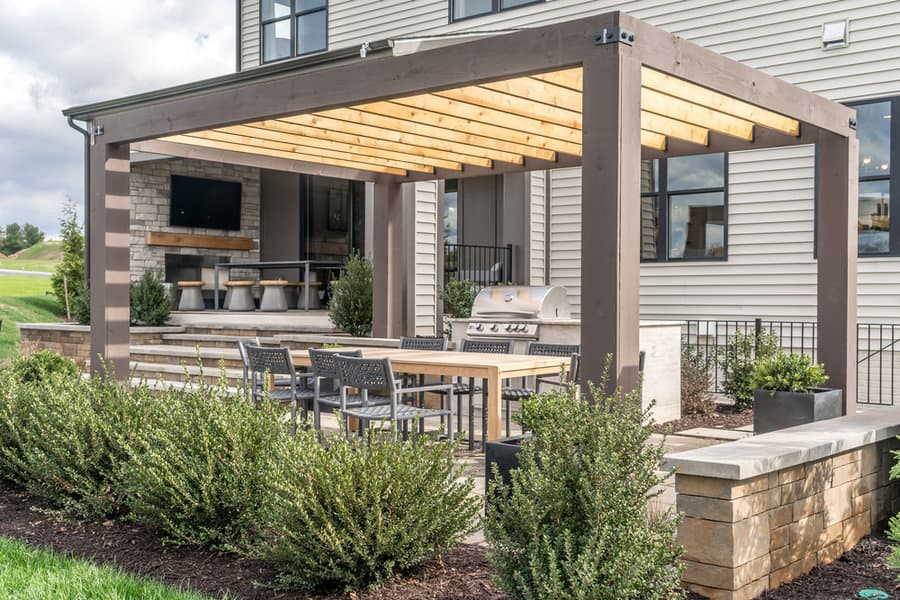
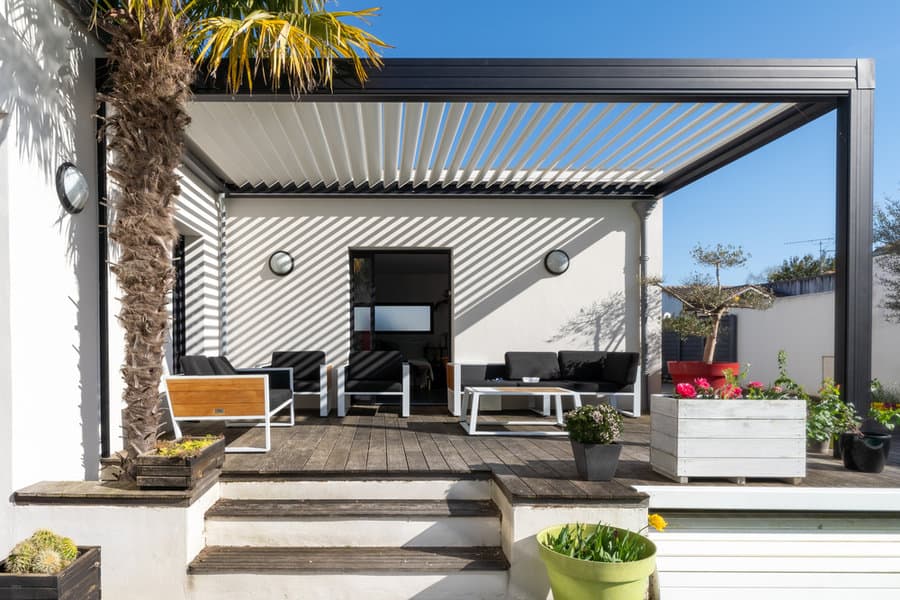
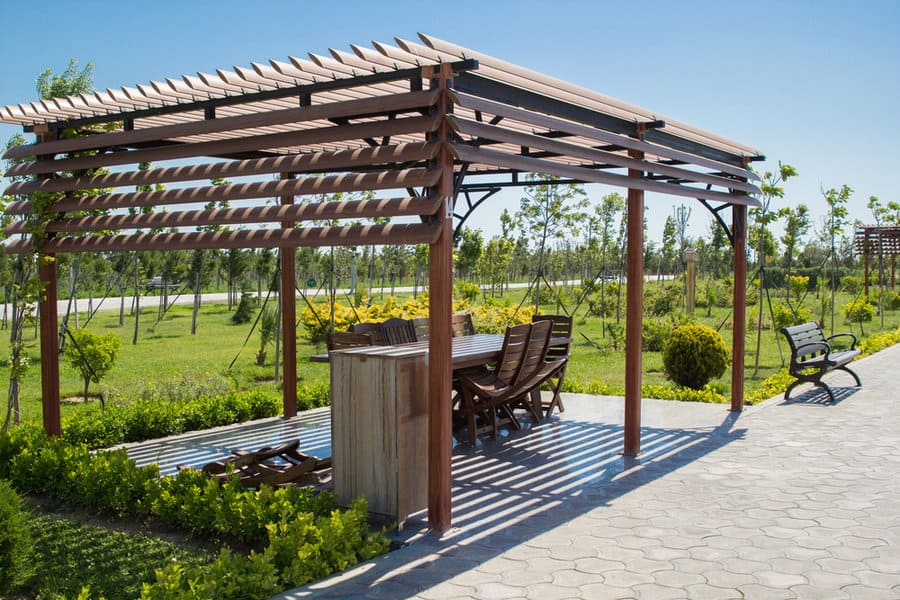
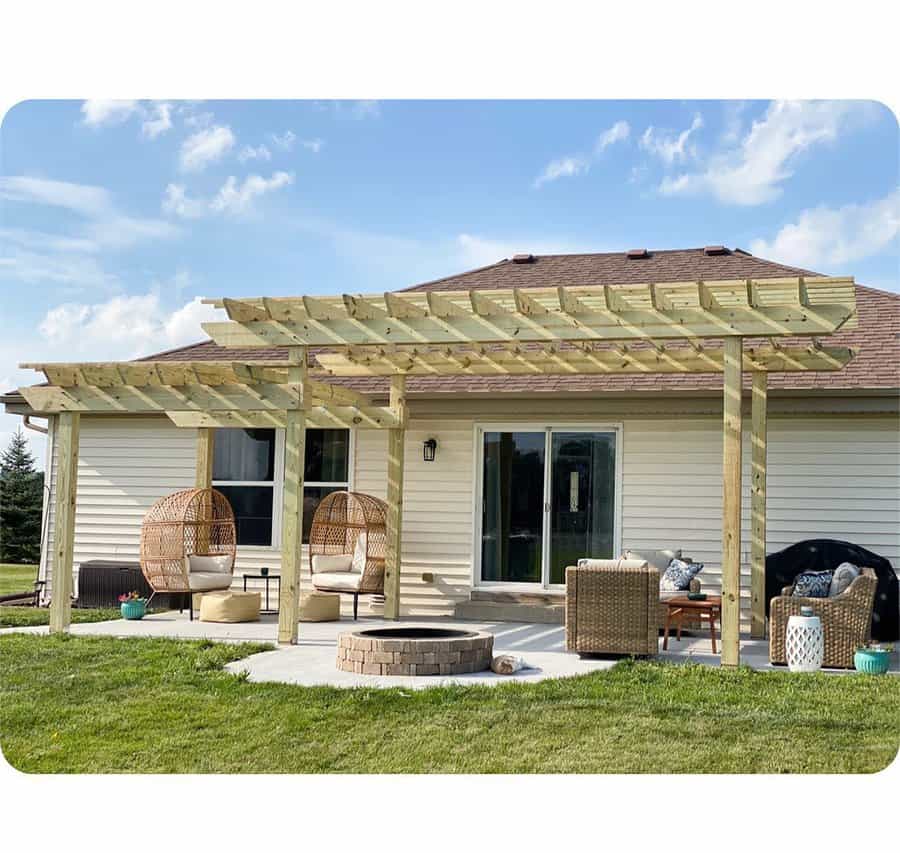
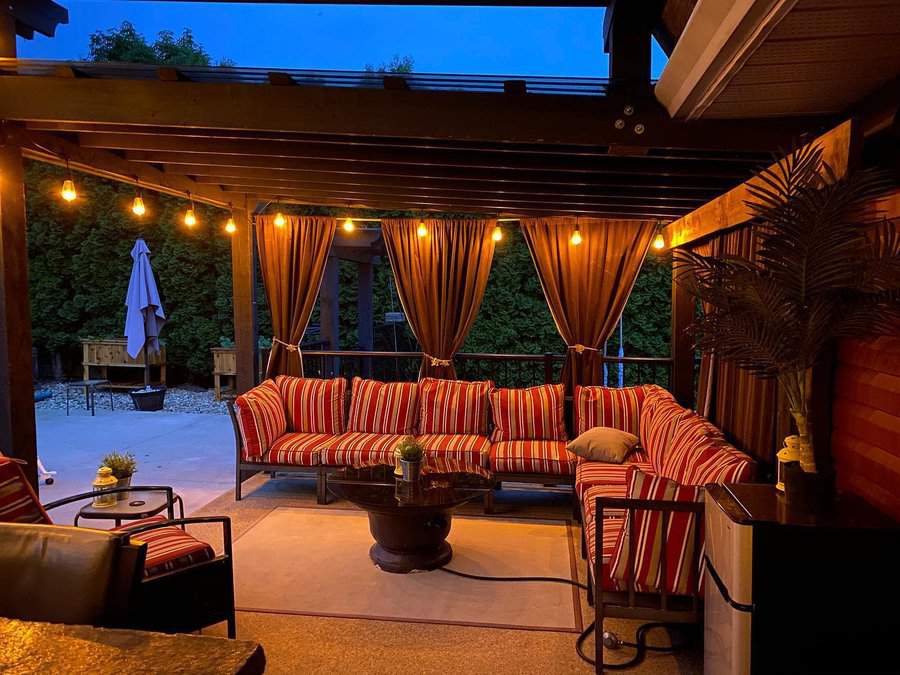
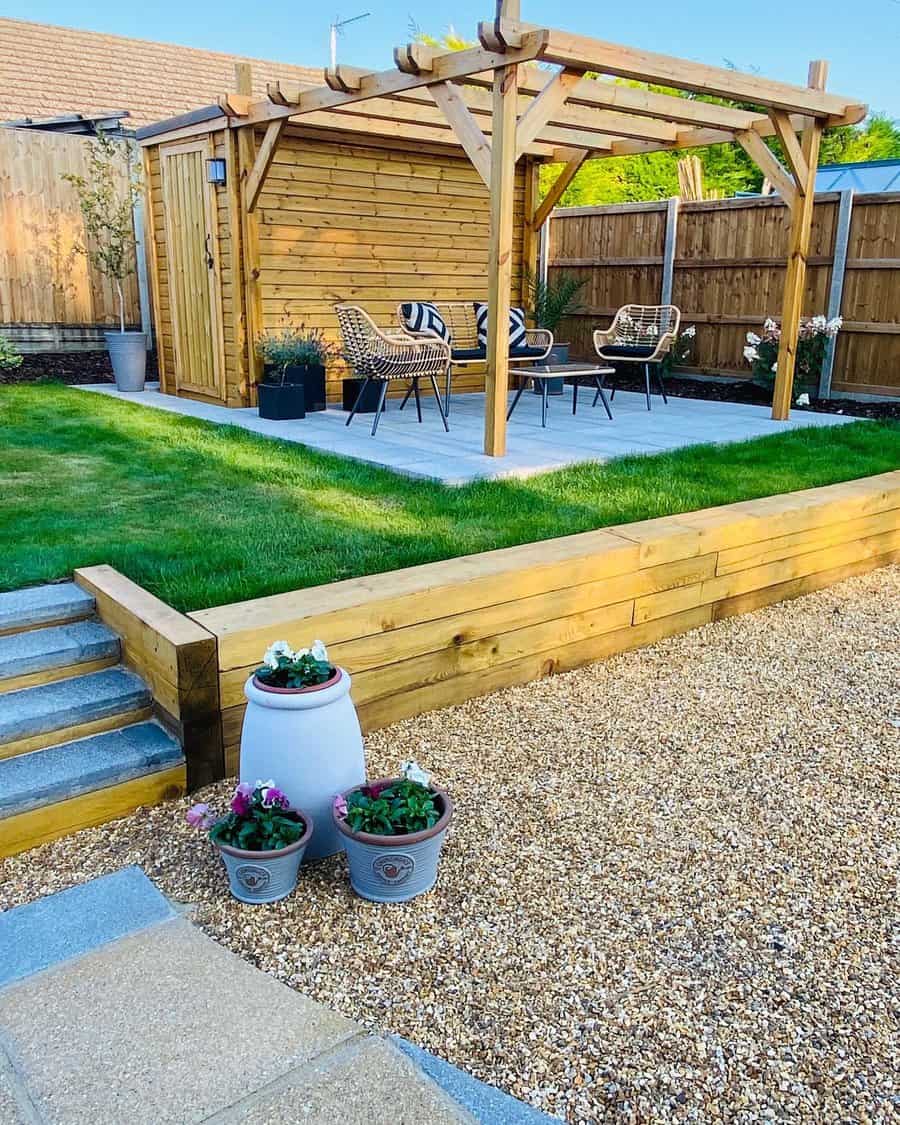
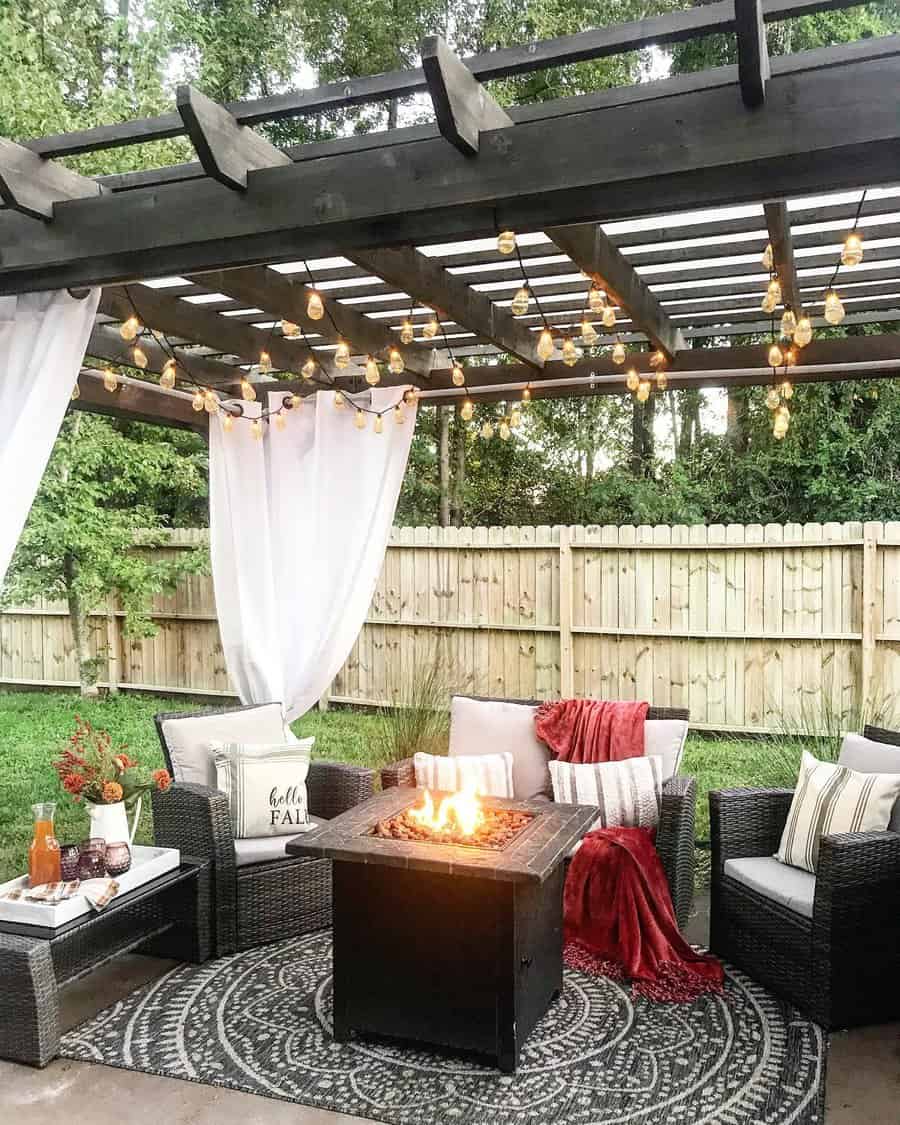
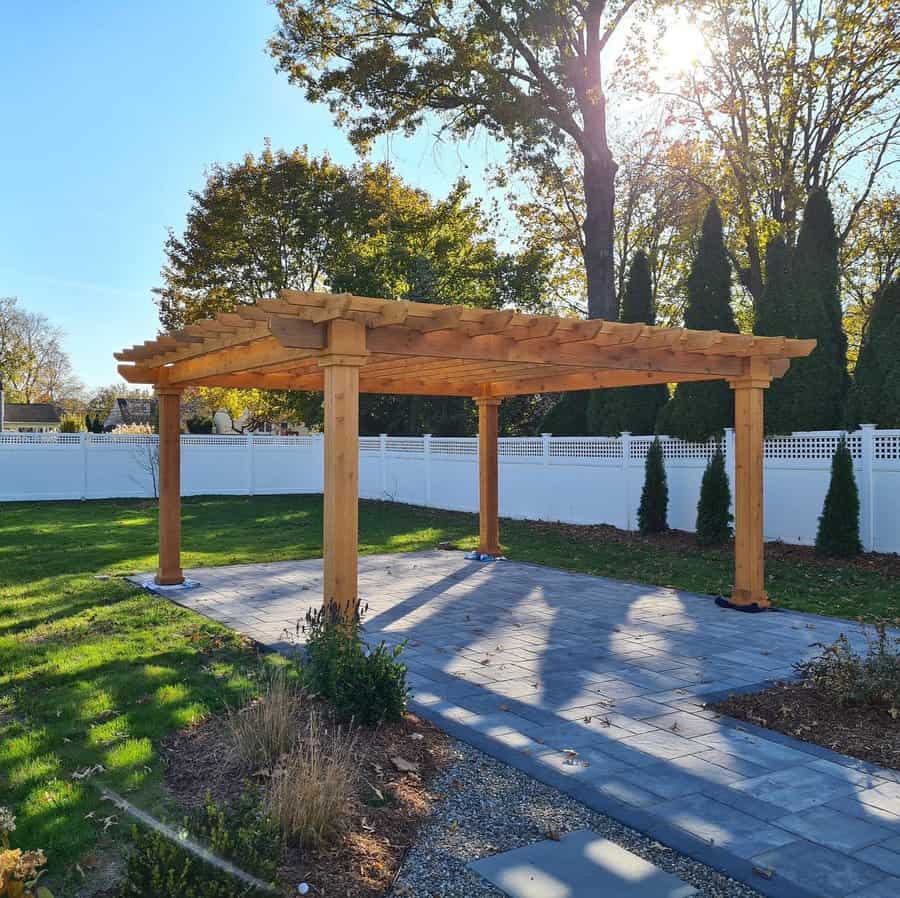
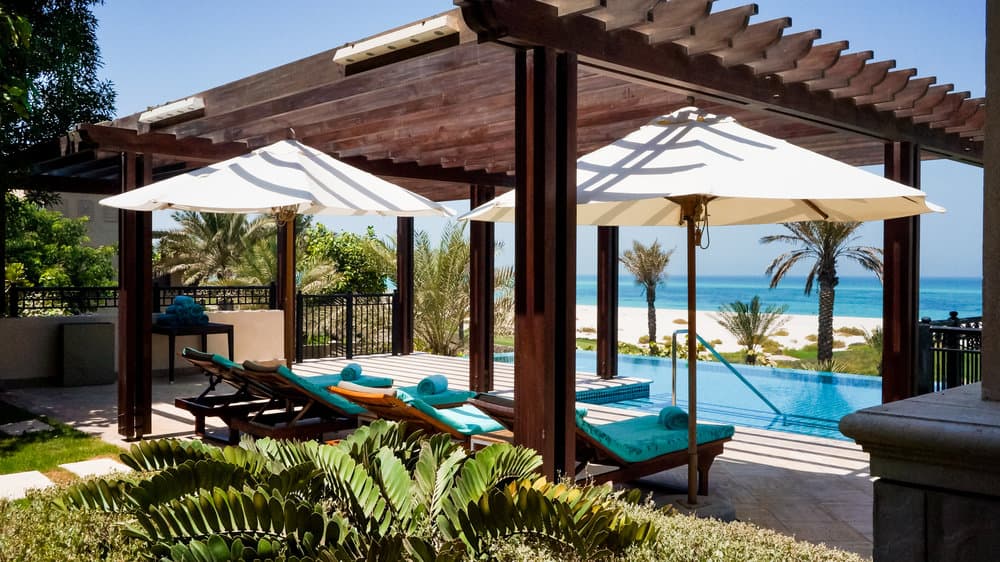
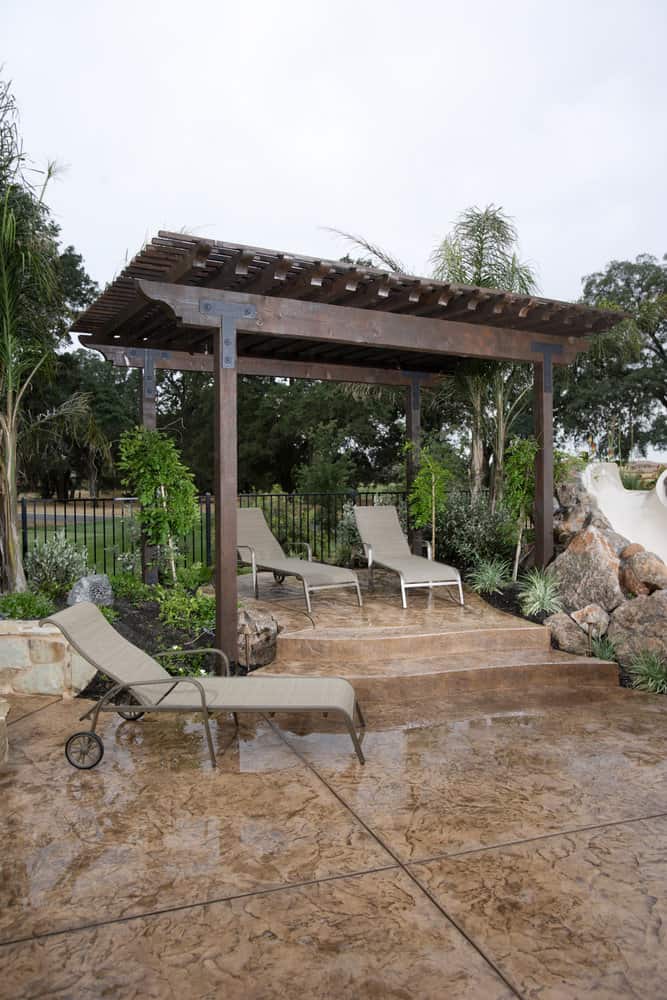
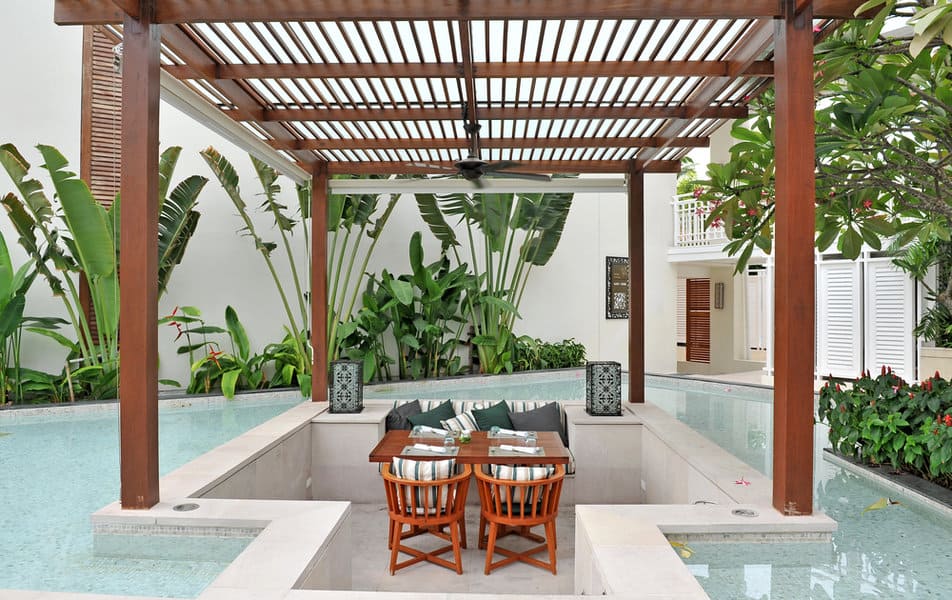
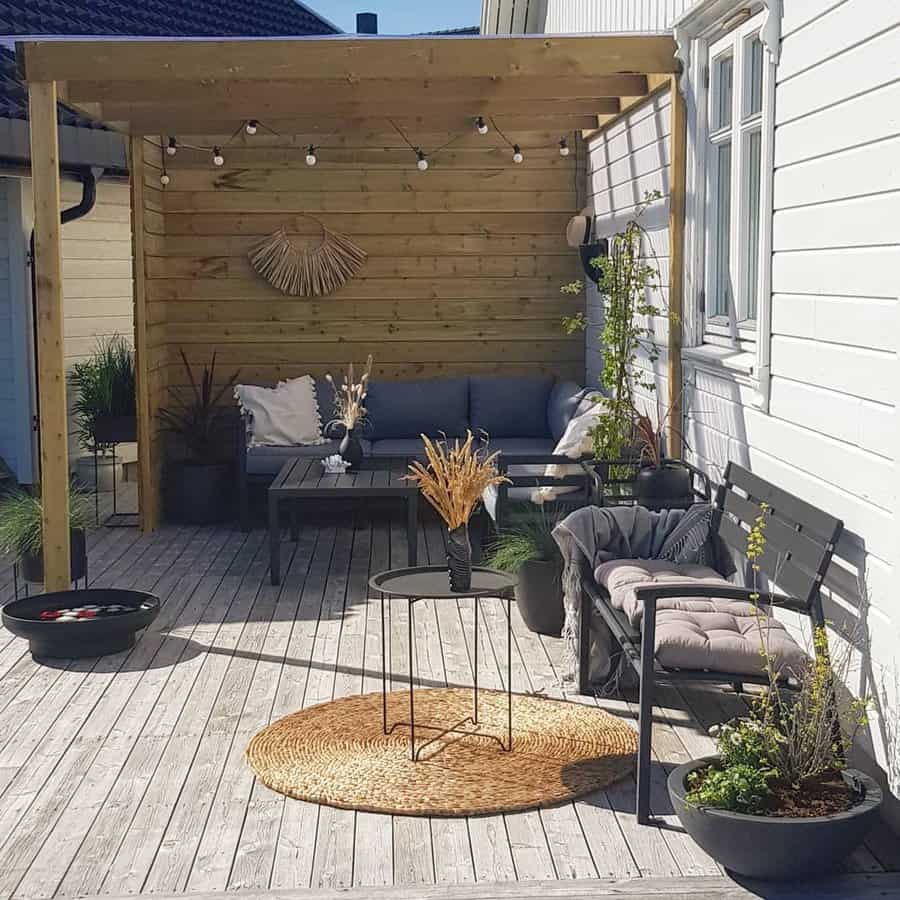
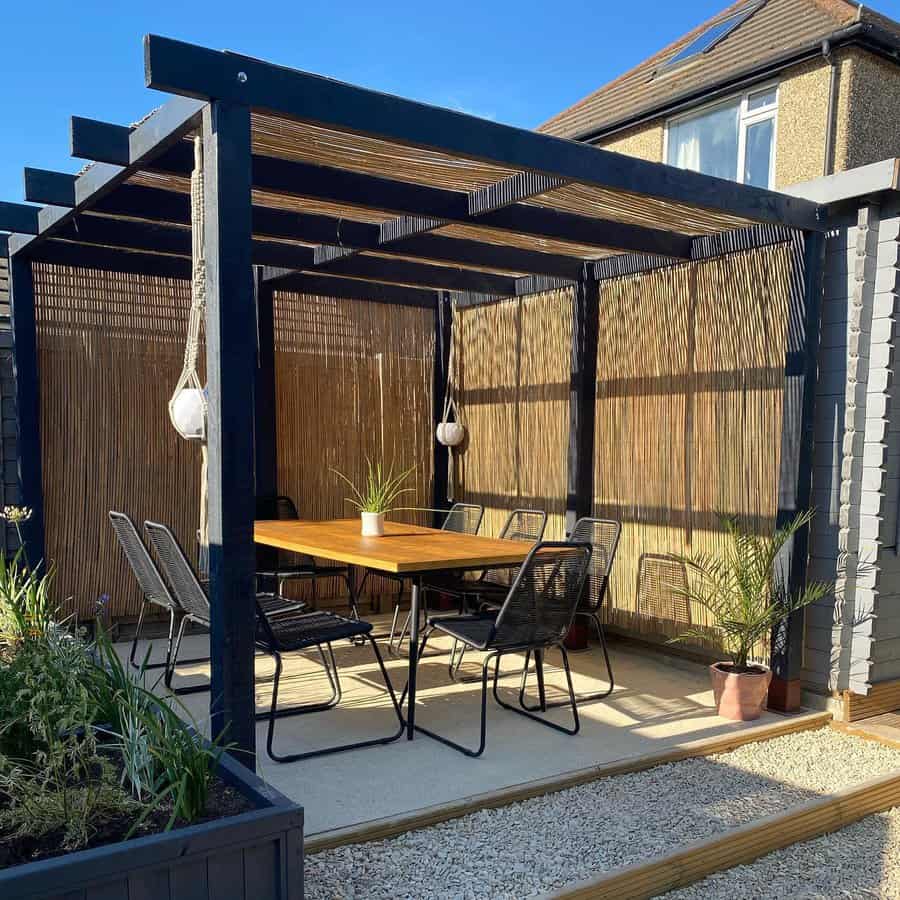
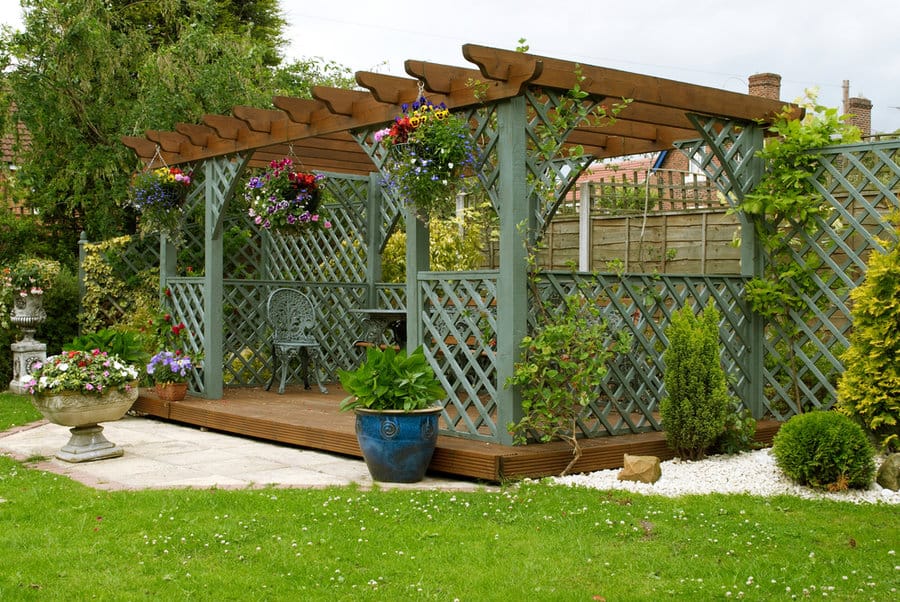
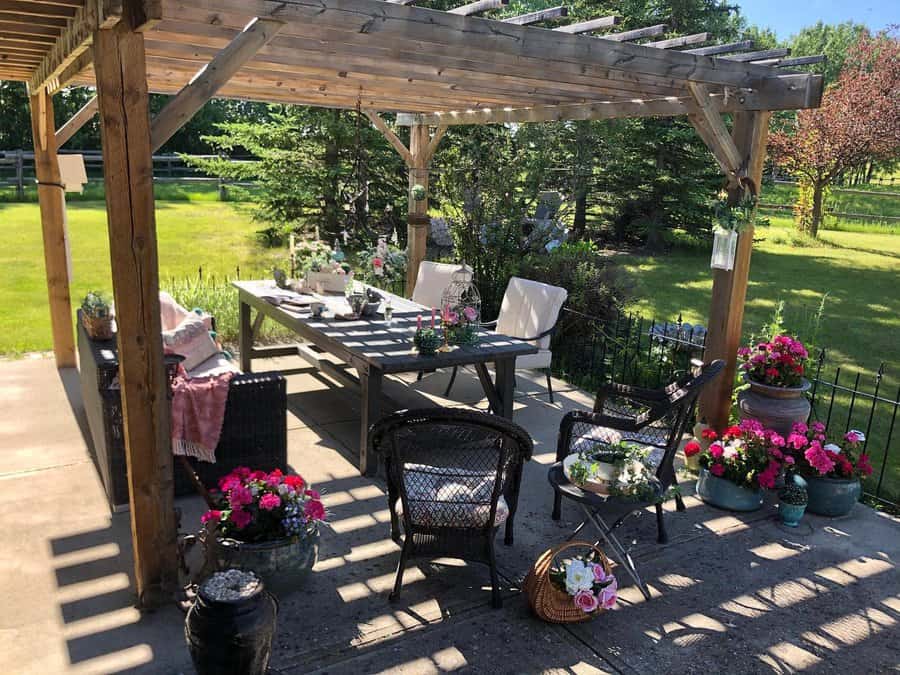
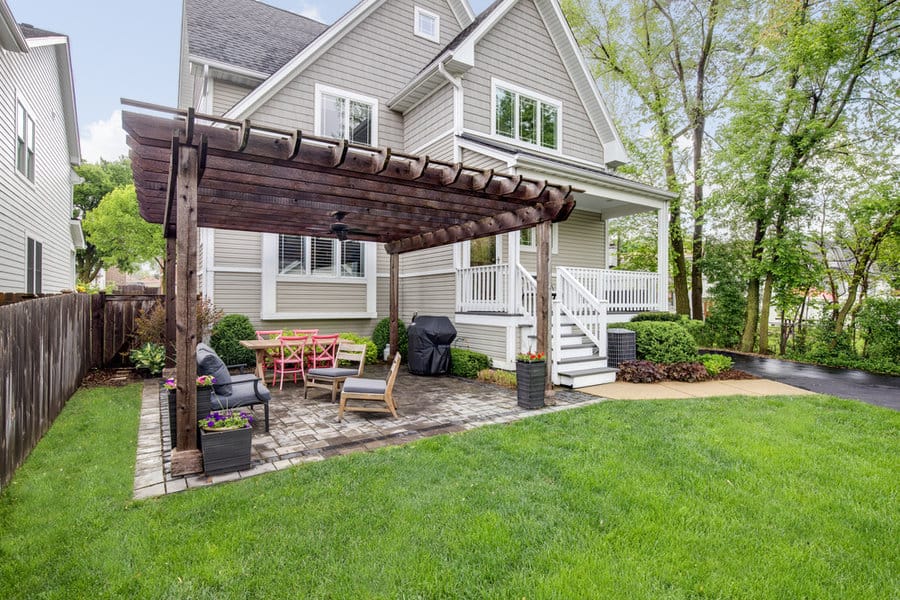
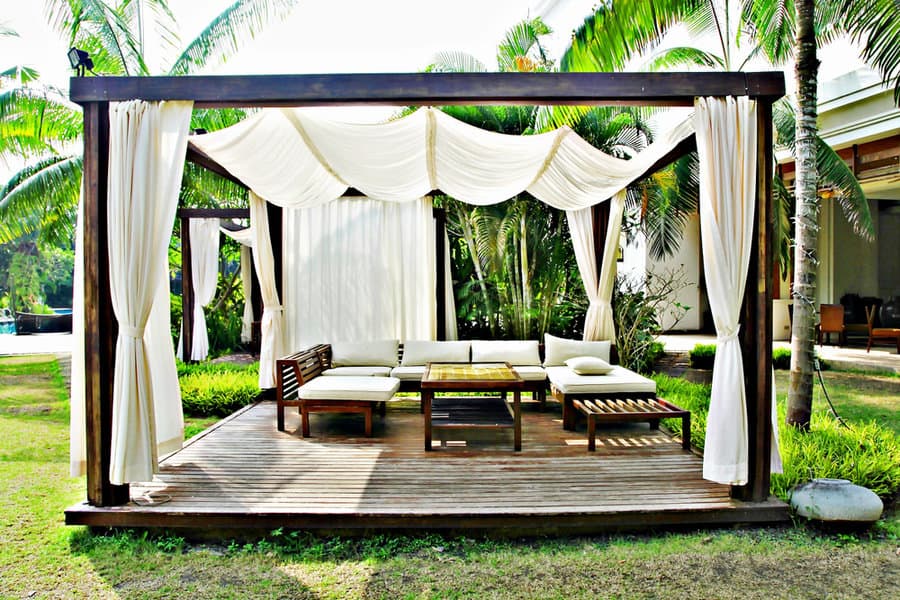
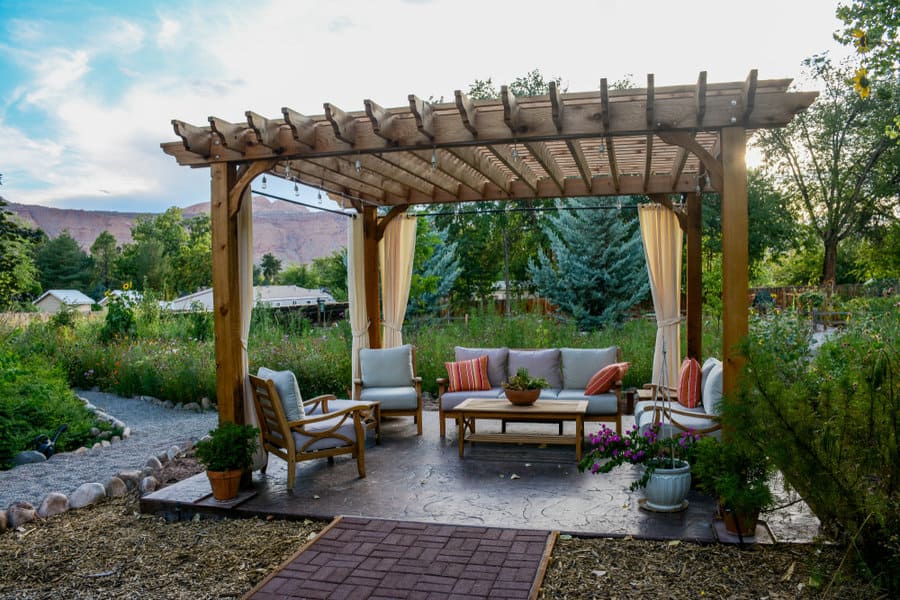
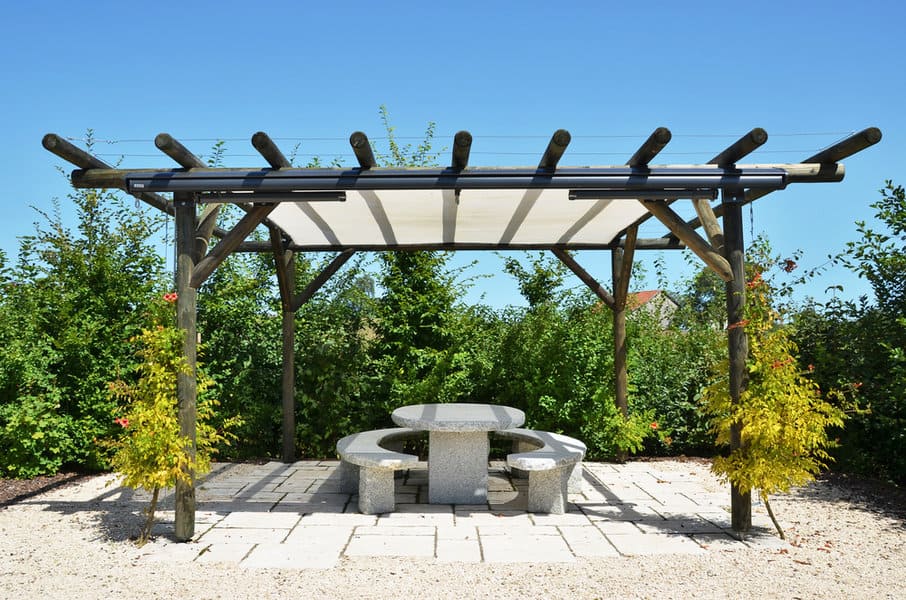
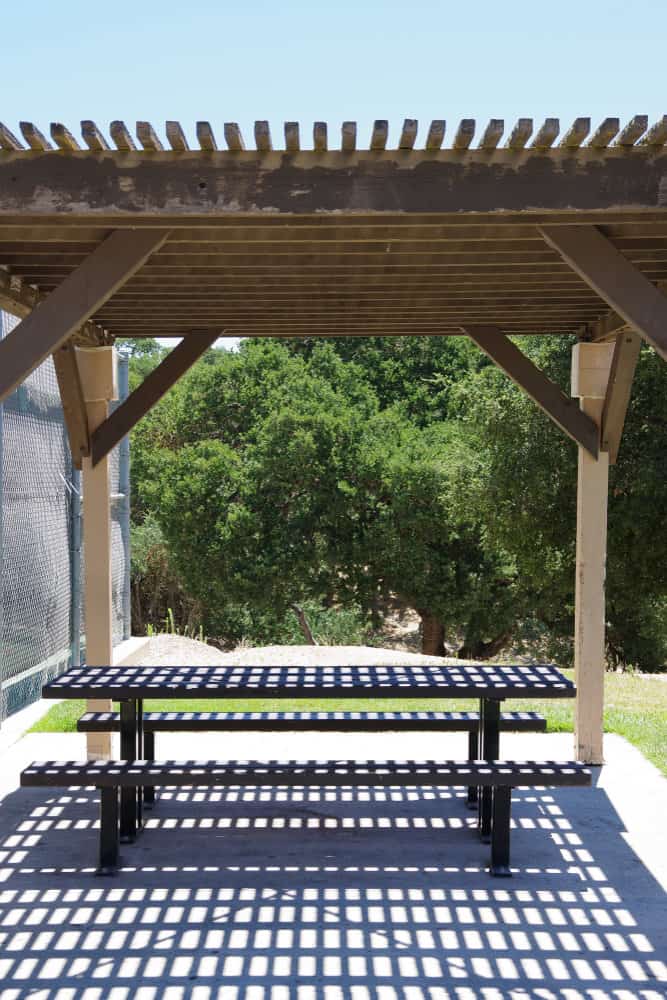
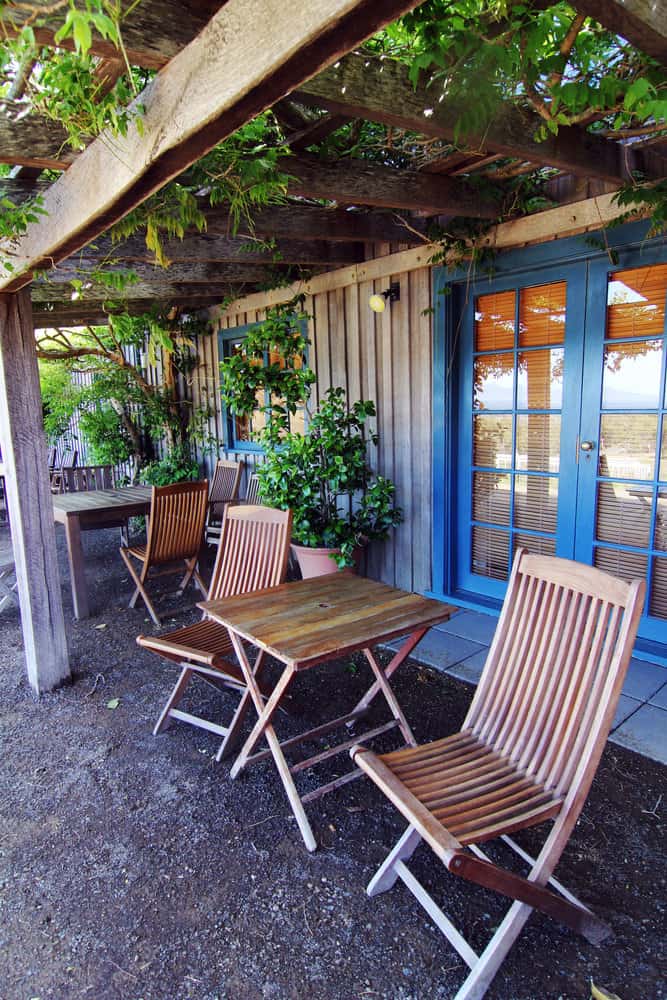
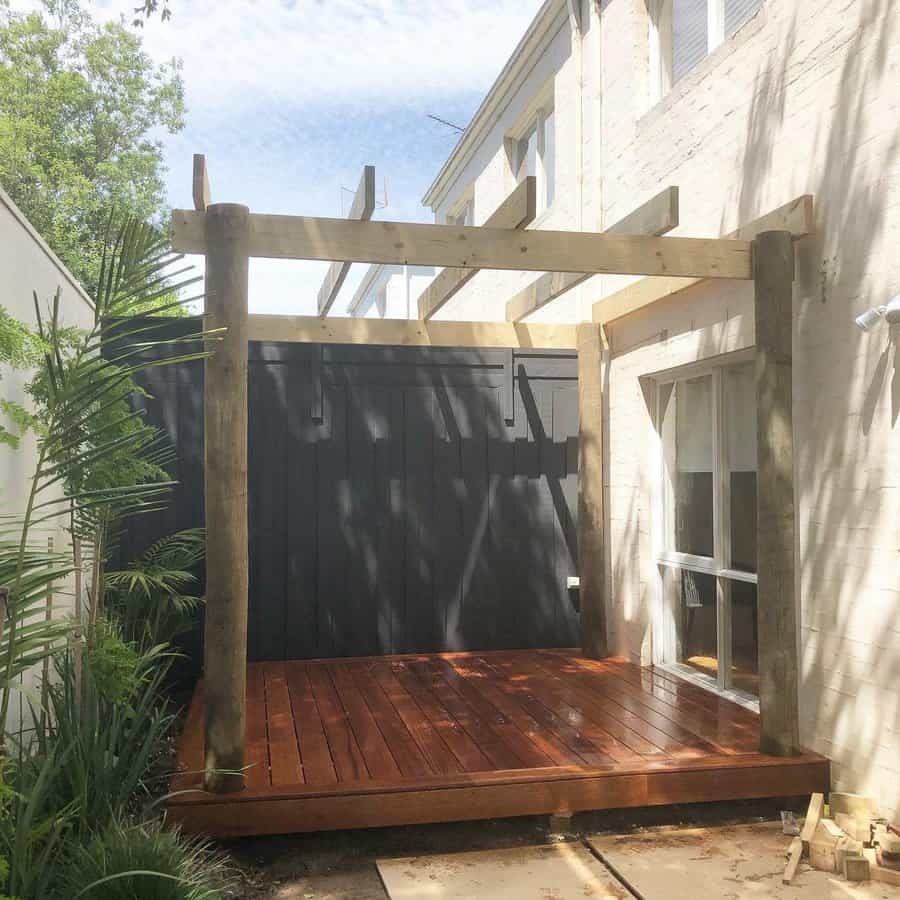
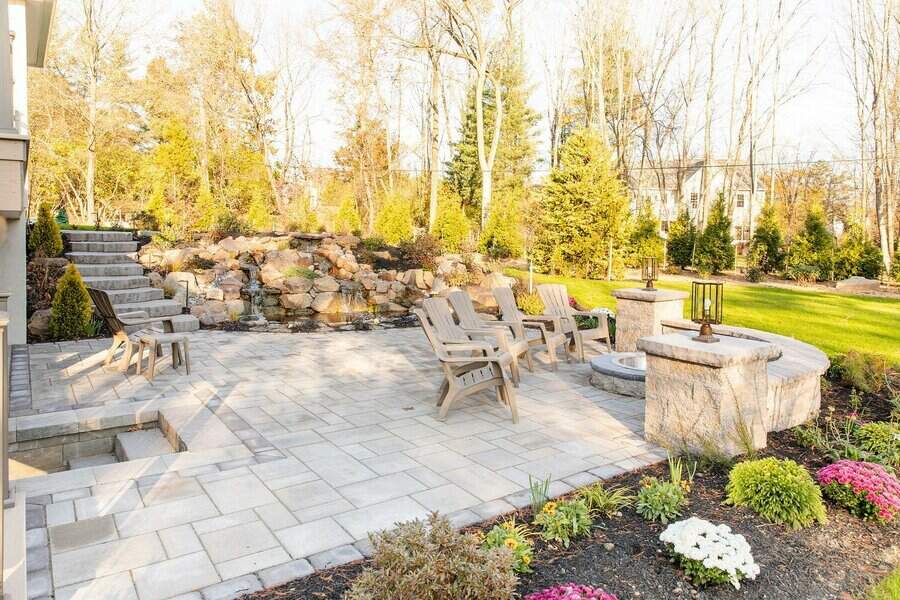
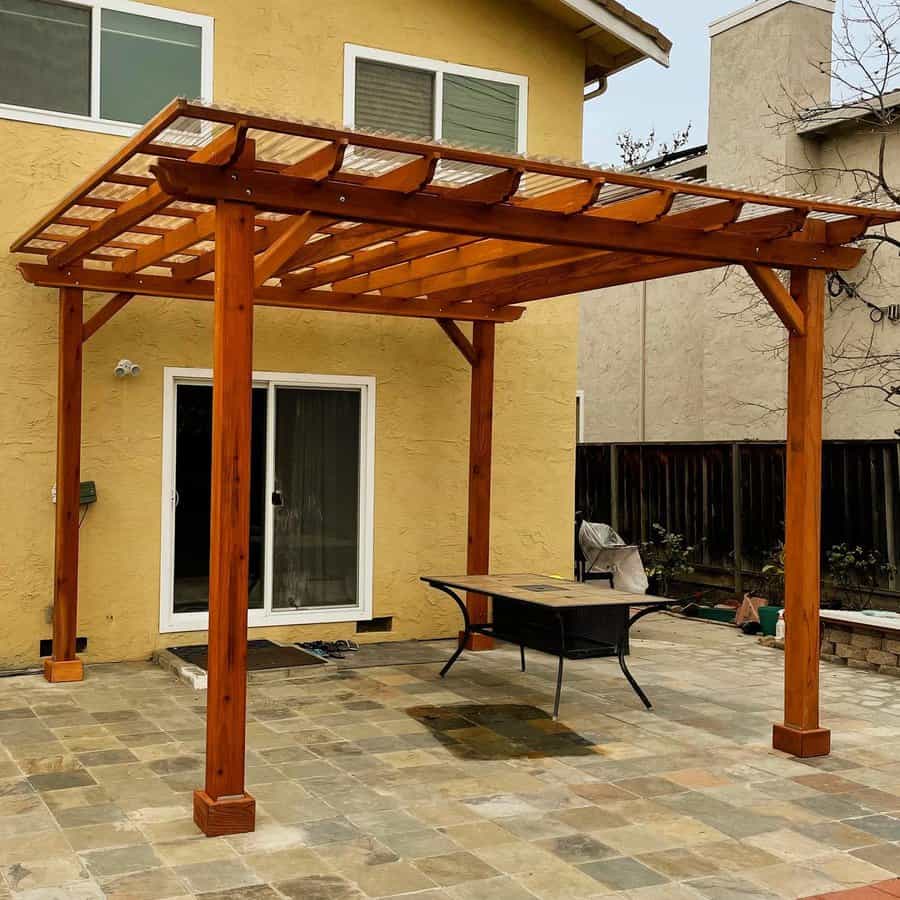
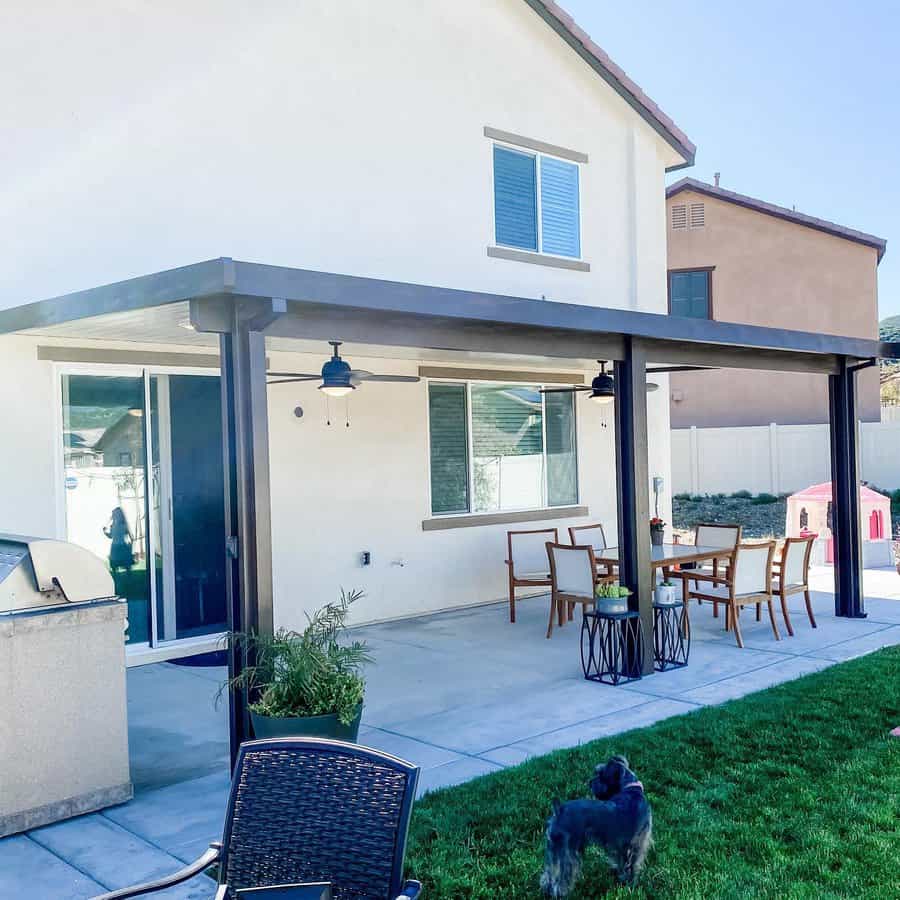
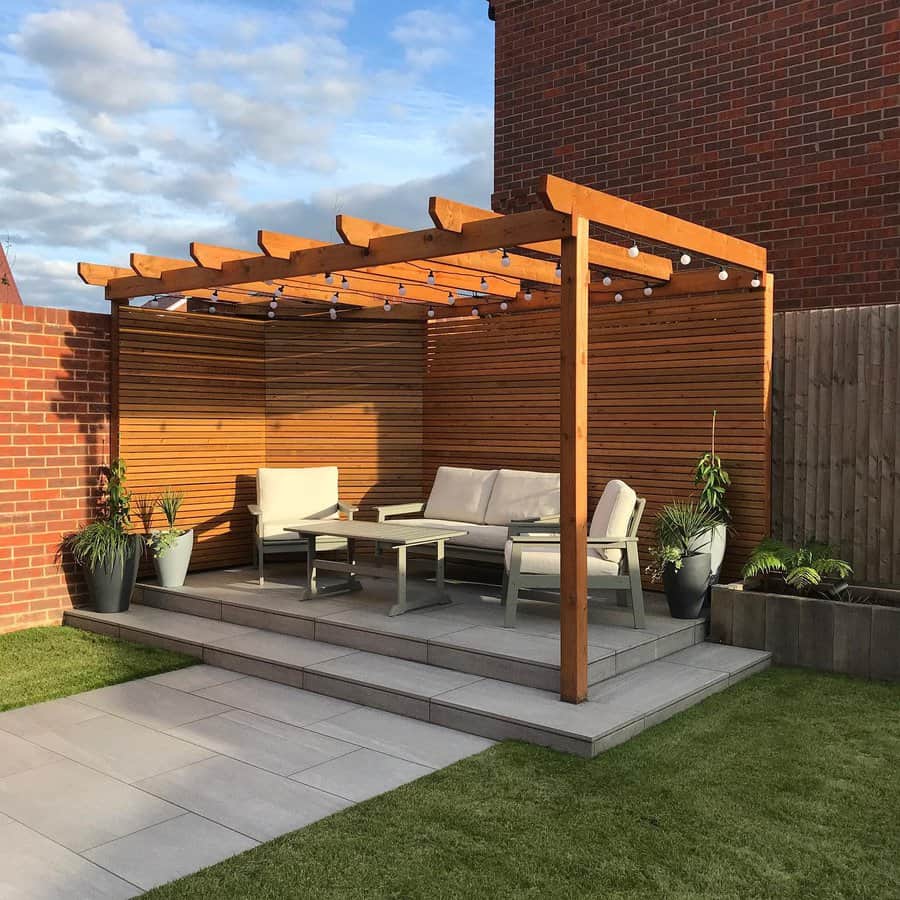
You love having an outdoor kitchen or sitting area on your backyard patio or deck. The only problem is the lack of shade. You would enjoy your outdoor living space a lot more if it weren’t so darn hot. Adding an outdoor structure like a pergola can provide you with much-needed relief from the sun. You may not realize that pergolas come in a wide range of sizes, shapes, styles, and materials. Choosing the right pergola for your backyard will depend on your budget, space available, and desired style.
These pergola ideas will help you add some much-needed shade to your outdoor area.
[view_toc]
1. Maximize Space with an Attached Pergola
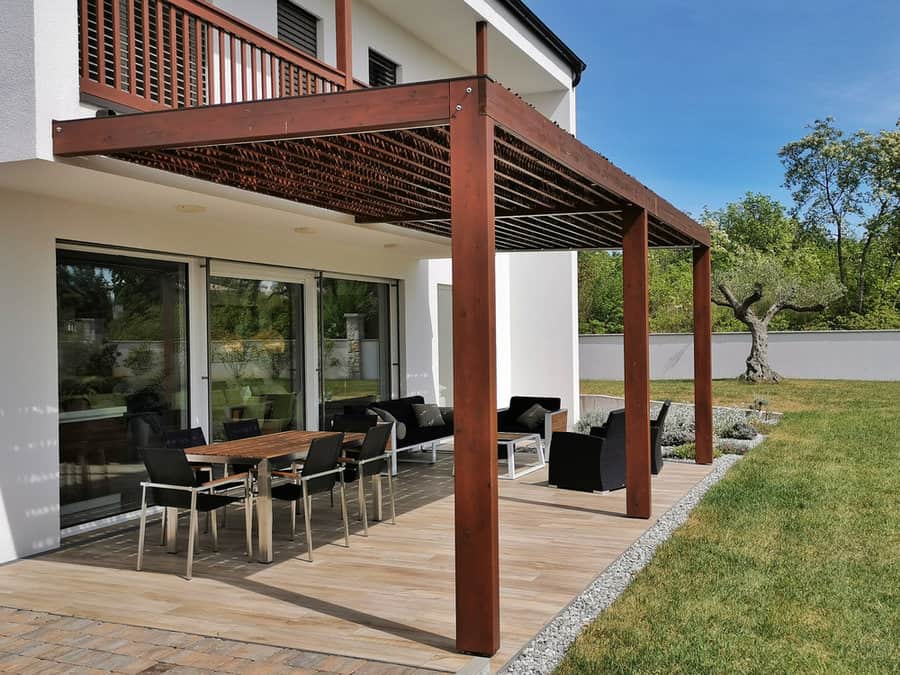
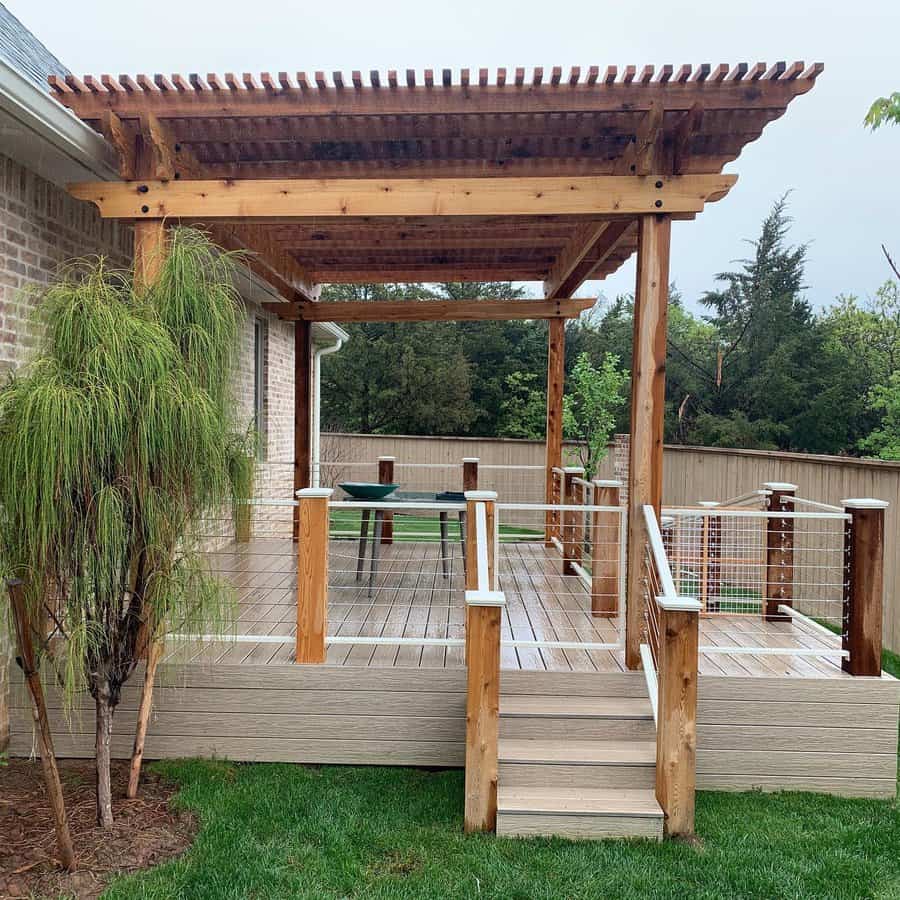
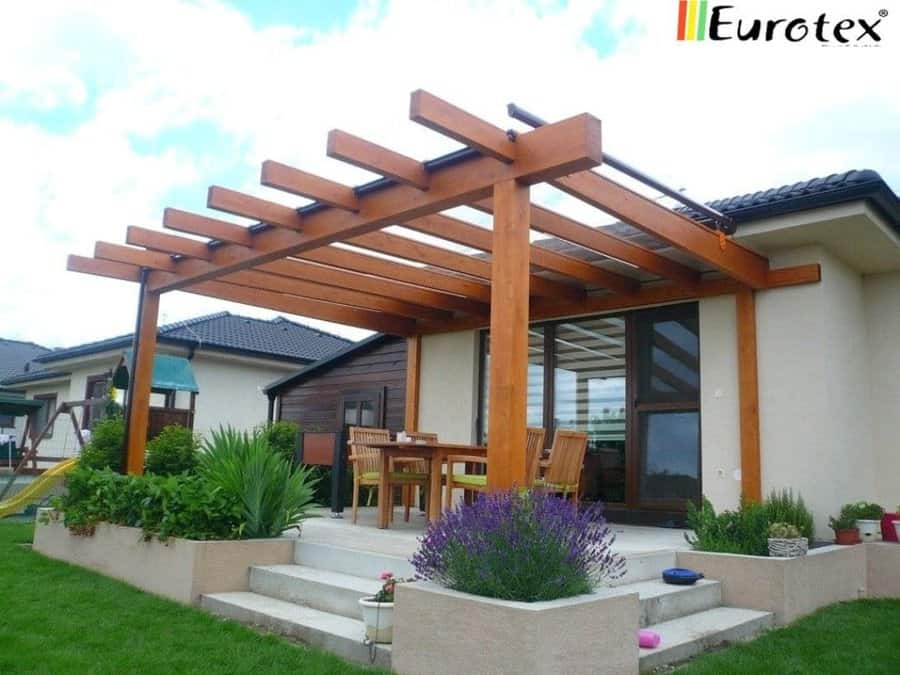
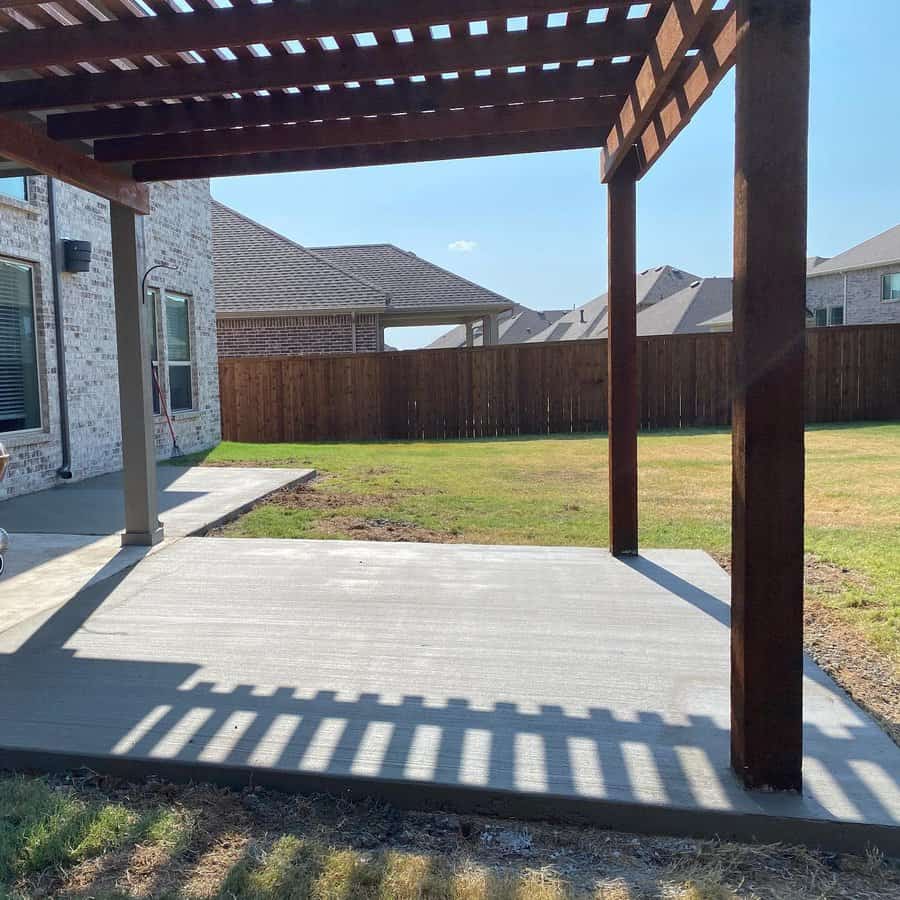
You don’t have to have a freestanding pergola. An attached pergola gets built off of the side of your house. You could have a wooden pergola constructed to extend from the roof of the house outward o cover your patio.
Source: @3leavesllc via Instagram
This is a great solution if you want seamless protection from your house to your outdoor living space. This style also works better when you have limited space and need a uniquely shaped pergola. Instead of a square, you could have a long rectangle shape that extends the length of your house.
2. Enhance Protection with Pergola Cover
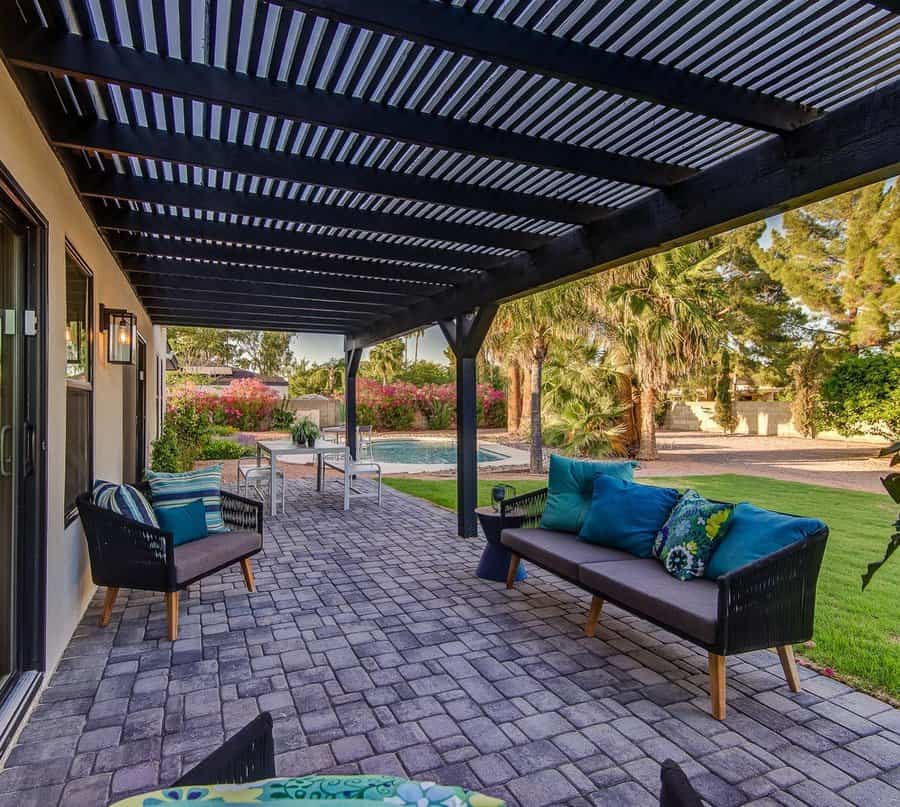
A traditional patio does not have complete overhead protection. There are long beams that provide some sun blocking, but not completely. It also won’t protect you from rain or falling debris. If you want more protection, you need an additional patio cover.
Source: @megbehrensdesign via InstagramSource: @nesting_in_grey via InstagramSource: @sodel.design via Instagram
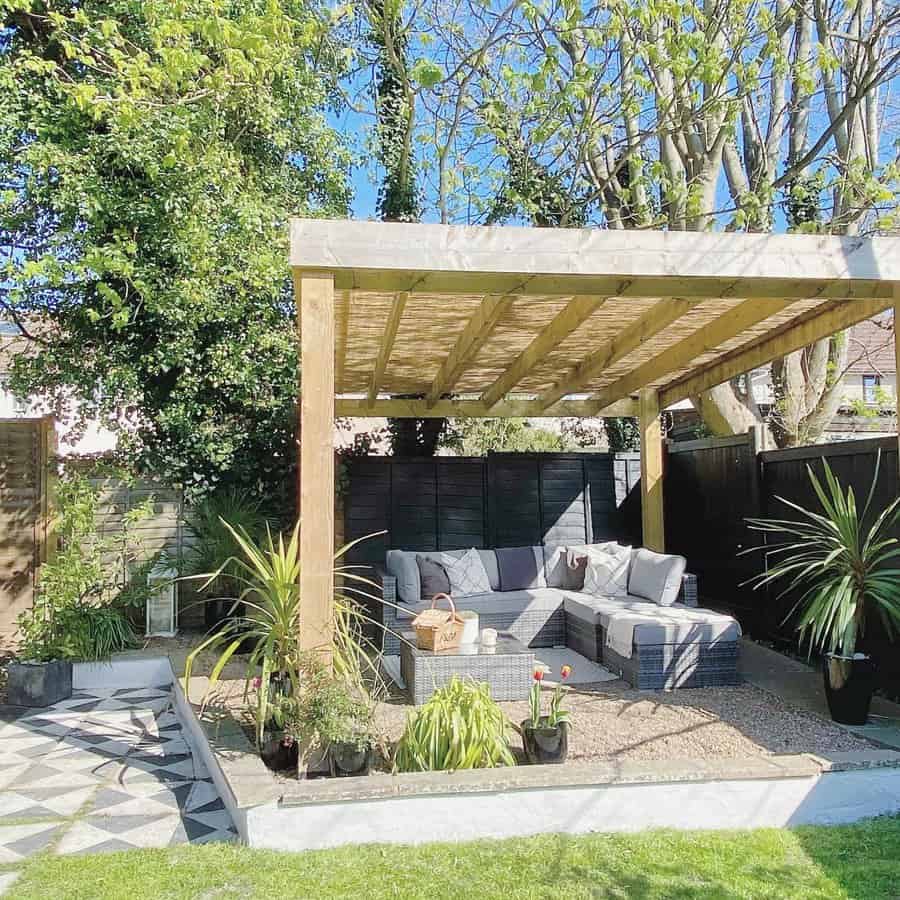
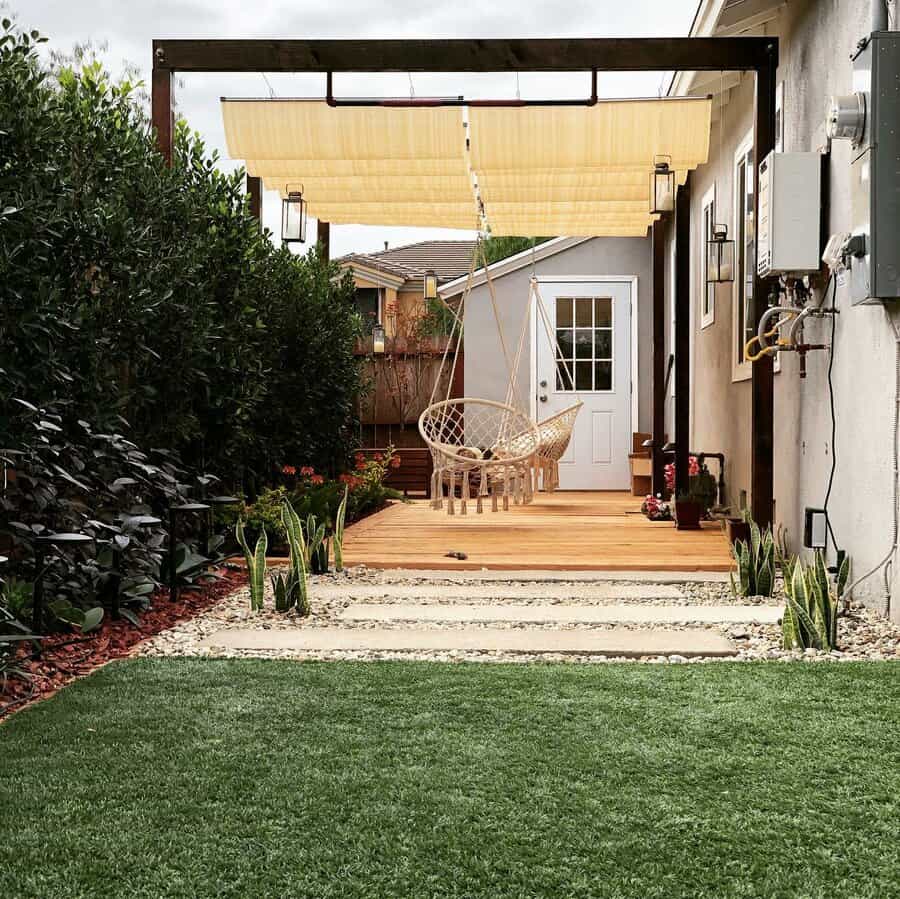
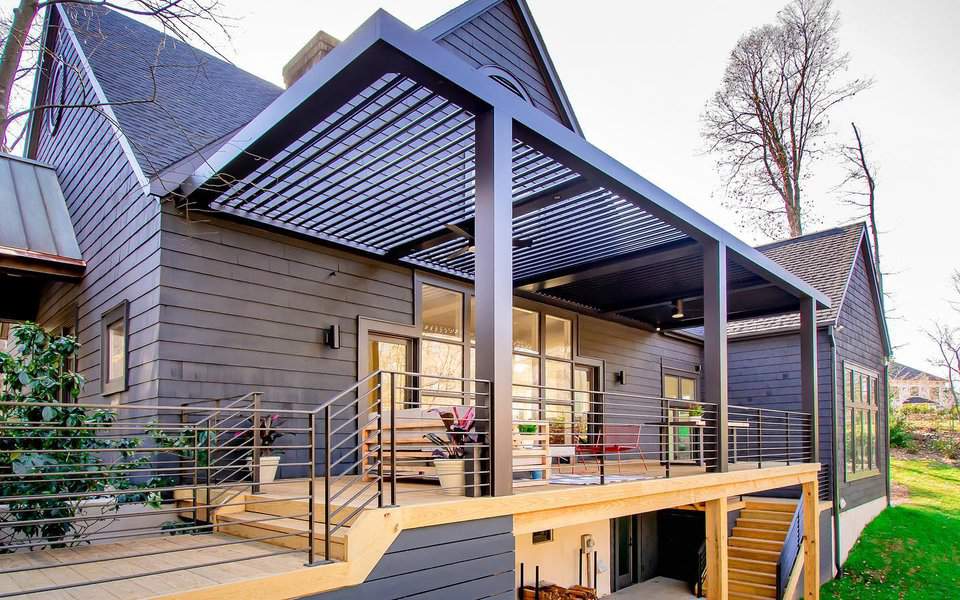
A popular pergola design idea is to use large strips of fabric that get woven through the roof. This blocks more light but won’t fully protect you from the sun. Another option is a mechanical roof. The beams are all interconnected so that you can move them either manually or have a motor connected to them. The beams then rotate to partially or fully cover the roof.
3. Upgrade Your Deck With a Pergola
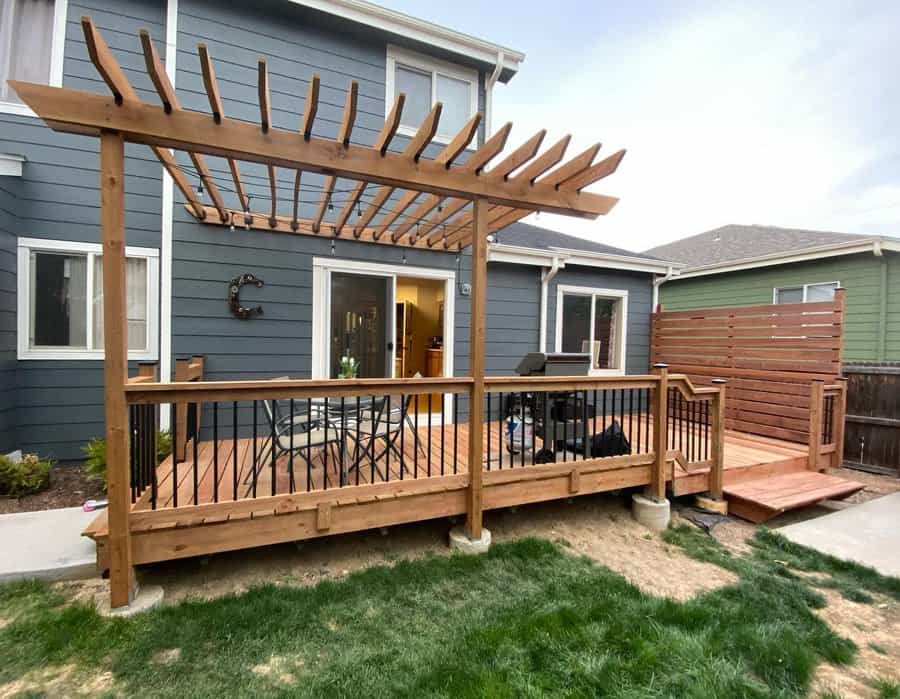
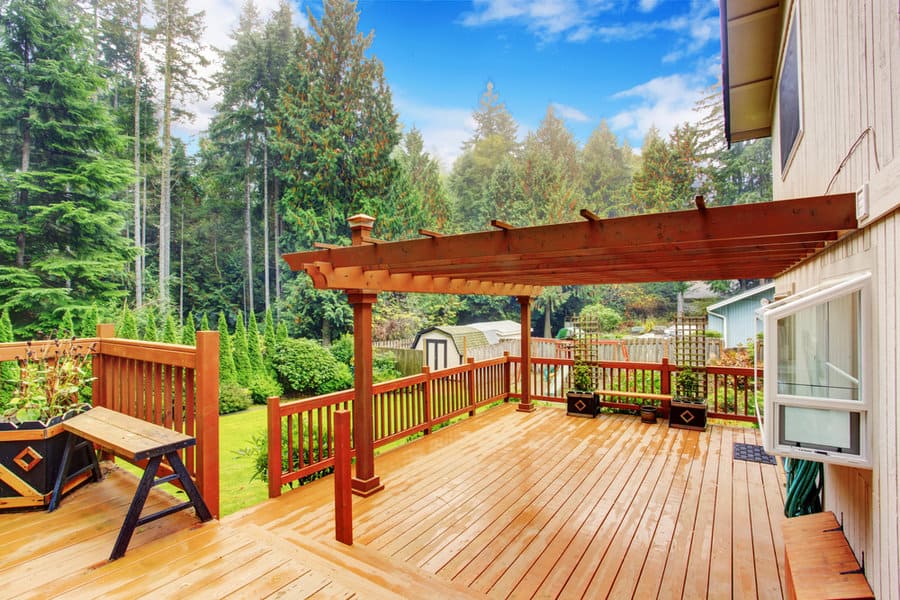
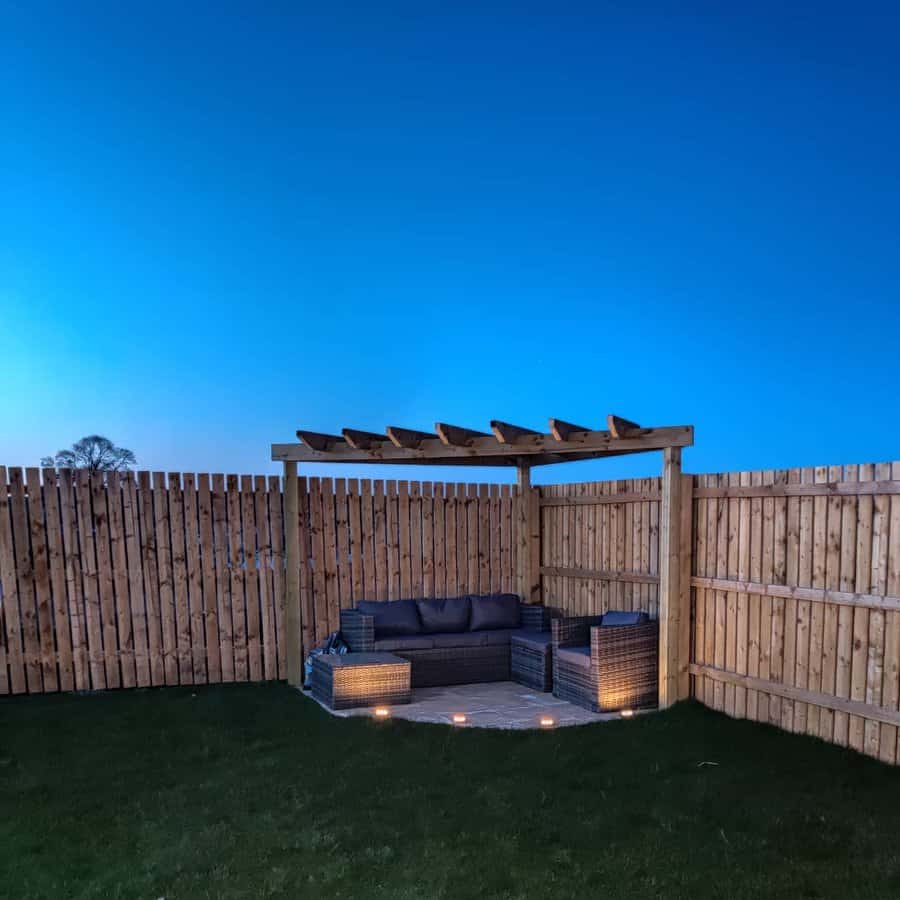
If you already have a deck attached to the backside of your house, then adding a pergola to it can make the outdoor space more enjoyable. What’s nice about pergolas is that you can buy them in different sizes. So you can add a pergola roof to small spaces.
Source: @arttmfg via InstagramSource: @mustangjonny84 via Instagram
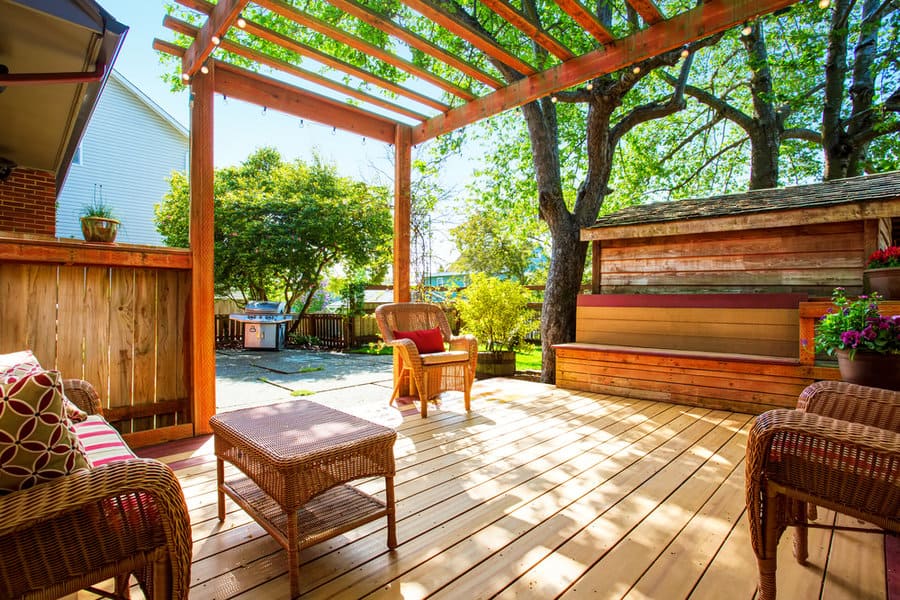
When adding a pergola to your deck, consider building it onto the existing deck. This integrates the design and helps everything to look cohesive. You can upgrade the design by adding lighting. You can have lighting around the lower deck area and then add more string lights overhead.
4. Match the Style of Your Pergola to the Style of Your Home
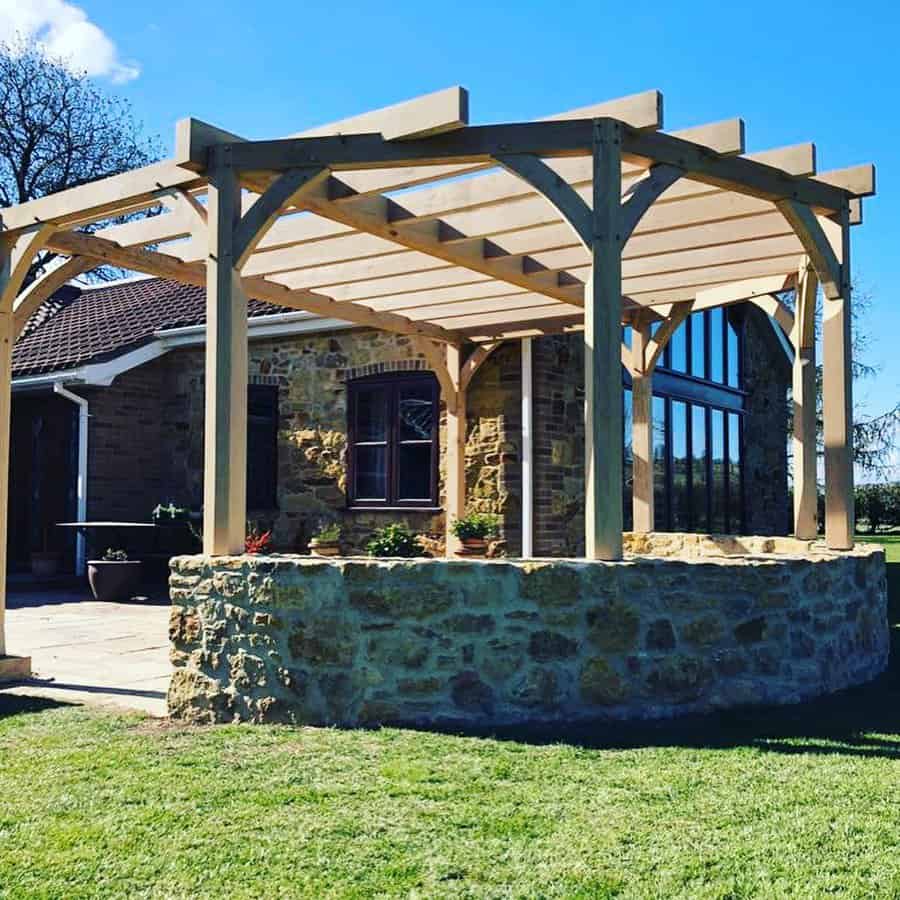
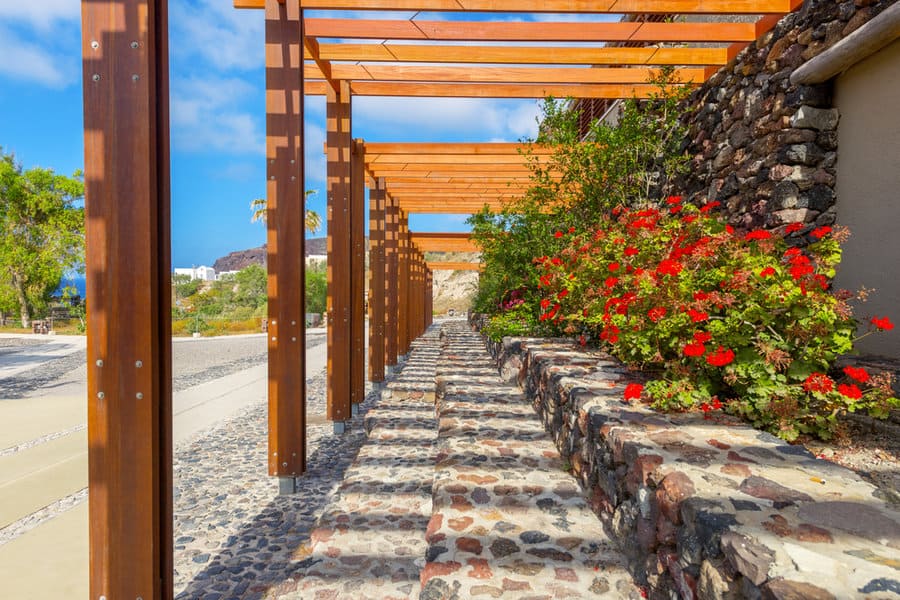
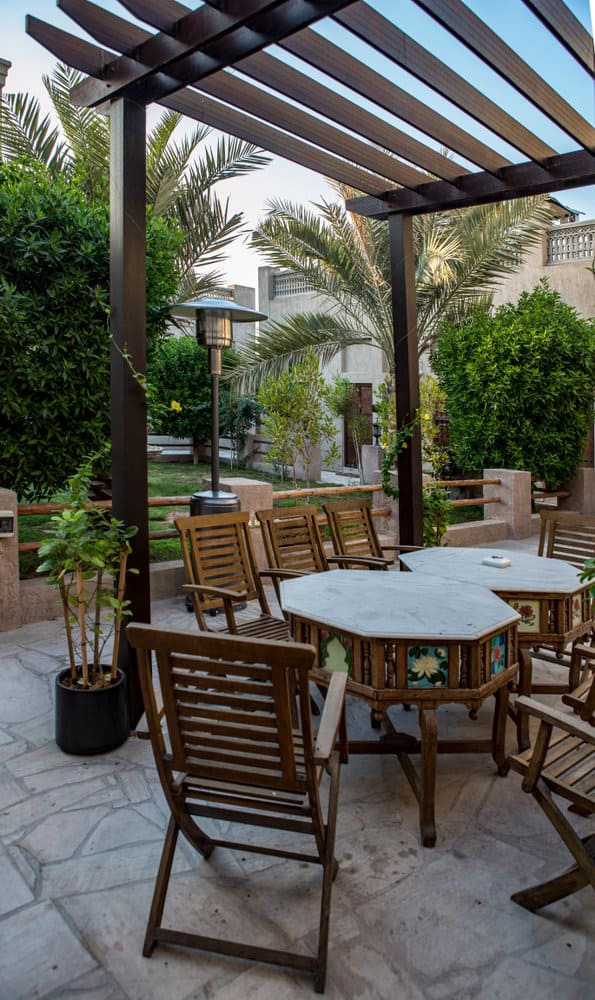
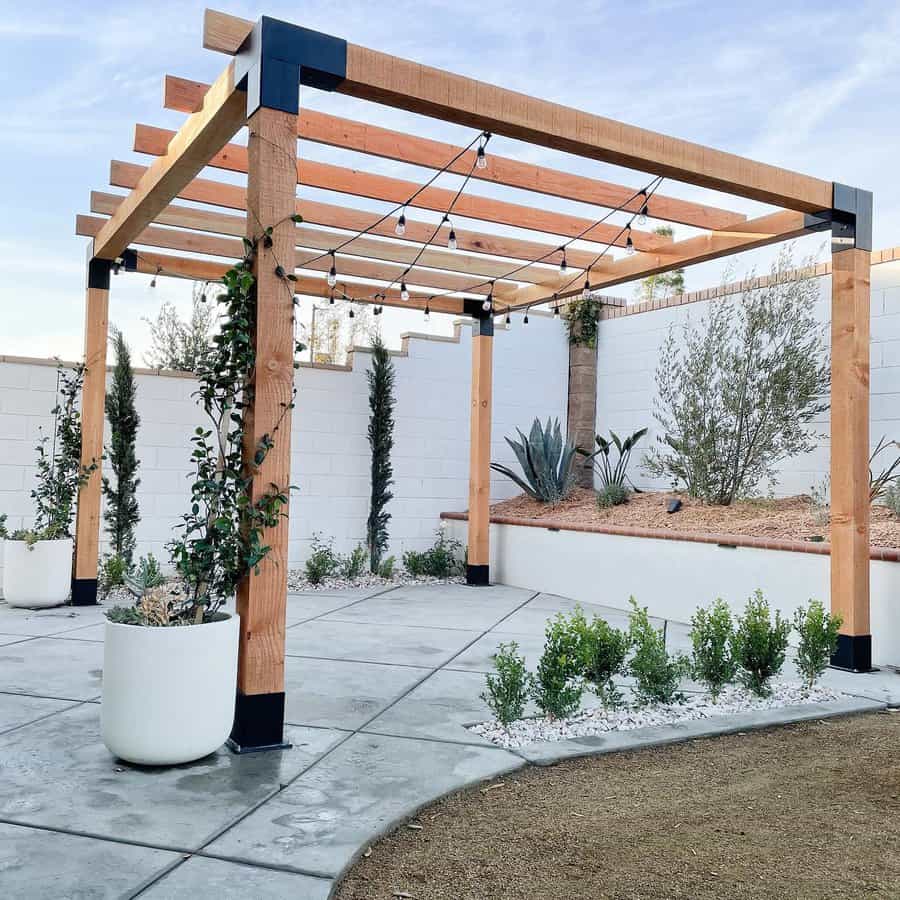
While all pergolas have a basic design of supporting legs and parallel beams overhead, they are a wide variety of pergola styles. When choosing your backyard pergola, consider its style, construction, materials, size, and color. This will ensure you pick the right pergola that complements your home.
Source: @premierpatioconcepts via InstagramSource: @topbarntimberframes via InstagramSource: @what_shall_we_do_to_number_two via Instagram
Your pergola should look like an extension of your home as if they were built at the same time. Otherwise, it will look like an awkward add-on. You also need to consider the climate you live in and the direction your backyard faces. This will help you choose the right setup for your backyard to provide the right amount of protection to make your backyard comfortable.
5. Ensure Stability and Safety with DIY Pergola Building
Do not try to DIY your pergola unless you have experience with woodworking and building. Depending on where you live, you may need a permit to build your backyard structure. If you build the right support for your pergola, it could sink into the ground and become crooked or completely fall.
Source: @catrin.stuart via InstagramSource: @rachelsbudgethome via InstagramSource: @redress.the.address via Instagram
You also need the right support for the top to ensure it stays standing during inclement weather. If you don’t have a lot of home improvement experience but still want to build your own pergola, you could buy a kit. They come with everything you need, from precut wood to hardware. Follow the directions and put your pergola together.
6. Create a Vertical Garden Oasis with Your Pergola
Turn your pergola into a living vertical garden. You can encourage a climbing plant to grow up the supports and across the top. Or you could hang potted plants from the pergola to add an accent of color. Put climbing vines in your hanging pots, and you can keep the garden off the ground and only above you.
Source: @greenprojects_algarve via InstagramSource: @justjehn via InstagramSource: @megacoopercontracting via InstagramSource: @newhousenewbeginnings via InstagramSource: @silverstonelandscaping via Instagram
You don’t need a trellis when you have a pergola because the frame acts as the support. This is why you commonly see grape and lemon vines growing over a pergola. Flowering vines are also popular because it can create a natural cover full of colorful blooms.
7. Transform Your Space with Modern Pergola Aesthetics
Unlike other pergola design ideas, modern pergola plans feature a simple design with straight lines and crisp 90-degree corners. While they could be made from wood, you will also find fiberglass pergolas.
Source: @accuratebuilding via InstagramSource: @couty_design_build via InstagramSource: @knaakdesigngroup via InstagramSource: @our_forever_home_at_no.2 via Instagram
They will come in more colors and have a simple and clean design that looks beautiful on modern homes. They can update an older home and look good with modern patio furniture. Skip the curtains with this pergola style as they look better with a stamped metal screen.
8. Embrace Elegance with Mediterranean Screen Pergolas
A Mediterranean screen-style pergola is perfect for creating an oasis in your backyard. Unlike other pergola design ideas, these pergolas have a screen built into them. This could be a screen over the top to provide gentle light filtering.
Source: @_kim_schneider_ via InstagramSource: @_kim_schneider_ via InstagramSource: @justagirlfromtheheath via InstagramSource: @shiplapshanty via InstagramSource: @theamishcraftbarn via Instagram
There could also be a screen on one or more of the sides. Look through pergola designs to find one that complements your home’s style. It could have large statement columns or screens made of metal. A lattice style of screen is perfect for growing a vine plant to create a living wall.
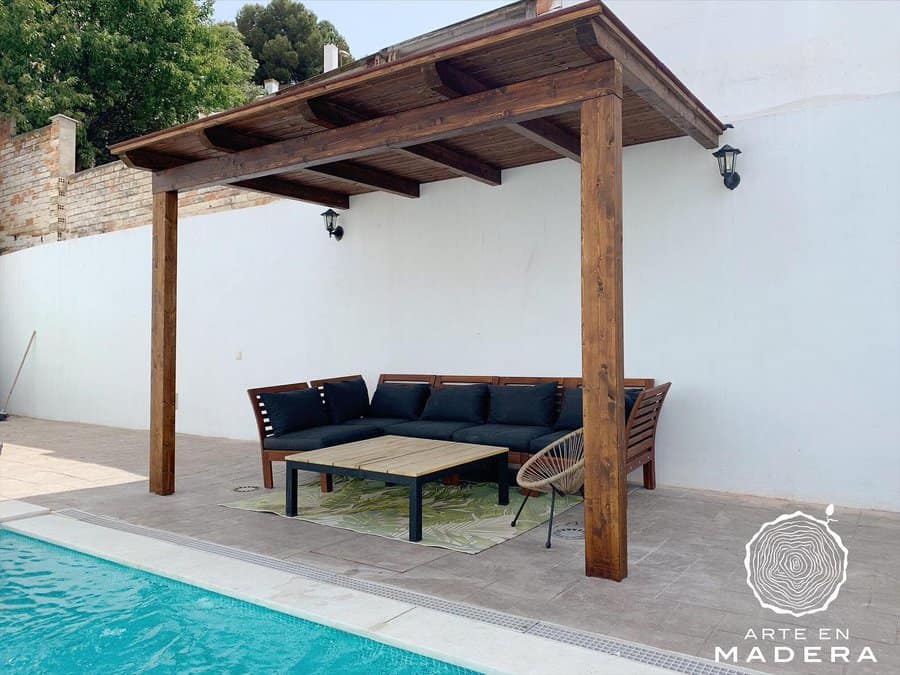
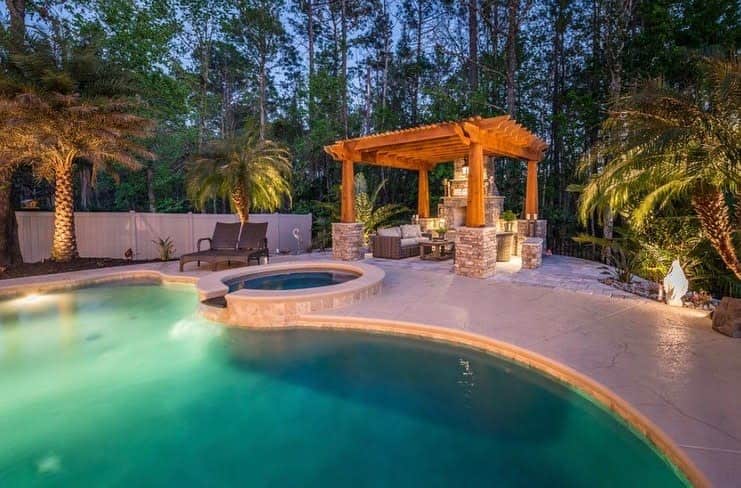
9. Transform Poolside Space with a Pergola
If you already have a pool in your backyard, adding a pergola is the perfect addition. It will provide you with a much-needed escape from the sun. You can outfit your pergola with home decor-inspired elements. This creates an indoor feel to your outdoor space. Add an outdoor sofa, area rug, and lighting.
Source: @andalucia.arteenmadera via InstagramSource: @stonecorejax via InstagramSource: @stonecorejax via Instagram
A few throw pillows will create plenty of cushion. A chaise lounge or lounger chair is perfect for relaxing on a hot summer day. Curtains are also nice because they can block the sun as it moves across the sky from morning to evening.
10. Add Curtains and Screens to Your Pergola
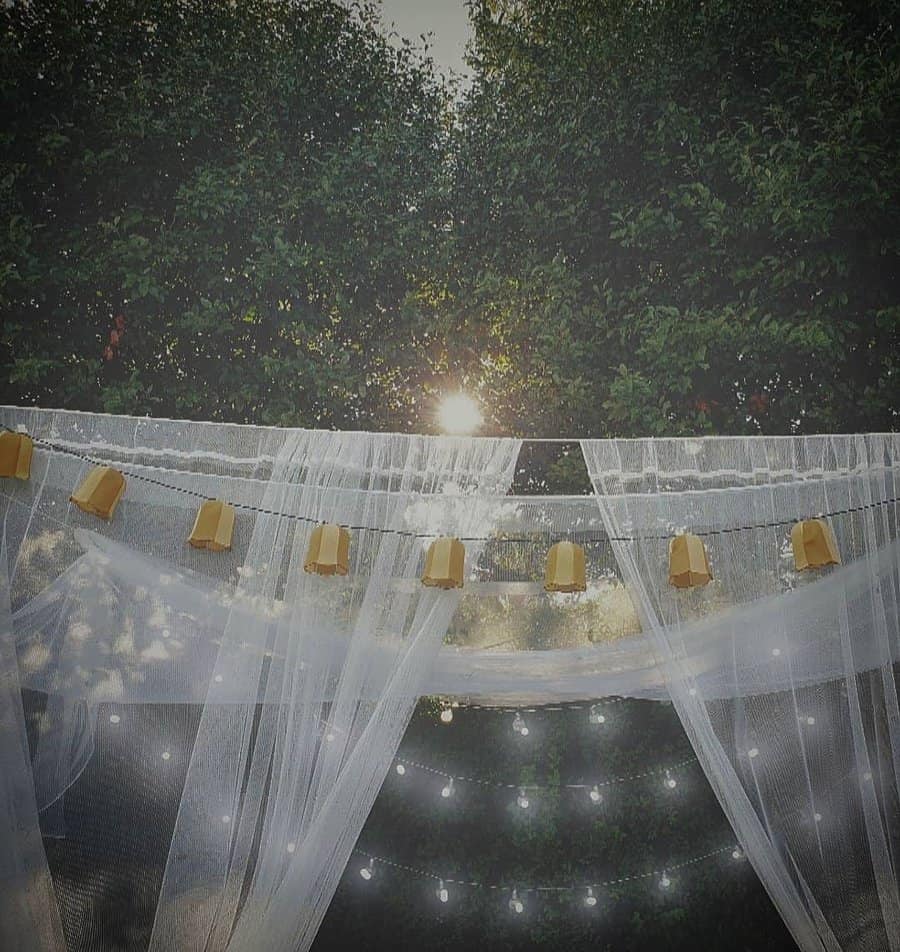
Once you build your backyard pergola, you’ll want to spend more time outside. This can lead to a new problem, a lack of privacy. You don’t want your neighbors inviting themselves over every time you try to enjoy some outdoor dining. Instead of just having a pergola frame, you can mount curtains.
Source: @christinanygard via InstagramSource: @tellesabelle via Instagram
This transforms your structure into a white pergola with billowing white curtains flowing all around. Having multiple curtains allows for plenty of airflow while also creating privacy. If you’re looking for more privacy, you could turn your pergola into a more solid structure with screens or even glass doors.
11. Generate an Outdoor Ingenuity With a Rustic Wooden Pergola
A sleek and modern pergola won’t make sense if you have an old house. Your pergola should blend in with the rest of your home’s style and architecture. Take a lesson from southern living trends and build a wood pergola.
Source: @touchofeleganceinteriors via Instagram
This traditional building material looks good with a wide variety of home designs and can be cut or carved to mimic the details of your home. You could have a rustic pergola that looks hand-built or an ornate pergola with intricate carving details throughout.
12. Transform Small Space with Pergola Kits and Canopies
Pergolas are typically large, permanent structures that cover your entire patio. If you don’t have the budget for this type of investment, there are smaller options. The first is to buy a vinyl pergola kit. They come in a range of sizes to fit your backyard space and budget.
Source: @baylinecarpentry via InstagramSource: @creativityjinks via Instagram
The other option is to put up a canopy; these temporary structures typically have a metal frame and a canvas or other fabric covering. They come in smaller sizes, making them perfect for micro patios. These small patio pergolas limit the number of people you can fit under them, limiting the size of the entertaining you do.
13. Add Swings and Hammocks to Your Pergola
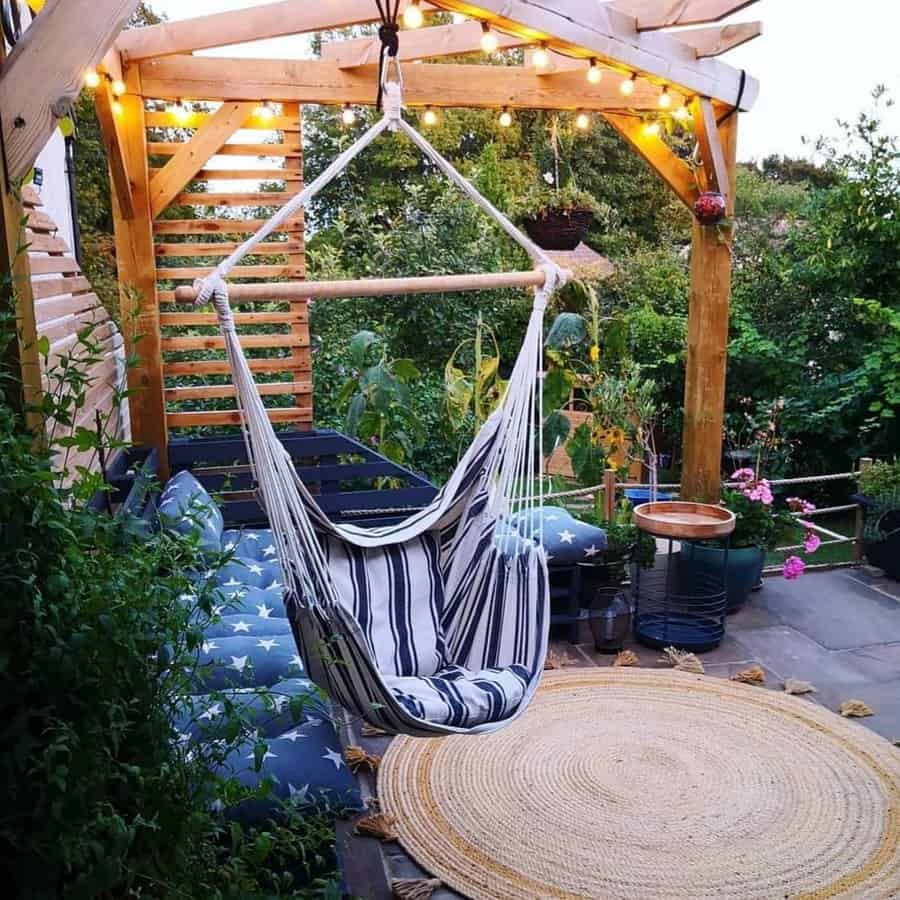
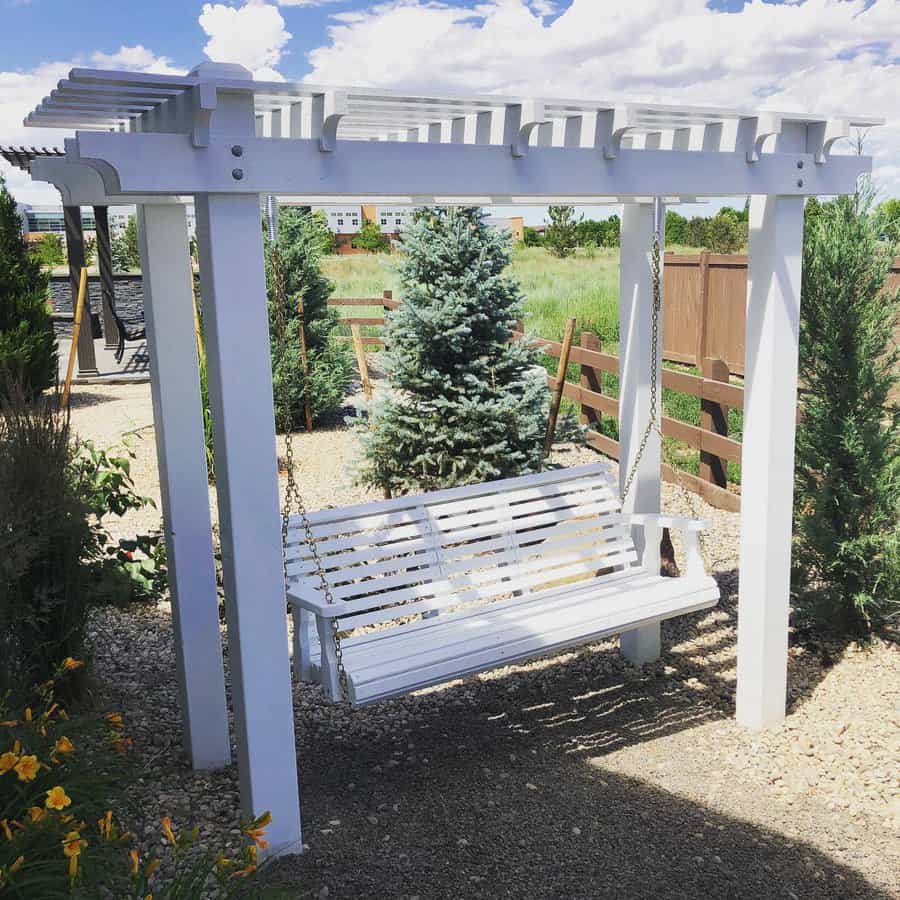
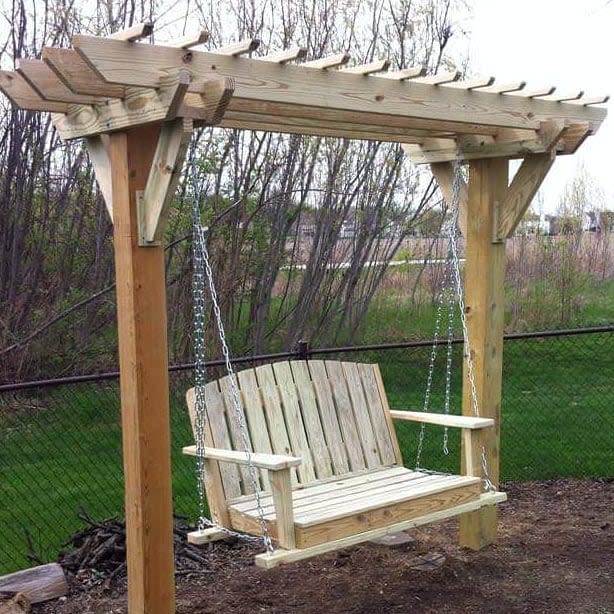
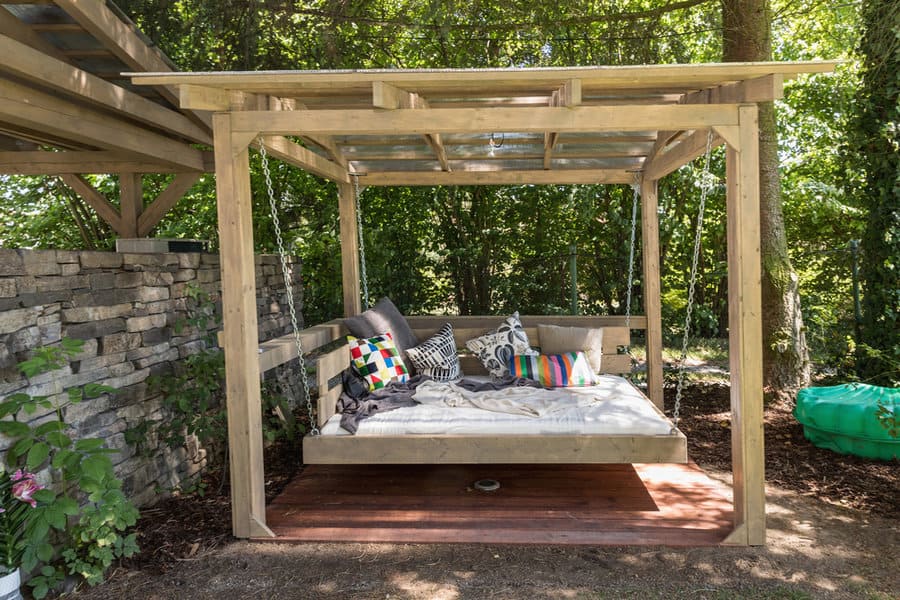
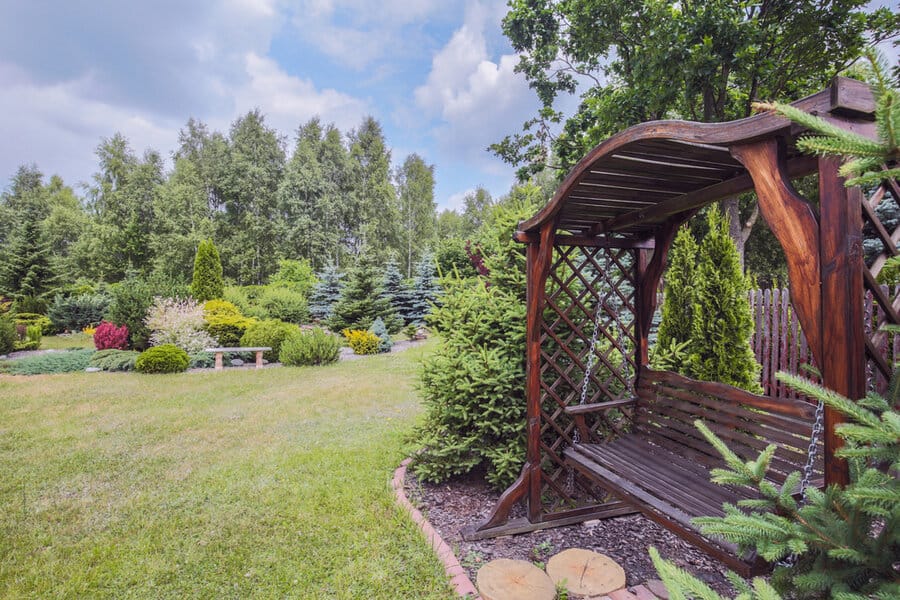
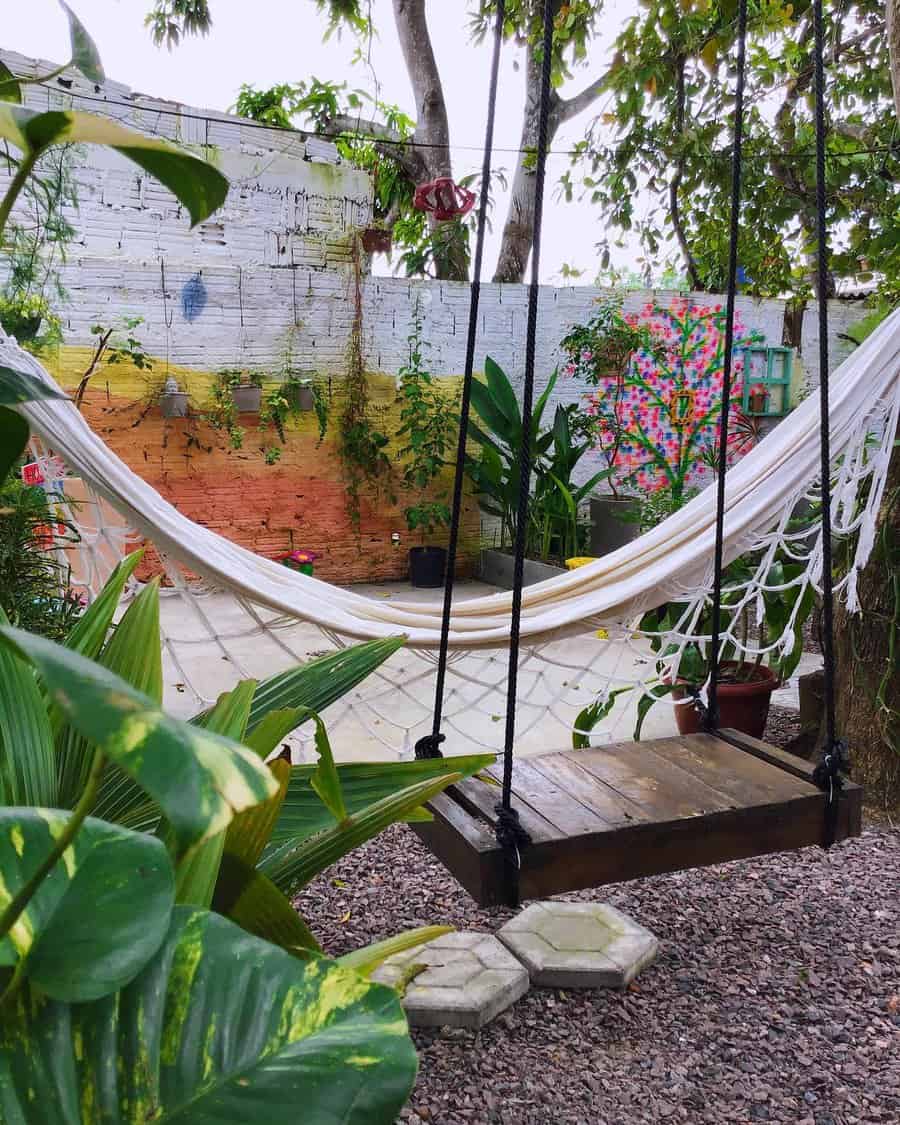
Give yourself a place to sit back and gently sway as you enjoy a cool afternoon refreshment. Instead of having a porch swing, you can hang one from your pergola. If your pergola is large enough, you could hang two that face each other.
Source: @3leavesllc via InstagramSource: @moorewoodcrafting via Instagram
Each swing should be large enough to seat more than one person for them to be functional. If wooden porch swings aren’t your style, take a tropical or bohemian approach with a macrame hanging chair or hammocks. They’ll cradle your body and are perfect for a more organic feel to your pergola seating.
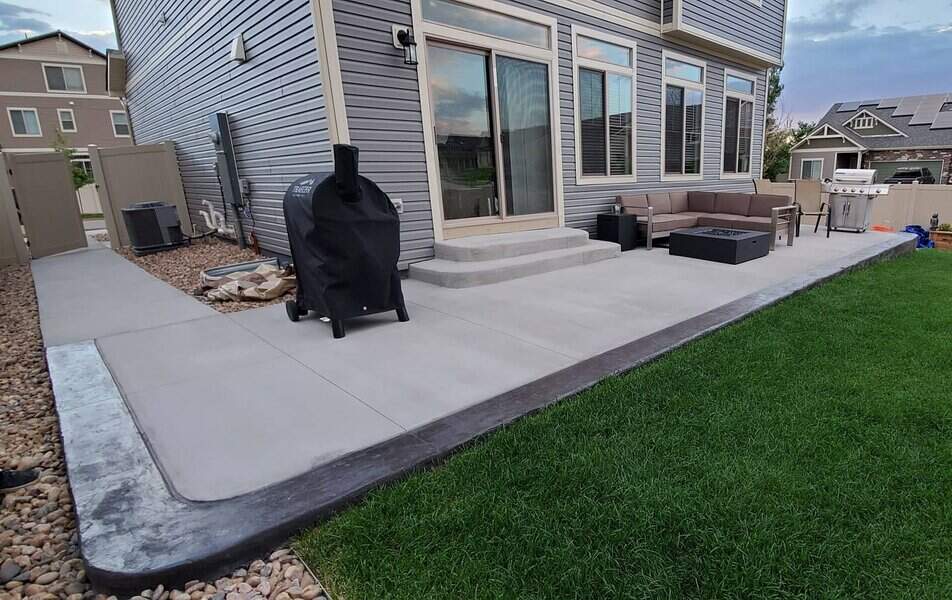
Having a concrete patio on the back of your house gives you the perfect place for developing your outdoor living space. The concrete is sturdy, durable, and long-lasting. The problem with concrete is that it’s not very attractive. Leaving your concrete bare can bring down your entire outdoor design. Thankfully, there are several ways you can dress up your concrete patio to elevate the exterior of your home.
Check out these concrete patio ideas and upgrade your concrete into a place you actually want to be.
[view_toc]
1. Transform Your Concrete Patio with Wood Planks
If you absolutely hate your concrete and want something else, then you can cover it with wood planks. Your concrete patio is a perfect solid base for building a wooden deck over it. You could start by building a framework that rests on the concrete. Then mount your planks on the framework.
Source: @eurotex.usa via Instagram
Another option is to use wood tiles. They give you the look of a wood deck but are cheaper and much easier to install. There are teak tiles that are perfect because the teak is durable enough to be left outside year-round. The wood is on a plastic frame base that locks into the tiles around it. The result is a floating wood covering that sits directly on the concrete.
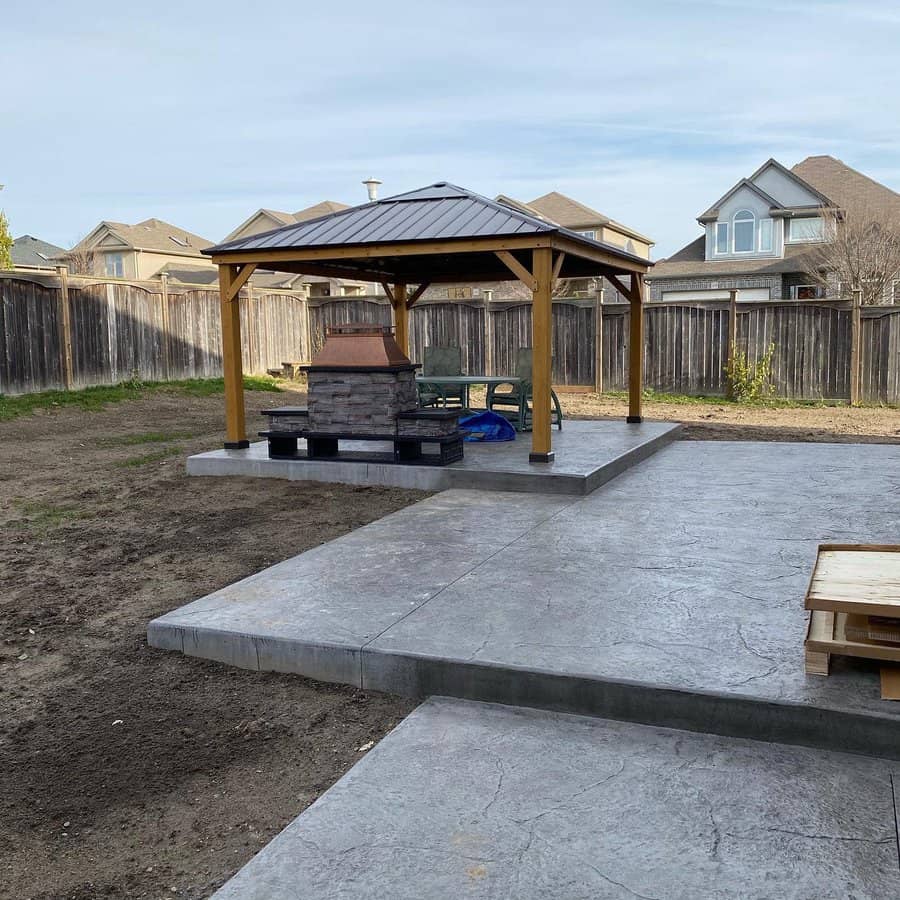
Placing a fire pit on your concrete patio is a great addition. You’ll see many ideas that use pea gravel for the fire pit base and surrounding area. Concrete is better because it’s solid and smooth. This gives you a solid base for your fire pit, which is safer than one that can shift and move.
Source: @taylorsconcrete via Instagram
Fire pits are basic, though. Build an outdoor fireplace instead. You can build it on one side of your concrete patio and have a modified chimney that helps direct the smoke upward. You can then create an outdoor living room set up in front of it.
3. Enhance Your Patio with Thoughtful Landscaping
It doesn’t matter if you are planning a DIY concrete patio or already have one in place. Once the patio is in place, you need to add landscaping around it. Otherwise, you have an awkward concrete slab just sitting on your property.
Source: @actionlandscape_ via InstagramSource: @heidi_schwegler via InstagramSource: @naylorscapes via InstagramSource: @nwbuilders_tucson_az via Instagram
You’ll feel exposed when sitting on your patio furniture or when swimming in your backyard pool. Try planting a variety of vegetation that grows to different heights for a layered effect. Dense leafy plants or those that produce large leaves are good for creating privacy.
4. Natural Stone Transformation for Your Patio
Fresh and clean concrete can look modern, but it needs to look new and be meticulously maintained. Chances are, if your concrete patio is older, it wouldn’t be up to these standards. Thankfully, you have another option for modernizing your patio. Use your concrete patio as a base for laying natural stone.
Source: @rbzcontracting via InstagramSource: @triple_crete_construction via Instagram
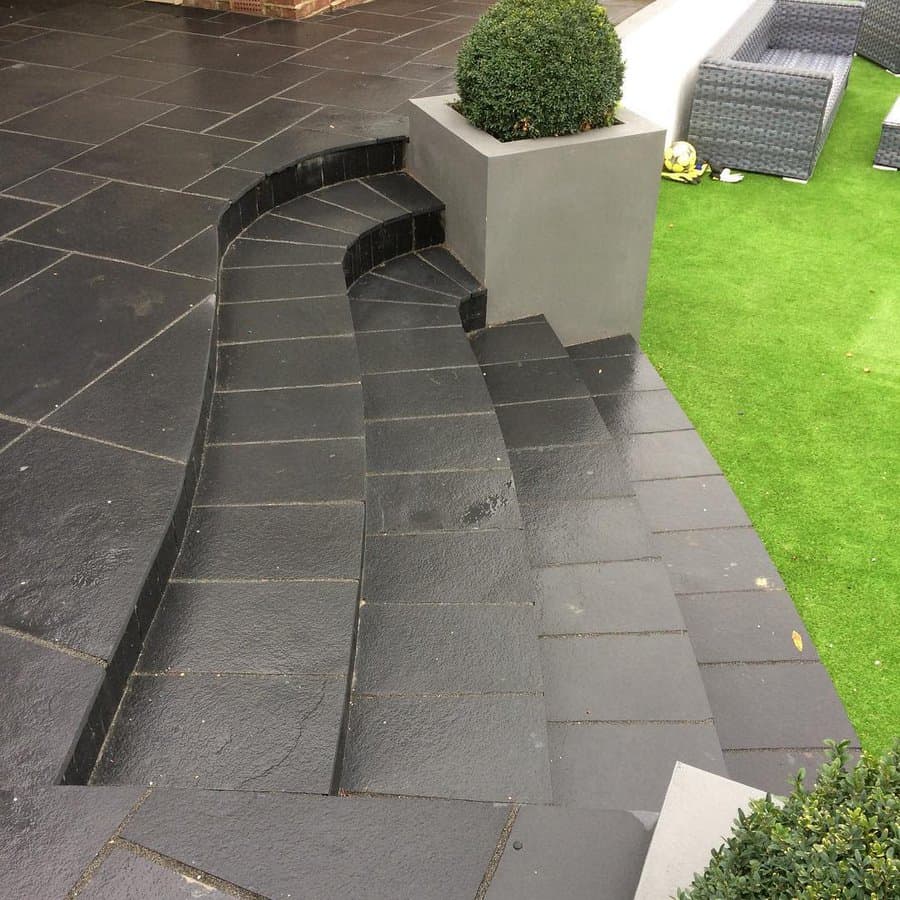
Choose a durable and hard stone like slate or flagstone. These stones have dark coloring to transform the look of your patio. To secure the stones on the concrete, you’ll need to mortar them in place.
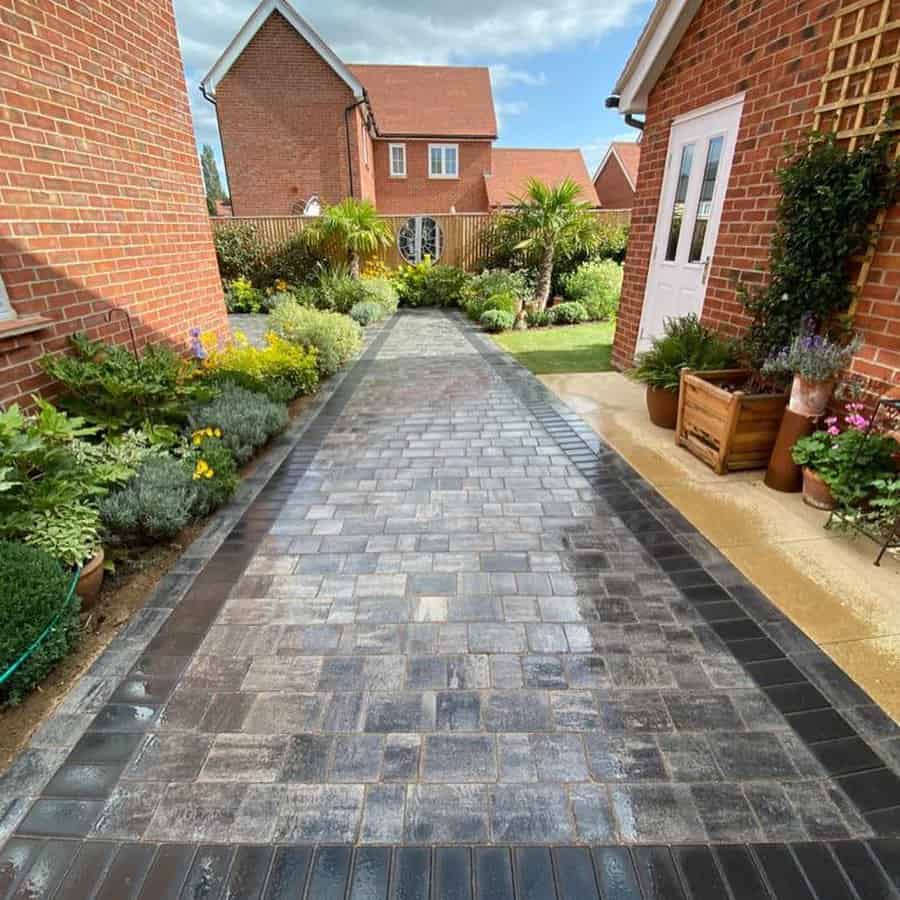
5. Install Pavers Over a Concrete Patio
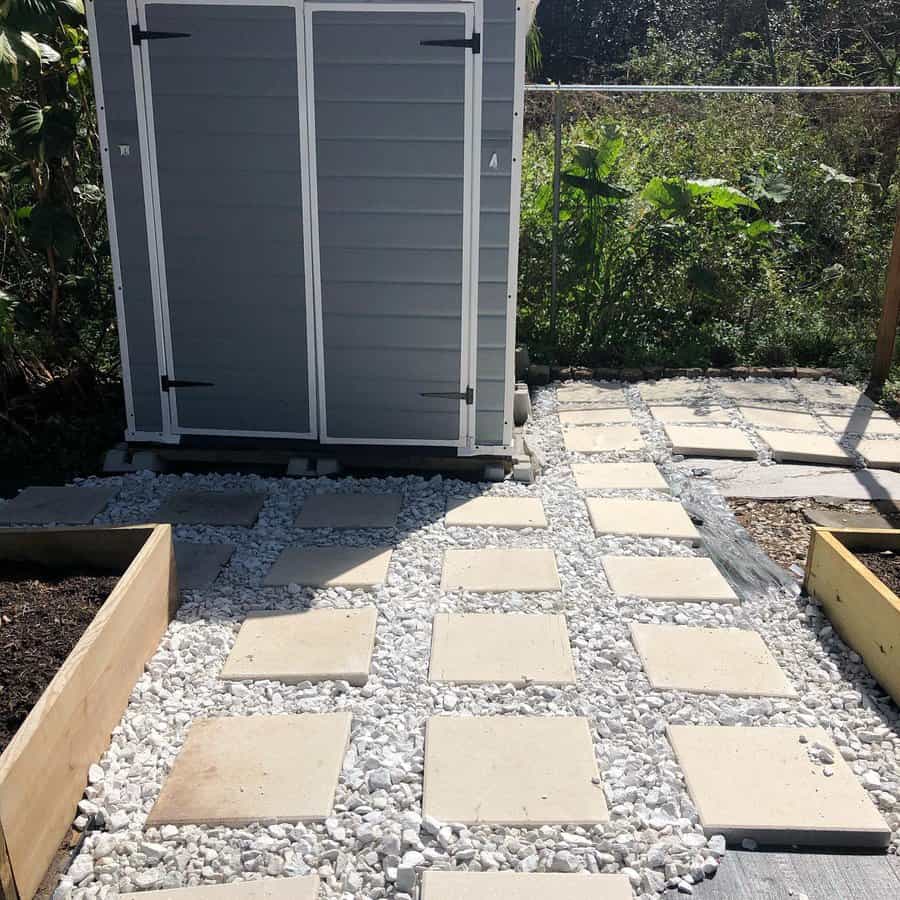
For a contemporary update to your concrete patio, cover it with pavers. This paver project is significantly easier than starting another project from scratch. The concrete surface gives you a smooth and stable surface for your paver patio concrete overlay. Concrete pavers will give you the same level of durability and a similar look to your slab.
Source: @ekwlandscapedesigner via InstagramSource: @greeninnovationslandscapes via InstagramSource: @millstreamlandscapes via Instagram
Bricks can give your patio a traditional look with a rich red color. Clay pavers are the modern version of traditional bricks. They create a more modern concrete patio design in your outdoor space. You can keep the design simple with square or rectangle pavers. You can also get more creative with wedge or hexagon shapes.
6. Add a Stylish Pergola to Your Concrete Patio
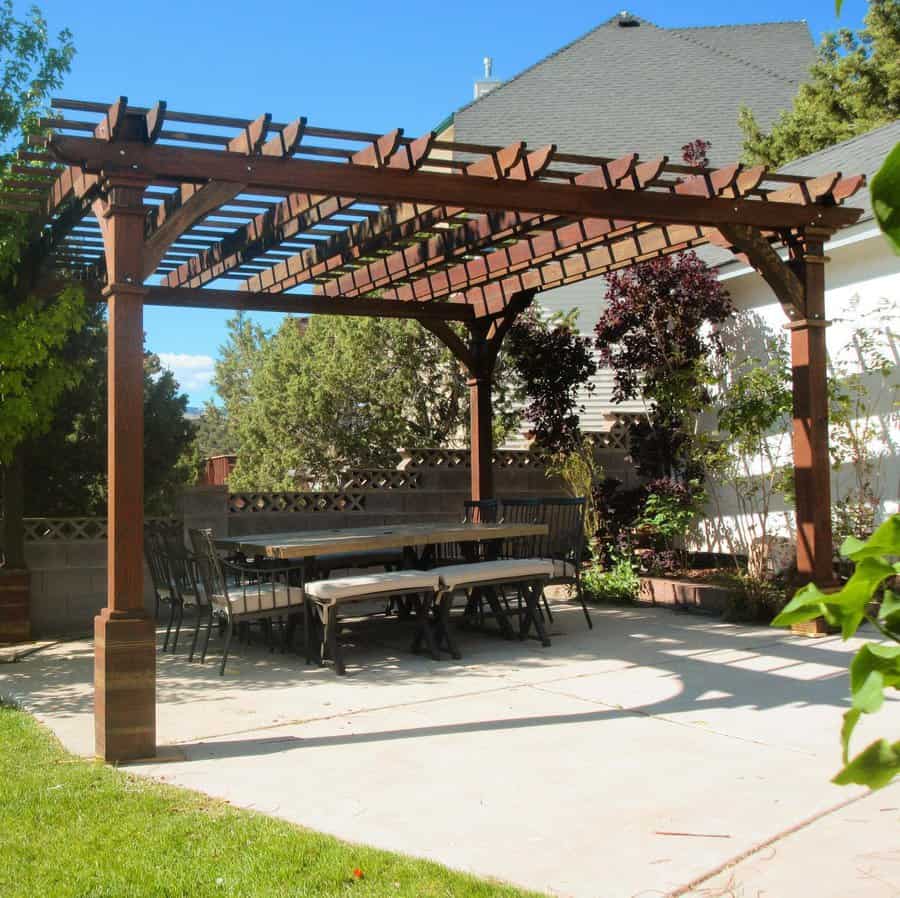
You already have the concrete flooring, so why not build a pergola over it. Now you have a shaded and protected outdoor space to enjoy your backyard. You could turn it into an outdoor living room. Or you could have a large dining table for an outdoor spot to enjoy meals.
Source: @4_seasons_llc via InstagramSource: @anothertarajones via InstagramSource: @bestredwood via InstagramSource: @builtrightpatios via InstagramSource: @fumauk via InstagramSource: @levelup_contractors via InstagramSource: @the_sumpter_house via InstagramSource: @bestredwood via Instagram
You could even build an outdoor kitchen if you have a larger patio. Pergolas come in a wide range of sizes, so you can build a structure that perfectly fits your large or small backyard.
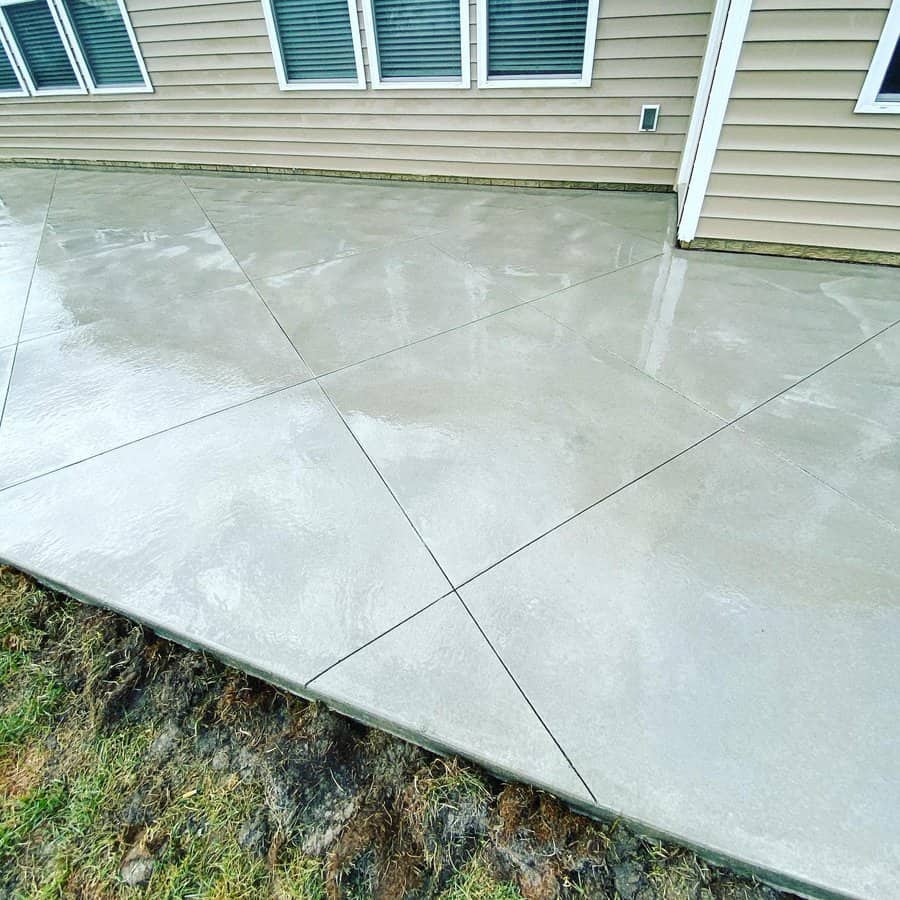
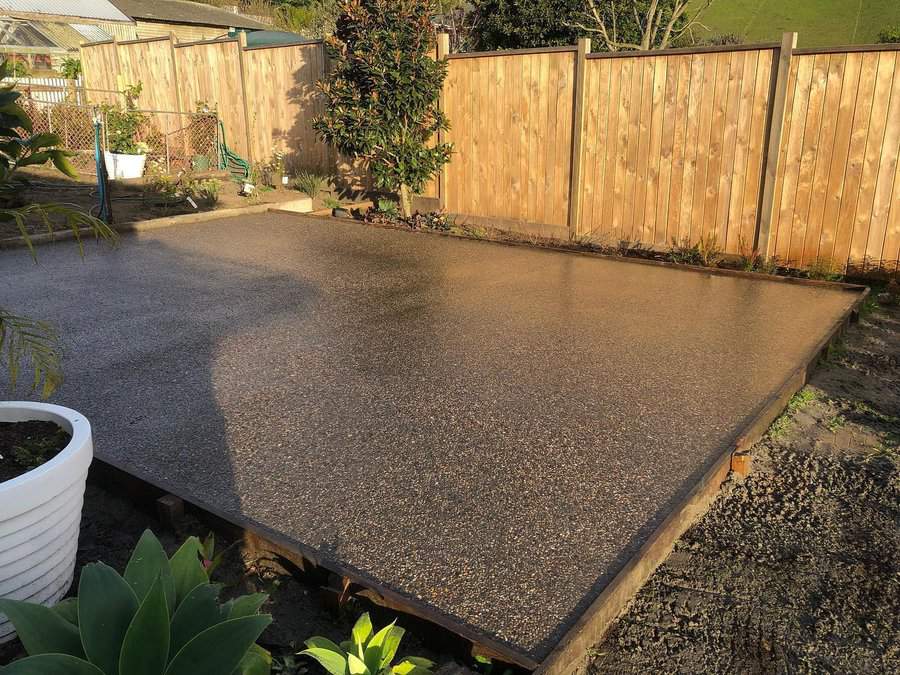
If you are ready to build your outdoor living space from the ground up, your first step is to build the concrete patio. For a solid concrete floor, a poured patio is the best option. It’s more expensive than pre-cast pieces, but it lets you customize the design, and it’s built directly where you want it.
Source: @_royalconcrete via InstagramSource: @denverconcreteinc via InstagramSource: @firebirdconstruction via InstagramSource: @macleodconcrete_bayofplenty via Instagram
If you already have a patio, you could perform a patio makeover by adding a layer to the top of your patio. This is sometimes done when adding a pool to your backyard. The additional poured concrete connects your existing patio to your future pool surround.
8. Concrete Slabs for Home and Patio
A slab is a large piece of concrete that supports your entire house. Before building up, the contractor marks out and pours the concrete. Once cured, it acts as the base for your home. For most modern homes, the builder will make the concrete slab larger than the home’s size.
Source: @reyfinishconcretecorp via InstagramSource: @zsoltfl via Instagram
The extra piece of concrete is what eventually turns into the backyard patio extending out from the side of the home. If you plan to build a home, include your patio ideas early on so that you can account for the additional planning, concrete, and costs.
9. The Beauty of Stained Concrete Patios
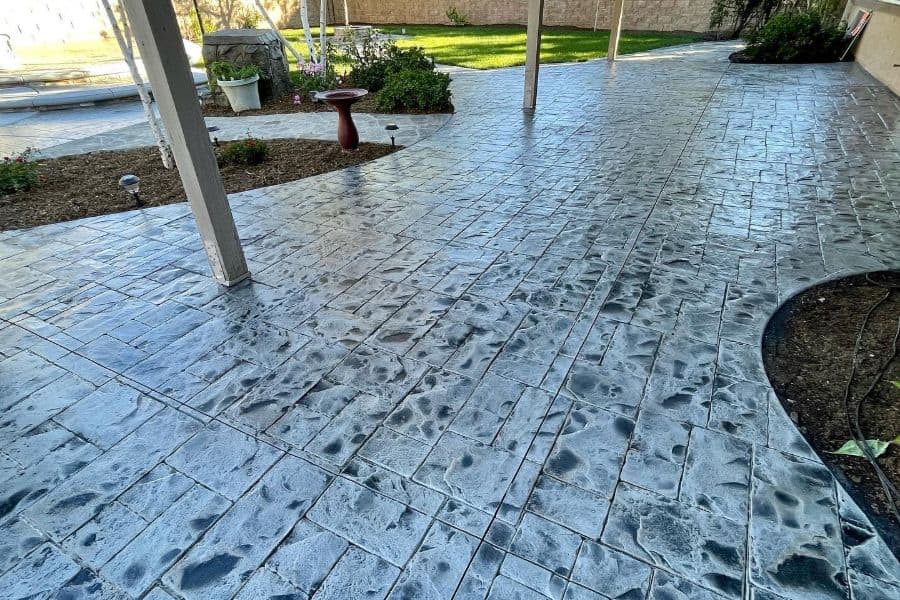
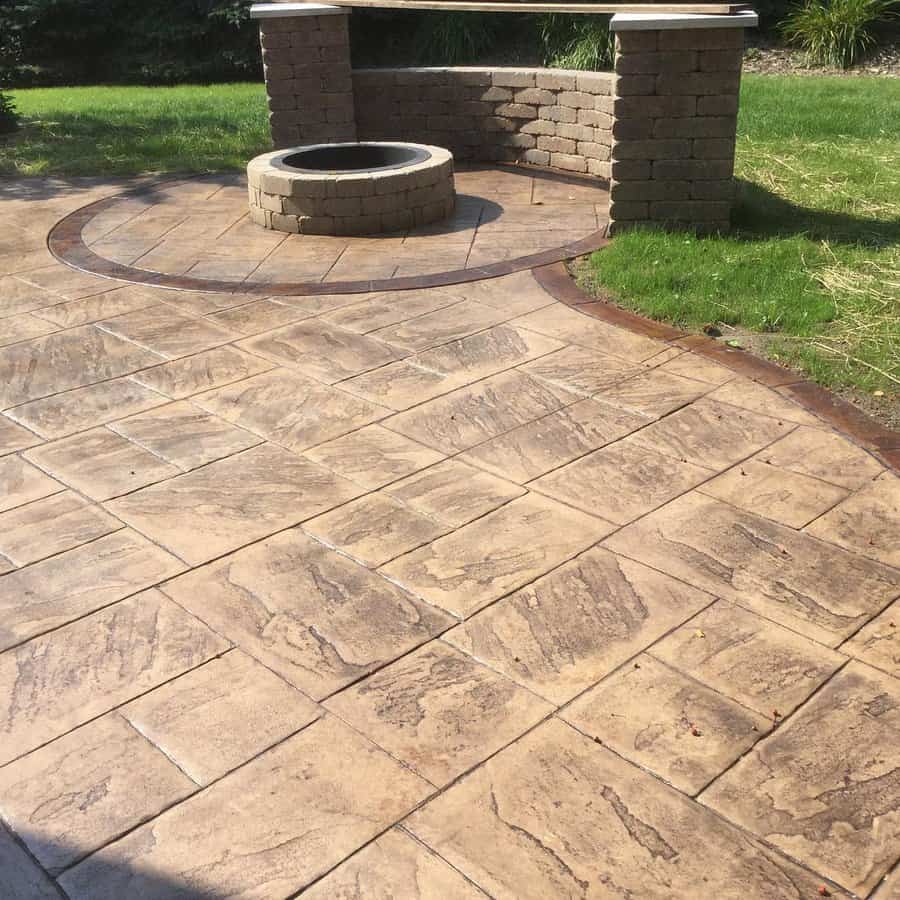
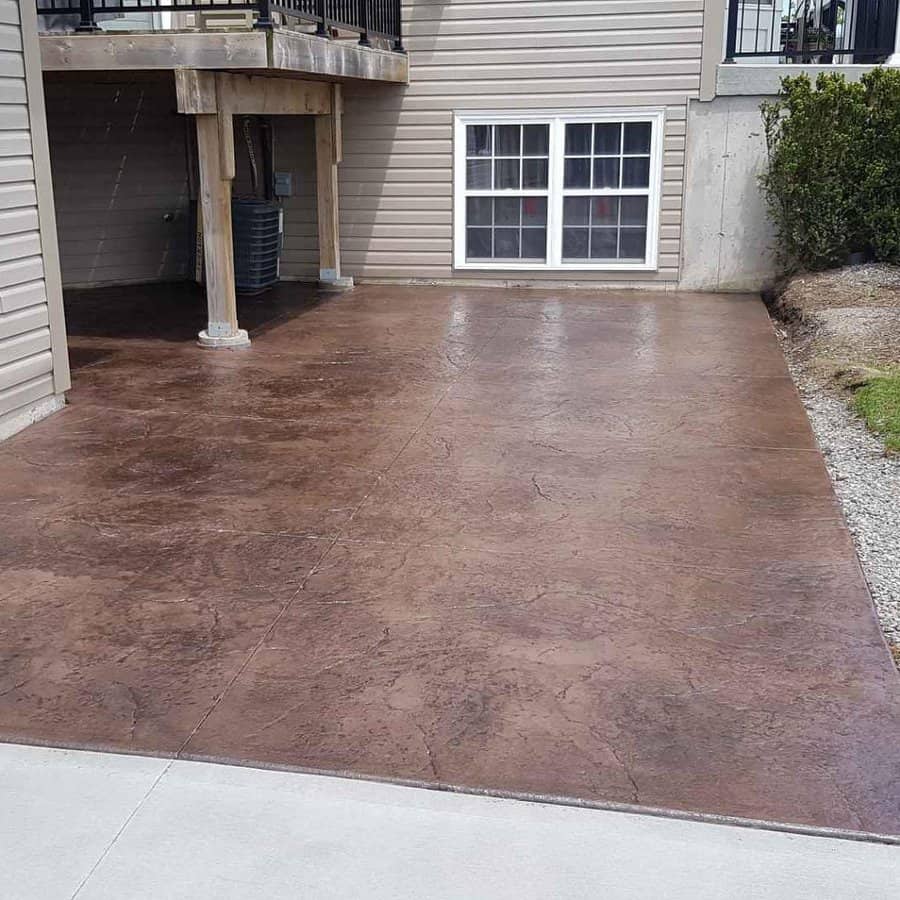
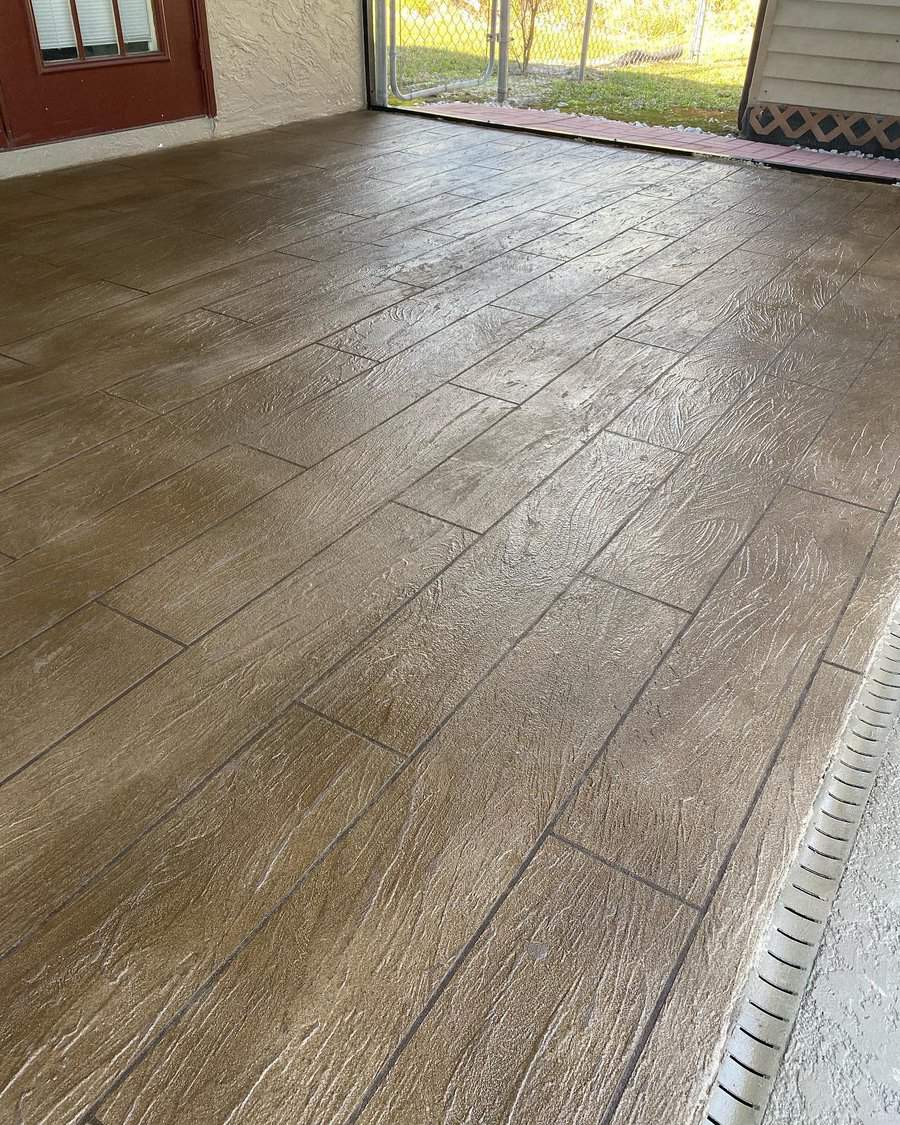
A stained concrete patio will not look like concrete. It’s colored concrete, but it can mimic the look of stone. The stain elevates the look of the concrete without having to cover it up or replace it. When done yourself, you can have an affordable and beautiful concrete patio.
Source: @capitalconcretefinishing via InstagramSource: @covafloorcoatings via InstagramSource: @kevinbrown4112 via Instagram
Seal the concrete once you have the stain the way you like it. This protects the concrete and the staining design. Concrete stain comes in a wide range of colors. Try using more than one to create a layered effect that becomes multidimensional.
10. Upgrade Your Concrete Patio: Adding Functional Stairs
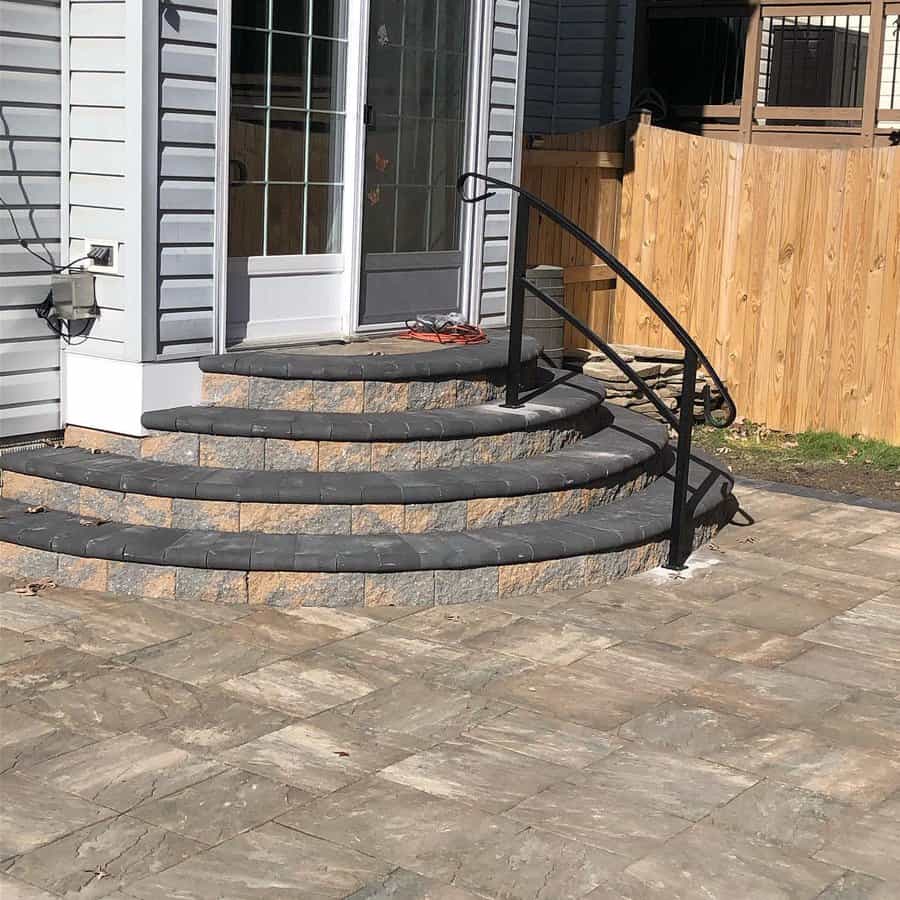
Adding stairs to an existing concrete patio can make it safer to navigate your property. You may need a step or two leading into the house through your home’s exterior door. Or perhaps your property slopes, and you need stairs that take you from the patio to the ground below.
Source: @artechlandscaping via InstagramSource: @jlbuild via InstagramSource: @tonyslawnandgarden via Instagram
You can use pre-cast steps to build your stairs quickly. Place them where you want them and secure them in place. They should fit smoothly against your poured concrete patio to prevent a safety
11. Transforming Plain Concrete: The Artistry of Concrete Stamps
Because poured concrete can look plain with a smooth surface, you can use concrete stamps. They are typically made from a plastic or PVC material. Once the concrete is poured and begins to set up, you lay the stamp on the surface of the concrete and press down. The stamp then makes an indent in the surface to create a design.
Source: @qbconcrete via Instagram
You can create a stamped concrete border when you have freshly poured concrete. Or you can use a larger stamp to create a stamped concrete pattern over the entire surface of the concrete. Some stamps can mimic the look of stones. Other stamps create a decorative design for an artistic stamped concrete patio. You’ll need to work quickly, and it helps to have multiple stamps to cover a larger area at once.
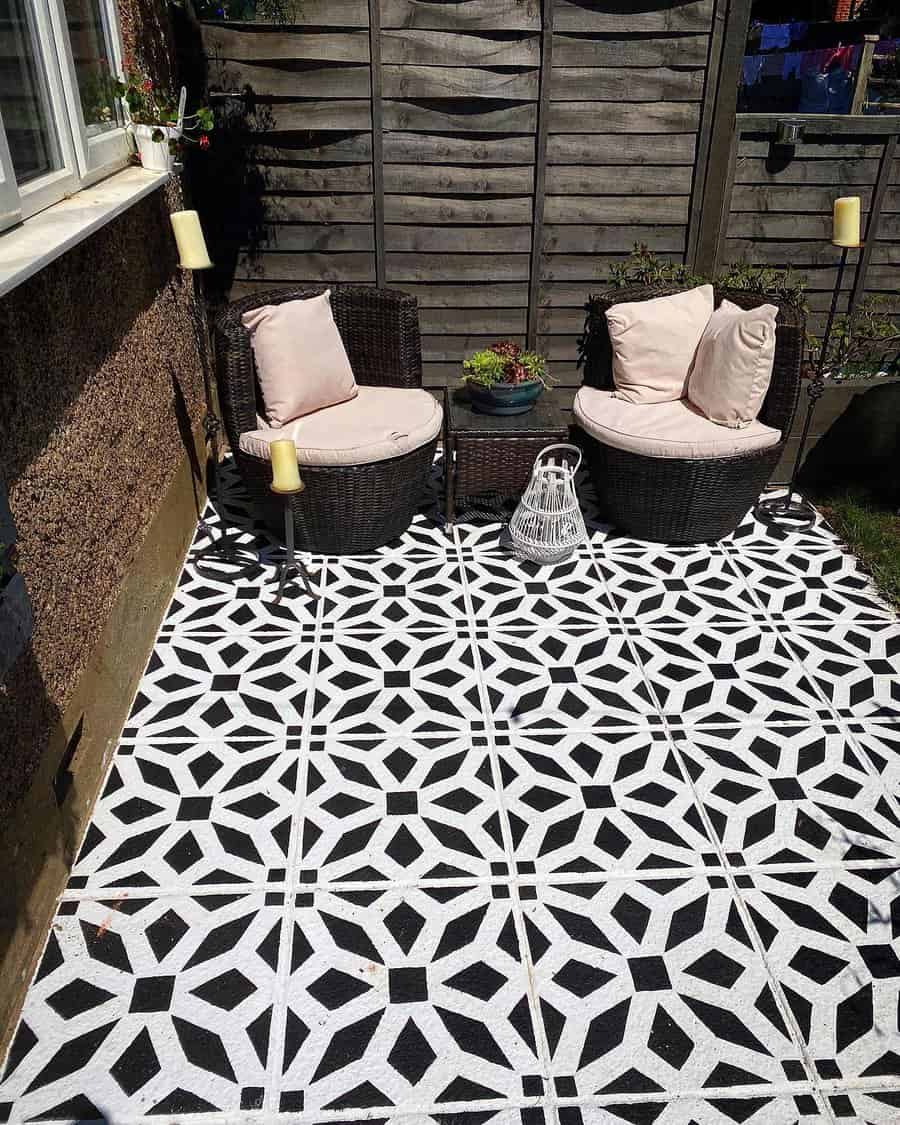
12. Stencil and Paint: An Easy Concrete Patio Makeover
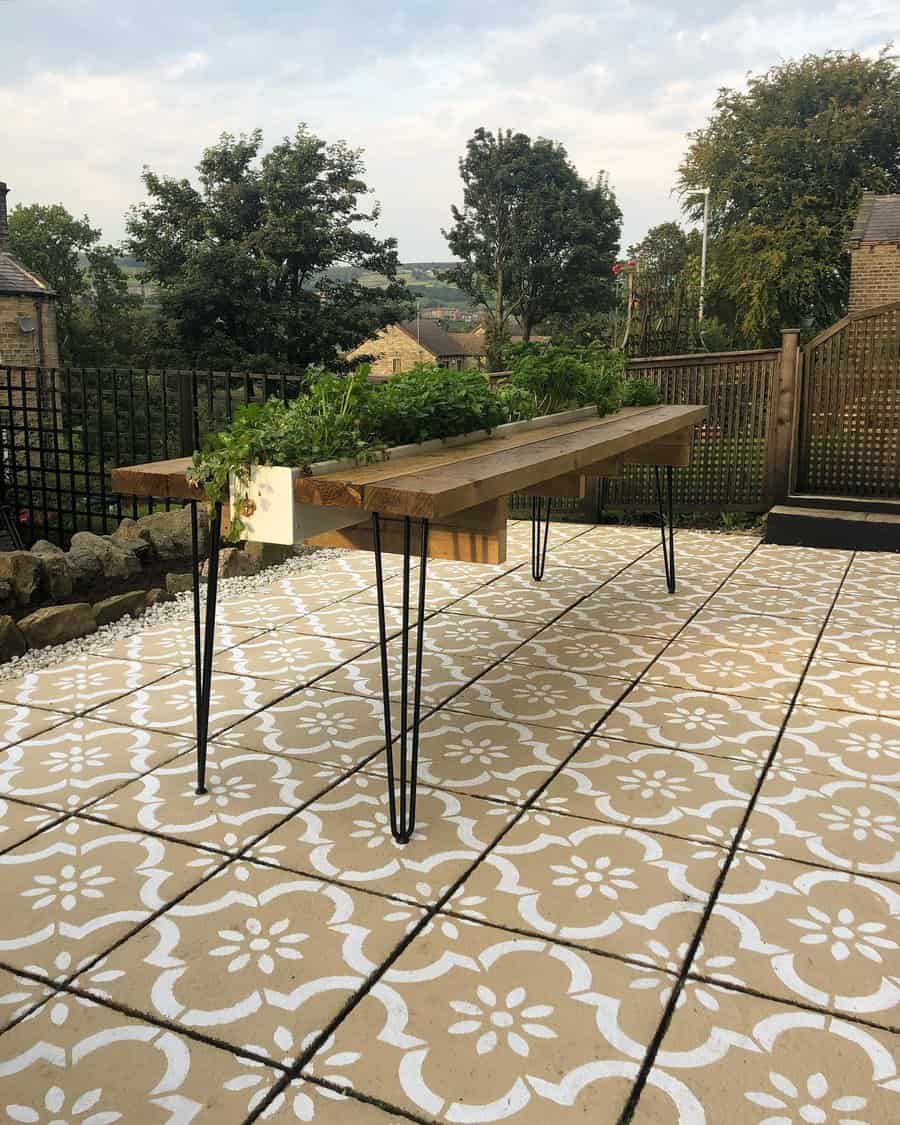
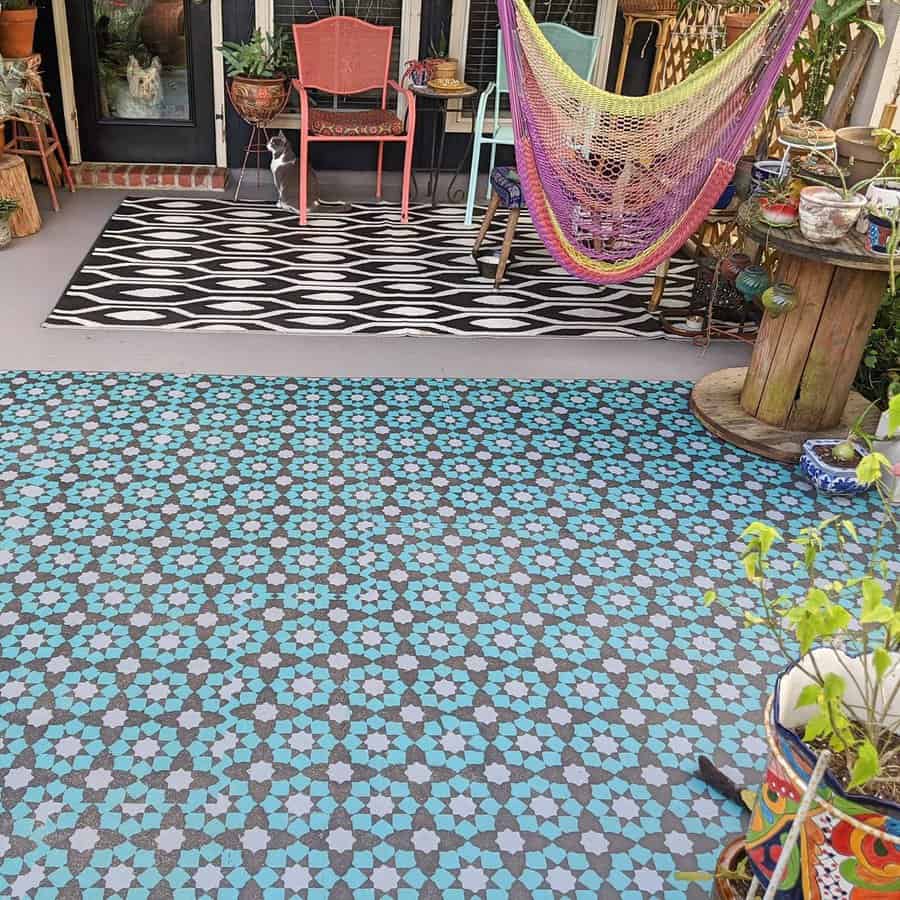
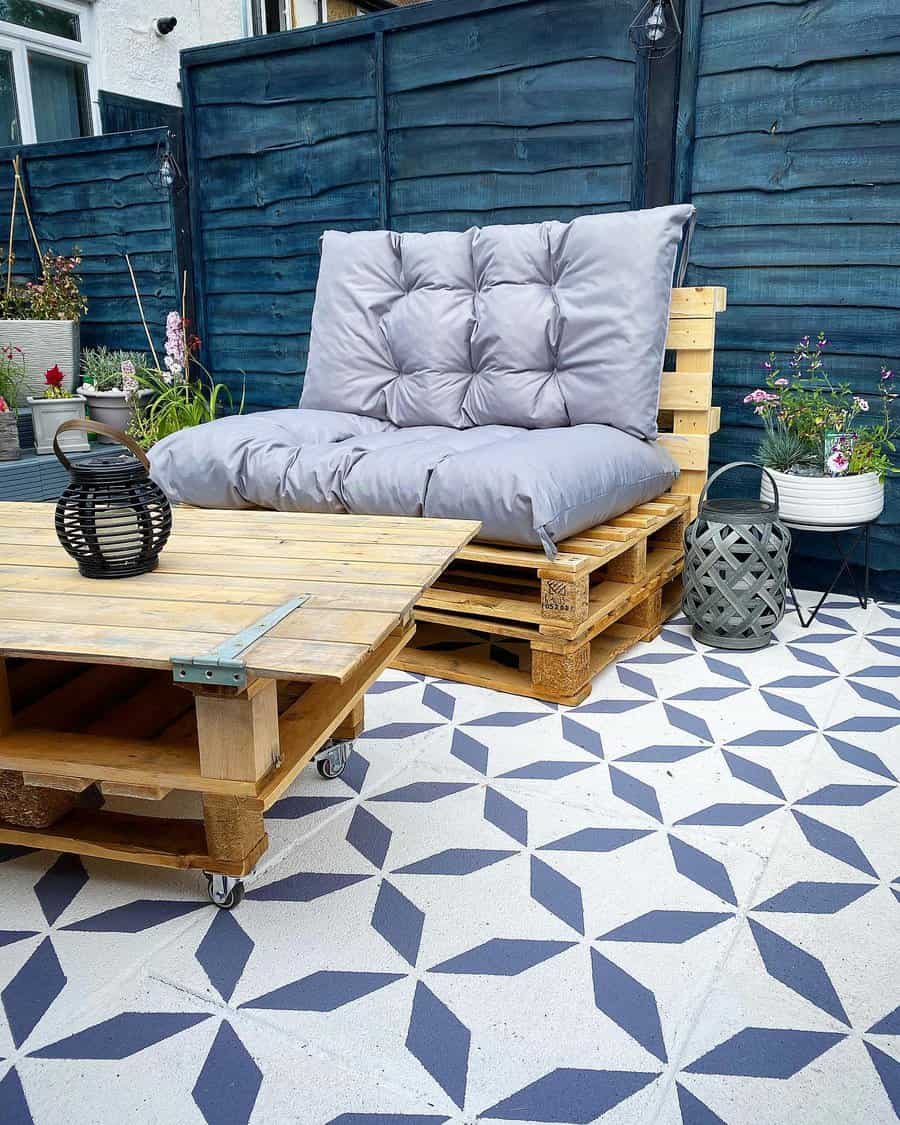
Using a stencil and some paint is a simple method for dressing up an old poured concrete patio. Start by pressure washing your concrete to remove any dirt or grease. You need a clean and bare surface for the paint to adhere to the concrete.
Source: @curatedbyanna_ via InstagramSource: @hey.tiger via InstagramSource: @oursharedcorner via InstagramSource: @oursharedcorner via Instagram
Choose a stencil that you like, lay it down, and then paint the pattern onto the concrete. The finished result should be a decorative concrete patio. You could use a single color or use multiple colors and stencils for a more intricate pattern.
“My garden is my most beautiful masterpiece.” -Claude Monet
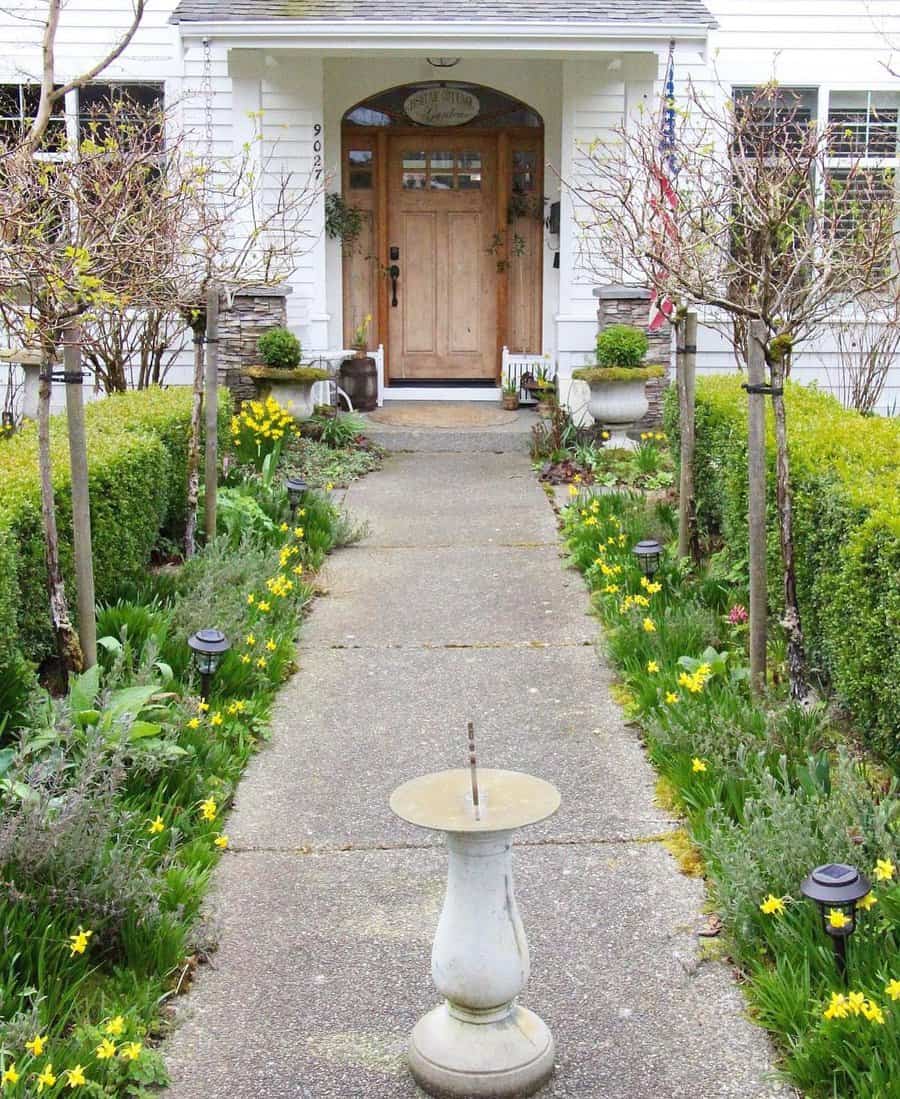
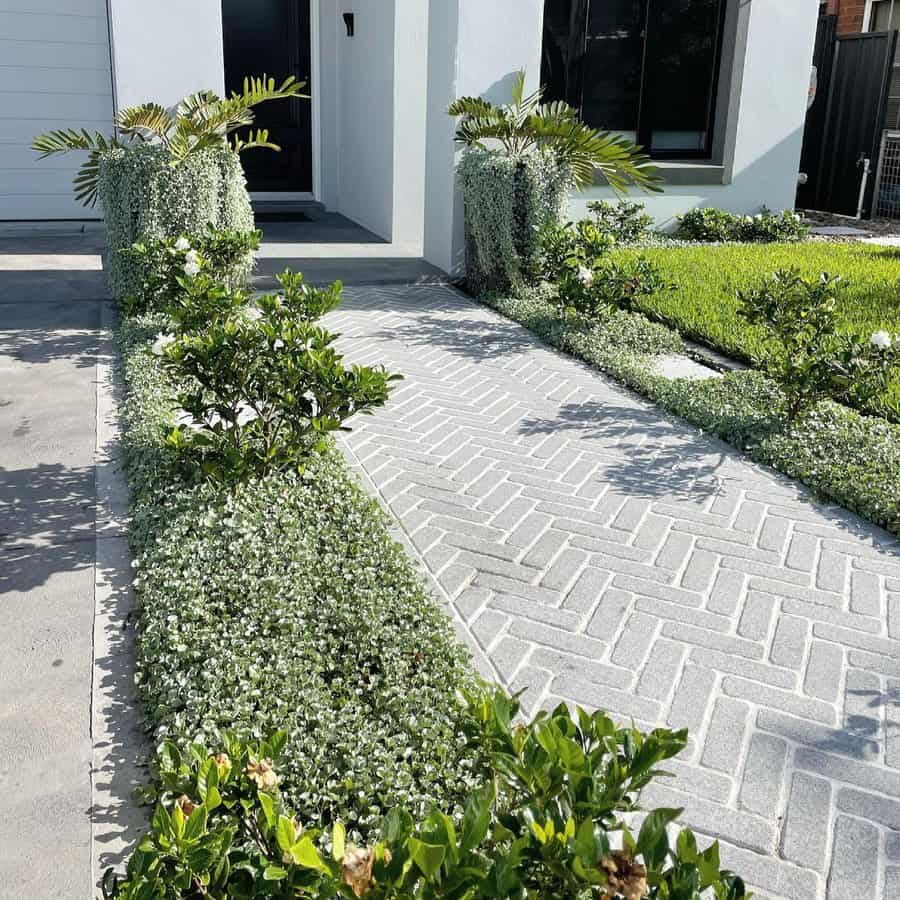
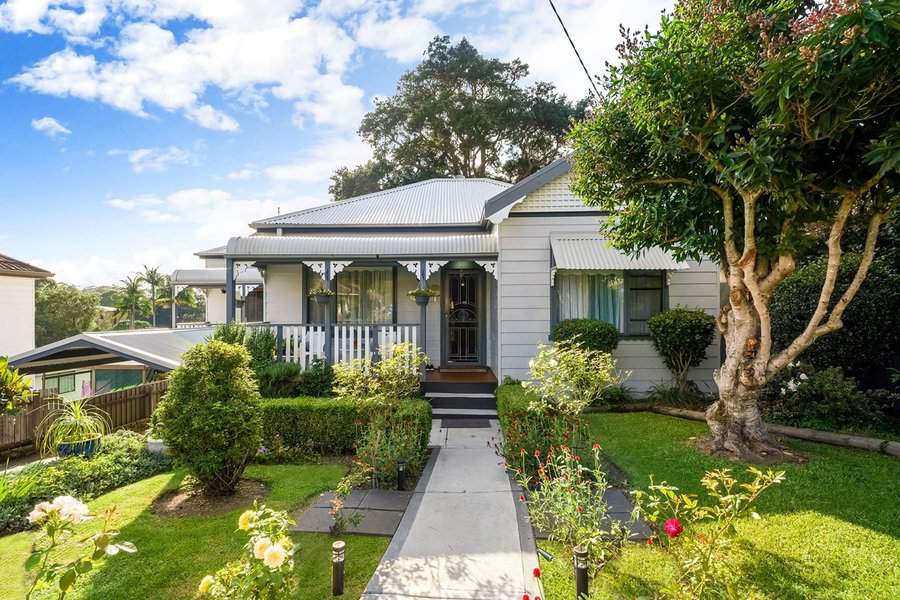
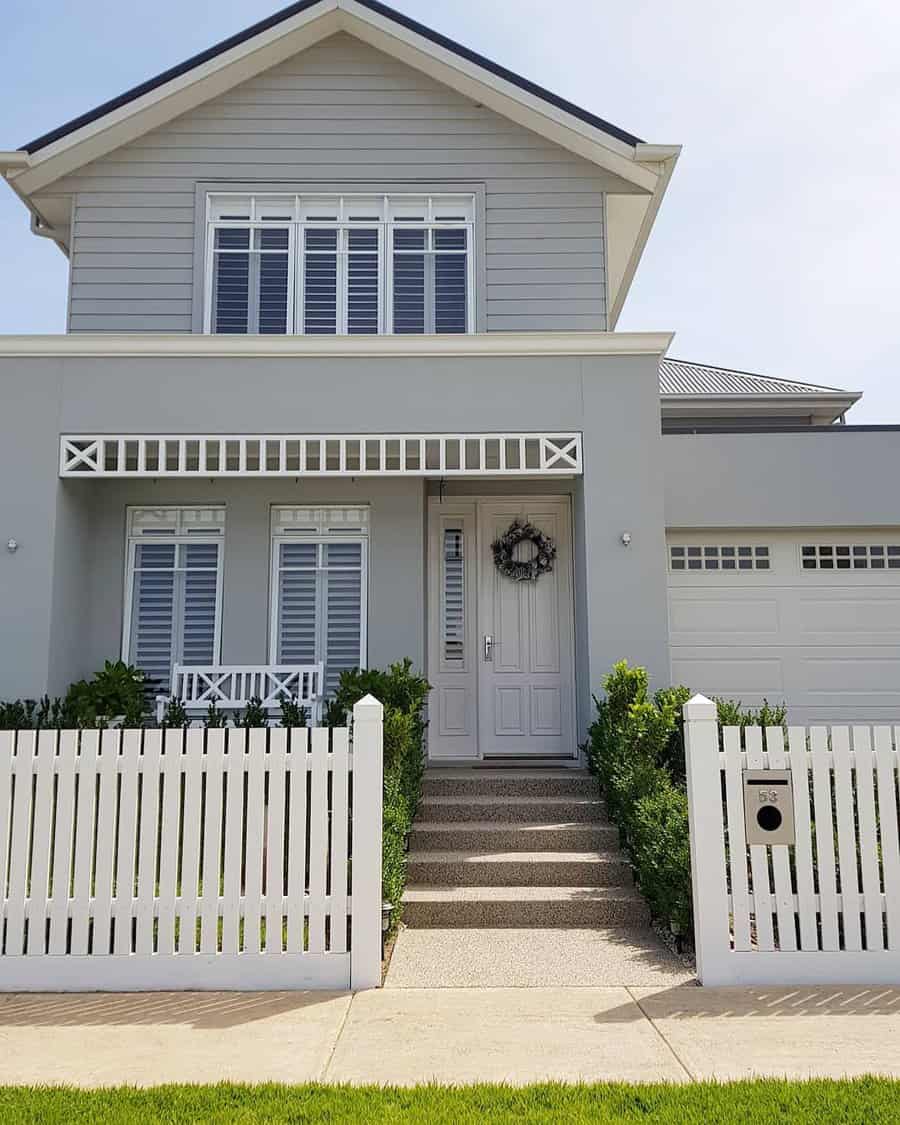
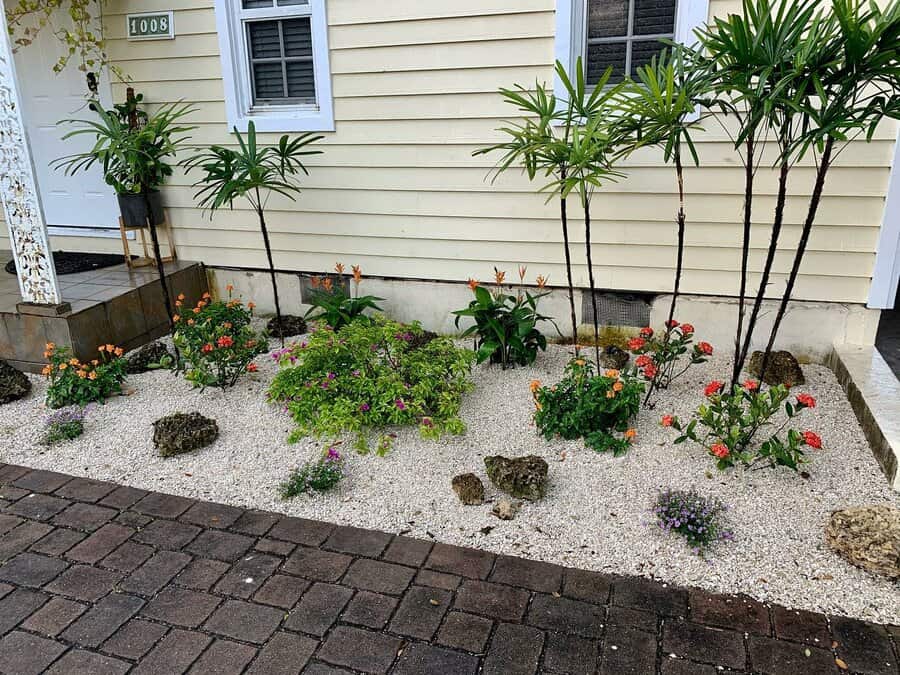
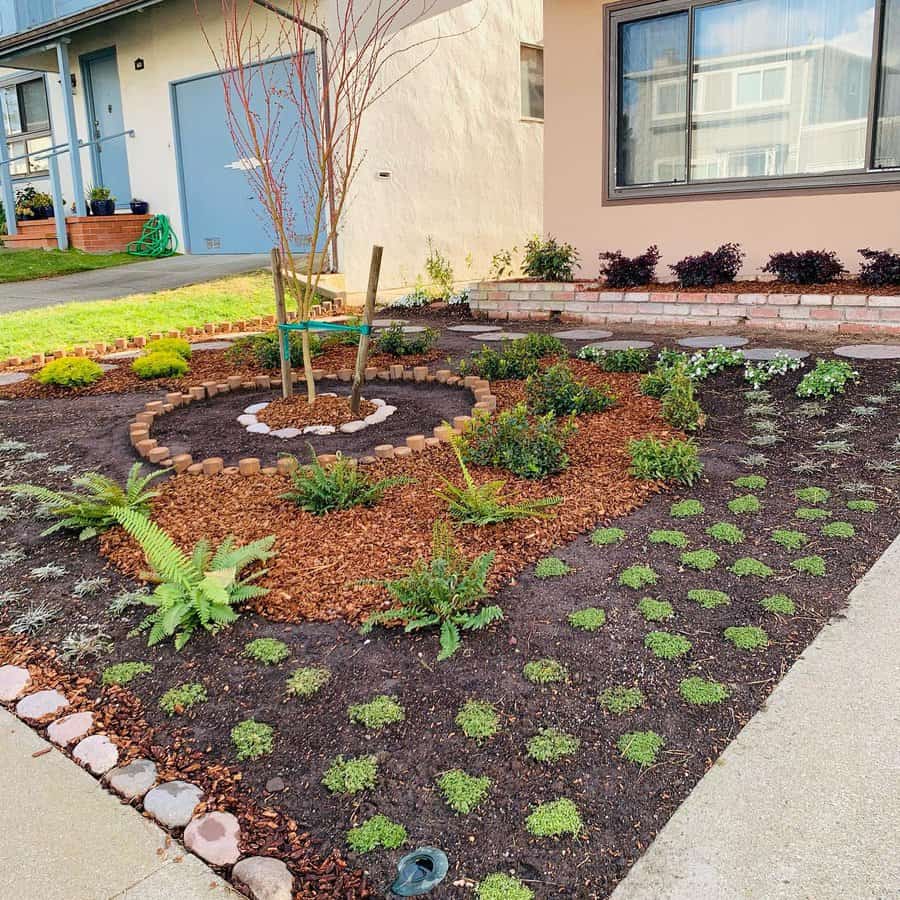
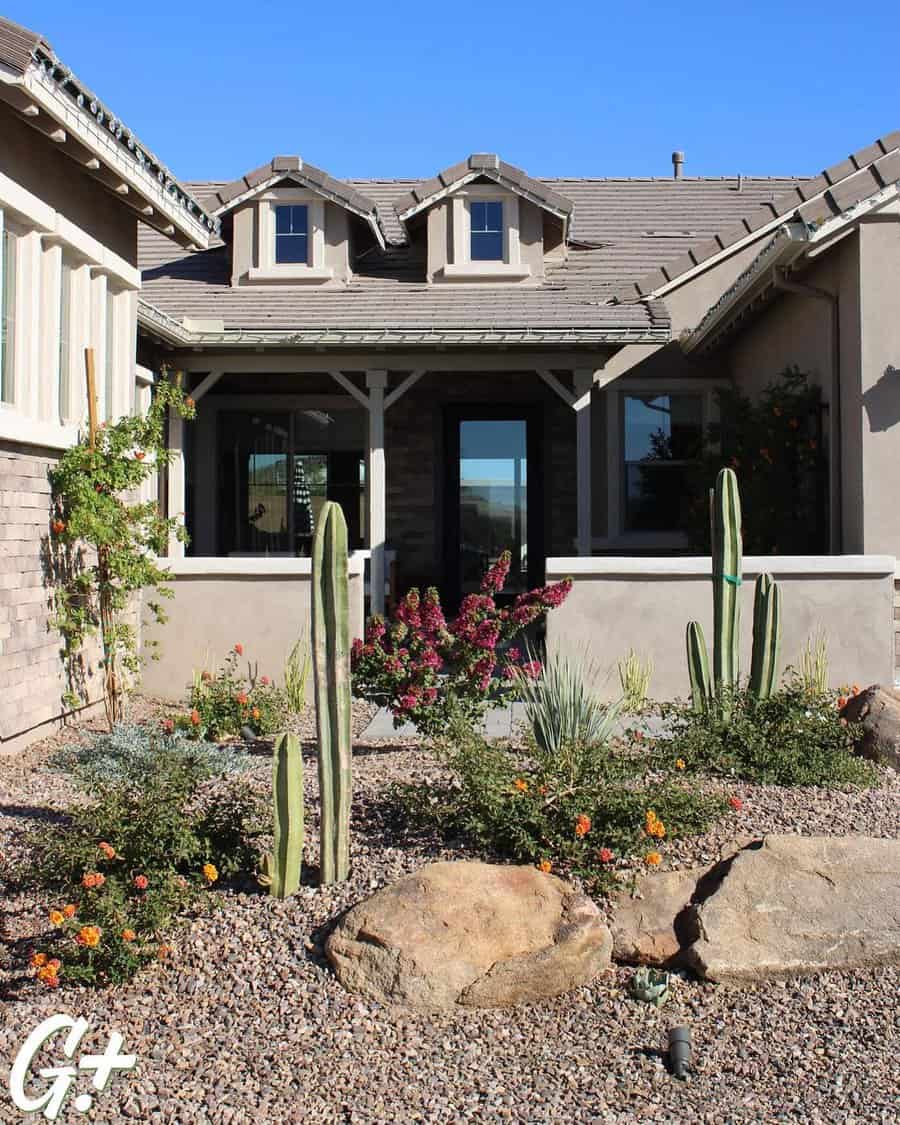
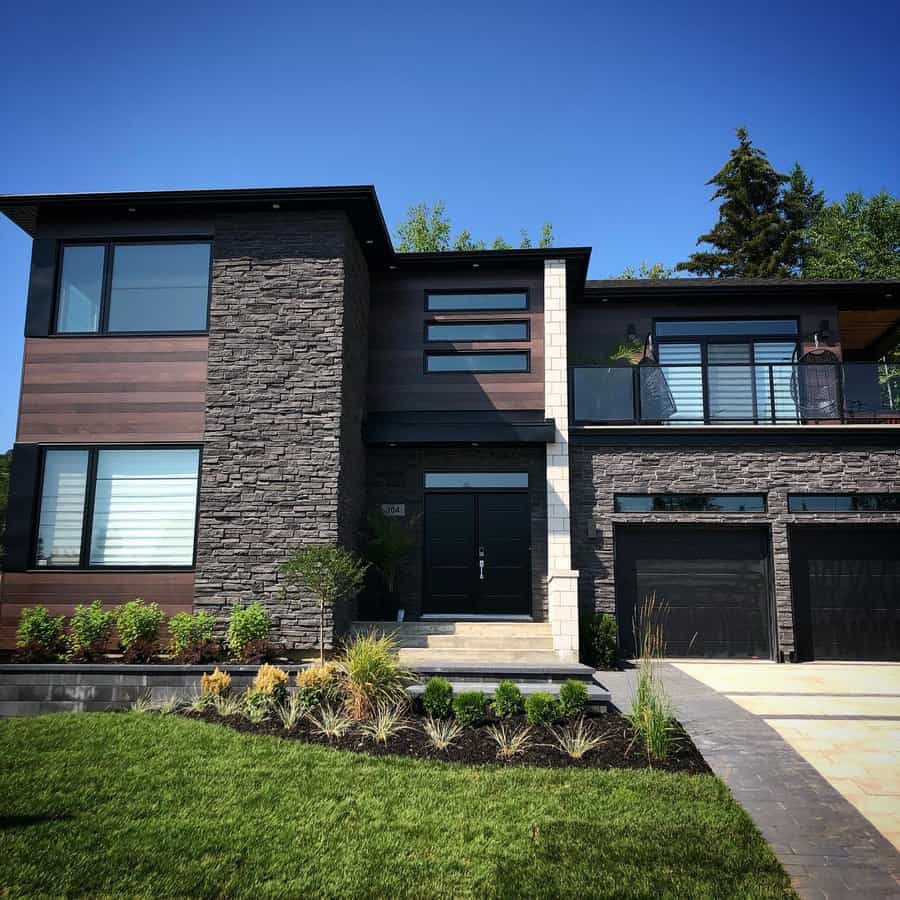
Everyone with a front yard has the opportunity to create a masterpiece to be enjoyed for years to come. Simple or complex, the inherent beauty of plants makes it easy to make even a dull entrance interesting.
If you’re feeling low on creative inspiration, take a look at this collection of 48 amazing front garden ideas. You’re bound to find several new landscaping ideas to enhance your home’s curb appeal.
[view_toc]
1. Line The Entrance With Flowering Shrubs
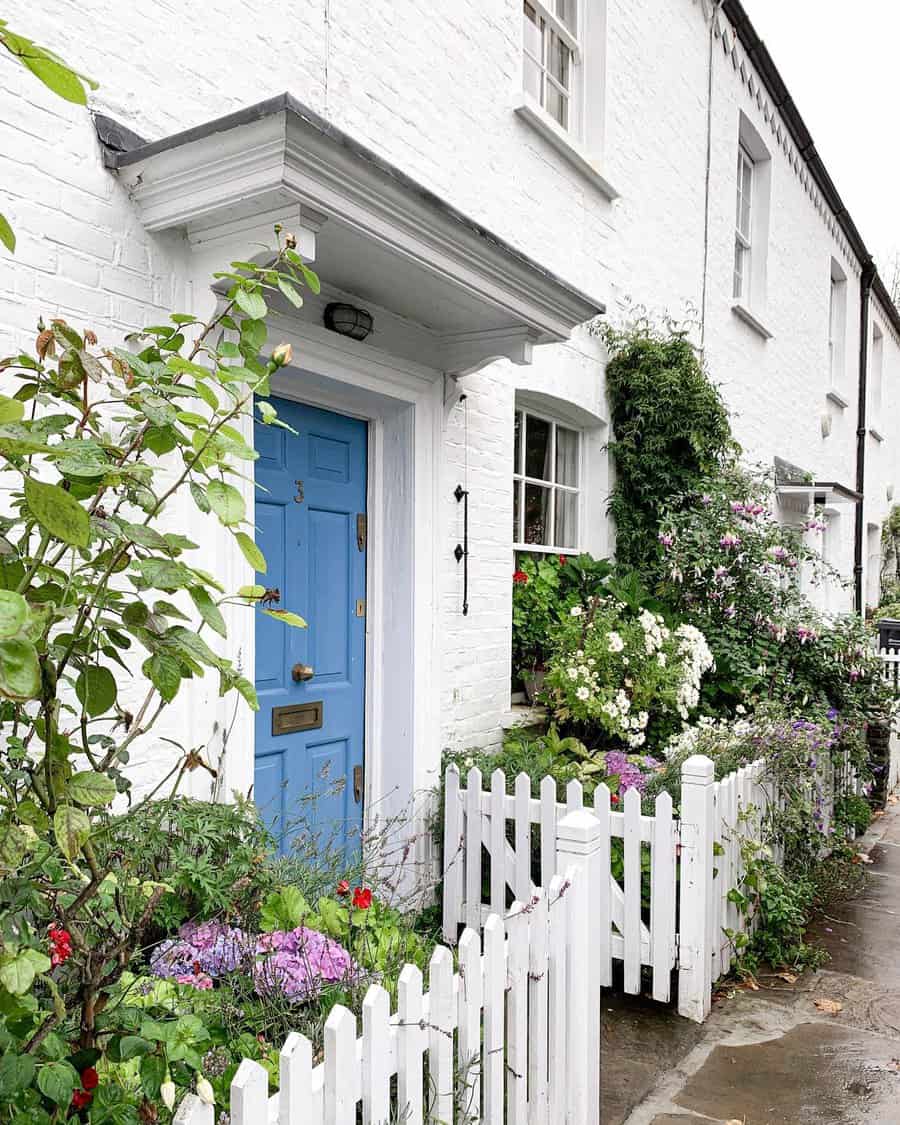
A front garden is your chance to create an outdoor space that oozes country-style charm. Plant flowering shrubs like hydrangeas for an eye-catching centerpiece, or combine vibrant blooms with rustic basket-style hanging baskets for a quaint cottage vibe.
Then why not finish off the look with gravel and stepping stones running through the soft grass, creating winding pathways of playful discovery as you find your way around the garden? A perfect idea to make your front garden look stylish and inviting.
Source: @owerhawse via InstagramSource: @welcometoplot146 via Instagram
2. Install Stamped Pavers To The Driveway
Transform your front yard into a quaint oasis with side landscaping that leads up to your driveway. You can lay down some stamped pavers for an extra touch, and create a lush shrub garden for added depth and texture.
With side landscaping, you can break up what may be an area of simple grass or dirt to provide interest and focal points as you make your way from the street to your front door. Incorporating various plants, trees, lighting, and statuary within your side landscaping helps give off the true cottage feel and reinforces the overall design aesthetic to immediately welcome guests.
Source: @beaumont_reno via InstagramSource: @gardencraftlandscapes via Instagram
3. Make It Nostalgic With White Pebbles
Transform your front garden into the perfect mix of beauty and practicality with white pebbles on the driveway, lush side landscaping, and an airy vibe. Transforming your garden shouldn’t be daunting – come up with a plan, shop around for plants and materials, and create something beautiful that best suits your needs.
Invest in low-maintenance plants that don’t require much attention and will still add life and vibrancy to your entrance. Consider incorporating white furniture pieces in your design to bring more light into the space, or create a cozy seating space with some comfy sofa cushions.
Source: @houseofharts_ via InstagramSource: @the_day_home via InstagramSource: @ourlittle_reddoor via InstagramSource: @pracownia_out.form via InstagramSource: @johnstone_avenue via Instagram
4. Craft Leading Lines With A Landscaped Walkway
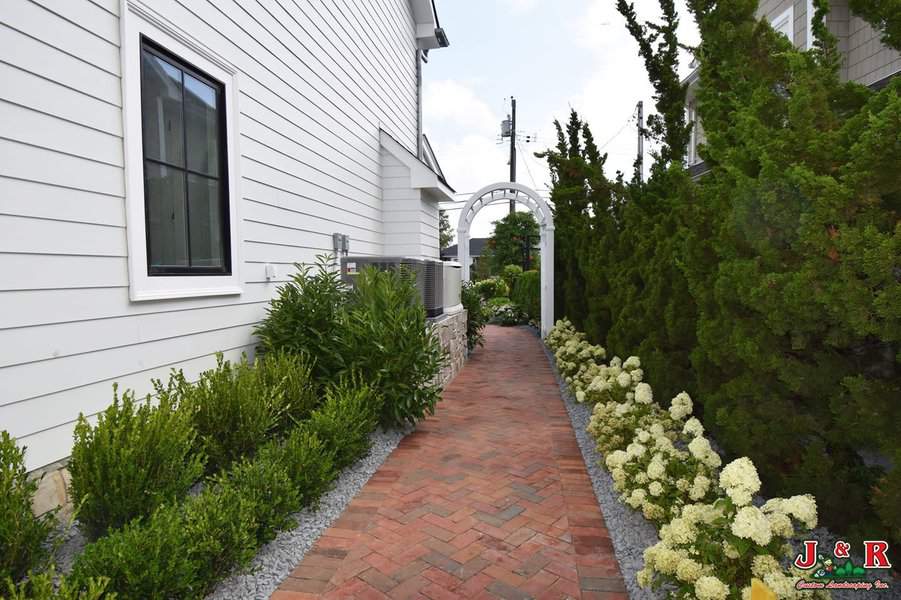
Your entryway should be the main focus of your home’s exterior. If there’s a path leading to your front door, the way you landscape the areas around it greatly impacts your home’s curb appeal. Always keep entryway hedges and ornamental grass borders neatly trimmed.
Source: @fishtailcottage via InstagramSource: @thevaluershouse via InstagramSource: @molenaarandmcneice via Instagram
5. Elevate Your Front Garden
If you want to create a unique elevated front garden that looks like something out of a magazine, consider installing a charming outdoor staircase at your front door. The elevated design is perfect for organizing your garden and home into separate sections while adding some beautiful visual interest to your exterior space.
With the help of stepping stones, windy paths, and some colorful desert plants you can create an entrancing vertical garden that will be admired by everyone who passes by. Use tall cacti and other succulents for an eye-catching display, or plant blooming flowers for a vibrant look that is guaranteed to cheer up your visitors!
Source: @ourhamptonshome via InstagramSource: @our_hastings_2020 via InstagramSource: @premier_constructionva via Instagram
6. Build An Arched Privacy Wall
If you’re looking for a creative way to spice up your front garden, consider adding an arched privacy wall. Not only does it offer extra privacy, but it also serves as the perfect complement to existing flower landscapes.
Best of all, the arched design adds depth and dimension that helps give any garden character and charm. Plus, depending on the materials used and whether or not your arched wall is painted, your backyard can truly become a personalized paradise that screams creativity!
Source: @xtracarelandscapes via InstagramSource: @fenhopkins via Instagram
4. Add An Enclosed Fence
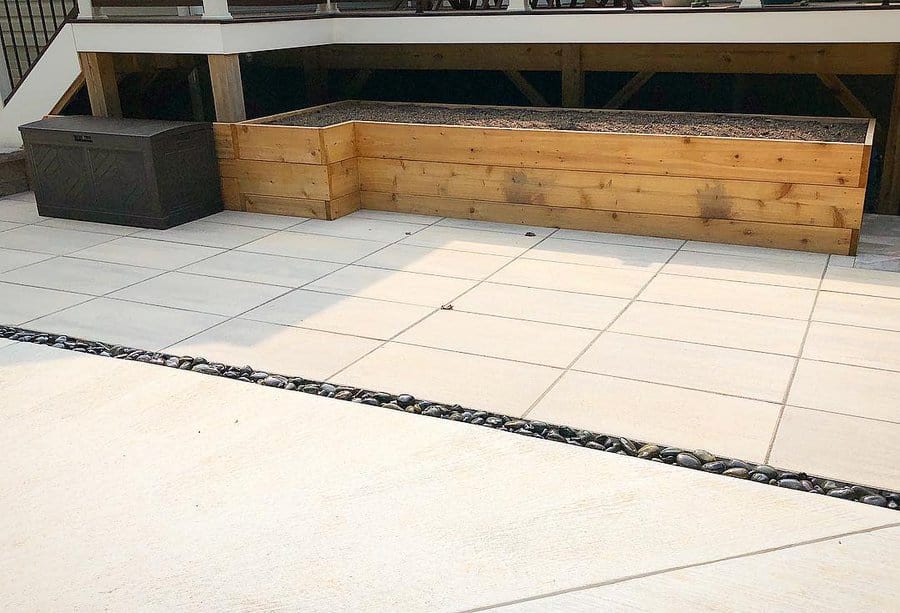
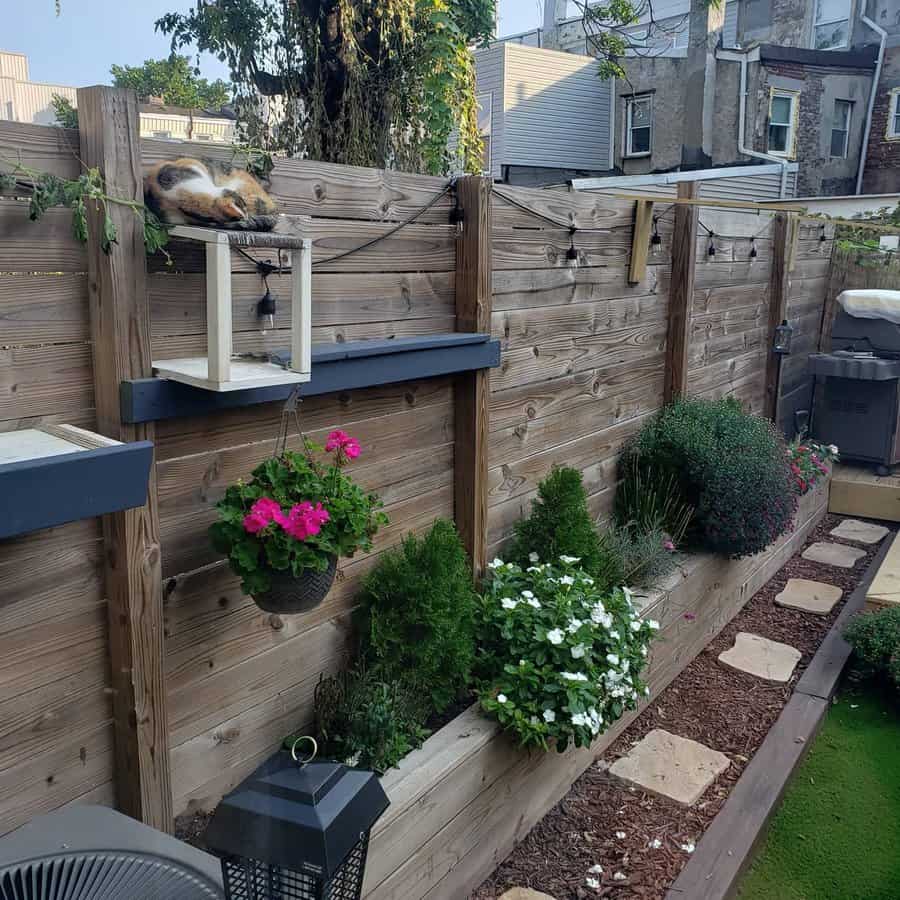
Creating a stunning front garden can be a great way to freshen up the look of your home. For creative garden ideas, try enclosing the space with a wood fence for a natural, rustic feel.
Behind that wood fence, you could use a simple plant box as an elegant backdrop to break up the wood fence and provide some contrast with its muted greens. With these two simple techniques, your front garden will become an eye-catching aesthetic in no time!
Source: @kim_mullaney via InstagramSource: @lou_875 via Instagram
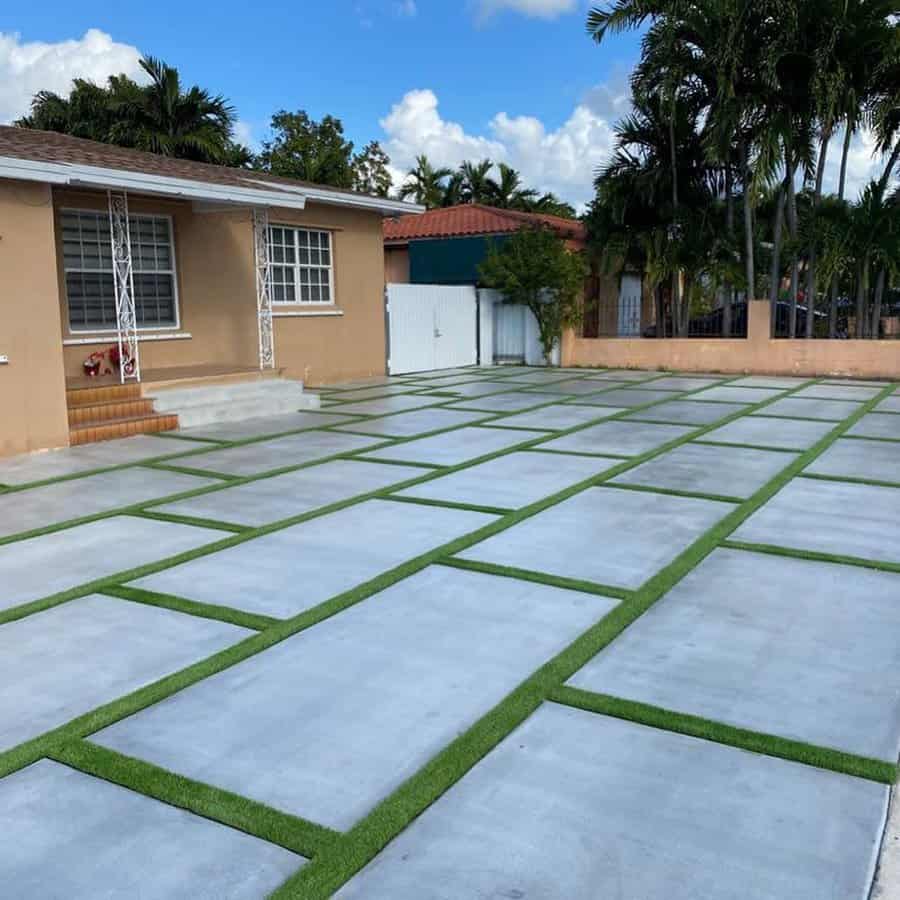
5. Pavers In Grass
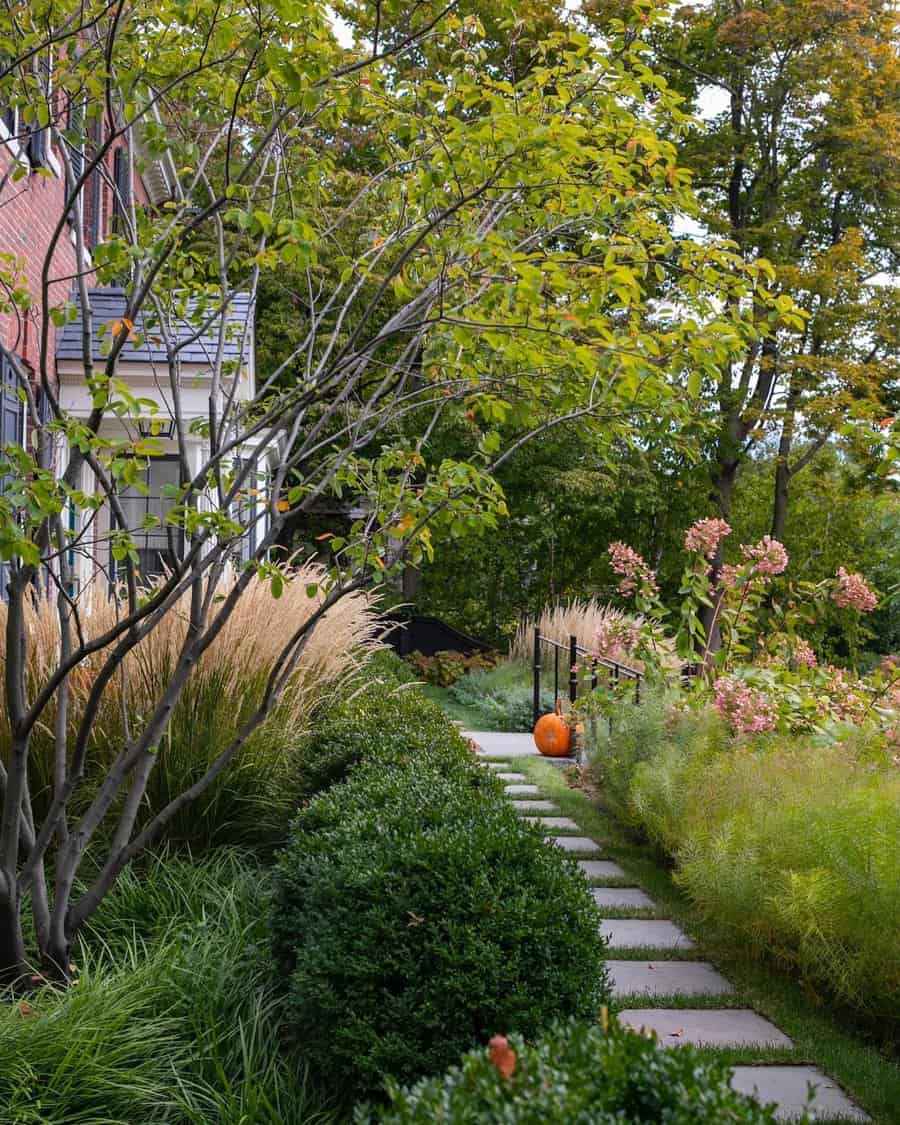
Transform your front garden into an outdoor living space by adding pavers in the grass for a walkway – this creative idea will make your garden stand out from the rest! With pavers in the grass, you can create a unique landscape architecture that is both elegant and eye-catching.
Your pavers provide structure to your garden; while the abundant green grass balances out the concrete elements and brings a lush, vibrant mood to your outdoor space. Enhance your front garden ideas by installing pavers as a centerpiece of modern outdoor design.
Source: @landscape_images_nola via InstagramSource: @constructionweb via InstagramSource: @davengraphics via InstagramSource: @scenefrommyrun via Instagram
6. Box Trim Your Shrubs
A well-maintained front garden can create an inviting and attractive exterior to any home. Box-trimmed shrubs are a great way to add structure and foliage, creating a border for your garden with greenery. Plant some colorful annuals for added interest, or add paving stones and carry the box-trimmed motif into the pathways.
A water feature is always a great option too: experiment with different bubbling urns, fountains, and cascading ponds to generate a tranquil atmosphere that will give off a sense of luxury. Maintaining the freshness of your box-trimmed shrubs allows them to flourish while giving off an elegant, polished impression that creates beautiful curb appeal all year round.
Source: @wrights_renovating via InstagramSource: @yourgardendesign via Instagram
7. Jazz Up Your Front Door
Enhance the front of your home with front garden ideas that will make people green with envy! Consider adding a front door with potted plants on either side to really create an inviting feel.
Or, if you’re looking for a more subtle effect, put trimmed bushes in pots and line them up in the front of your house to give it a neat and tidy look. With either of these options, you can enliven the front of your property and create plenty of curb appeal.
Source: @_easylawnsandplants_ via InstagramSource: @chelseaandleisure via InstagramSource: @garthomas78 via InstagramSource: @jewelstonekingdom via InstagramSource: @ourlifeatno25 via InstagramSource: @le_regard_vert via Instagram
8. Add Blooms To The Front Door Railing
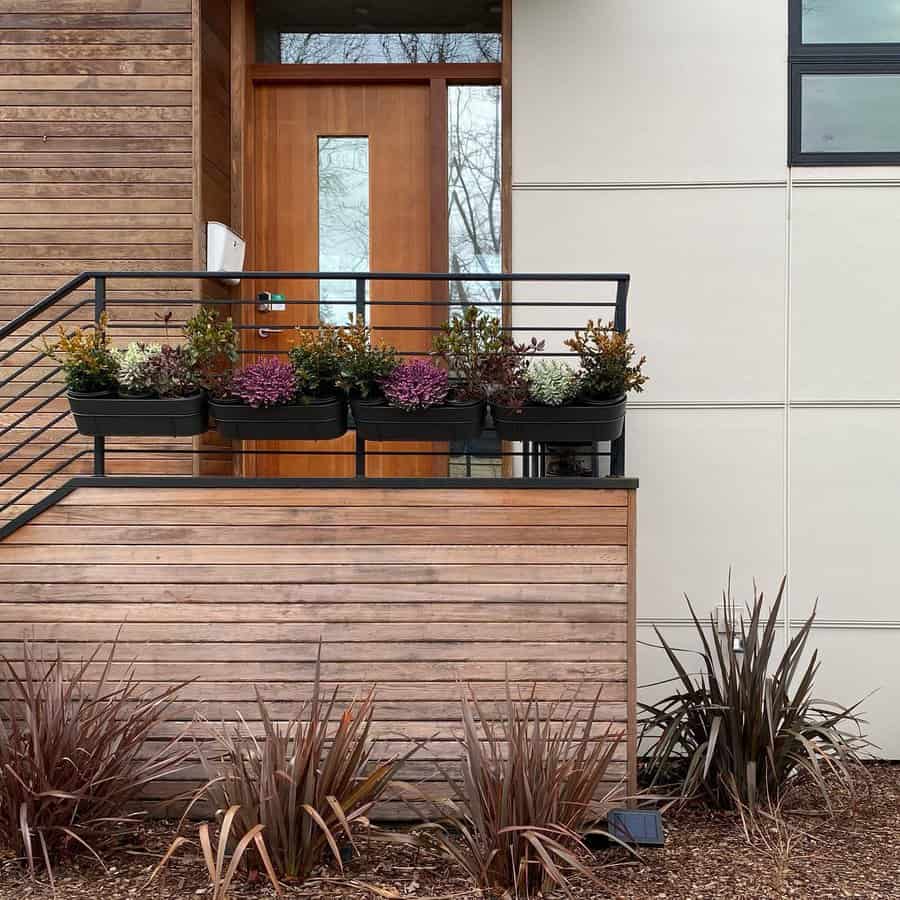
Looking for a unique way to spruce up your front garden? Try mounted flower pots hooked to the railing. This outdoor decor is different from traditional plantings and can give your garden some modern charm.
Just make sure to select planters that are lightweight enough for mounting and choose flowers or plants hardy enough to withstand any changes in temperature and moisture levels. With mounted flower pots on your railing, you’ll have an eye-catching garden that you’ll be proud to show off!
Source: @cicilia_ya via Instagram
9. Create A Dainty Wild Flower Garden With A Lattice Fence
If you’re looking to spruce up the front of your home, why not consider a wildflower garden with a lattice fence surrounding it? Not only will wildflowers bring vibrant color and life to your front yard, but the lattice fence can serve as leading lines that draw the eye straight to your front door.
This is a great way to welcome visitors in both an aesthetically pleasing way and make them feel right at home!
Source: @magnoliawalks via Instagram
10. Add Quirky Planters
For those looking to break away from the conventional flower- and shrubbery-filled front garden, why not explore some quirky alternatives?
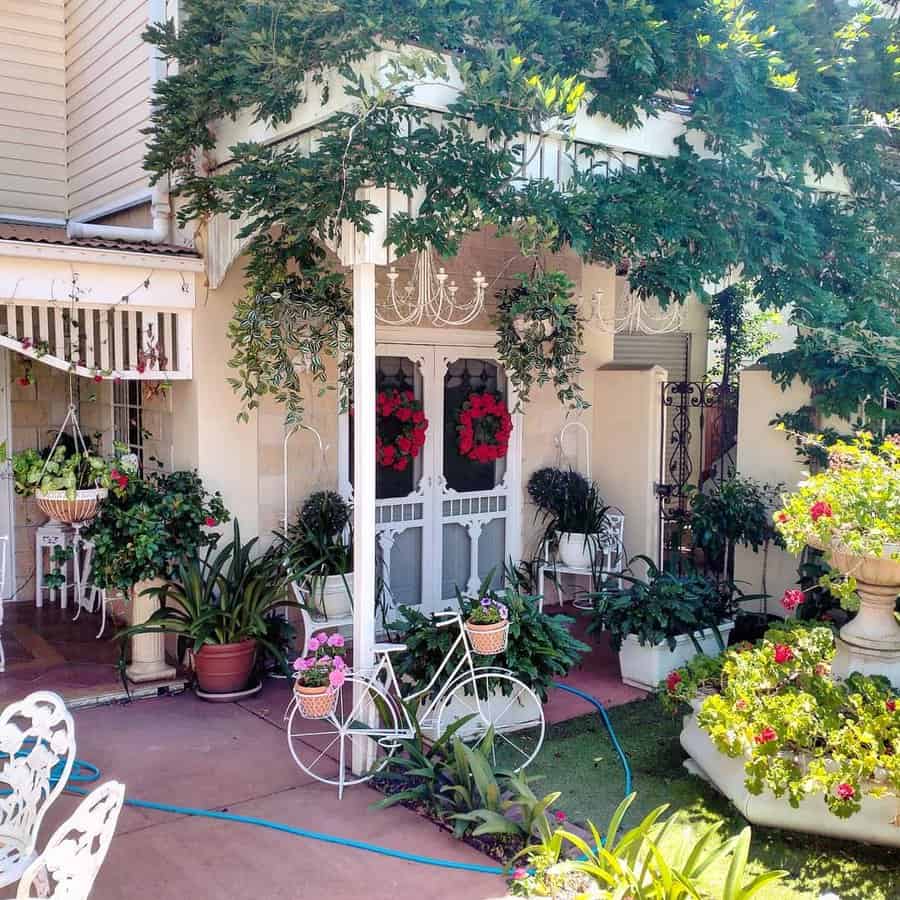
Instead of merely lining your walkway with planters, why not incorporate a quirky bicycle planter as a quirky way to exhibit some of your favorite blooms? Or add in some unexpected garden props – an old wheelbarrow filled with cascading succulents for instance – to really stand out. The sky’s the limit: have fun creating a unique and unforgettable entrance to your home.
Source: @rayoflight_general via Instagram
11. Set Up A Curved Landscape
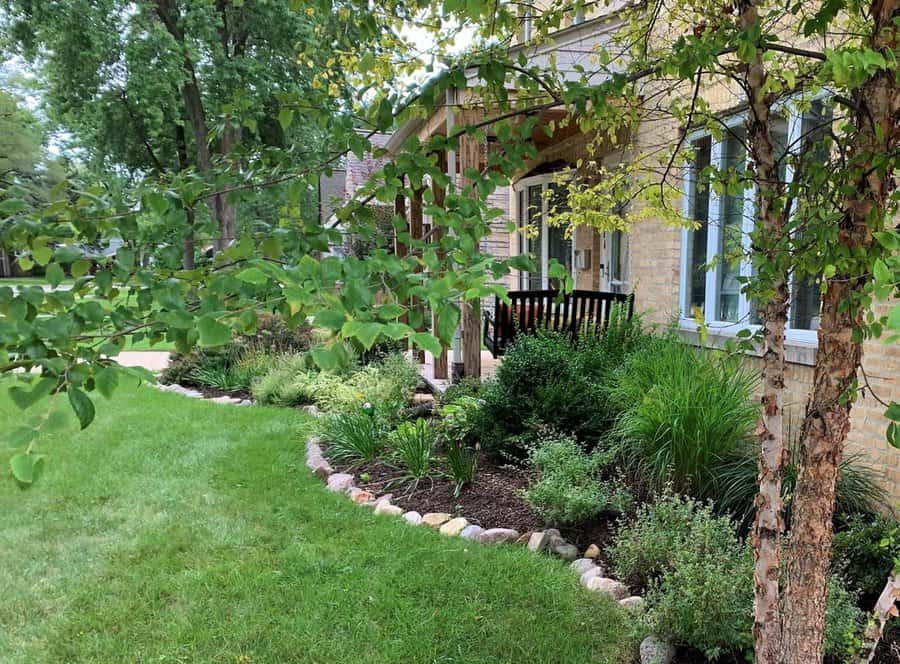
Transform your front garden into an oasis of tranquillity with curved landscape pathways, mixed borders of shrubs and wildflowers, and lush tropical plants. Create charming little pockets so that anyone walking past can enjoy the springtime fragrances and flutter of butterfly wings.
If you don’t have much outdoor space, why not try creating a hanging garden or placing potted plants throughout the entryway?
Accentuate the beauty of your front garden by using decorative stones, adding a curved seating area for peaceable sunset moments, and gathering friends for tea parties to celebrate the summer. There’s no limit to what you can do with your front garden!
Source: @amlivlanddesigns via InstagramSource: @botaniscapes via InstagramSource: @our.home.no3 via InstagramSource: @rhy5_ via InstagramSource: @fearns.house via Instagram
12. Grow A Lush Front Flower Garden
A front flower garden can be a great way to add some curb appeal to your home. With a little creativity, you can create a lush and wide front garden that is bursting with color and life. Add interest with layers of flowers and foliage at various heights, from bedding plants to tall shrubbery, for an eye-catching design. For added ambiance, include native wildflowers for the added pop of seasonal color, or choose perennial favorites for year-round color harmony.
Don’t forget to carve out some spaces – like small pathways or benches – so you can linger in the beauty of nature up close and personal!
Source: @greenjaylandscaping via InstagramSource: @sofloexteriors via Instagram
13. Get A Garden Statue
Spruce up your garden with a garden statue to add a bit of creative flair. Garden statues can help add an accent to any garden, and by carefully placing them in the right spot, you can make the garden look like an outdoor gallery or sculpture garden.
Whether you want to choose something more whimsical, such as an animal statue, or if you’d prefer to go for something more traditional like a cherub or rabbit, adding a garden statue to your front garden is sure to make passersby stop and admire your artwork.
Source: @living_the_gardening_life via Instagram
14. Choose Low-Maintenance Varieties
If you’re looking for something low-maintenance yet eye-catching in your front garden, cacti and low-growing shrubs such as yew and barberry are great choices. Cacti make for a beautiful addition to any outdoor space and come in a range of sizes and shapes so that you can create interesting displays or sculptures.
Yew is also low maintenance and will provide evergreen color to your garden during the winter months when other plants may be dormant. Barberry is low-growing, comes in several varieties and has attractive foliage – perfect for creating striking patterns or features within your garden design. With some careful consideration, you can achieve stunning results with low-maintenance plants that will stay looking amazing all year round!
Source: @garden.with.a.view via InstagramSource: @gardenpluslandscapepools via InstagramSource: @le_regard_vert via Instagram
15. Set The Mood With Floor Lighting
A garden floor lighting feature is an imaginative way to highlight your front garden and create an eco-friendly (and stunning!) area in which guests and loved ones can relax and spend quality time.
Taking outdoor lighting to the next level, garden floor lighting can consist of light-emitting diode (LED) strips, in-ground solar lights or path markers, or even a combination of both. This attractive addition to your garden will be sure to wow the neighbors and make your front garden truly stand out!
Source: @homesandcars_ via Instagram
16. Install A Corner Front Garden
A small corner front garden adds an attractive accent to a front entrance, even if there’s limited space to work with. Create a small bed filled with lush foliage plants that can filter pollutants from the air and be enjoyed throughout the year.
Incorporate small shrubs or small trees, succulents, ornamental grasses or rock gardens for an extra dash of color, texture, and contrast to the area. Intersperse blooming annuals or perennials when possible for added prettiness. Overall you can make a big statement in small spaces with front garden ideas built around designs tailored for small front spaces.
Source: @our_sankey_countryside via InstagramSource: @the.crazy.gardening.nurse via Instagram
“Life begins the day you start a garden.” – Chinese Proverb
Creating a garden not only increases your home’s curb appeal, it’s a great way to spend more time in the great outdoors. Garden therapy is also good for the soul.
There is so much more to a garden than just plants. Garden decor can include beautiful pots, planters, stepping stones, bird baths and more. We’ve collected 62 of the best garden decor ideas to show you how easy and fun it is to personalize this most special outdoor living space.
[view_toc]
1. Explore the Magic of Bonsai Trees
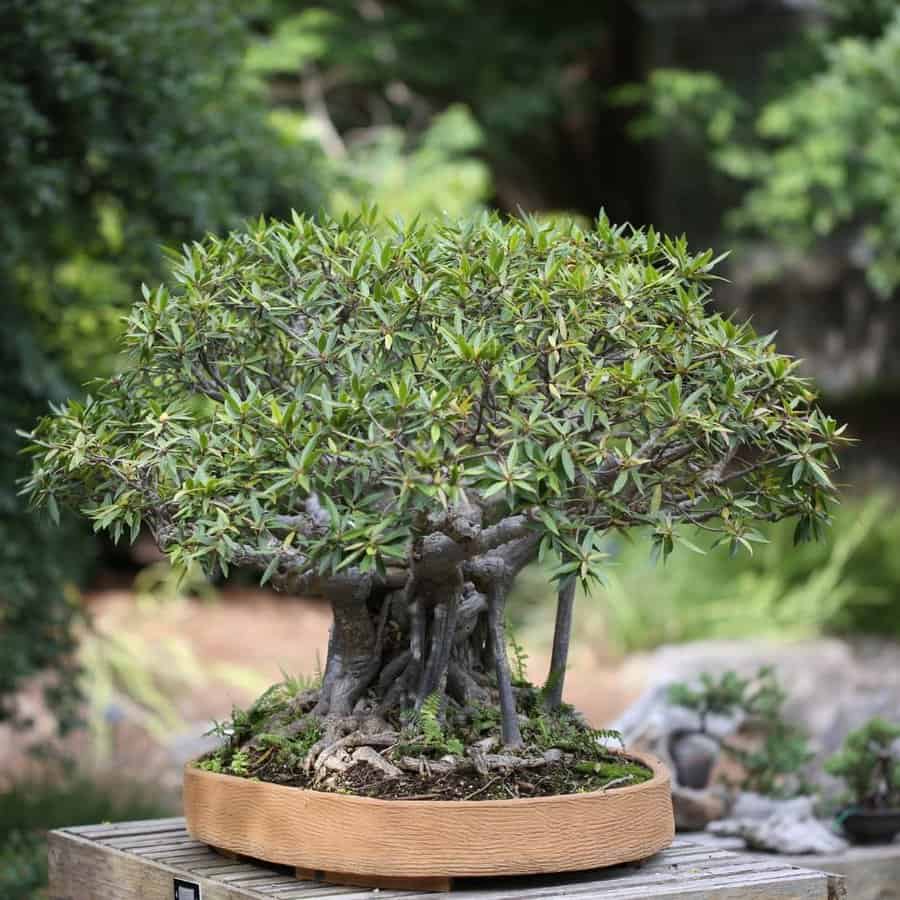
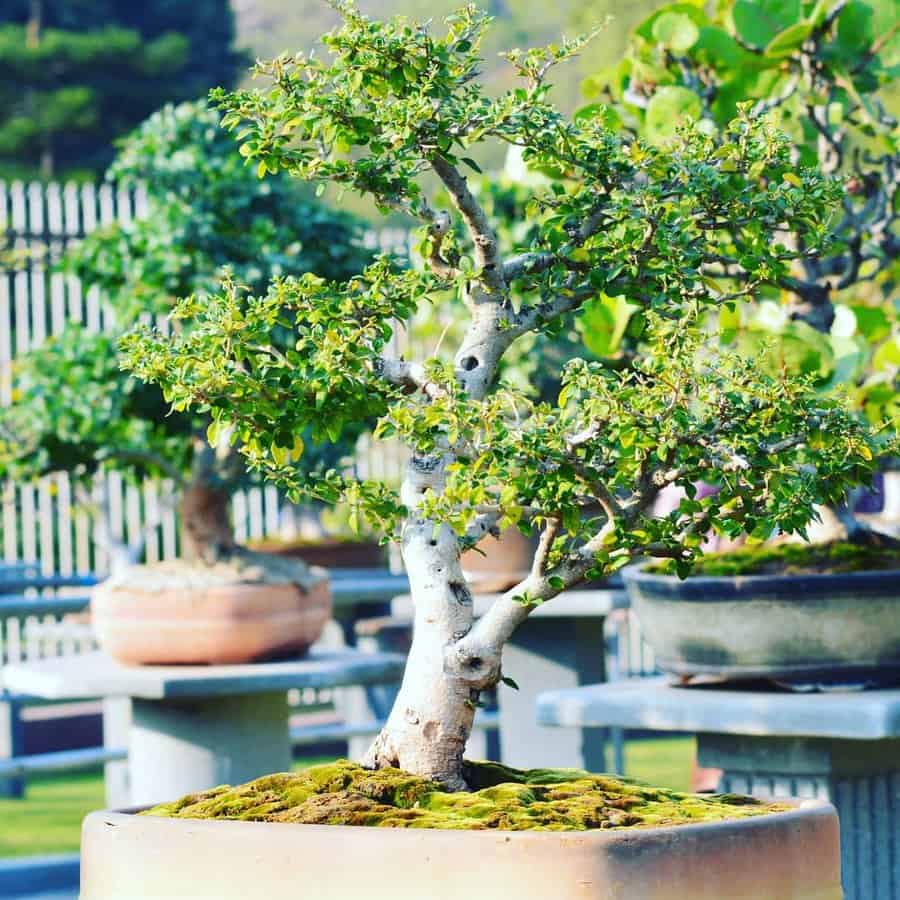
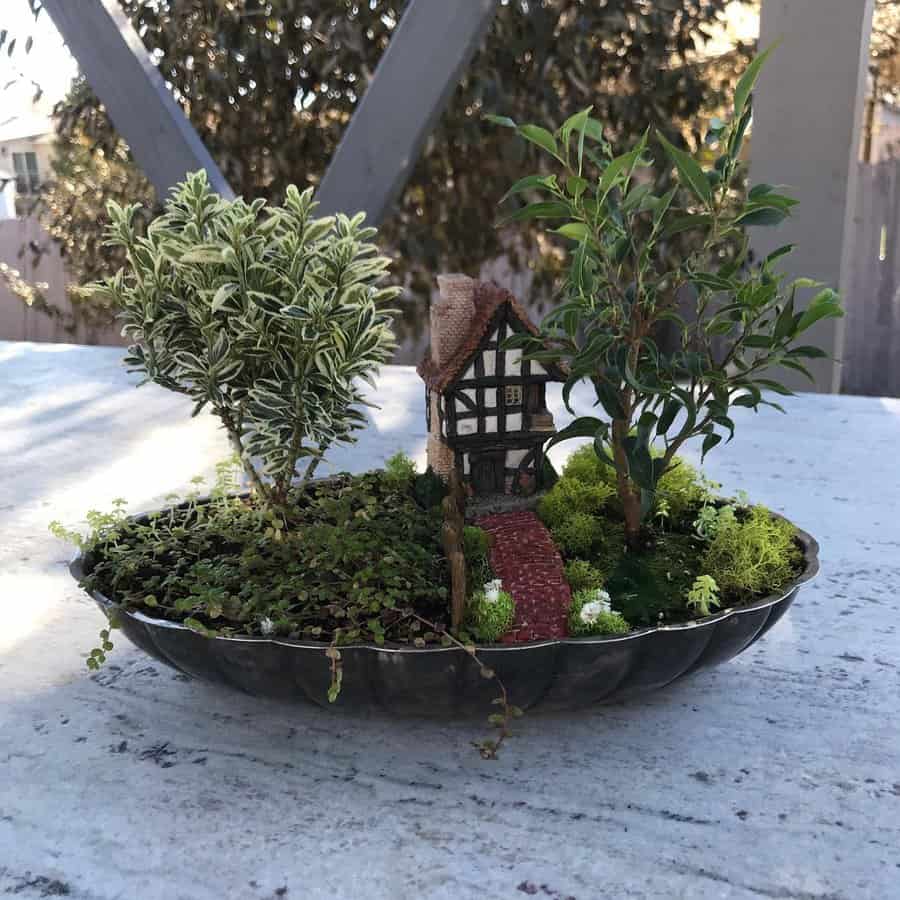
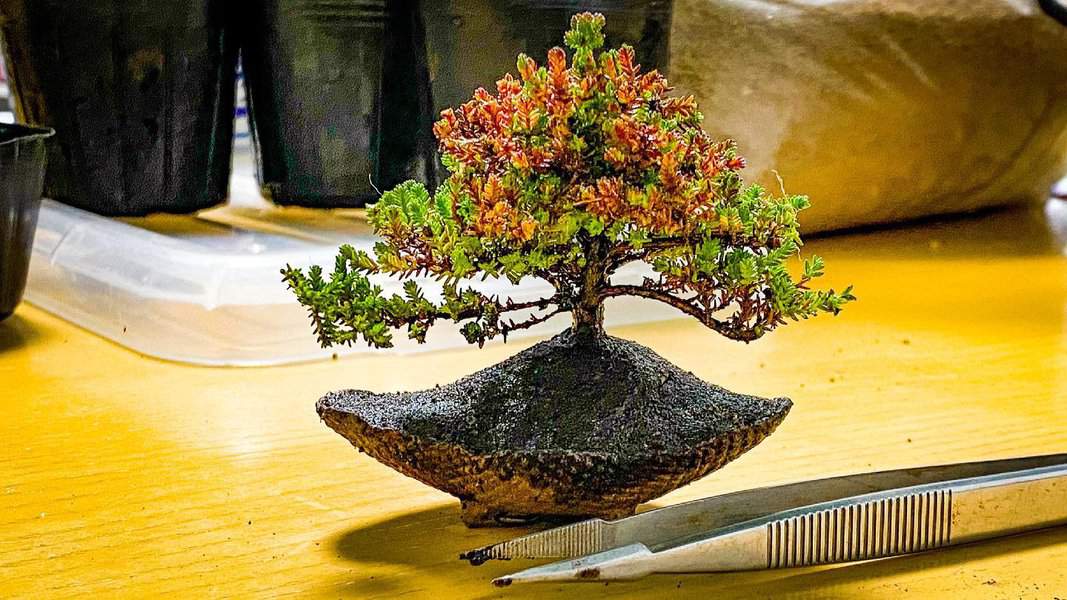
Bonsai is a Japanese word that literally means “planted in a container.” A bonsai tree is an artfully created miniature replica of a full-grown tree.
Bonsai trees are not usually genetically dwarfed plants. Virtually any tree or shrub can be trained into a bonsai through pot confinement and careful root and crown pruning.
Source: @bonsai_server via InstagramSource: @d.sameerinfine8 via InstagramSource: @metamorphosis_miniaturegardens via InstagramSource: @nagamine_toru_bonsai via Instagram
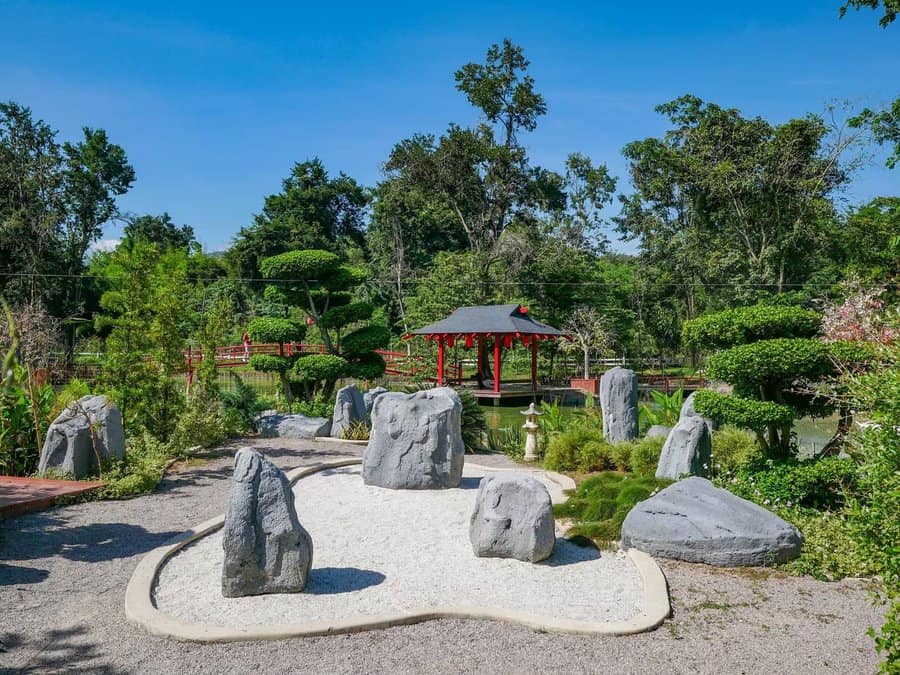
Bonsai trees are often miniature gardens on their own, with small ceramic houses, bridges, or paths arranged around them. Create a stunning garden decoration by displaying bonsai trees in an Asian-inspired rock garden.
2. Create a Minimalist Oasis in Your Garden Today
Fans of contemporary interior design will want to reproduce the same elements in their outdoor living space. A contemporary garden space usually projects a clean, simple vibe. Contemporary garden decor may include wood fences or patio dividers, simple light fixtures, and minimalist garden furniture.
Source: @act_luxury_landscapes via InstagramSource: @inside_no_8 via InstagramSource: @romaincouteaux via InstagramSource: @thedistinctivegardener via InstagramSource: @thelondongardenerltd via Instagram
Contemporary garden decor ideas often incorporate Asian-inspired elements, including shrubs carefully trimmed into geometric shapes and simple planters in various neutral colors. Plant flowers and shrubs in straight lines or simple groupings.
3. DIY Garden Decor: From Recycled Planters to Raised Boxes
Do-it-yourselfers will love all the DIY decoration ideas that exist for garden decor. Make whimsical hanging planters out of old plastic bottles and rope, as shown in this video:
Source: @abounding_in_grace via InstagramSource: @hathkargha via InstagramSource: @manasidunakhe via InstagramSource: @quilling_by_nagamani via InstagramSource: @quintal_da_mari_studio via InstagramSource: @shafaqusahar via InstagramSource: @the_liverpool_house via InstagramSource: @quintal_da_mari_studio via InstagramSource: @quintal_da_mari_studio via Instagram
People with advanced DIY project skills might never need to buy planters after seeing how simple it is to build a DIY raised planter box. Watch this video to learn how:
4. Design Your Dream Flower Bed Now
A flower bed is the heart of any garden space. The flower options you can include are limited only by your local climate and growing zones. Choose a monochromatic color scheme for an elegant flower bed, or mix colors for a more whimsical display.
Source: @adelaidecastelli via InstagramSource: @cibea via InstagramSource: @dlpsprinklers via Instagram
When creating a flower bed, always plant shorter flower varieties in the front and taller flowers or shrubs in the back. When choosing flower seedlings, note the time it takes for the plant to reach maturity. It may take a few seasons before the plants fill in enough to give you the look you’re after.
5. Add Fountain to Transform Your Garden
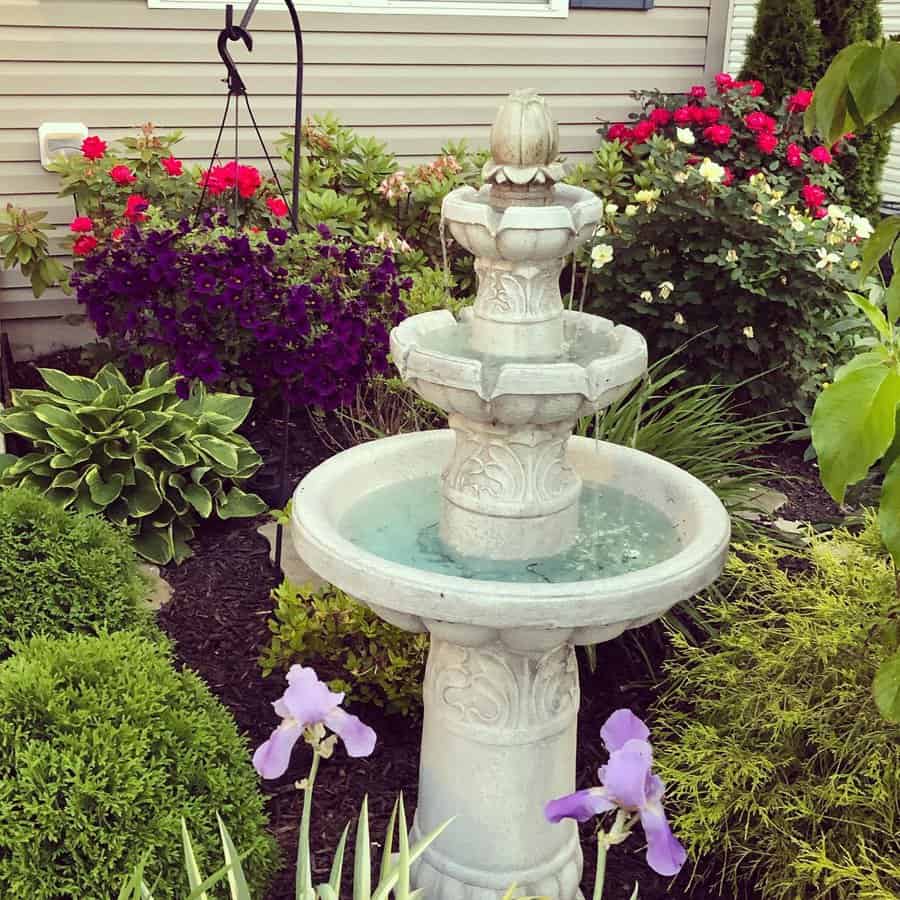
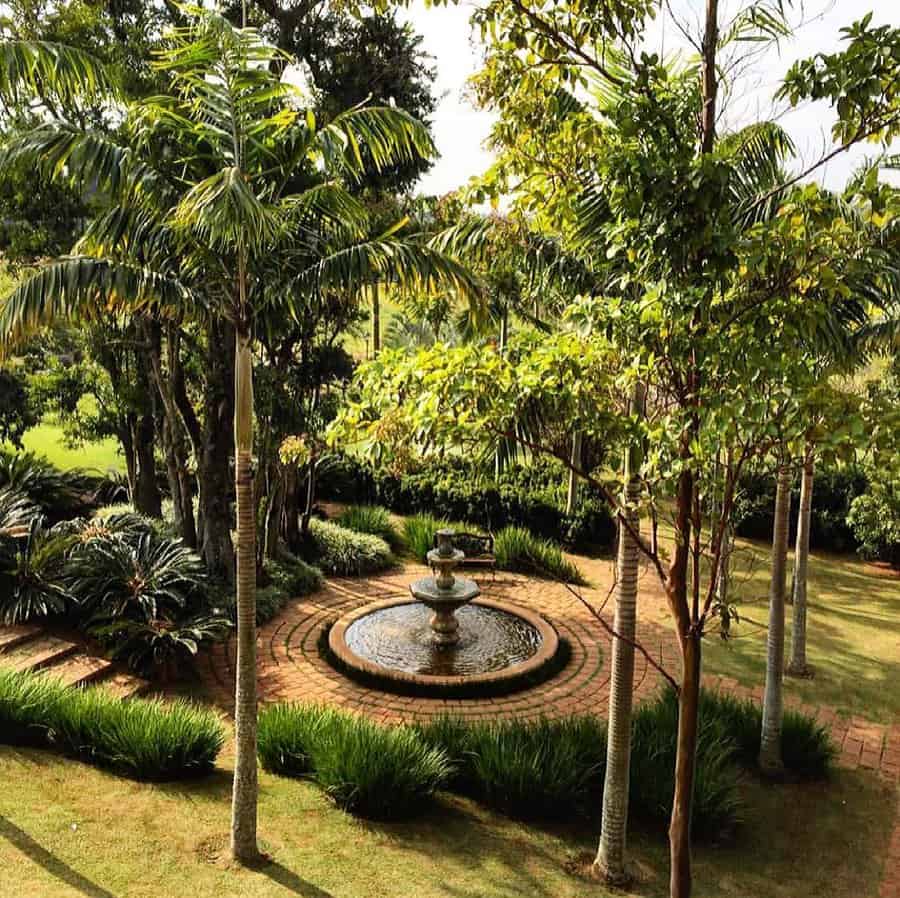
A fountain adds motion, texture, sound, and light to your garden decor. Fountains are often more affordable than people realize and can turn a basic garden into something truly special.
Source: @casa_de_bibi via InstagramSource: @marcelonovaespaisagismo via InstagramSource: @all_about_anything_goes via Instagram
6. Start a Family Project with Vintage Dish Garden Art
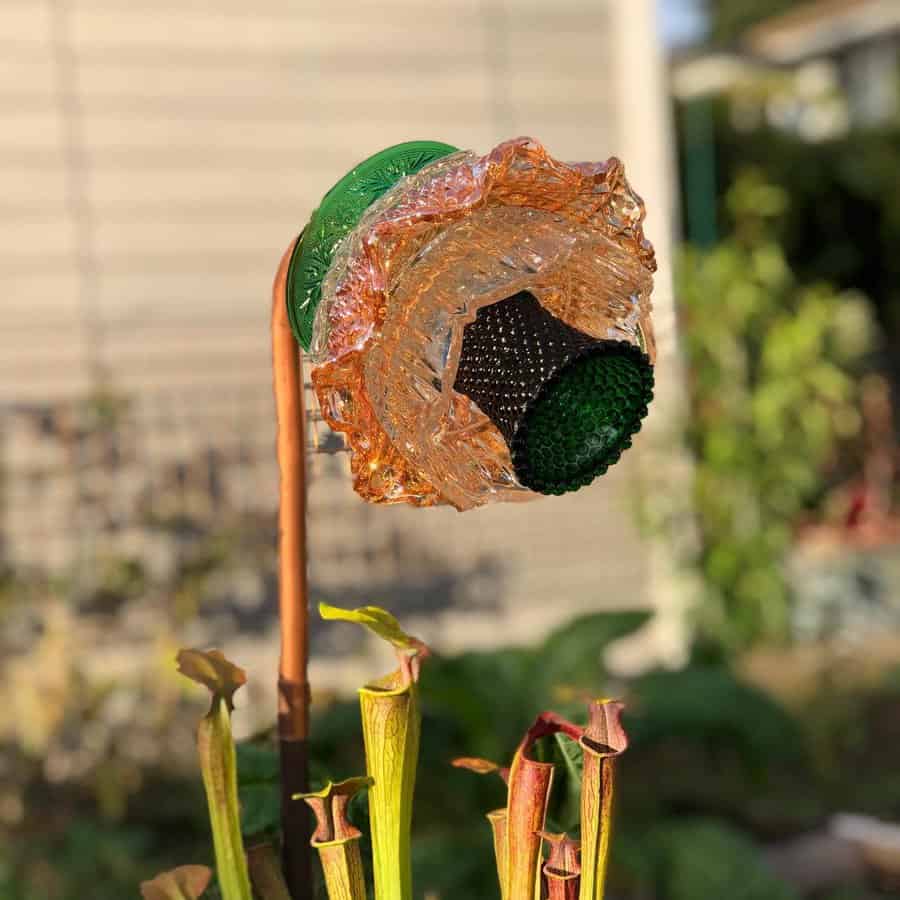
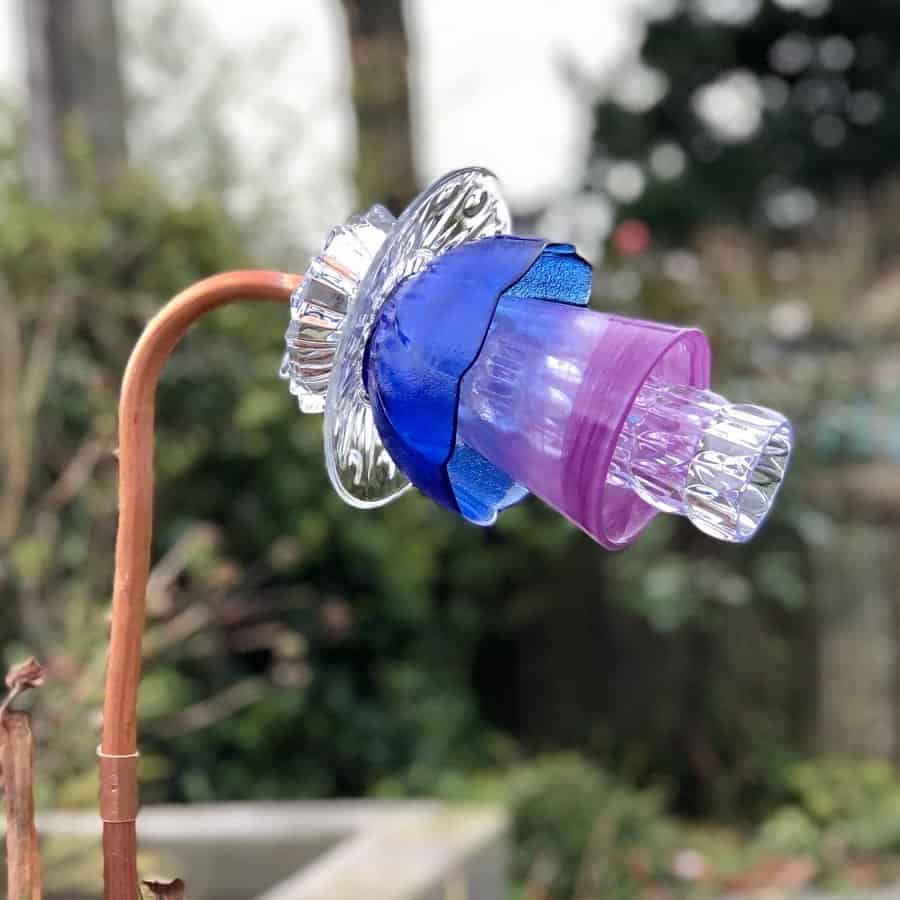
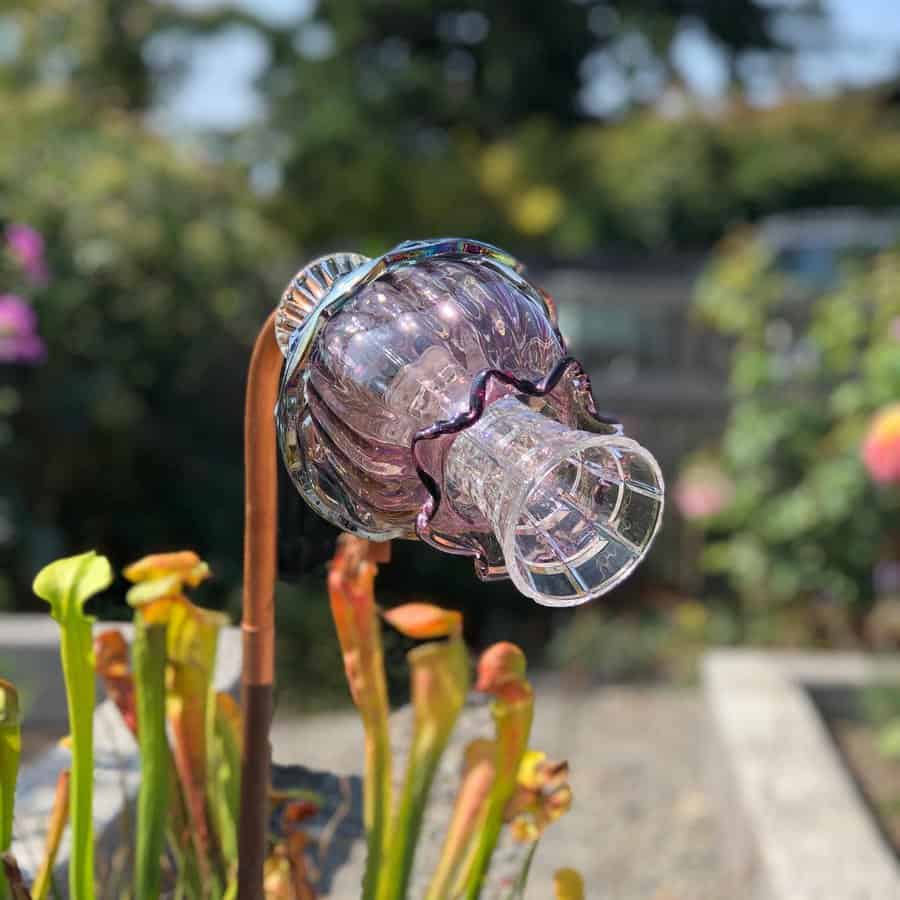
Handmade garden decor ideas make wonderful family-centric DIY projects. Add color to your garden decor year-round by making oversized flowers from vintage dishes and glassware.
Source: @flowertothe2ndpower via InstagramSource: @zimba.arts.jpg via InstagramSource: @flowertothe2ndpower via InstagramSource: @flowertothe2ndpower via InstagramSource: @flowertothe2ndpower via InstagramSource: @flowertothe2ndpower via InstagramSource: @flowertothe2ndpower via Instagram
7. Light Up Your Garden with Decorative Lights
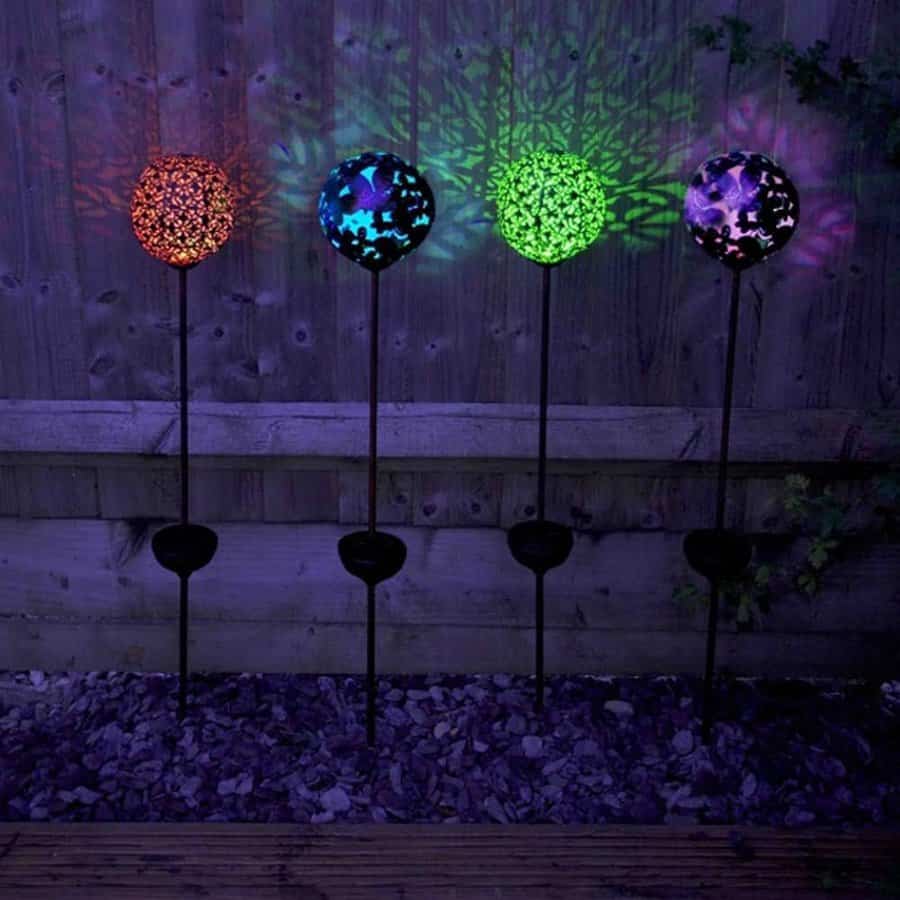
Garden lights aren’t just decor—they are functional accessories that add a certain air of magic when the sun goes down. From ordinary fairy lights to decorative solar light stakes, illumination is always a good garden decor idea.
Source: @bettersolarlights via InstagramSource: @tegelvillan3 via Instagram
Strands of vintage Edison bulbs add a sophisticated touch to a vintage inspired garden. String lights embellished with colorful stars or crackled glass orbs are a great idea in a bohemian-flavored landscape. Solar light stakes in flower shapes are a great outdoor decor idea that adds color to your yard night and day.
8. Craft Beautiful Garden Pathways
Strolling down a lovely garden pathway is one of the small pleasures of spring, summer, and fall. Pathways help you navigate all areas of your outdoor space, and are an integral part of garden design.
Source: @ab_florida_gardening via InstagramSource: @jrcustomlandscaping via InstagramSource: @msc_site.masonry.landscape via Instagram
Gravel, crushed rocks, or larger stones are all attractive pathway materials. For a more formal garden, use brick pavers. Larger rocks make beautiful path borders that make your path feel more natural than constructed.
For safety reasons, be sure to include lights along the pathway. Solar light fixtures keep you from having to remember to turn the lights on and off each day.
9. Dive into the World of Garden Ponds
Many people feel that a contemporary or vintage garden is incomplete without a water feature. A small backyard pond—with or without goldfish—is an ideal landscape focal point.
Source: @cou_ntrylivingcreations via InstagramSource: @flowersfortyfive via InstagramSource: @thepheasantgarden via InstagramSource: @thepheasantgarden via Instagram
Water lilies and other water plants add color and dimension to the garden. Elevate your pond by building a waterfall and enhance your garden with the musical sounds of water flowing over rocks.
10. Elevate Your Garden with Raised Beds and Window Boxes
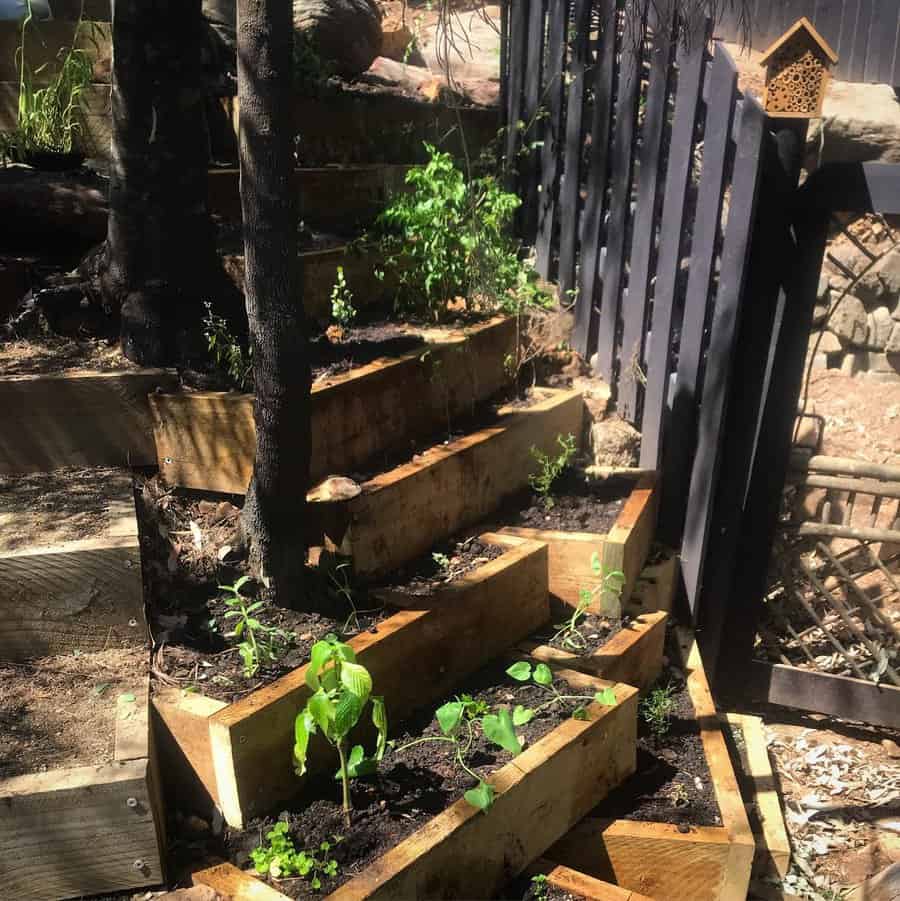
Raised garden beds are a great idea for anyone who loves gardening but not the backaches that result from all that bending over. They are relatively simple to build as well, either from scratch or with a kit.
Source: @c5organicfarms via InstagramSource: @great4garden via InstagramSource: @greenladymeg via InstagramSource: @richardhiscox_homegrowing via Instagram
Made of wood or galvanized metal troughs, raised bed gardening is ideal for growing vegetables. It’s also a good way to organize an herb garden. Position an herb drying display nearby and you can enjoy the fruits of your labor year-round.
A classic window box is much like a raised bed in that it’s a contained, raised space for growing flowers. Consider adding them to certain windows, or attach one to a vintage window wall hanging for a fun piece of living garden art.
11. Give New Life to Your Garden with Upcycled Art
Upcycled garden art is an environmentally friendly way to keep discarded items out of the landfill. Wind chimes made from old spoons, antique doorknob flower sculptures, and vintage coffee pot planters are all examples of turning weathered items into something new and beautiful.
Source: @compulsive_upcycler via InstagramSource: @flowertothe2ndpower via InstagramSource: @life_stumbler via InstagramSource: @monicajewellery via InstagramSource: @normalfamilyecojourney via InstagramSource: @pennyslainvintage via InstagramSource: @upcycledbykw via Instagram
Make a ladder display out of an old wooden ladder. Use the rungs as shelves for trailing potted plants, or allow climbing plants to do their thing up its steps. Transform old wooden chair legs or stair railings into garden mushroom sculptures by topping them with overturned painted bowls.
12. Discover Vintage Garden Decor Inspirations
Vintage garden decor ideas are warm and comfortable, able to evoke memories of a lazy summer garden party at Grandma’s. Old window frames, galvanized metal tubs, and blue willow teacups are just a few of the vintage garden decorations you can add to your landscape.
Source: @joem7816 via InstagramSource: @middletownantiques via InstagramSource: @old_shed_vintage via InstagramSource: @the_little_end_cottage via Instagram
Freshen the paint on a vintage birdhouse and hang it from the porch rafters. Put a distressed garden display table on the porch and use it to display vintage flowerpots filled with heirloom plants.
“True luxury is being able to own your time – to be able to take a walk, sit on your porch, read the paper, not take the call, not be compelled by obligation.” -Ashton Kutcher
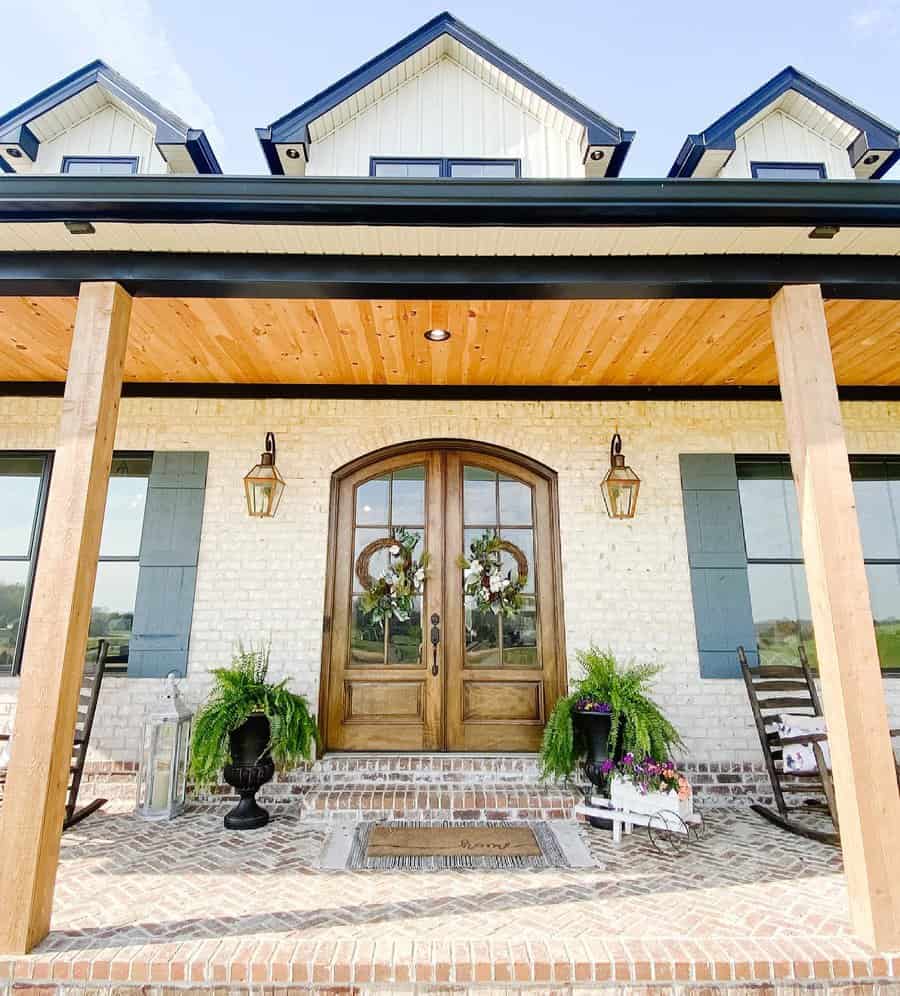
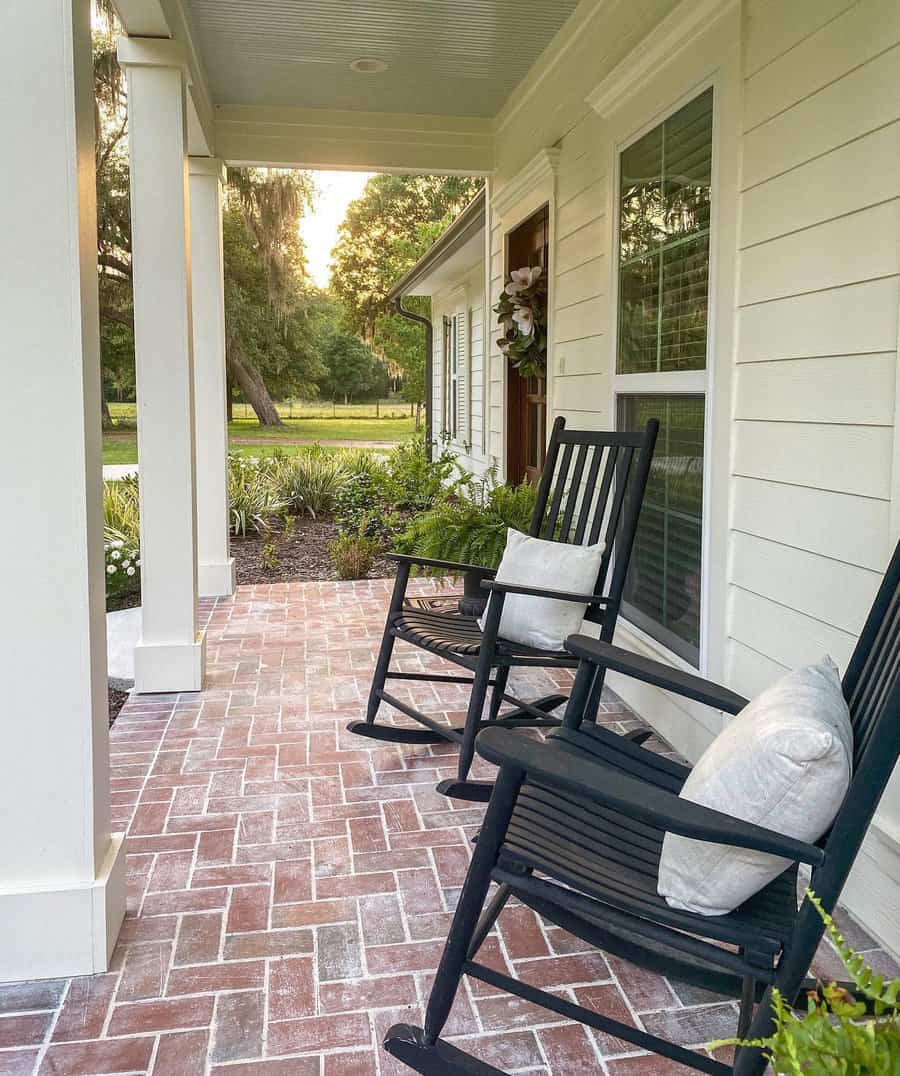
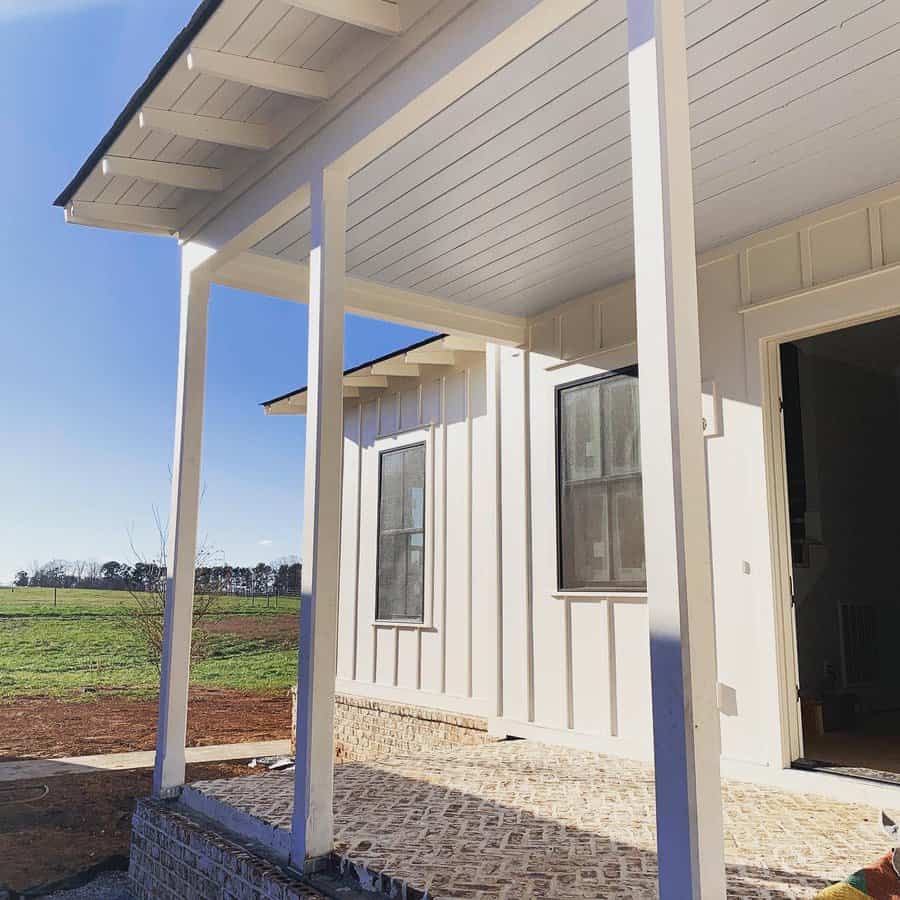
Few things are more pleasing than relaxing on the porch with a book and a beverage on a lazy summer afternoon. But creating the perfect outdoor living oasis requires the same attention to detail as the rooms inside your home.
While a plain porch roof protects you from the elements, it’s nothing great to look at while you’re relaxing below. Paint, beadboard, and other design features will elevate your porch experience to something truly special. These top porch ceiling ideas will inspire you to spruce up your outdoor living space.
[view_toc]
1. Experiment with Ceiling Materials
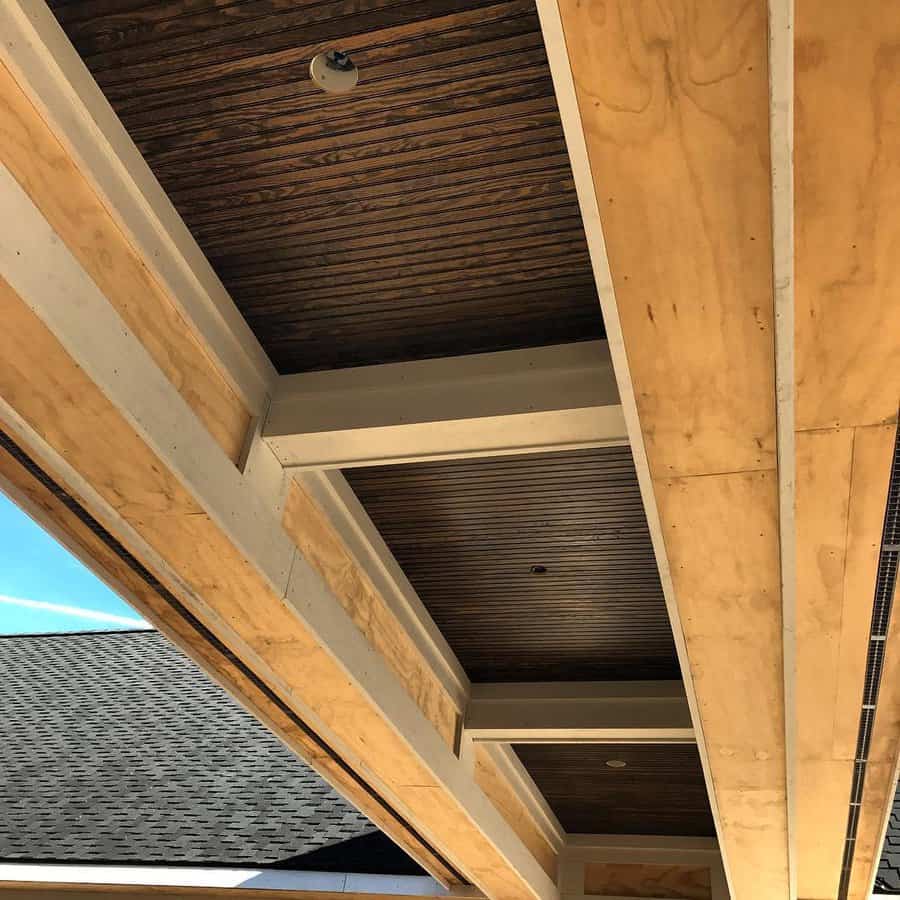
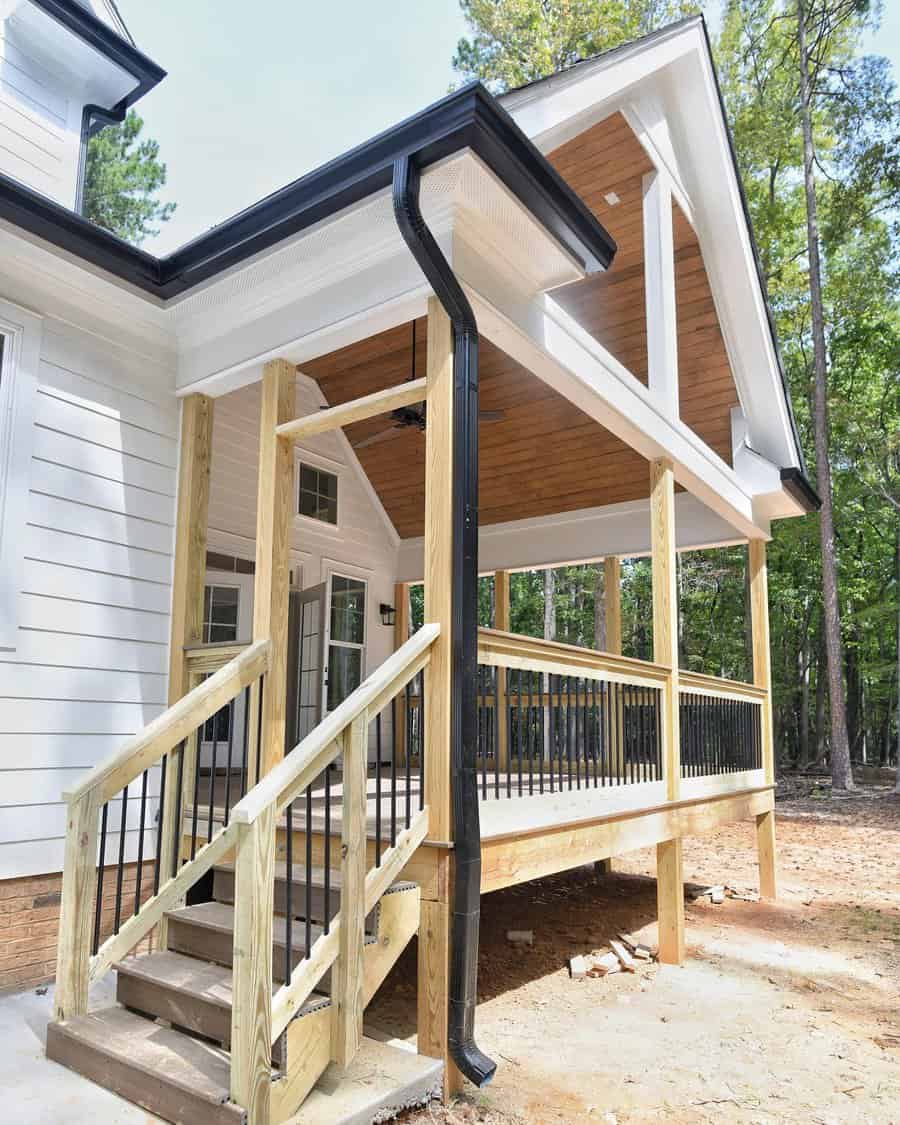
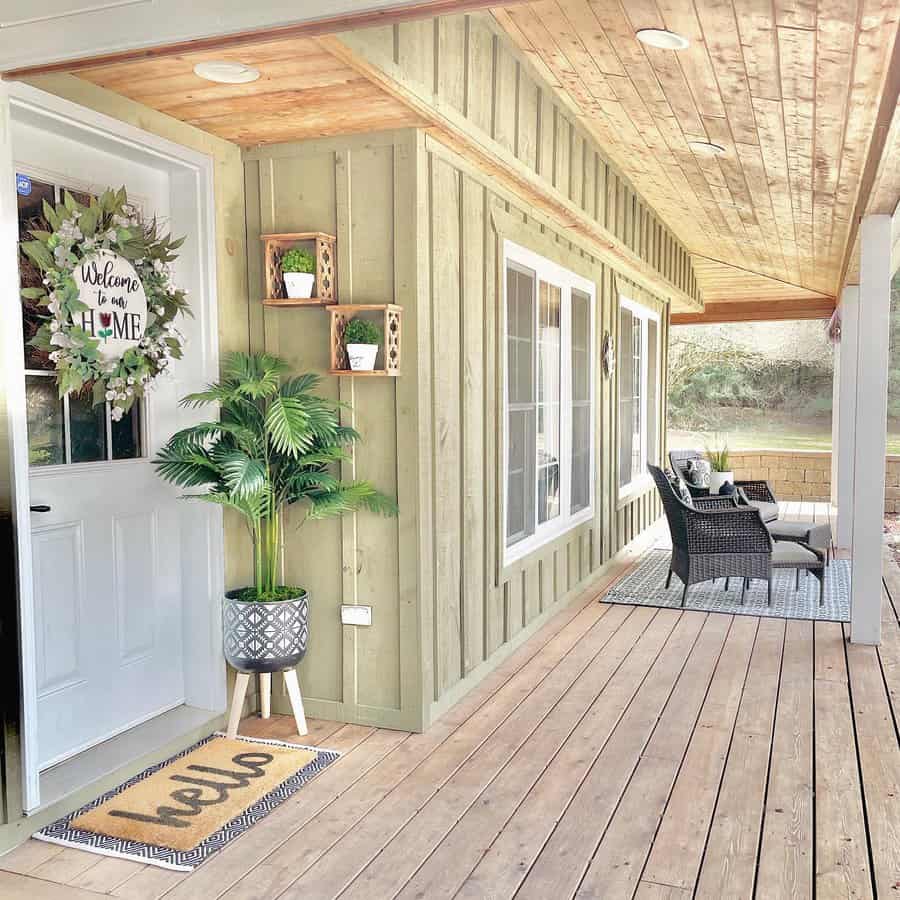
Enhance the appeal of your outdoor space by exploring various ceiling materials. One intriguing option is a composite porch ceiling. Combine a wooden ceiling with a painted frame to create a sophisticated and distinctive area for leisure and entertainment amidst nature’s beauty.
Get creative by blending different materials to craft a truly unique look that will impress your guests with your design prowess. Not only do composite porches boast lasting durability, but they also require minimal maintenance, ensuring your space maintains its aesthetic charm for years to come.
Source: @sweet_southern_homestead via Instagram
2. Create a Serene Porch Atmosphere
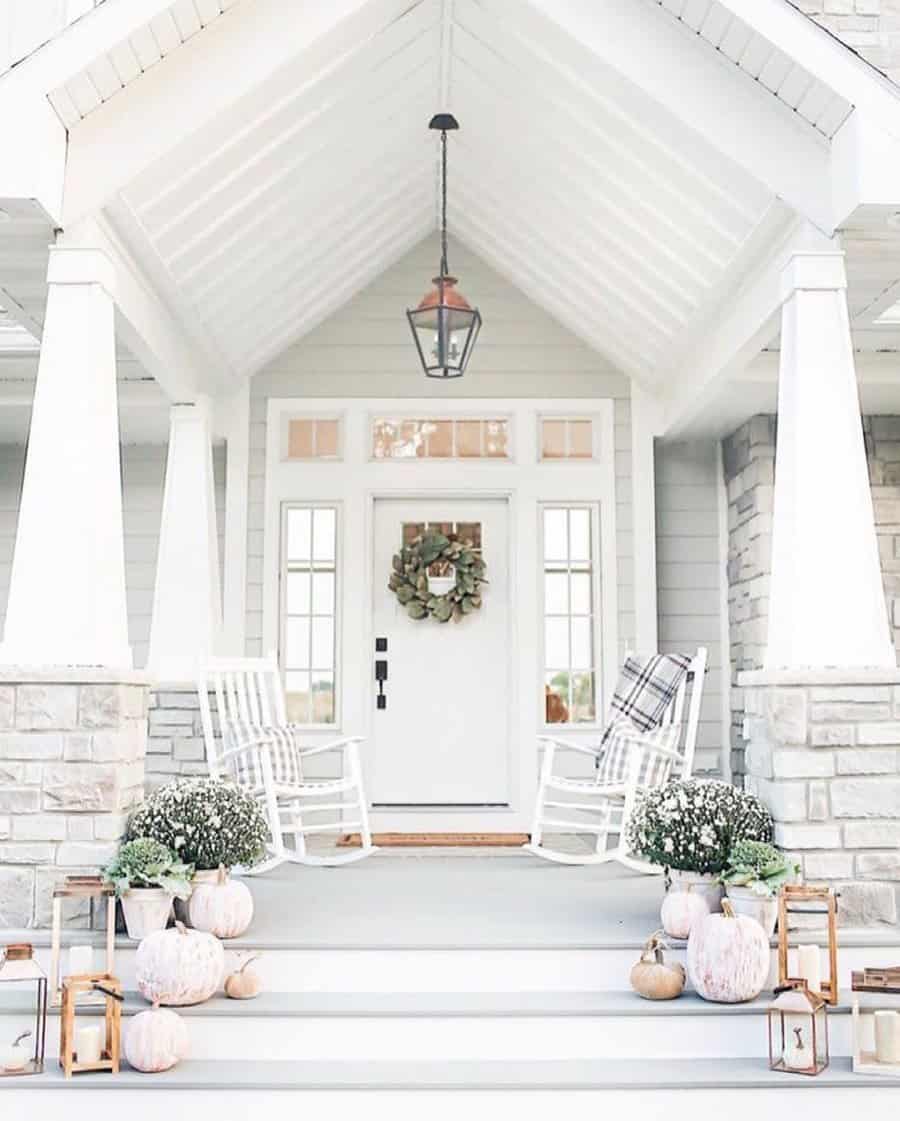
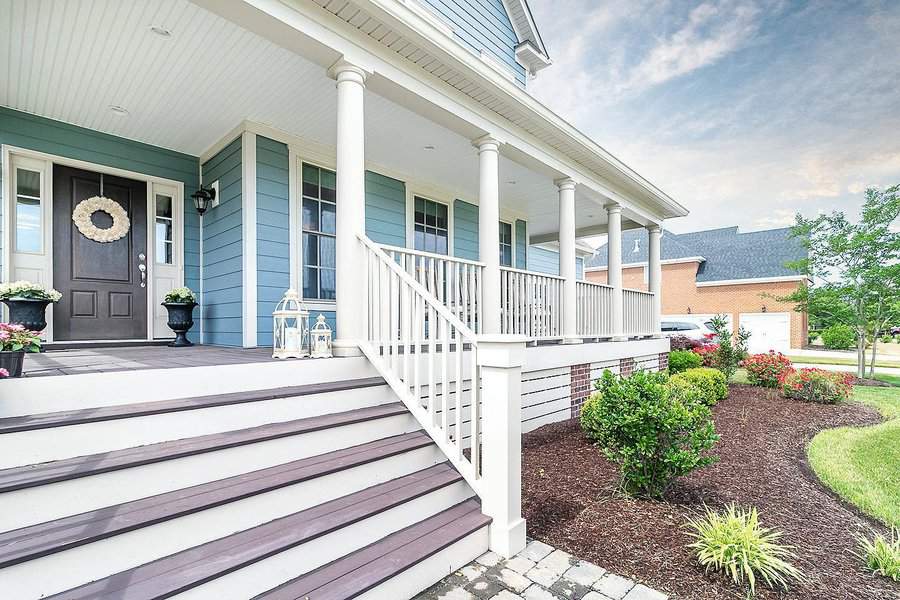
Choosing a light-colored porch ceiling can work wonders in creating a serene atmosphere. Consider soft pastels or classic white to evoke a calming ambiance. This simple change will not only soothe your guests but also leave them with a sense of tranquility. Pair it with comfortable seating and soft lighting to complete the inviting atmosphere.
Source: @ameliadesignandcompany via InstagramSource: @mrskaystiles via Instagram
3. Enhance with Porch Ceiling Beams
Introduce beams to your porch ceiling for a coastal-inspired oasis. These beams not only infuse charm but also add depth and height, bringing life to a plain ceiling. To achieve this look, consider painting the beams white or staining them for an authentic beachy vibe.
Pair the beams with light and breezy furnishings, such as wicker furniture and nautical accents, to complete your coastal retreat and make the most of your summer relaxation.
Source: @asnipofgoodness via Instagram
4. Decorate with Stylish Rafter Tails
Consider incorporating rafter tails into your porch ceiling design to infuse charm and creativity into your outdoor space. These wooden cutouts not only add visual appeal but also bolster the structural integrity of your porch by extending the rafters.
Rafter tails offer the added advantage of seamlessly complementing other porch components, creating a cohesive overall design. With a wide variety of styles available, you can select rafter tails that harmonize with your porch’s surroundings, whether you prefer a classic or eye-catching look. Elevate your porch’s appeal with the versatile and stylish addition of rafter tails.
Source: @boernerconstruction via Instagram
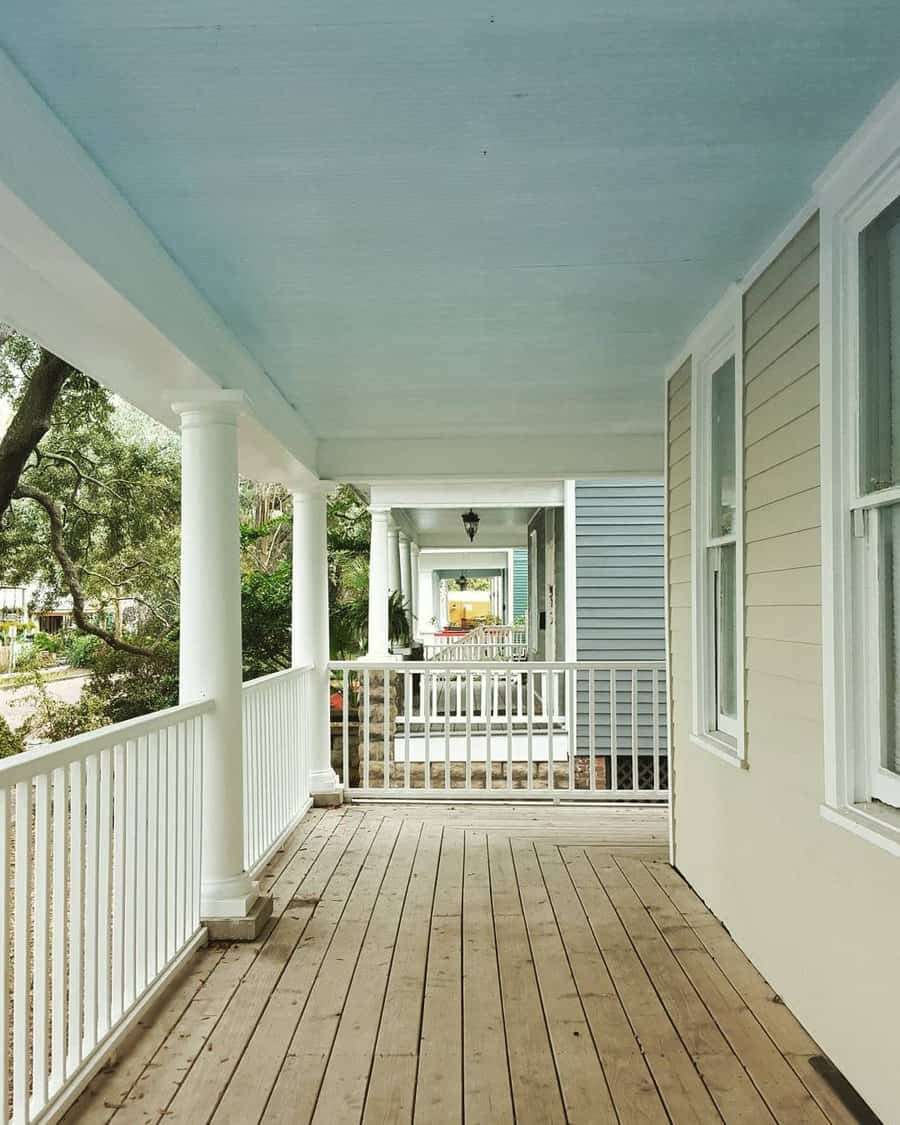
5. Stay Cool with Blue Ceilings
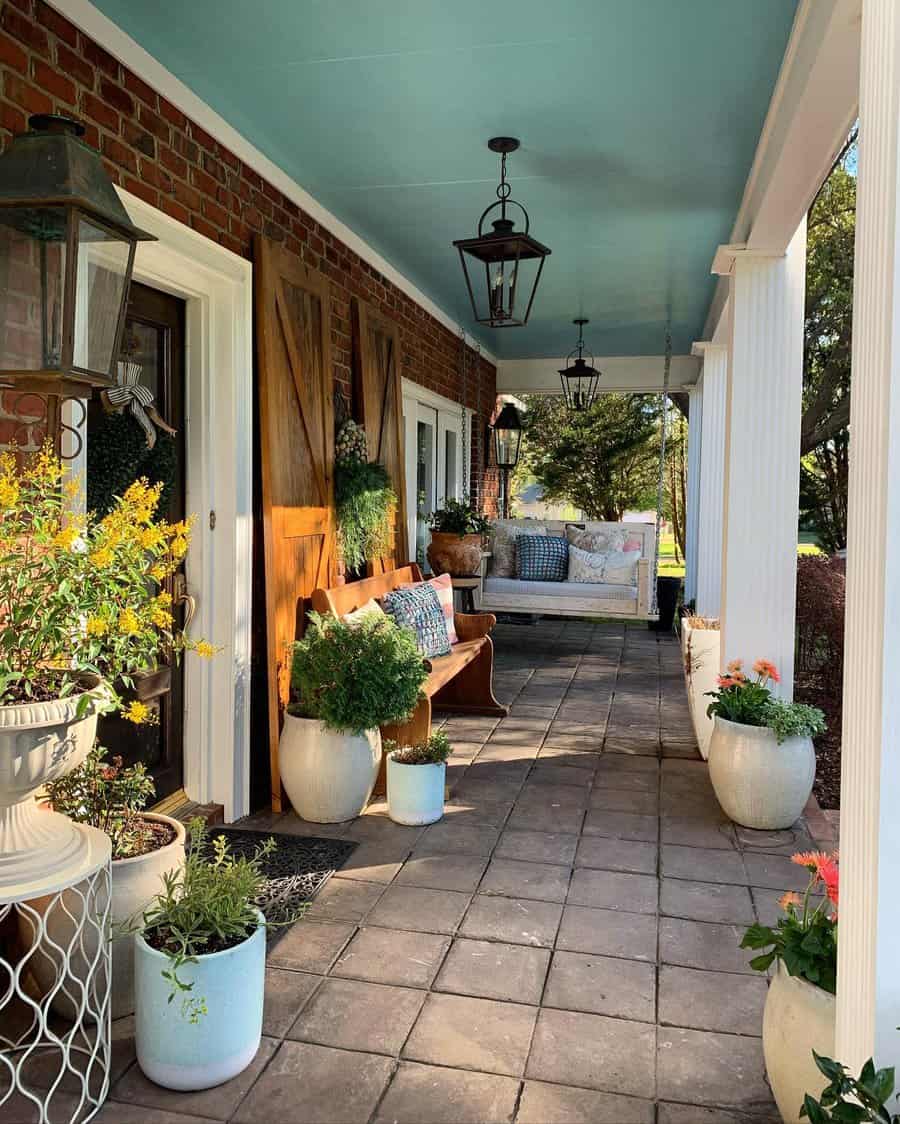
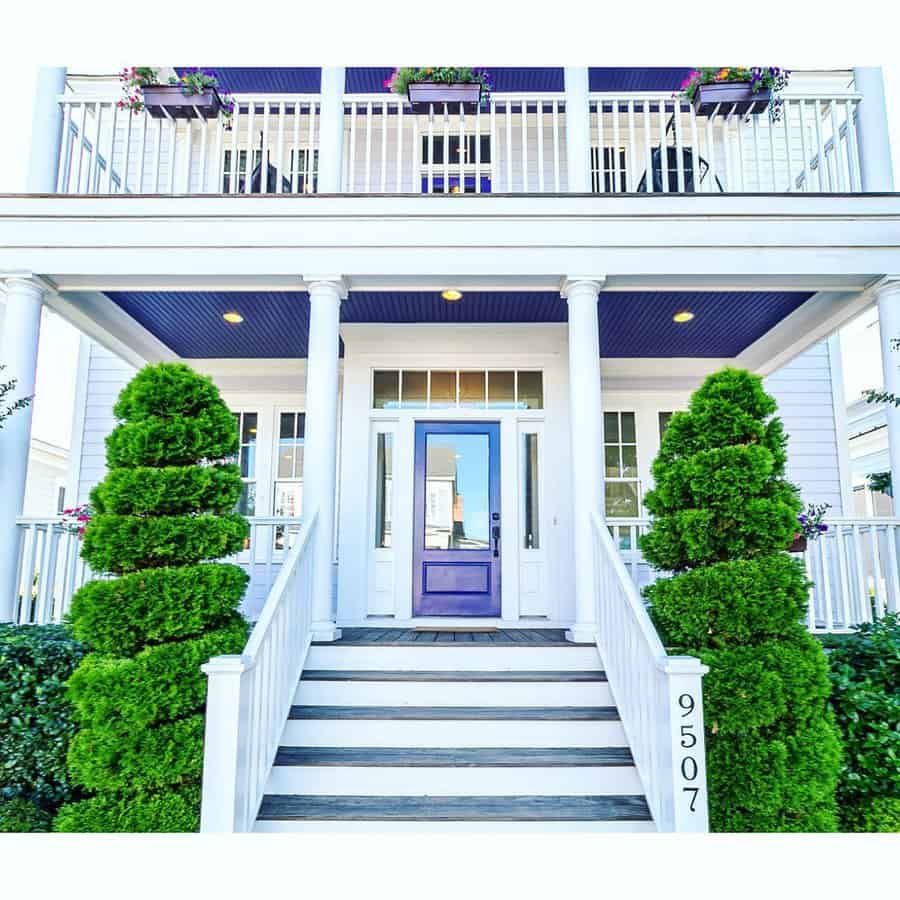
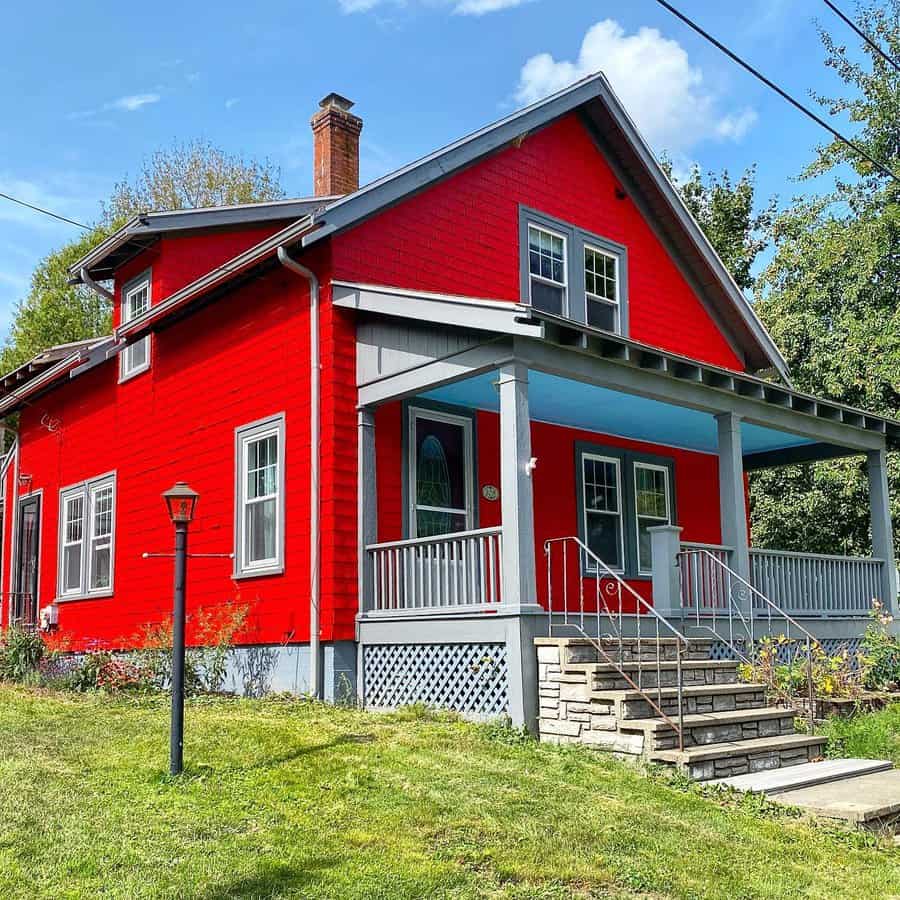
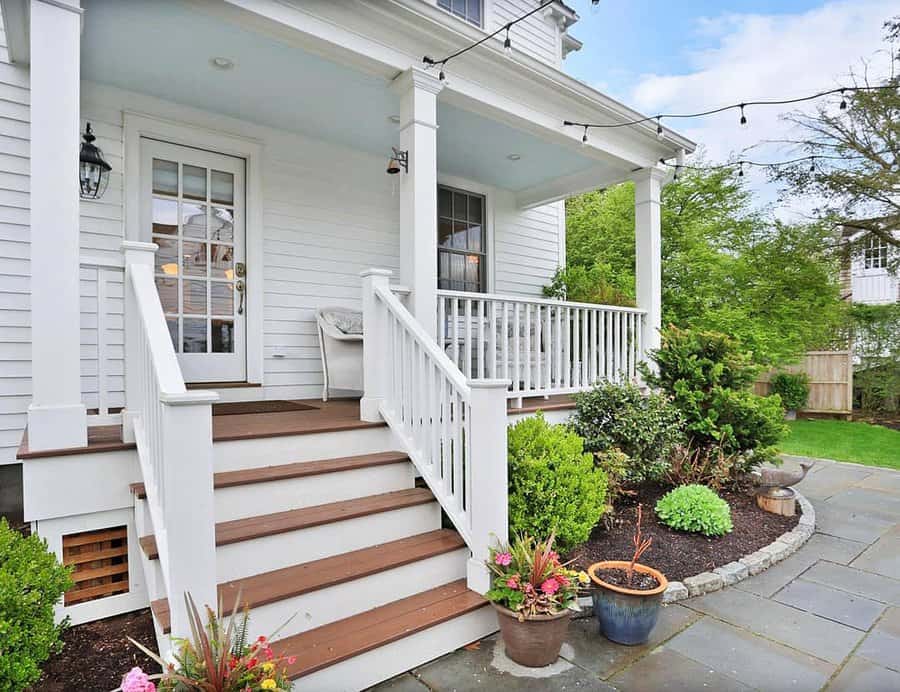
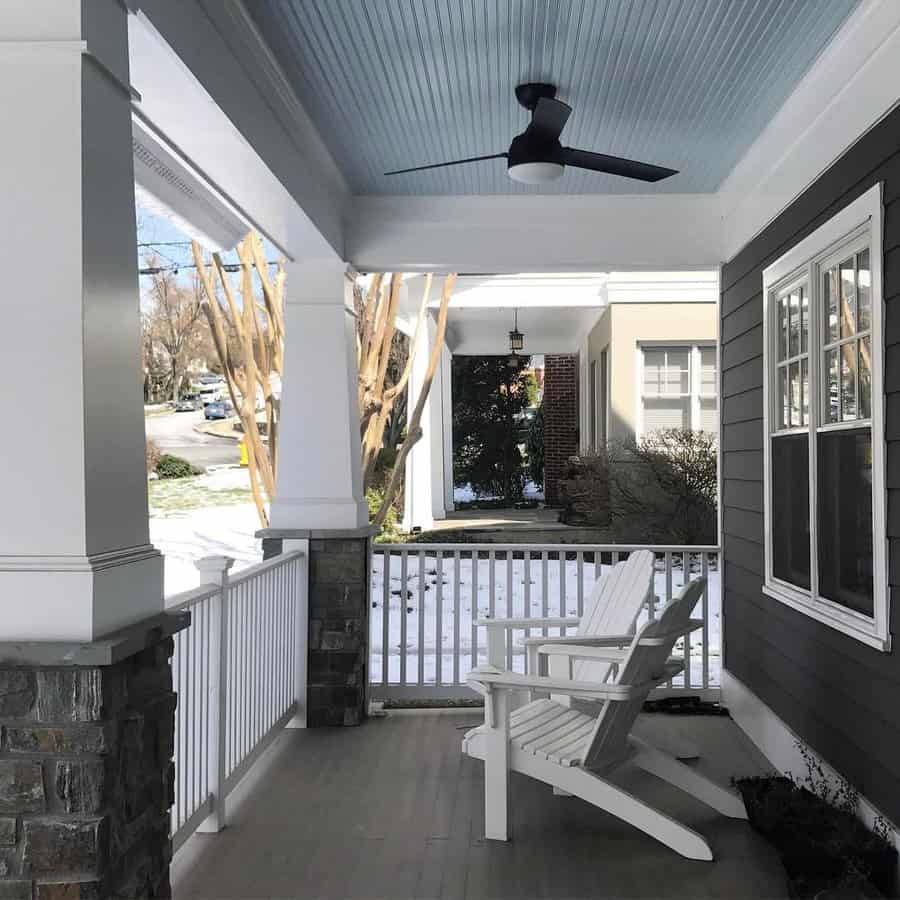
Painting your porch ceiling blue is a timeless choice that can instantly cool down your outdoor space. Whether you prefer a gentle baby blue or a vibrant electric shade, blue exudes a soothing aura, perfect for turning your porch into a peaceful retreat.
Additionally, blue ceilings may deter pests and symbolize good luck, adding to their appeal. When choosing this design, consider complementing it with white or light-colored furniture to create a refreshing coastal vibe. Investing in your porch’s aesthetics, particularly through a blue ceiling, can truly transform your outdoor area into a haven of tranquility.
Source: @elizabethwrightrealtor via InstagramSource: @irenedavisdotcom via InstagramSource: @jhogarty_ via InstagramSource: @jhogarty_ via InstagramSource: @snyderpritchardhomes via Instagram
6. Make a Statement with Ceiling Lamps
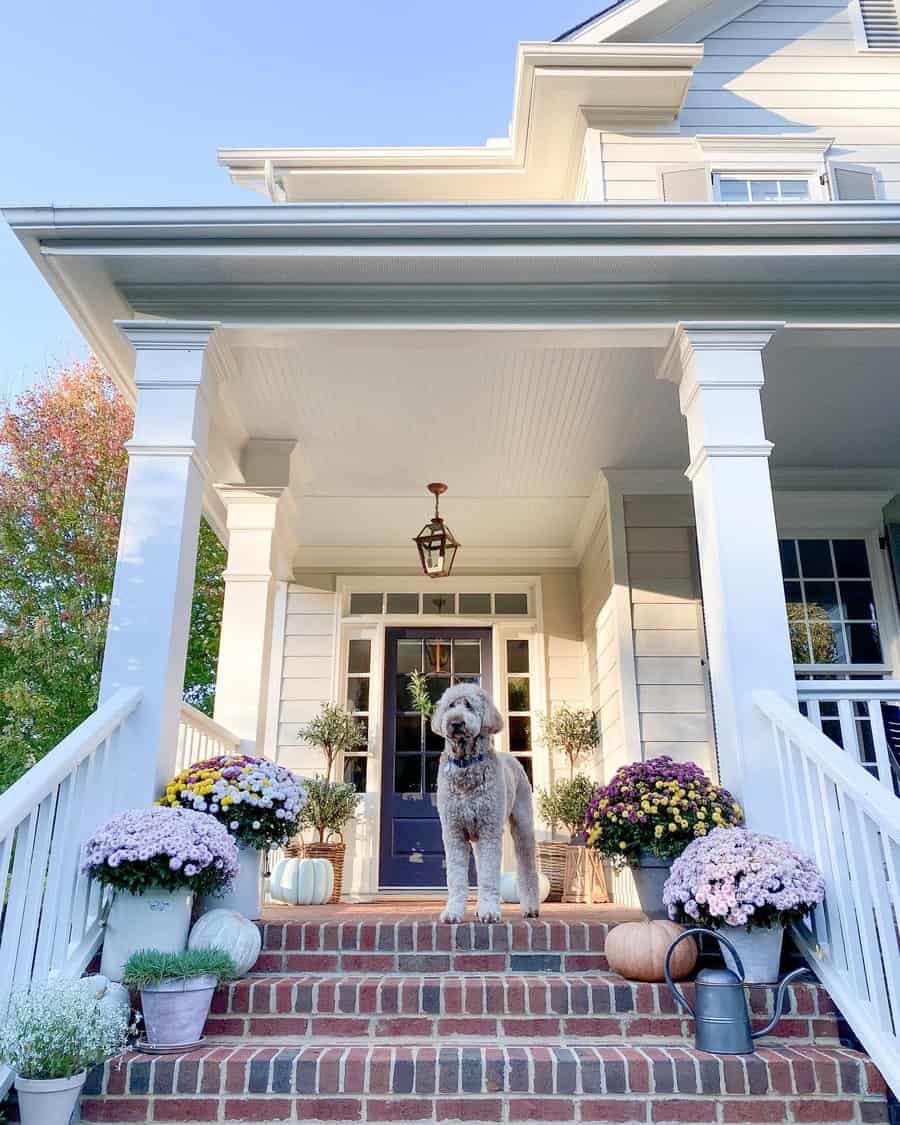
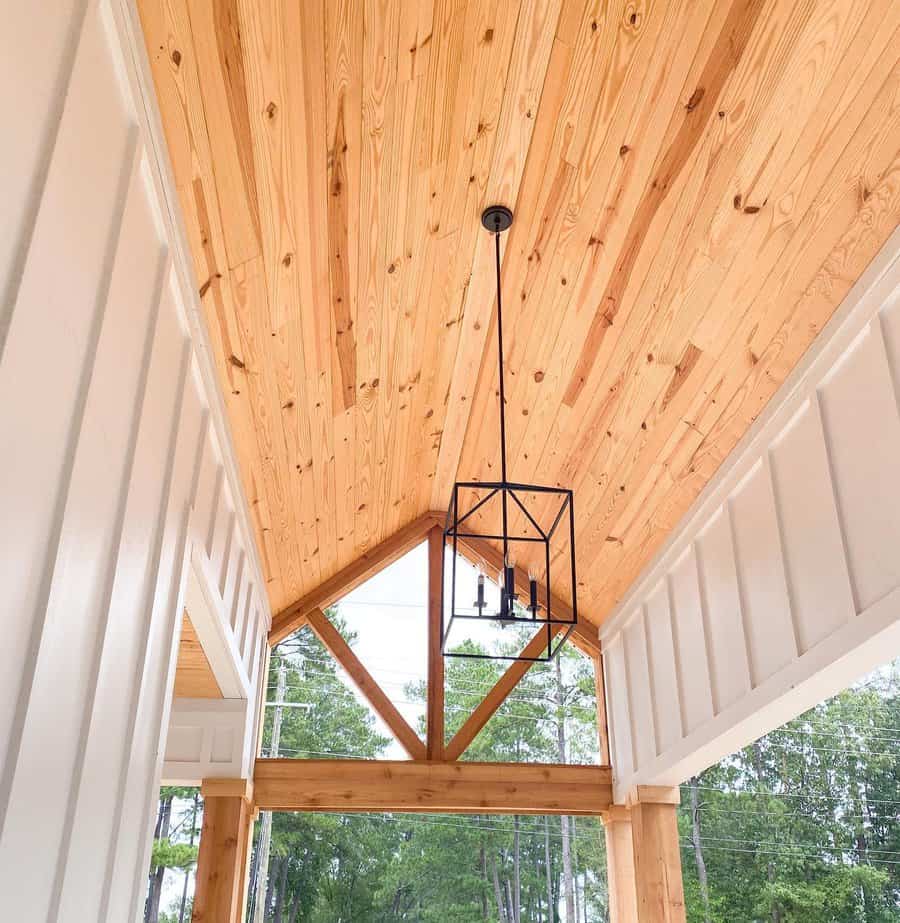
Pendant lighting is a fantastic way to make a statement with your porch ceiling. It effortlessly adds a unique and stylish touch to your outdoor space while providing essential lighting for your evenings outdoors. Whether you choose a single standout pendant or multiple scattered lights, this design choice can effortlessly transform your porch from ordinary to extraordinary.
Consider complementing this lighting with other decor elements like comfortable seating or potted plants for a complete and inviting porch ambiance.
Source: @amestokill via InstagramSource: @joycefernandesrealestate via InstagramSource: @houseofbluehues via Instagram
7. Coordinate with Wooden Walls
Coordinating your wood porch ceiling with wooden walls creates a charming and rustic atmosphere. This design choice evokes the cozy ambiance of a mountain cabin getaway, making it ideal for impressing guests or creating a tranquil escape at home. To complete the look, consider adding wooden furniture, such as rocking chairs or a wooden dining set, and layering with soft textiles like cushions and throws for a harmonious and inviting porch design.
Source: @domenicohomes via Instagram
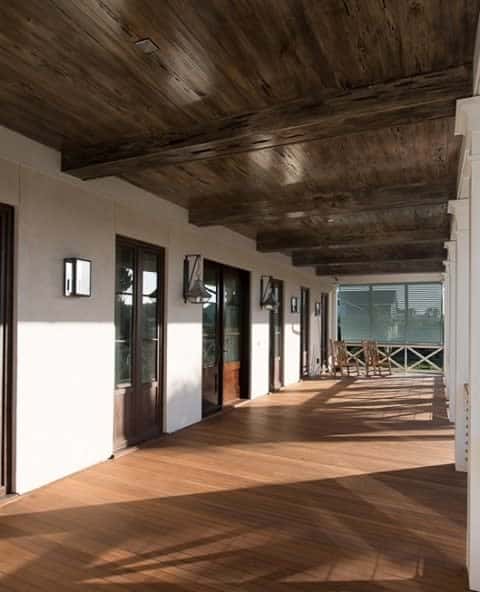
8. Add Drama with Dark Wood
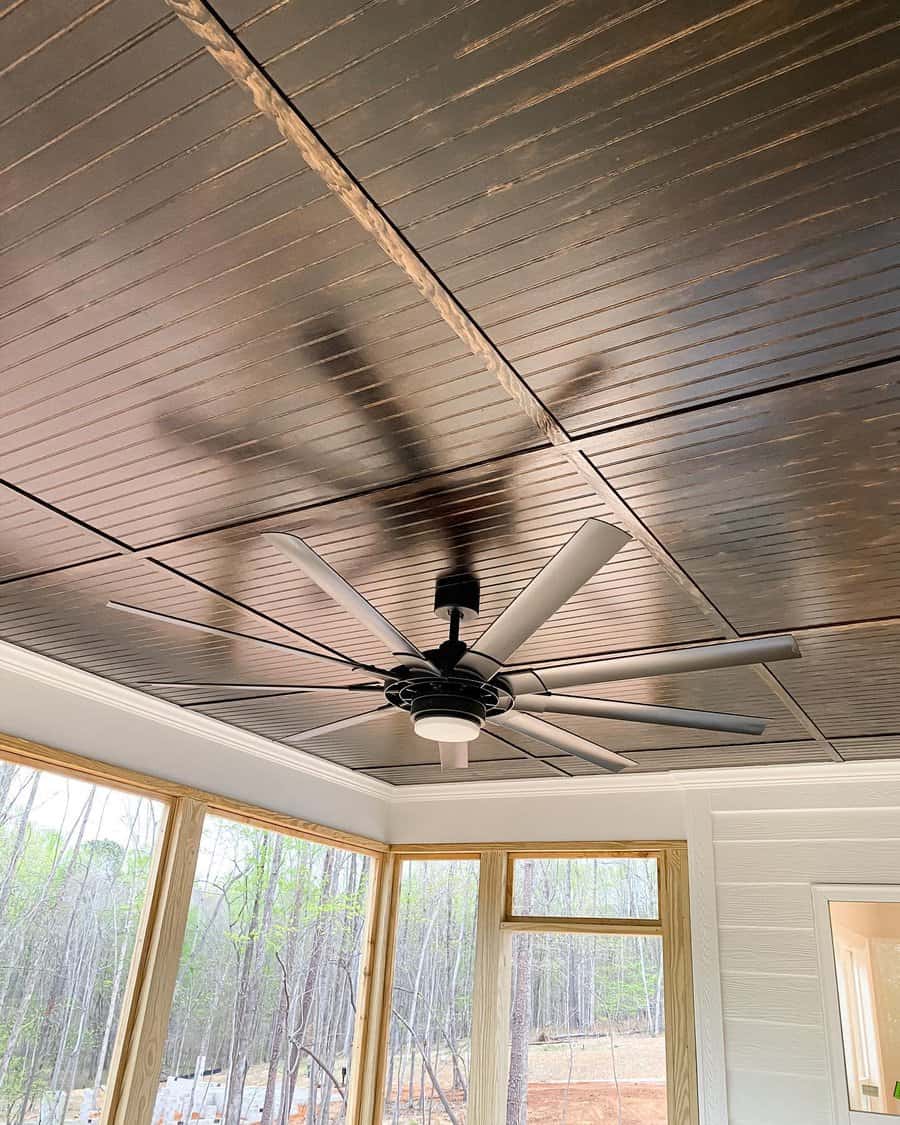
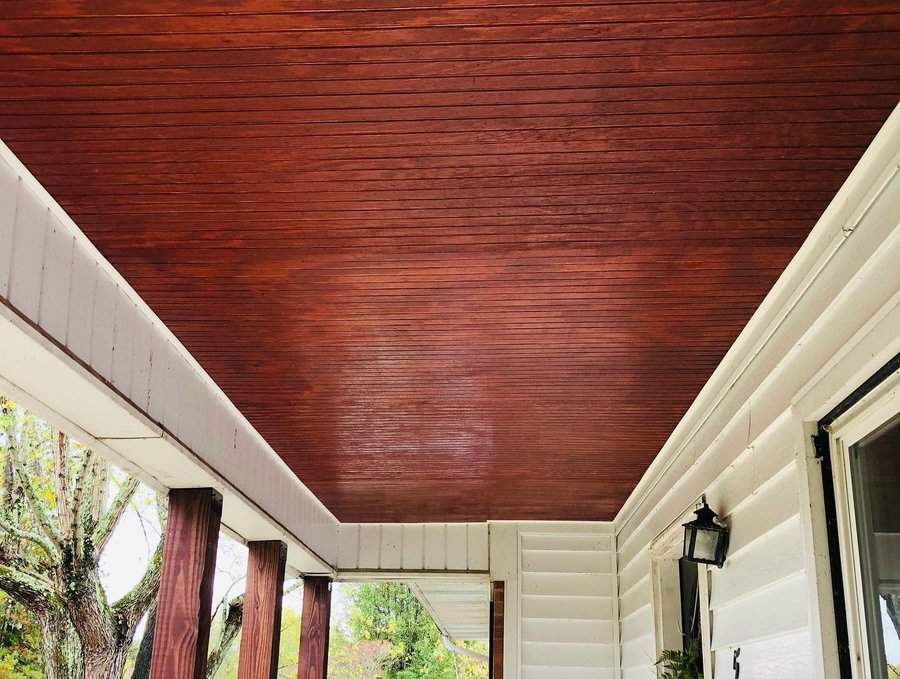
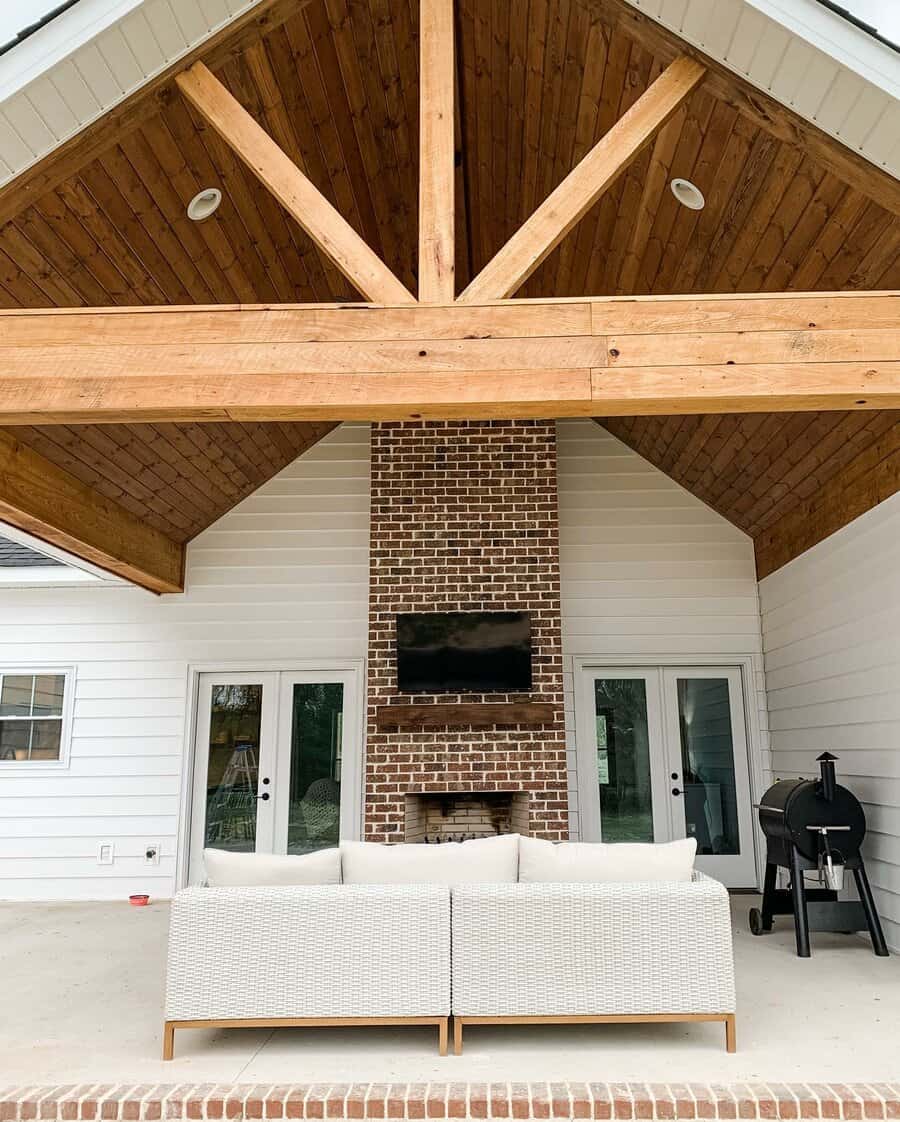
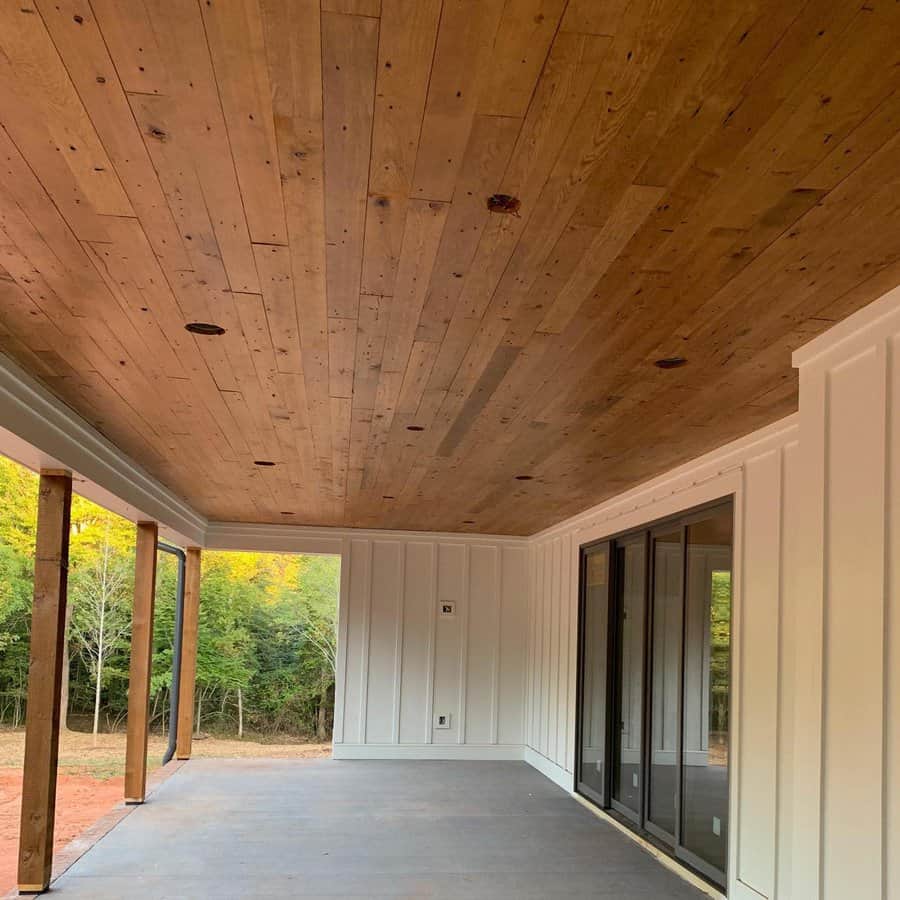
Dark wood ceilings can add a touch of drama to your porch design. Their deep, rich colors create a striking contrast against light walls, resulting in an inviting and cozy atmosphere. To complement this look, consider using neutral or muted color palettes for your furniture and decor, adding soft lighting fixtures, and incorporating textured cushions and rugs for a balanced and sophisticated outdoor space that exudes style and comfort.
Source: @mysoutherncharmer via InstagramSource: @sean_patrick_builders via InstagramSource: @j.millsconstruction via Instagram
9. Small Ceilings, Big Charm
For a refreshing makeover of your small porch ceiling, consider using light colors. Painting it in bright white or subtle pastel hues can instantly brighten up your entryway and make it more inviting.
Light colors create a sense of openness and airiness, making the narrow space feel more expansive. To complete the look, add some potted plants or hanging baskets to your porch, which not only complement the light colors but also add a touch of nature to your outdoor area, creating a welcoming and visually appealing atmosphere.
Source: @strongshieldsiding via Instagram
10. Illuminate with String Lights
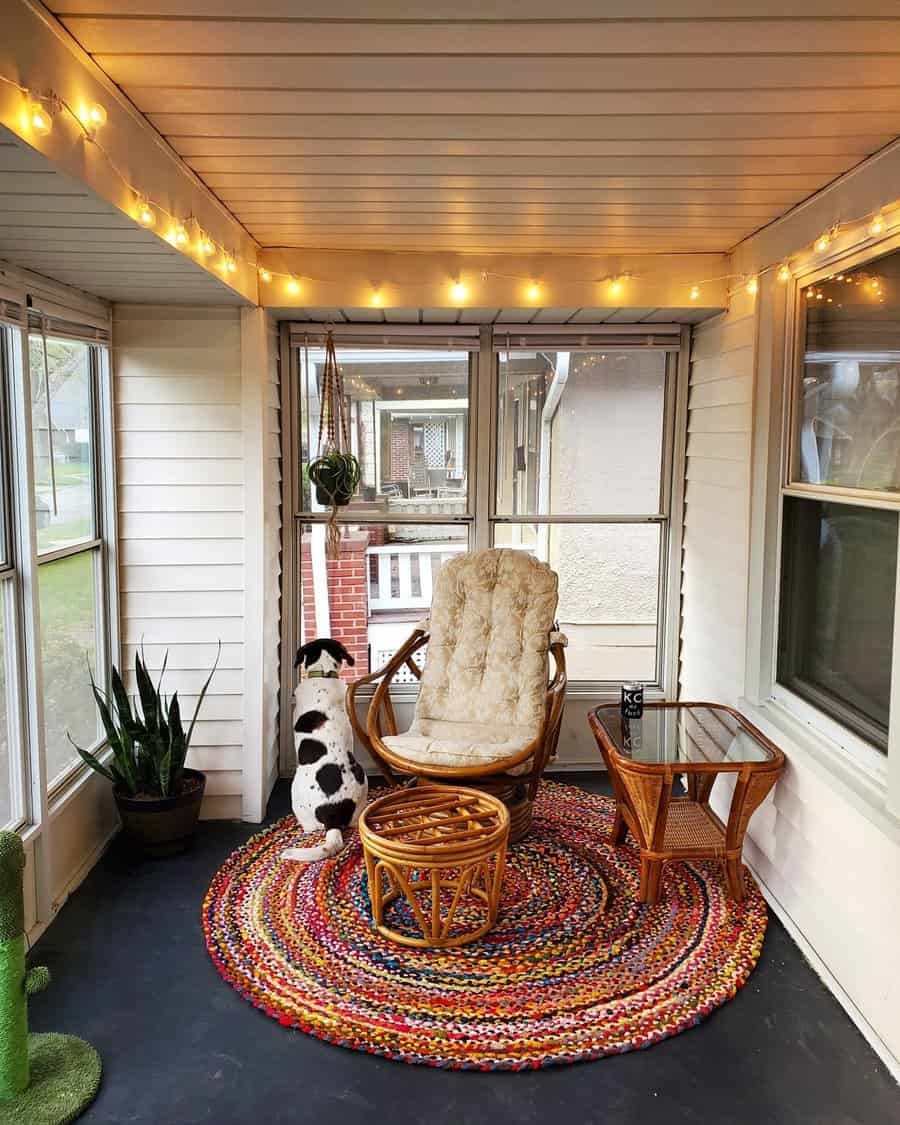
Transform your outdoor living space into a enchanting haven by adorning your porch ceiling with string lights. These versatile strands offer adjustable and replaceable lighting that can suit any occasion or season.
Picture romantic summer nights bathed in a soft, dreamy glow created by these charming lights. To complete the look, consider adding cozy seating, such as cushioned chairs and outdoor rugs, to make your porch a welcoming retreat both during the day and as night falls, ensuring it’s a place you’ll cherish year-round.
Source: @rachelhain via Instagram
11. Elevate with High Ceilings
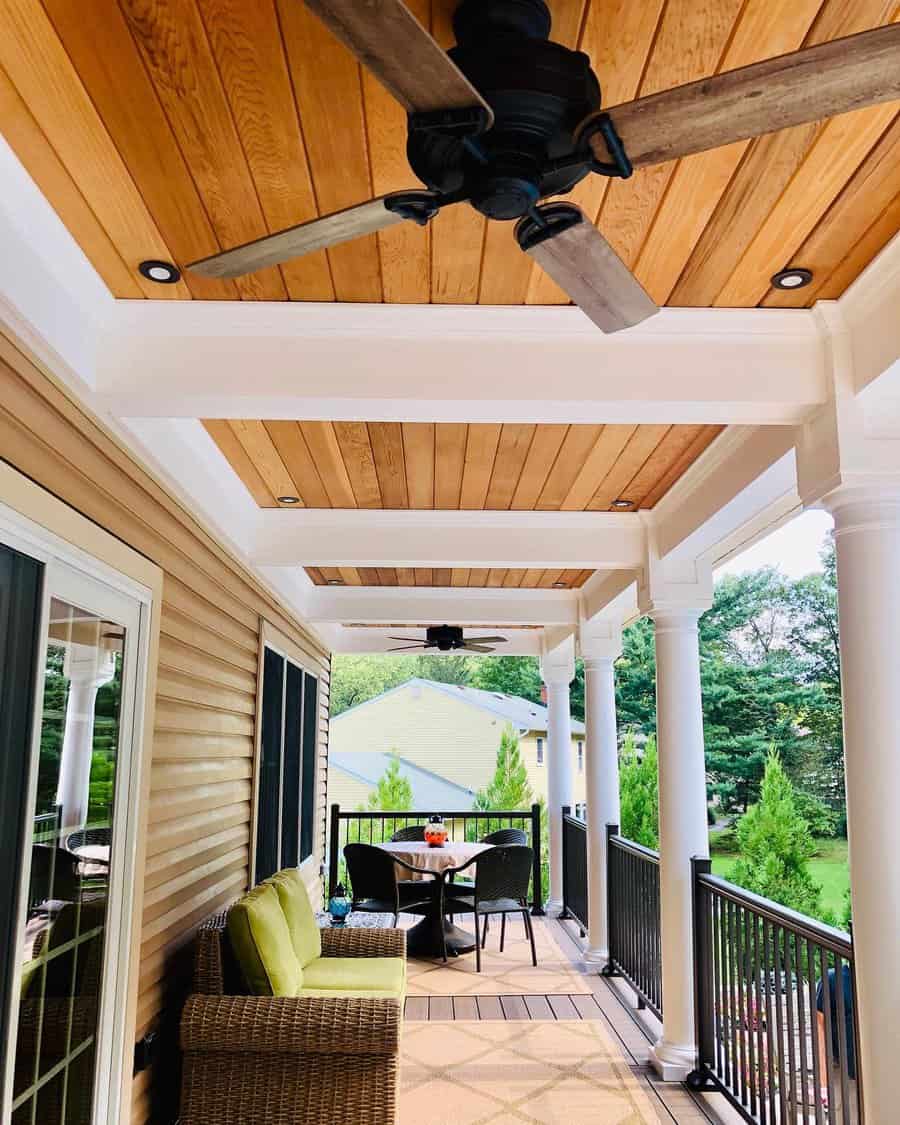
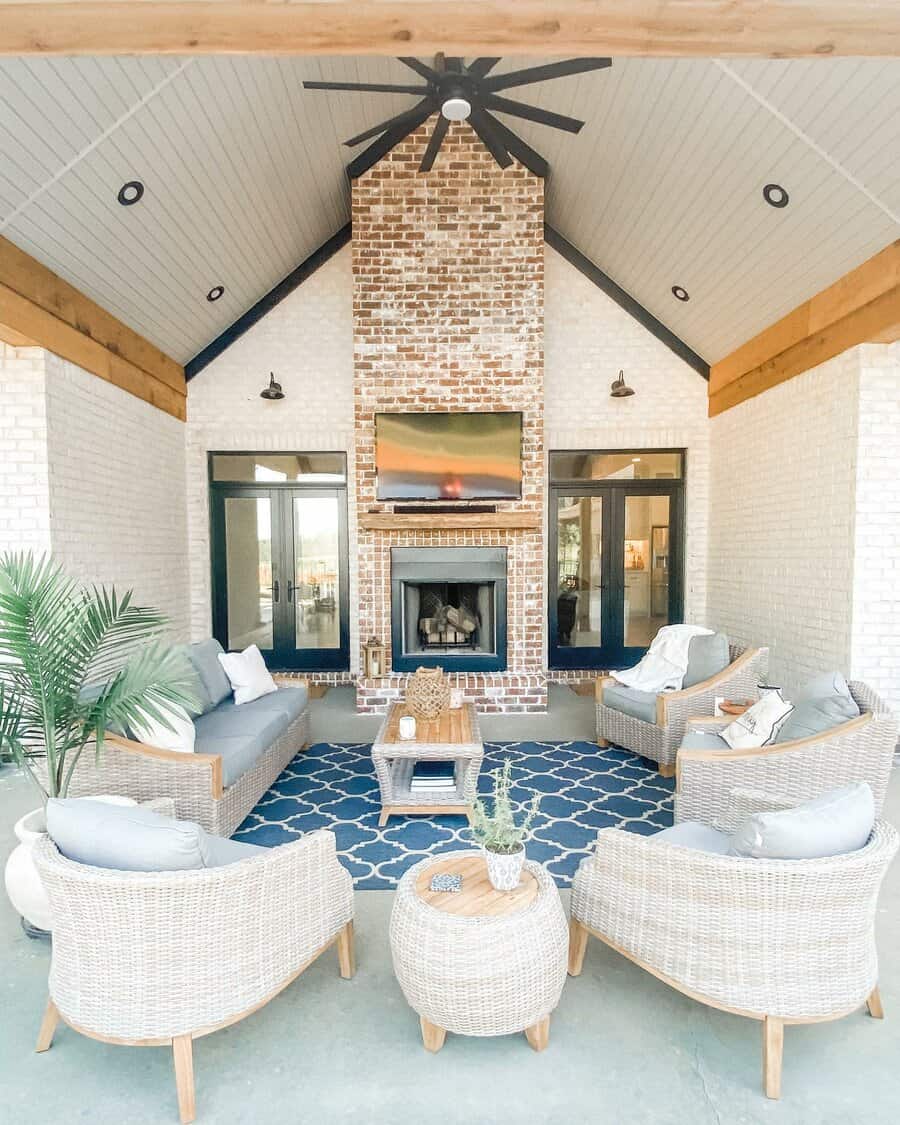
High porch ceilings bring an open and spacious feel to your outdoor area. Emphasize your home’s impressive height by installing a ceiling fan, providing both refreshing airflow and a stylish touch.
Envision relaxing on warm summer evenings, enjoying the cool breeze that flows through your porch. To enhance the space further, consider adding tall potted plants and cozy outdoor seating, such as a porch swing or rocking chairs, to create a welcoming retreat where you can unwind and soak in the serene atmosphere of your private haven.
Source: @sweet_southern_homestead via InstagramSource: @thirteenacres via Instagram
12. Achieve Rustic Porch Elegance
For a touch of farmhouse charm in your outdoor space, consider a distressed wood ceiling. Distressed wood beams exude classic appeal and rustic aesthetics, transforming your porch into a cozy cabin retreat.
The weathered finish lends a worn-in charm that pairs beautifully with cream-colored or neutral paint. To infuse a hint of modernity, incorporate natural materials like bamboo and rope for added texture and contrast, creating an inviting and unique atmosphere for lazy summer days with friends.
Source: @herlongarchitects via Instagram
13. Seamless White Ceilings
White porch ceilings offer a clean and seamless backdrop for your outdoor living area. To make the most of this design, consider contrasting the white ceiling with vibrant colors or earthy tones in your decking and furniture. You can opt for equally clean white furniture and accents for a minimalist look or choose more eye-catching elements to let your creativity shine. To complete the design, add potted plants, colorful cushions, and decorative lighting fixtures to infuse personality and style into your porch space.
Source: @irenedavisdotcom via Instagram
14. Stay Cool with Ceiling Fans
Installing a ceiling fan on your porch not only adds to its aesthetics but also offers practical relief during hot summer months. The gentle breeze creates a more pleasant atmosphere, allowing you to enjoy your porch even as the temperatures rise.
When choosing a fan, consider both style and functionality, as there are numerous decorative options available. To optimize its effectiveness, place the fan strategically to ensure even airflow, and pair it with comfortable seating and outdoor lighting to create an inviting outdoor oasis perfect for day and night relaxation.
Source: @moserarchitects via Instagram
15. Arch Your Porch Ceiling
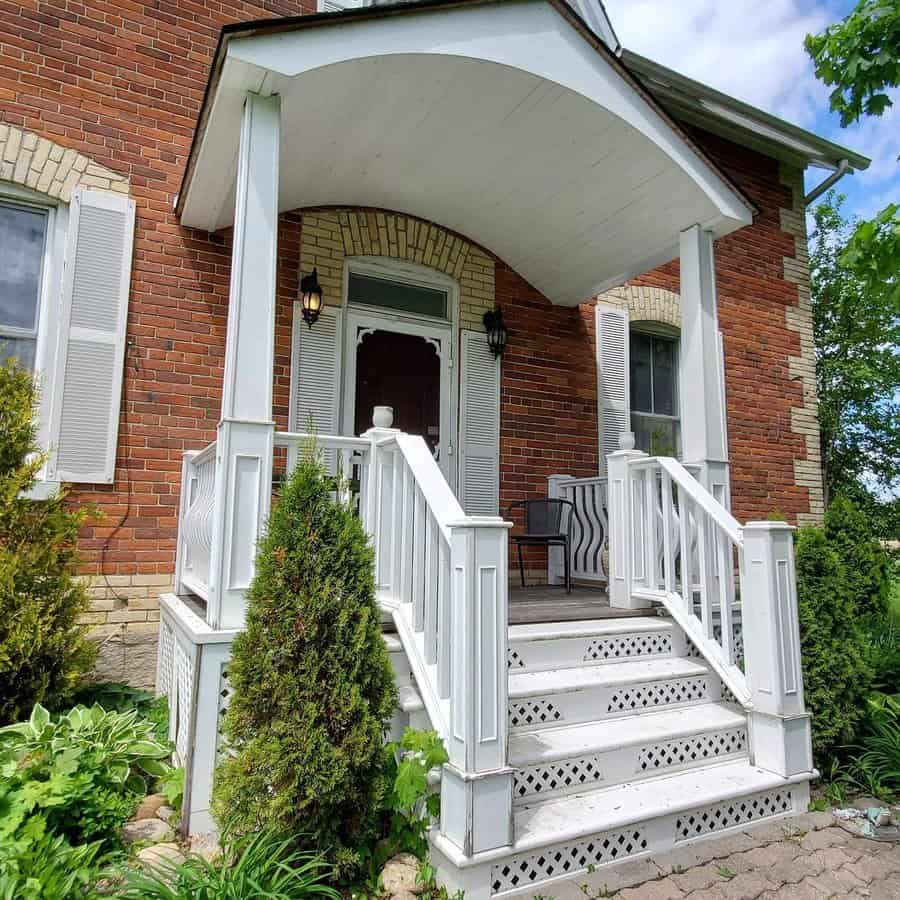
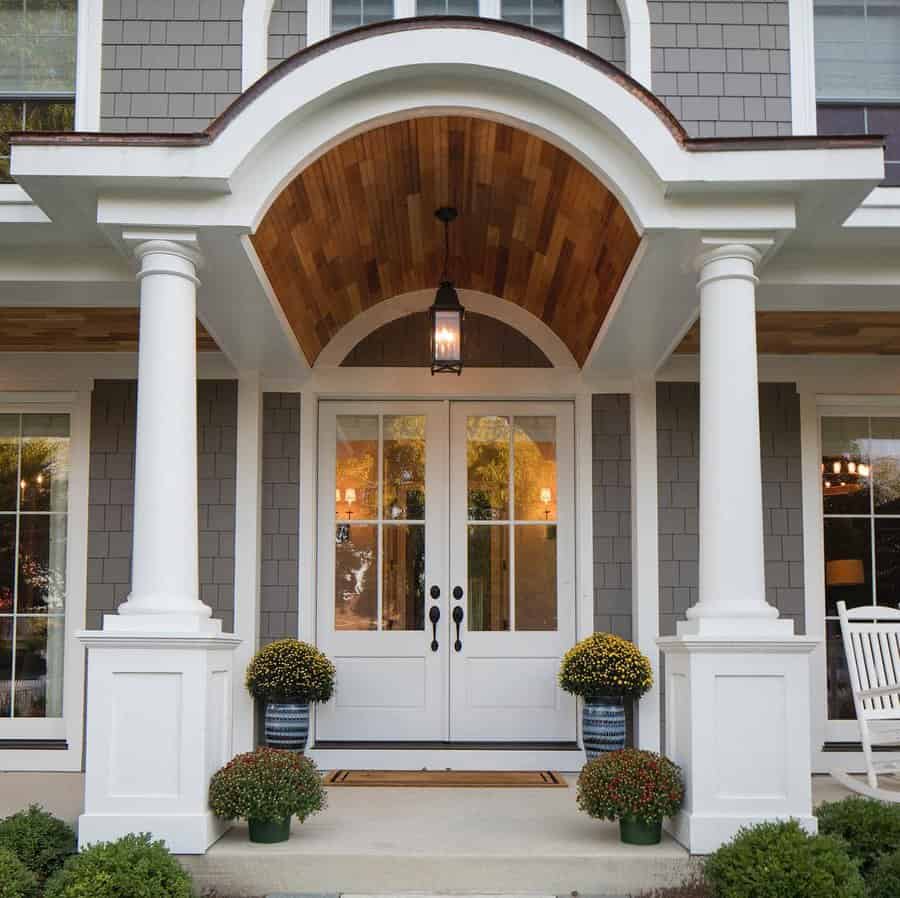
Consider an arched porch ceiling to infuse traditional charm and elegance into your home’s exterior. The graceful curve of an arched ceiling complements both traditional and modern architectural styles, adding a touch of sophistication to your porch. To enhance its appeal, pair it with architectural elements like columns or decorative moldings.
Additionally, installing a ceiling fan or pendant lights can further enhance the aesthetics while providing practical functionality for your outdoor space. An arched porch ceiling not only elevates the visual appeal but also offers added protection from the elements, creating a warm welcome for your visitors.
Source: @olsencancraft via InstagramSource: @homesbypinnacleinc via Instagram
16. Expand Space with Matching Ceilings
Coordinating your porch ceiling with the walls can instantly make your outdoor space feel more expansive and inviting. While matching colors is a safe choice, consider creating a dynamic contrast by selecting complementary shades for the wall and ceiling. For example, if you have neutral-toned walls, opt for a slightly lighter or darker hue for the ceiling to add depth and interest. To complete the look, add comfortable seating, outdoor rugs, and potted plants to create a harmonious and welcoming porch that feels like an extension of your home.
Source: @sairamalikrahman via Instagram
17. Simple Canopy Overhangs
Adding a canopy overhang to your porch ceiling is a timeless choice that combines aesthetics and functionality. This design not only adds charm to your outdoor space but also provides valuable shelter from the weather.
It’s particularly well-suited for smaller porches, lending them a classic and inviting appeal. To achieve this look, consider using natural materials like wood or bamboo for the canopy, and complement it with vintage-style furniture and cozy lighting to create a warm and welcoming atmosphere for your porch.
Source: @our_newhome_no7 via Instagram
18. Hang Greenery from the Ceiling
Transform your porch into a lush oasis by hanging greenery from the ceiling. Consider installing built-in ceiling hooks designed for suspending planters or string gardens. These hooks are both functional and decorative, adding a distinctive charm to your outdoor area. To achieve this look, select a variety of indoor plants or succulents, ensuring they suit your porch’s lighting conditions. Combine hanging greenery with cozy seating and soft lighting to create a tranquil retreat where you can relax and unwind.
Source: @patriotdiy via Instagram
19. Industrial Vibe with Matte Black Posts
For an industrial-inspired outdoor space, consider incorporating matte black posts into your porch ceiling design. This addition complements rustic red brick walls or industrial metal beams, creating a cohesive and bold statement. To complete the industrial look, pair it with sleek metal furniture, minimalistic decor, and industrial-style lighting fixtures.
Adding potted succulents or cacti can soften the starkness of the black and introduce a touch of greenery for a balanced and captivating porch that captures the essence of modern industrial design.
Source: @coupleofquinns via Instagram
20. Swing in Boho Style
Elevate your porch’s cozy factor with a bohemian chic touch – a hanging swing. Installing a swing below your porch ceiling not only adds charm but also provides a delightful spot for relaxation. To enhance the boho style, layer the swing with colorful cushions, throw blankets, and a macramé plant hanger. Incorporate a small side table for your beverages or books, creating an inviting and serene porch retreat perfect for lazy summer days or cozy evenings under the stars.
Source: @johnston.escapes via InstagramSource: @adelehmcd via InstagramSource: @livesimplymodernfarmhouse via Instagram
21. Embrace Light Wood Ceilings
Consider adding a light wood porch ceiling to elevate your outdoor living area. Its versatile style and subtle color palette allow for effortless pairing with pastel walls or traditional brickwork, providing a unique and visually appealing look for your home.
The light wood finish creates an airy and inviting ambiance, perfect for year-round outdoor relaxation. To complement this design, incorporate natural materials in your furniture and decor choices, such as wicker or rattan seating and potted plants, to create a harmonious and tranquil porch that’s both stylish and comfortable.
Source: @melissa_janzso_designs via Instagram
22. Timber Truss Grid for Character
Consider elevating the character of your porch by incorporating a timber truss grid on the ceiling. This design choice infuses a rustic charm reminiscent of old-fashioned farmhouses. To complement this look, consider installing a ceiling fan for added functionality and comfort during warmer days. The warm, inviting ambiance created by the exposed wood makes your outdoor space an inviting haven year-round. Explore various timber truss grid options to find the perfect fit for your porch.
Source: @pinyanfarmhouse via InstagramSource: @thejoyfilledfarmhouse via Instagram
23. Low Ceilings, Cozy Space
Opting for a low porch ceiling can be a cost-effective way to create a modern and inviting outdoor entertainment space. By keeping the ceiling lower, you’ll not only reduce energy costs but also give your outdoor area a contemporary makeover without breaking the bank. Consider using creative paint or wall treatments to enhance the aesthetics and make the most of your cozy space.
Low porch ceilings can be an opportunity for unique design choices that save both time and money, resulting in a stylish and welcoming outdoor retreat.
“A single rose can be my garden… a single friend, my world.” – Leo Buscaglia
Building a garden in your backyard can be a rewarding experience. There’s nothing more satisfying than heading out into your backyard, picking your vegetables, and preparing a fresh meal with ingredients from your garden.
You don’t need to have an extensive farm; you just need a small garden with a few different types of vegetables. So set aside a weekend and get your garden started.
Whether you have a small or large space available, these DIY garden ideas will help you get started on your DIY garden.
[view_toc]
1. Repurpose Rusty Items for Planting
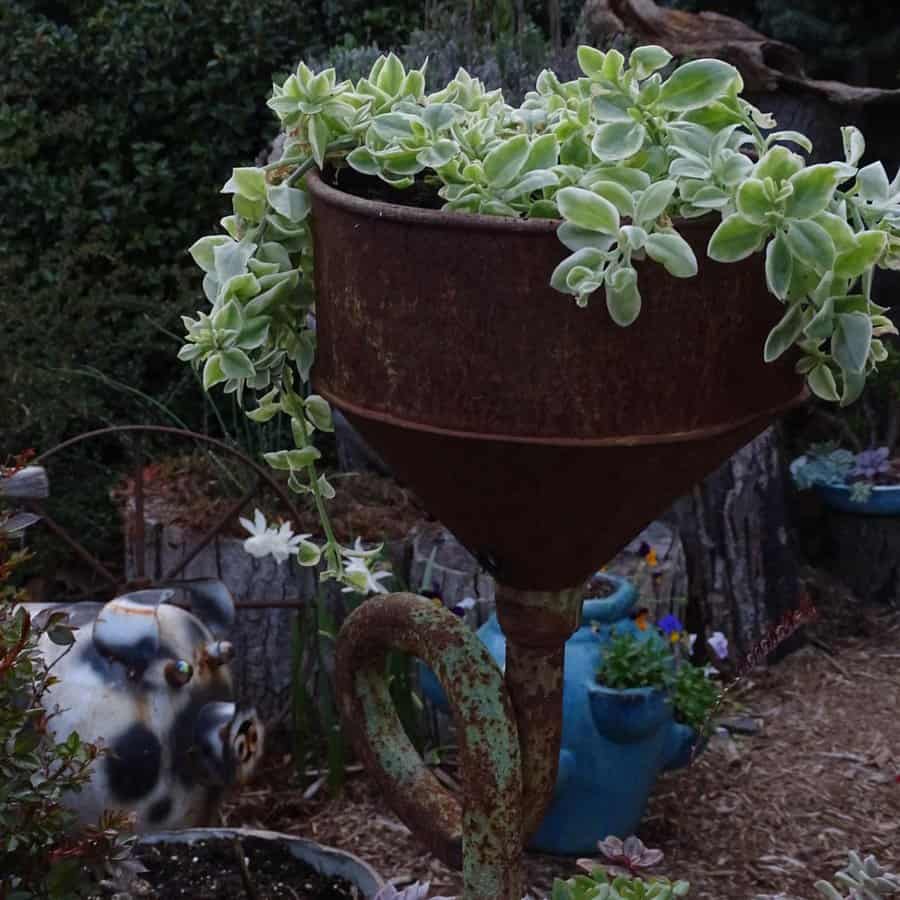
For budget-friendly garden projects that blend creativity with resourcefulness, repurpose rusty items into charming plant displays. An old chair can become a striking statement piece with a fresh coat of paint, while collections of repurposed cans or stone sculptures add unique character to your garden.
Explore unconventional plant containers by turning kitchenware like old mop buckets or cut milk jugs into quirky pots for your plants. Embrace the beauty of repurposed goods to create a cost-effective and enchanting garden that showcases your green thumb and artistic flair.
Source: @crystaltrojek via InstagramSource: @dragonflyfinds via InstagramSource: @vintagethruthyme via Instagram
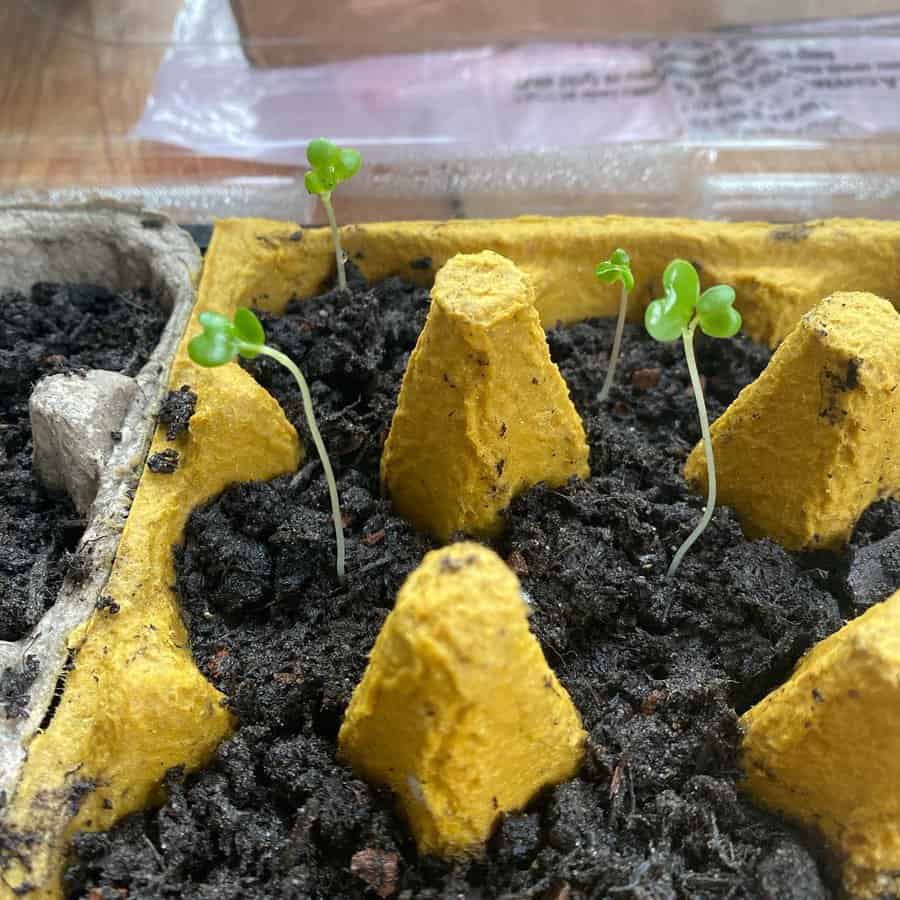
2. Create Container Gardens with Egg Trays
Kickstart your garden by using egg trays to create budget-friendly seedling containers. Cut out individual egg-shaped compartments, providing excellent drainage for your budding plants.
For a touch of eco-friendliness, repurpose old bottles or cans into charming planters. These creative ideas not only maximize limited space but also stretch your budget while infusing your garden with a unique and resourceful aesthetic. Consider grouping these containers on a wooden shelf or a repurposed pallet for an organized and visually appealing garden display.
Source: @ffiffiflowertots via Instagram
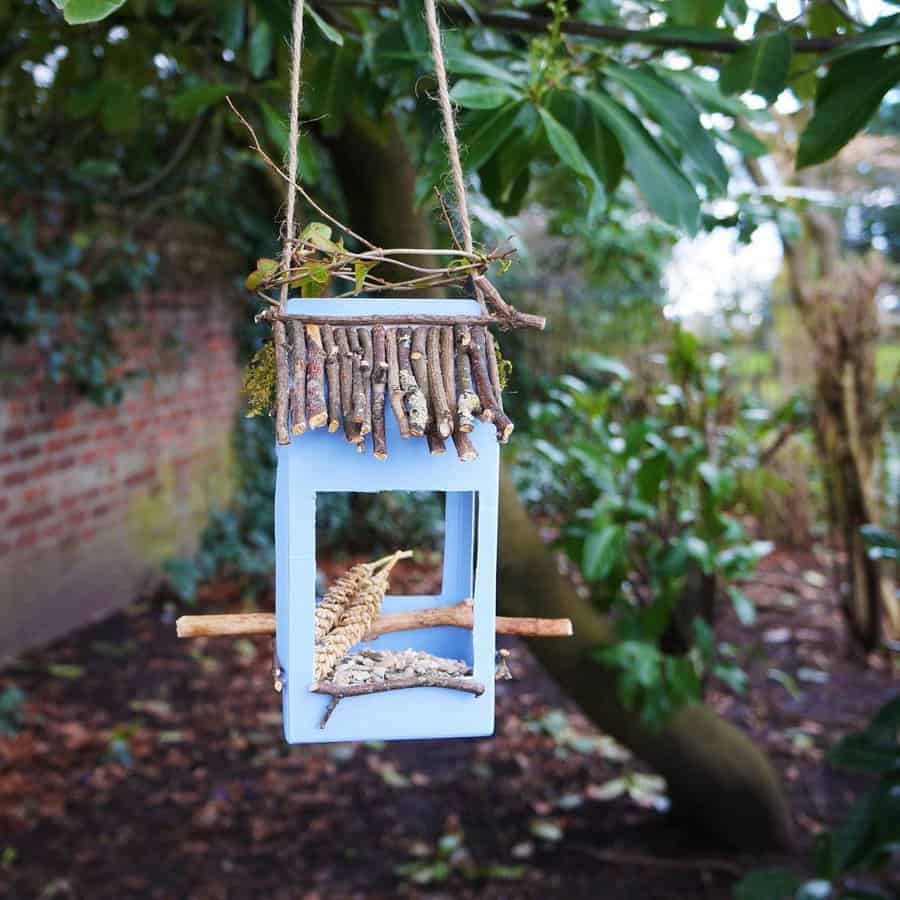
3. Craft a Budget-Friendly Bird Feeder
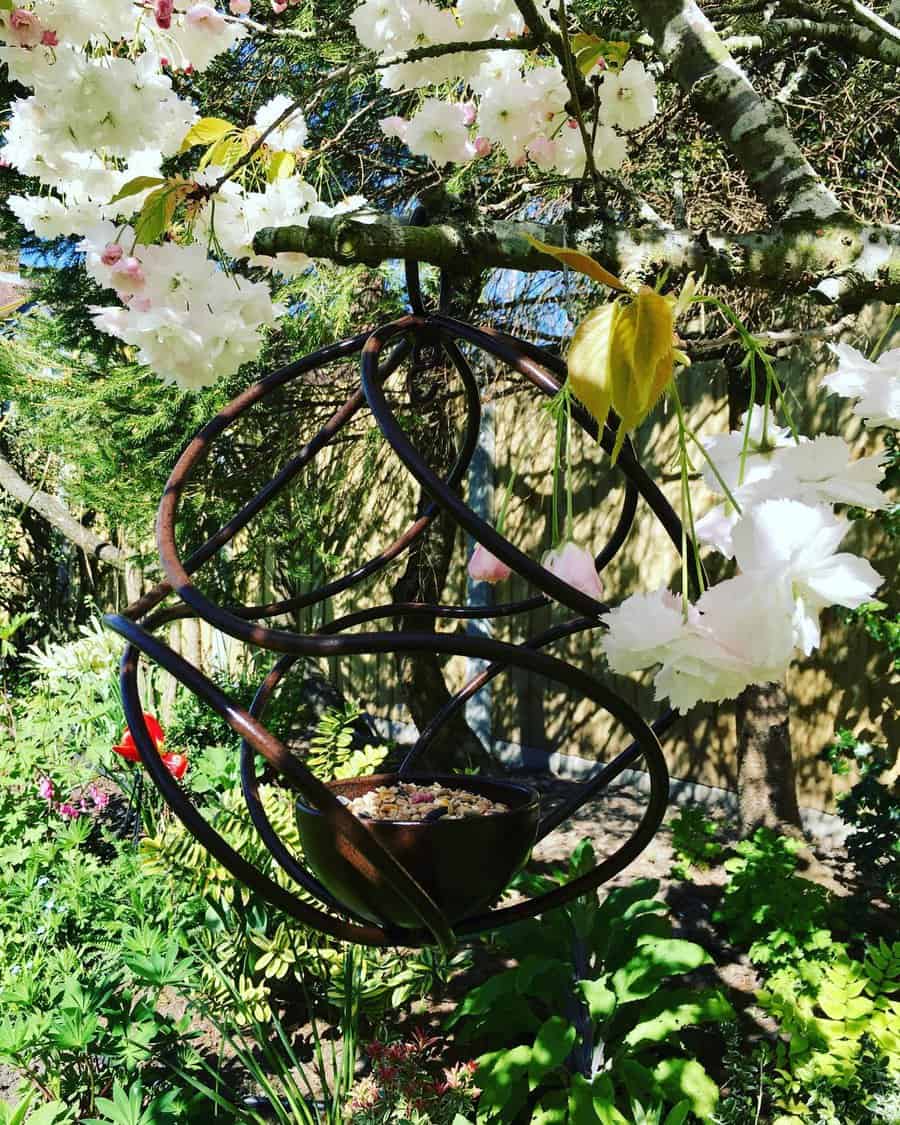
Maximize your small outdoor space by crafting a budget-friendly DIY bird feeder. Whether you have a balcony or a tiny garden, transform it into a wildlife haven with simple supplies like cardboard boxes or twigs, glue, and scissors. This project not only enhances your garden’s aesthetics but also nourishes local wildlife, bringing a touch of nature right to your doorstep.
To complement this bird feeder, consider adding potted plants or colorful flowers to create an inviting oasis for both you and your feathered friends.
Source: @galina_gnv via InstagramSource: @what_up_gnomes via Instagram
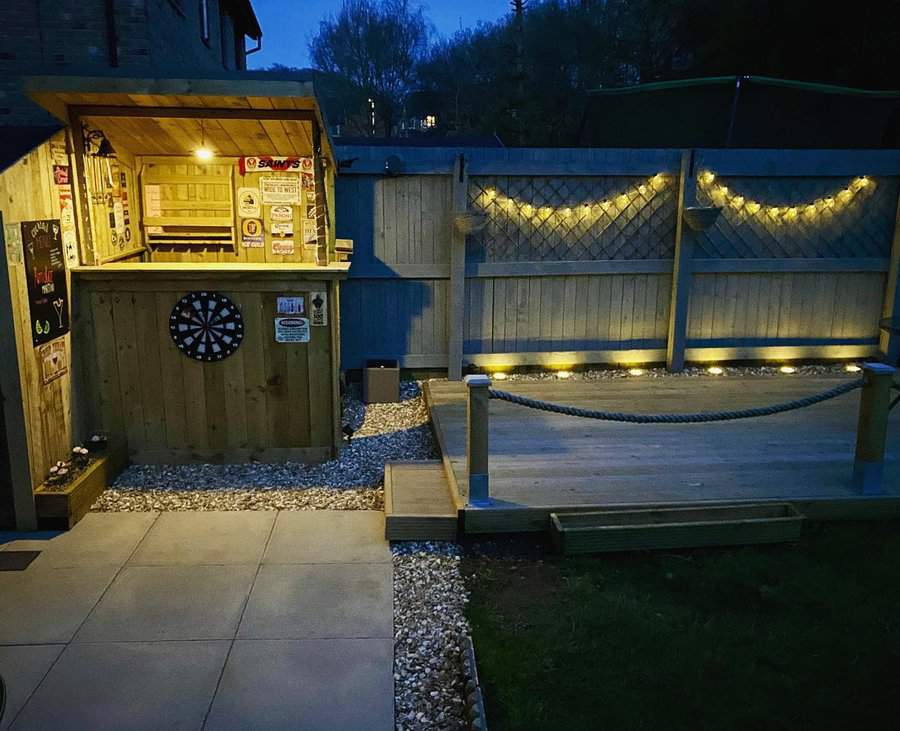
4. Build an Outdoor Garden Bar
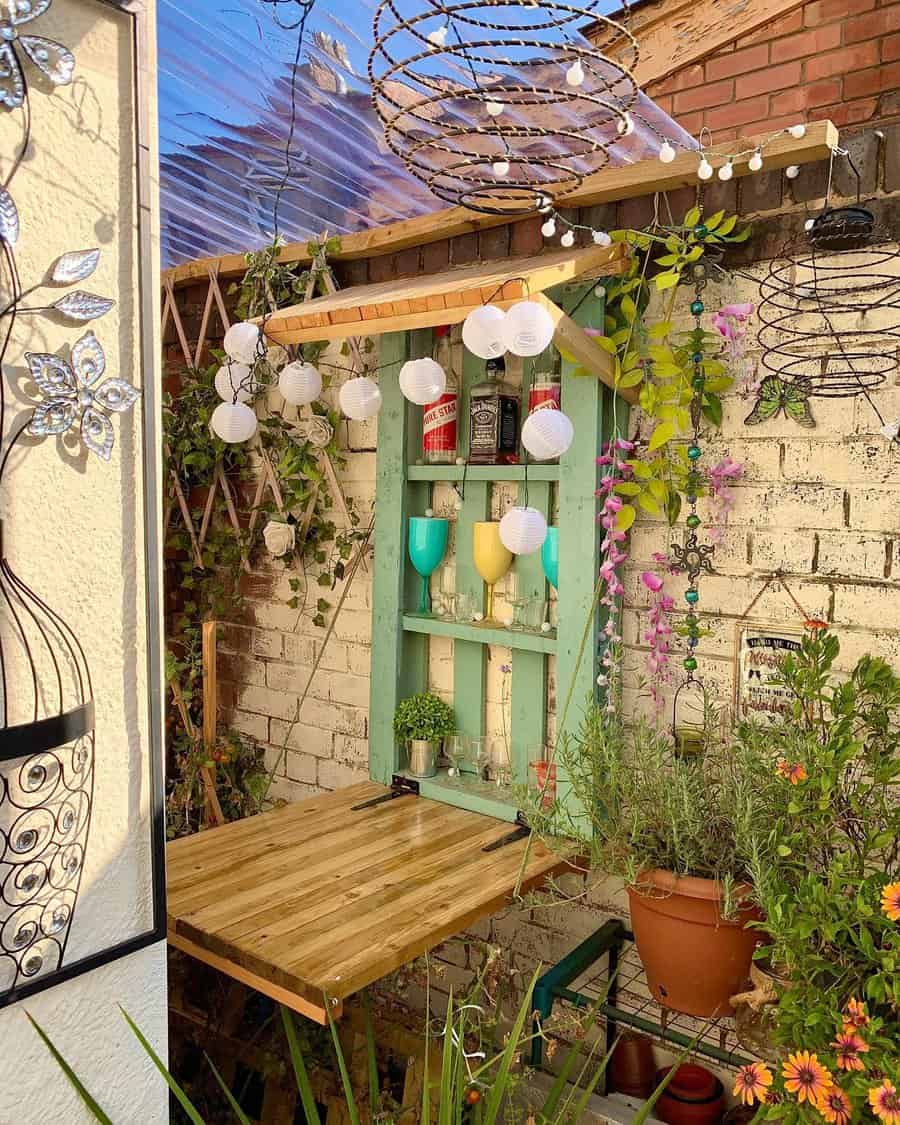
Enhance your outdoor gatherings with a charming DIY garden bar, a surprisingly simple project with a big impact. With basic DIY skills and readily available materials, you can craft an inviting al fresco hangout for friends and family.
Elevate the atmosphere by adding string lights or vintage wall art, transforming your garden into a memorable gathering spot. Don’t hesitate—start creating your perfect outdoor space today! To complement the garden bar, consider adding comfortable seating, potted plants, and an outdoor speaker system for a complete entertainment experience.
Source: @_inside_no_17 via Instagram
5. Craft Recycled Material Flowers
Crafting flowers from recycled materials such as craft paper, bottle caps, and fabric scraps is a budget-friendly way to add charm to your garden. For a pop of color, paint small terracotta flower pots and use them as planters to achieve a vibrant garden-like atmosphere in your outdoor spaces.
Embracing creative recycling allows you to enjoy unique foliage and blooms while keeping costs in check. With a touch of creativity and resourcefulness, you can set up an affordable garden, perfect for enjoying summer evenings in the beauty of nature. Consider adding complementary elements like mulch, pathway stones, and garden borders to enhance the overall look of your budget-friendly garden.
Source: @andreaelleray via Instagram
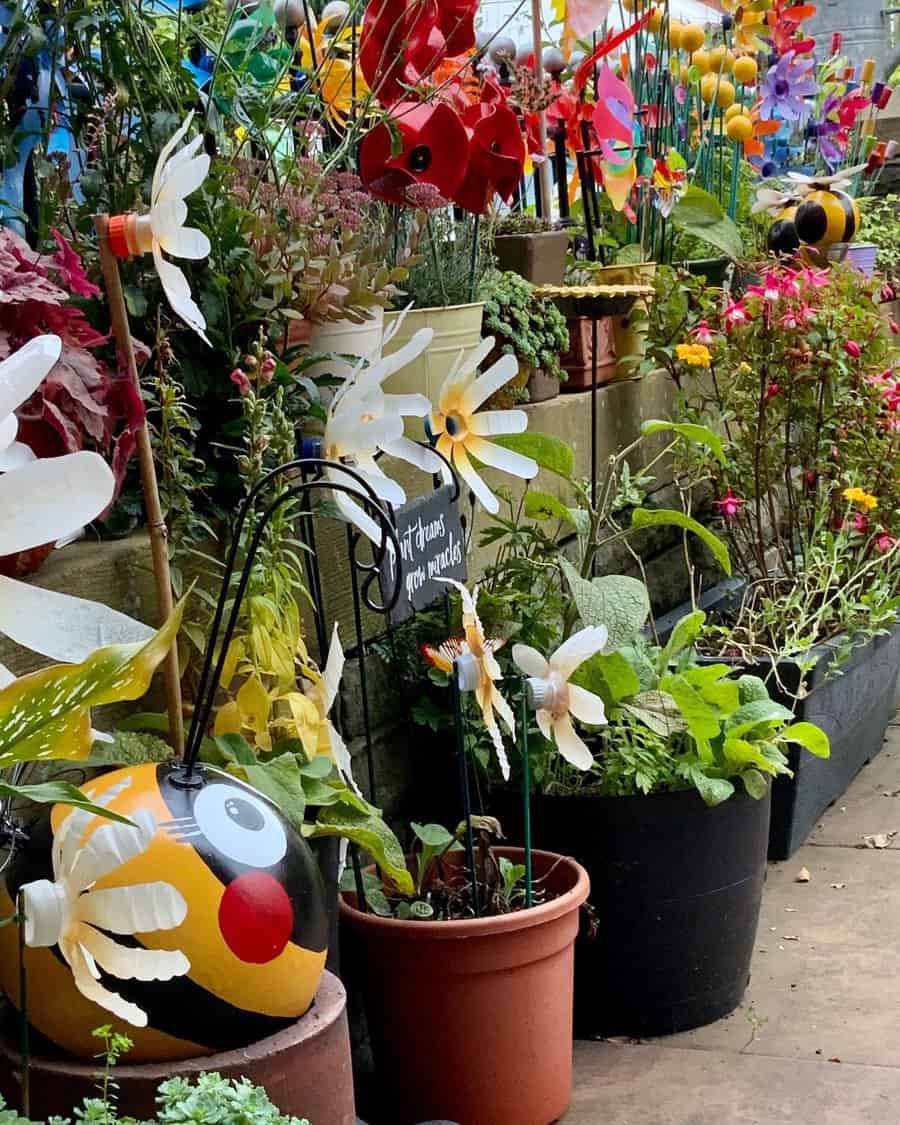
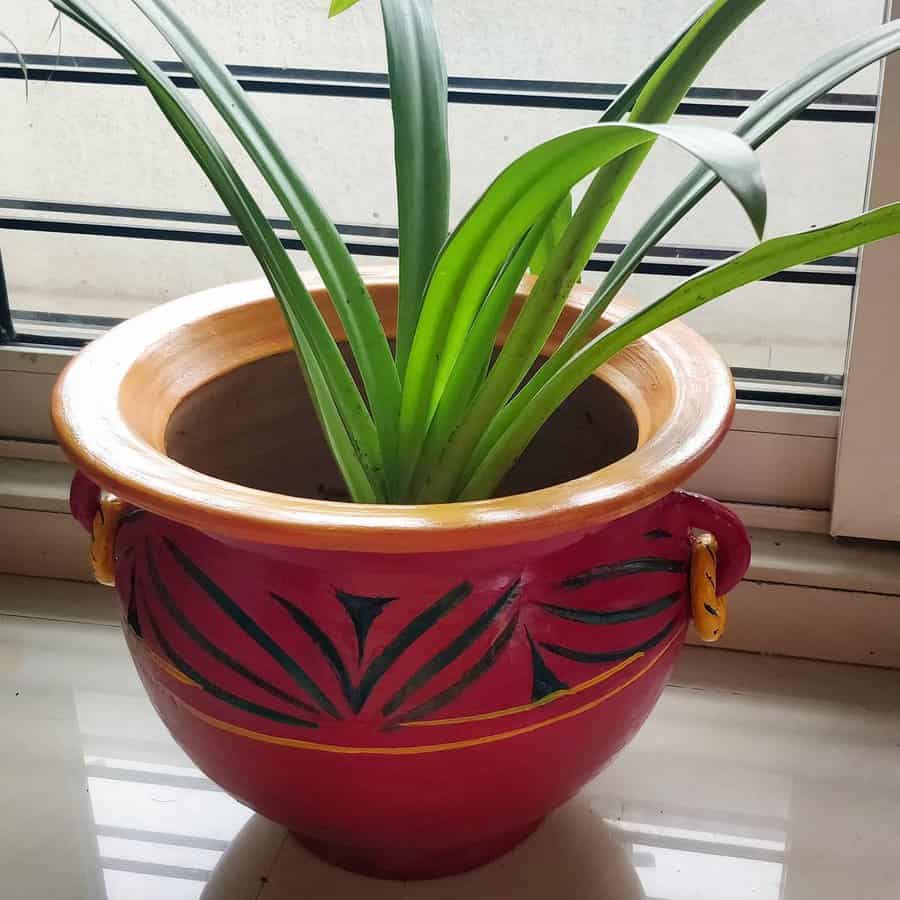
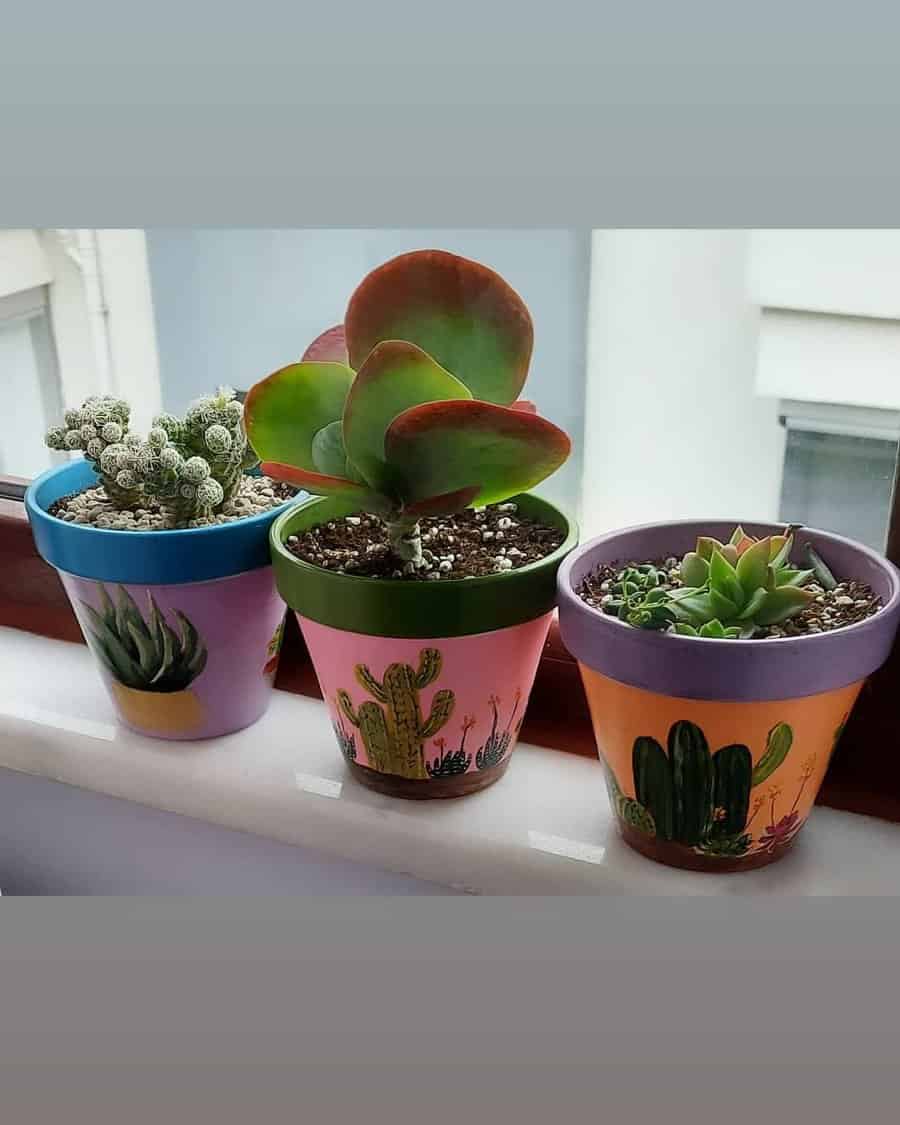
6. Painted Pots for Stylish Planting
Transform ordinary plant pots into stylish, personalized pieces of art by adding your creative touch with paint and doodles. Customize each pot to match your garden’s theme or your personal style, giving your greenery a charming and unique home.
This budget-friendly DIY project not only adds a touch of personality to your garden but also creates a cohesive and visually appealing look when you group these painted pots together. To complement your painted pots, consider choosing plant varieties that harmonize with the colors and designs you’ve used, creating a harmonious and eye-catching garden display.
Source: @nellytanguycreations via InstagramSource: @i.ckreate via InstagramSource: @cigdemcolberber via InstagramSource: @thefishinghamlife via Instagram
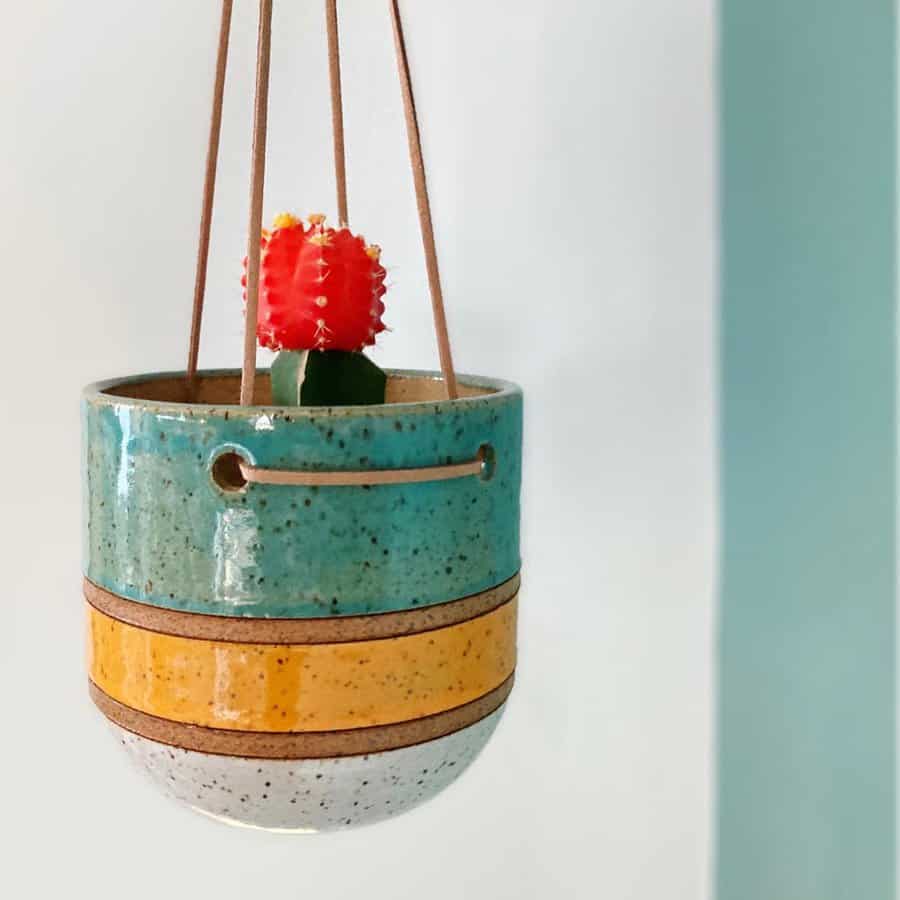
7. Craft Macrame Plant Hangers
Add a touch of creativity and boho-inspired charm to your garden without breaking the bank by crafting your own macrame plant hangers. These hangers are customizable in size, making them perfect for pots of all dimensions. Hang them outdoors to replace traditional planters or bring them inside for a whimsical, stylish display.
Incorporating macrame plant hangers is an easy and cost-effective way to enhance your garden’s aesthetics. To complement these hangers, consider using a variety of plant types and colors to create a lush and inviting garden space.
Source: @lizcohenceramics via InstagramSource: @thisisjoz via Instagram
8. Create Hanging Bamboo Planters
For an effortlessly picturesque budget garden, consider crafting your own hanging bamboo planters for trailing plants. Utilize thin and flexible branches from an old bamboo tree and readily available string, twine, or recycled wool to create your unique design.
Once you’ve constructed your basket-shaped planter, fill it with your favorite plants and flowers, enhancing the beauty of your garden space. To complement this DIY project, choose trailing plants with vibrant colors or cascading foliage to create an eye-catching display that adds character to your garden.
Source: @momdadnkiddo- via Instagram
9. Coordinate Your Garden Pots
Don’t settle for a bland budget garden! Get creative by coordinating your terra cotta pots with a vibrant color palette that includes pinks, blues, and violets. Whether you’re enhancing an existing landscape or starting from scratch, these colorful pots can serve as captivating centerpieces for your garden makeover.
To maximize impact and personality, mix pots of different sizes and textures. These affordable decor pieces have the power to transform an ordinary outdoor area into a visually stunning garden retreat. Complement this design by adding colorful garden furniture or decorative garden stakes for a cohesive and inviting garden space.
Source: @sewwhatsupdoc via Instagram
10. Design a Stone Path Landscape
One budget-friendly DIY garden idea is to incorporate a charming stone path into your landscape. This can be achieved by laying down stones or pavers to create a walkway that adds both functionality and aesthetics to your garden space. To complement this design, consider planting small trees or shrubs around the path to create a cozy atmosphere.
Additionally, adding mulch can give your garden a rustic and inviting feel. For a touch of elegance, adorn your patio area with window boxes and hanging plants, transforming it into a tranquil oasis. With thoughtful planning and a willingness to experiment, you can achieve a truly stunning garden space without breaking the bank.
Source: @clslandscape via Instagram
11. DIY Brick Fire Pit Setup
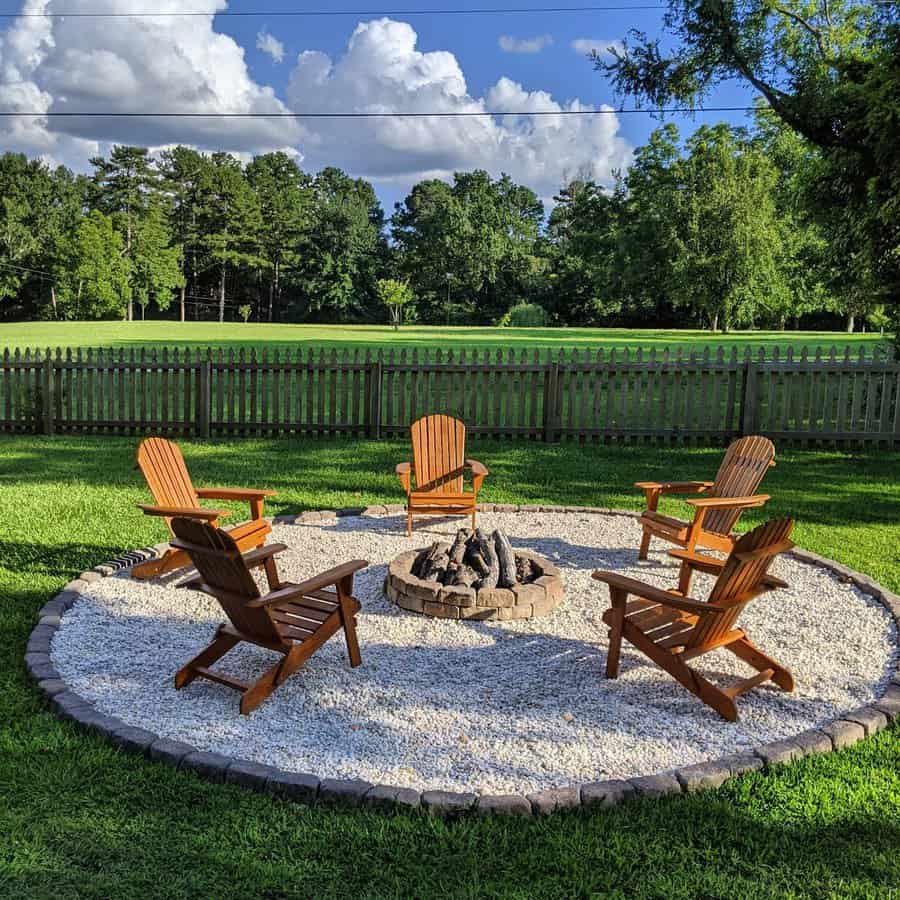
Crafting a budget-friendly garden can be incredibly rewarding. Begin by planning an inviting outdoor space with a brick fire pit as the centerpiece, surrounded by comfortable patio chairs. To set the mood, hang string lights or place lanterns around the area.
Enhance the garden’s atmosphere with strategically placed potted plants and small shrubs. Mix and match various types of tables and chairs to infuse personality into your outdoor oasis. Your budget garden will become a delightful retreat where you can relax and connect with nature. To complement the brick fire pit setup, consider adding cozy outdoor cushions, blankets, and a small table for snacks or drinks, ensuring your garden is both inviting and functional for gatherings and relaxation.
Source: @joynerathome via Instagram
12. Install a Budget-Friendly Water Fountain
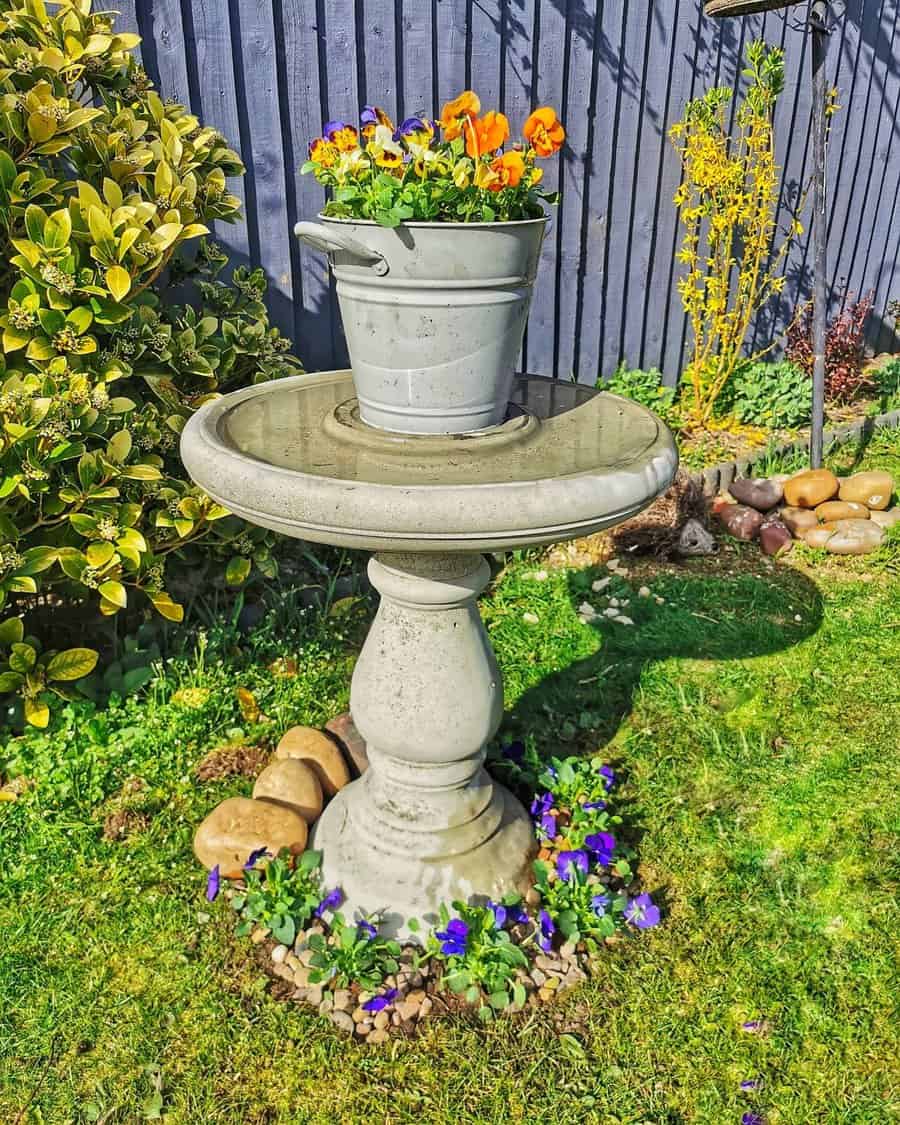
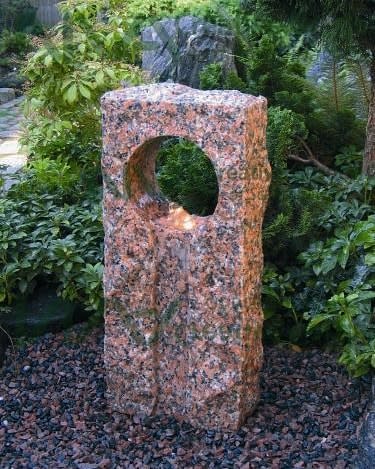
Add a touch of serenity to your garden by installing a budget-friendly water fountain. You can create a beautiful and tranquil space by choosing the right location for your fountain. Place it near a bird feeder to attract birds and make your garden come alive with their presence.
To further elevate the ambiance, consider planting colorful wildflowers around the fountain and strategically placing decorative stones for added visual appeal. By blending natural elements with your DIY fountain, you’ll not only be delighted with the outcome but also enjoy the influx of wildlife it brings to your garden.
Source: @ajgoold via InstagramSource: @raamaz_naturalstone via Instagram
13. Craft Tin Garden Sculptures
Revamp your garden without overspending by crafting your own tin garden sculptures. Give your garden a distinctive touch by repurposing tin materials to create unique sculptures, such as charming rabbit figurines made from soda cans and wire.
These handmade sculptures not only add artistic flair and character to your garden but also provide a budget-friendly way to personalize your outdoor space. Embrace your creativity and enjoy the satisfaction of crafting something one-of-a-kind for your garden without straining your finances.
Source: @sageandserenityhomeinteriors via Instagram
14. Revive Vintage Garden Statues
Creating a dreamy garden on a budget is entirely possible by incorporating vintage garden statues into your design. Explore flea markets, antique stores, or thrift shops to discover unique and budget-friendly pieces that infuse your garden with an antique, timeless ambiance. Mix and match these vintage finds to infuse your outdoor space with character and sophistication without exceeding your budget. Remember, a budget-friendly garden can be both inspiring and whimsical when you find the perfect vintage elements to complement your vision.
Source: @shima_antiques via Instagram
15. Make Lounge Seating with Pallets
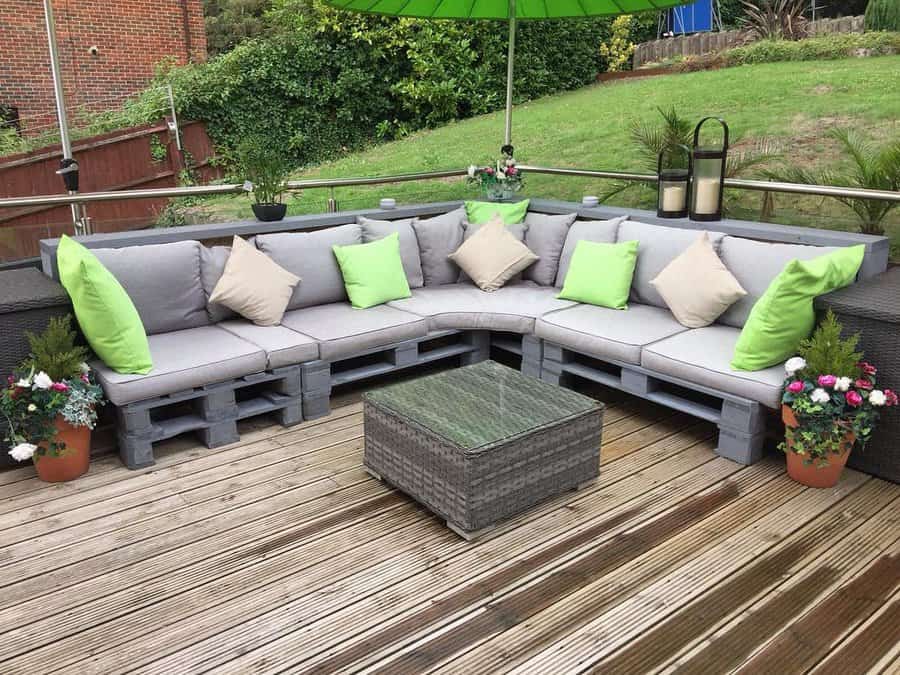
Enhance your budget garden by crafting stylish lounge seating using wooden pallets as a base, and then layering on comfortable pillows and cushions for ultimate comfort. This DIY project not only adds a touch of style to your outdoor space but also offers an economical way to maximize your garden’s functionality.
Your newly created seating area becomes the perfect spot for enjoying breakfast in the summer or hosting backyard dinner parties with friends. To complement the pallet lounge seating, add a small coffee table, potted plants, and outdoor lighting for a cozy and inviting atmosphere, making your garden the go-to place for relaxation and social gatherings.
Source: @tooposhfor via Instagram
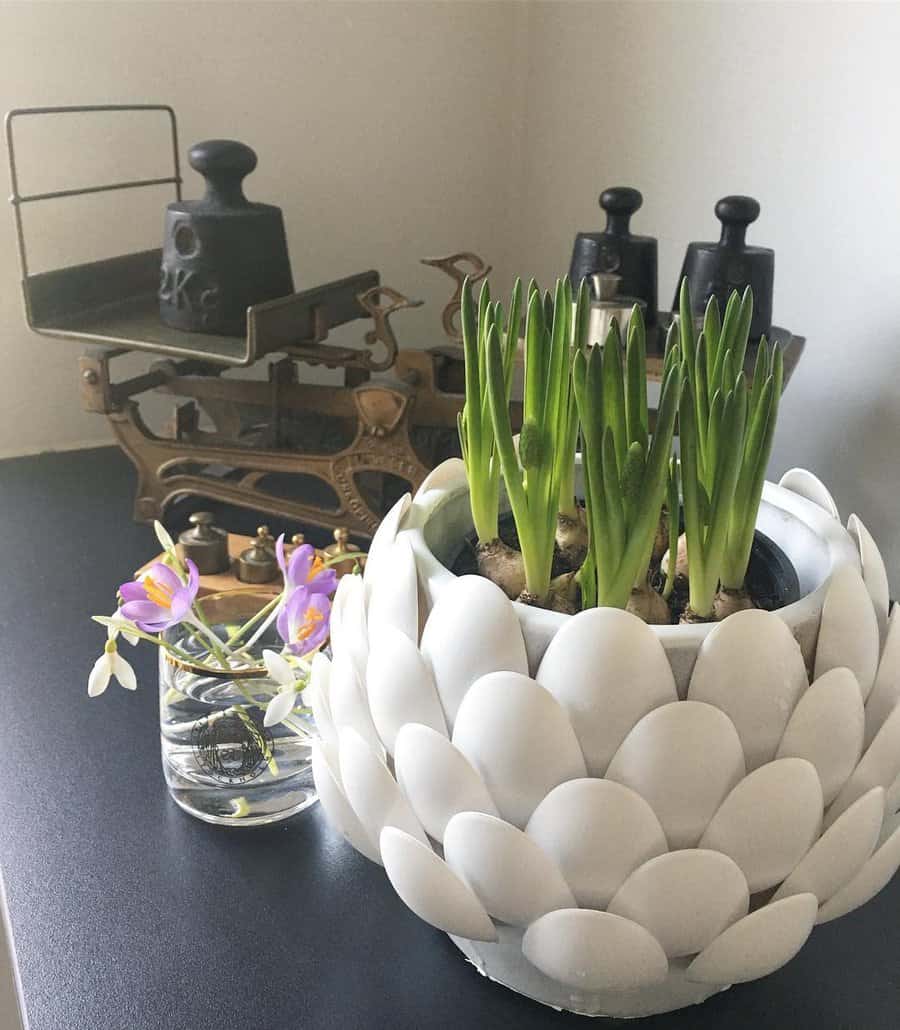
16. Create a Unique Plastic Spoon Vase
Unleash your creativity in budget gardening by crafting a unique vase using disposable plastic spoons, clips, glue, and string. This DIY project showcases the endless possibilities for creative crafts in budget gardens.
Consider repurposing old ceramic glassware, boxes, or furniture found at flea markets to add character to your garden space. By letting your imagination run wild, you can transform ordinary items into delightful garden accents. To complement the plastic spoon vase, place it amidst a cluster of potted plants or use it as a centerpiece for your outdoor table, adding a whimsical and eco-friendly touch to your garden design.
Source: @my.2.homes via Instagram
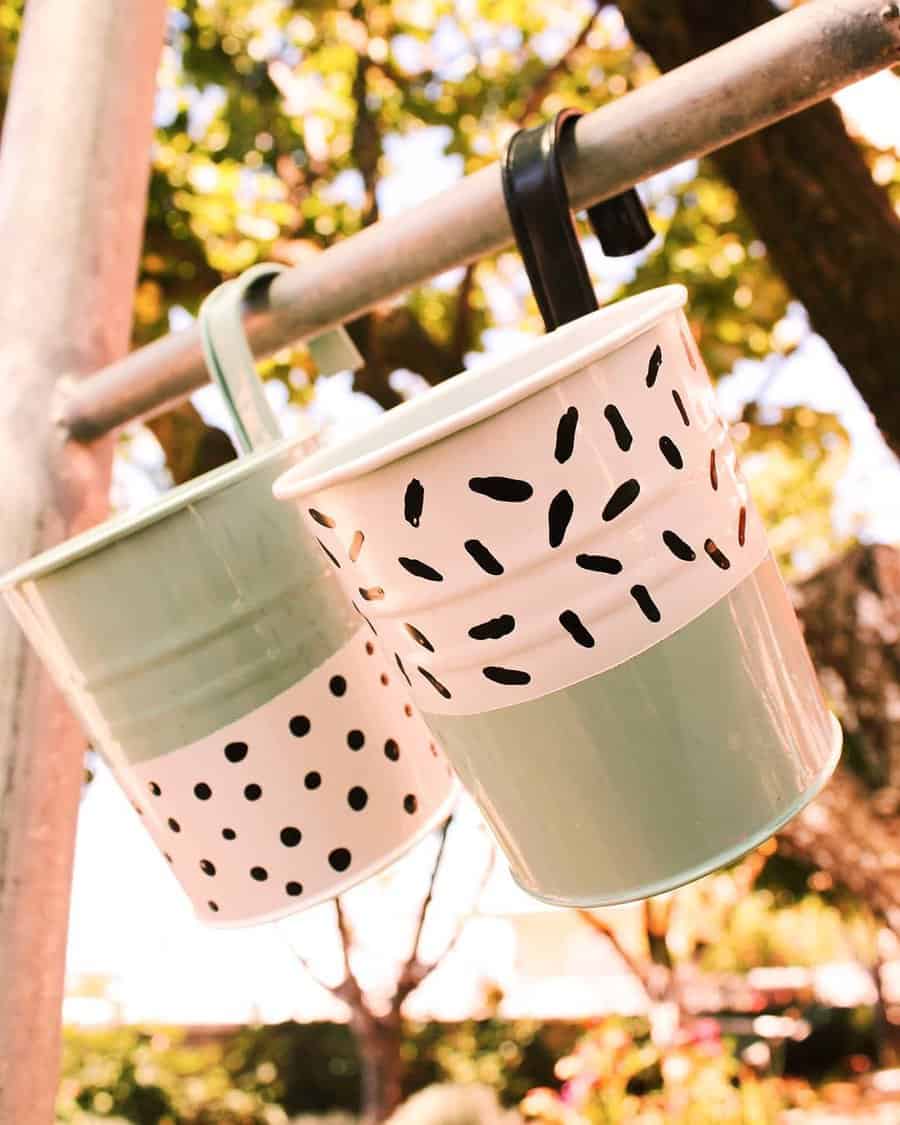
17. Add Hooks to Hang Potted Plants
A budget garden can be both beautiful and enchanting with the addition of hanging potted plants. Craft your own unique tin pots with hooks, add a string of fairy lights, and experiment with DIY paint designs to instantly transform your outdoor space. This creative project is not only enjoyable but also budget-friendly.
Personalize your DIY tin pots with hand-painted designs or fill them with vibrant blooms for a burst of color. In the evening, the fairy lights will cast enchanting shadows, creating a magical atmosphere in your garden. To complement the hanging potted plants, consider adding a cozy seating area nearby and incorporating other decorative elements such as outdoor rugs and wind chimes, making your budget garden a delightful retreat.
Source: @patriciabaradic via Instagram
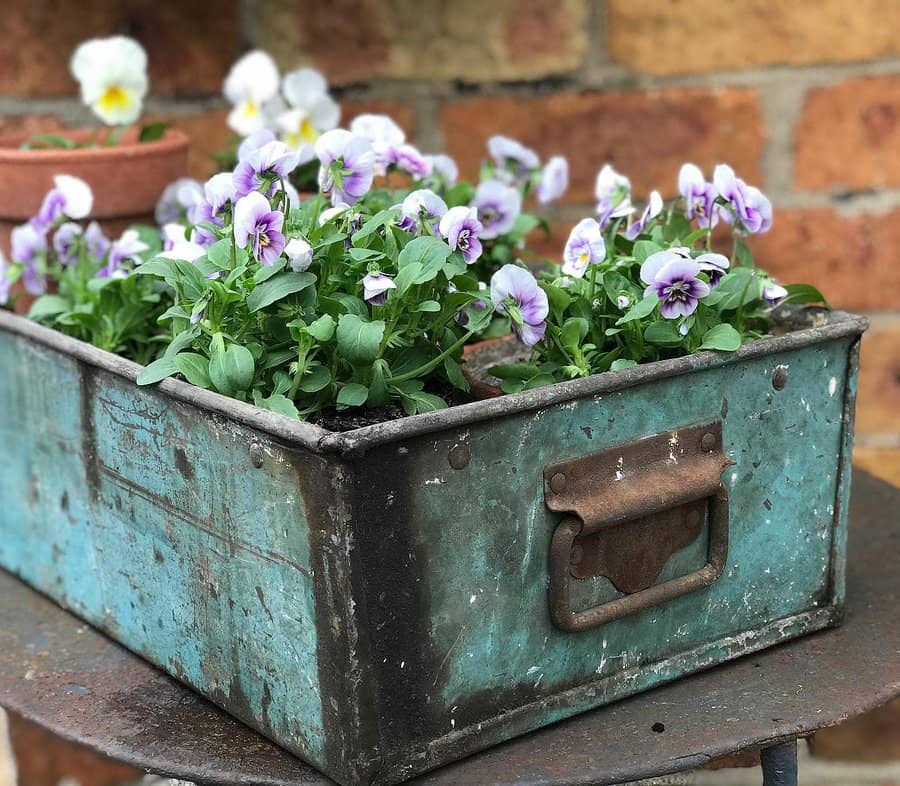
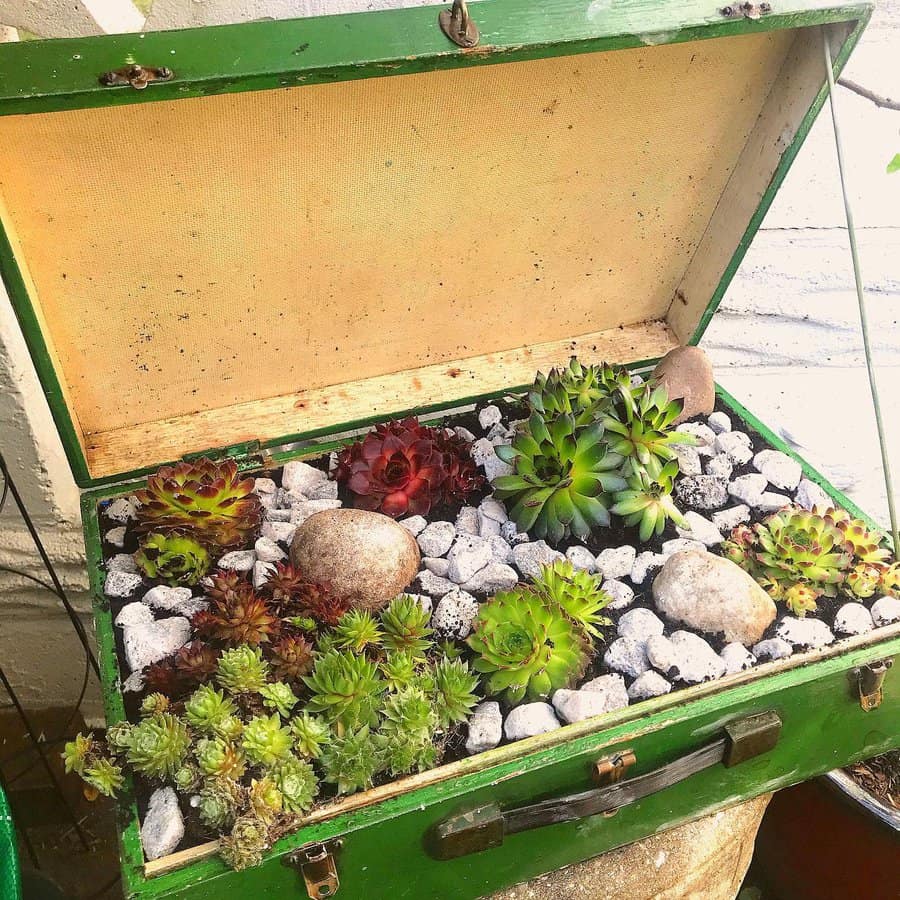
18. Repurpose Box Containers for Plants
Budget gardening can be both inventive and affordable. Opt for container gardening to maximize limited outdoor space, and consider repurposed box containers as an opportunity for creating a unique garden.
Utilize materials like repurposed cardboard boxes or wooden crates to unlock endless design possibilities for your budget-friendly garden. With a dash of creativity, you can easily craft an attractive garden by repurposing boxes. Whether you find an old box in your garage or source one online, repurposing it for container gardening allows you to personalize your garden economically, adding a touch of character without straining your budget.
Source: @fionacumberpatch via InstagramSource: @pommykiwi via InstagramSource: @greengardensoul via Instagram
19. Utilize Large Water Jugs for Gardening
Unlock your garden’s potential on a budget by repurposing large plastic or glass containers into sizable plant pots. Fill these containers with soil from your local nursery to create an affordable and versatile gardening solution. Consider planting beans, peas, or colorful flowers and herbs to make the most of your newfound garden space. With a touch of creativity, you can transform these containers into thriving pockets of greenery, resulting in a vibrant garden that blooms beautifully during the summer months.
Source: @homegnomegardens via Instagram
20. Transform Old Tires for Rustic Decor
Don’t let budget constraints hold back your gardening dreams. Get creative by repurposing old tires into charming rustic planters. Paint these tires in your choice of colors to match your garden’s theme and use them as unique flower pots. Their excellent drainage properties make them a practical choice, while adding a fun and eco-friendly touch to your outdoor space. Whether in your front yard or backyard, upcycled tire planters can transform an ordinary budget garden into a standout showcase of creativity and sustainability.
Source: @homesteadingindenver via Instagram
21. Painted Rocks for Garden Art
Creating a budget-friendly garden provides an excellent opportunity for creativity and family involvement. Whether you’re growing veggies, flowers, or potted plants, there’s no need to overspend. Incorporate painted rocks as charming garden decor; it’s a simple and cost-effective method to introduce vibrant colors and a playful touch to your outdoor space.
Engage your children in the process by encouraging them to paint their own rock designs, fostering a sense of ownership and fun. With a dash of imagination and some colorful rocks, your budget garden will shine brightly in the sunlight, bringing joy to both adults and kids alike.
Source: @dizzy_eyed_fillmore via Instagram
22. Assemble a Succulent Tray Garden
Transforming your garden into a budget-friendly, yet aesthetically pleasing haven is easily achievable with a succulent tray garden. Incorporate succulent cuttings into a variety of containers with varying shapes and depths to craft a captivating and conversation-worthy garden feature. To maintain these charming plants, simply water them when the leaves appear slightly wrinkled and the soil looks dry. In no time, your budget garden will thrive with the allure of succulent beauty.
Source: @konishi.yoshihiro via Instagram
23. Build an Attractive Rock Garden
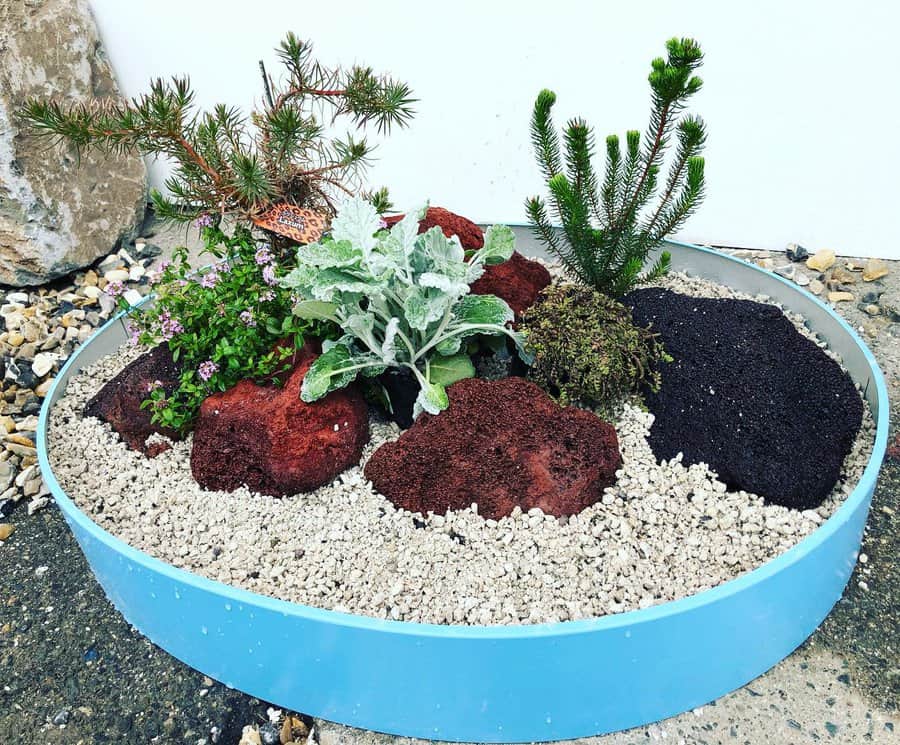
Crafting an appealing rock garden is an excellent choice for budget-conscious gardeners. Collect large stones, embracing their natural crevices and cracks that add character. Secure them in place with smaller pebbles to both complement the rocks and provide interesting texture.
A rock garden is an affordable way to breathe life into your backyard, offering a distinctive and captivating focal point that won’t break the bank.
Source: @maneekam via Instagram
24. Landscape with Pebbles on a Budget
Creating an inviting garden on a budget is now within your reach. Incorporate pebbles for a charming walkway or repurpose bricks to build terrace walls. These affordable landscaping ideas can inject color and vibrancy into your garden space without breaking the bank. Transform your backyard into a budget-friendly oasis by carefully selecting materials and unleashing your creative flair.
Source: @senorjuanton via Instagram
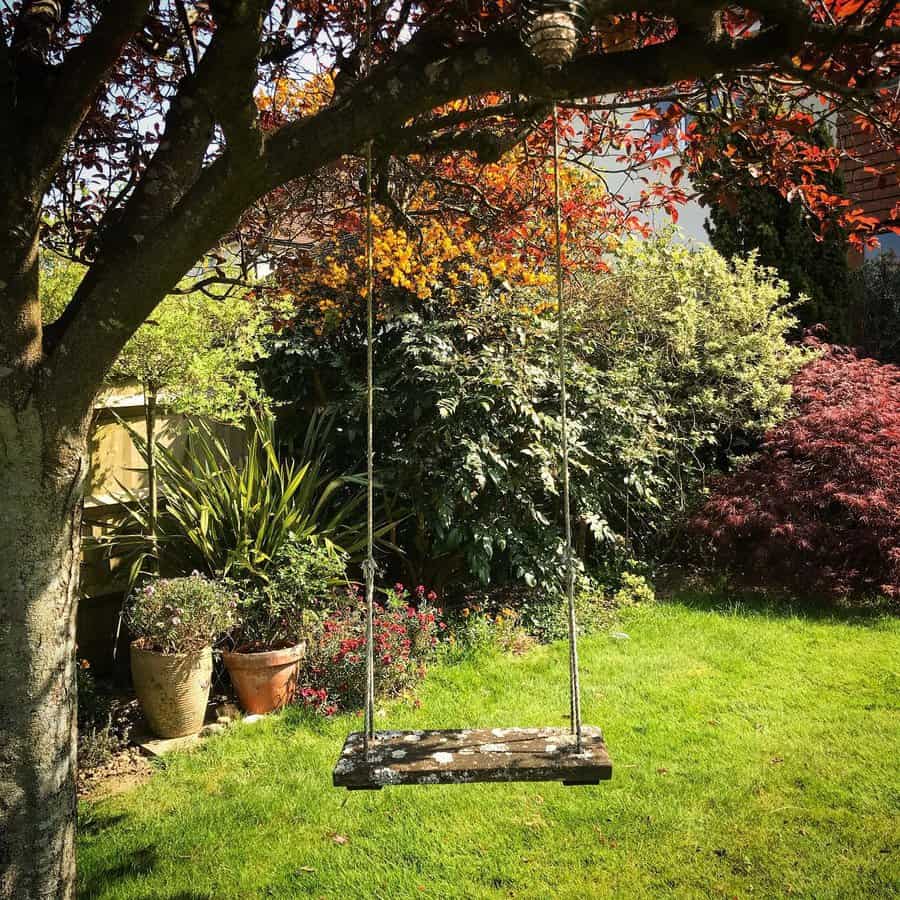
25. DIY Tree Swing from an Old Plank
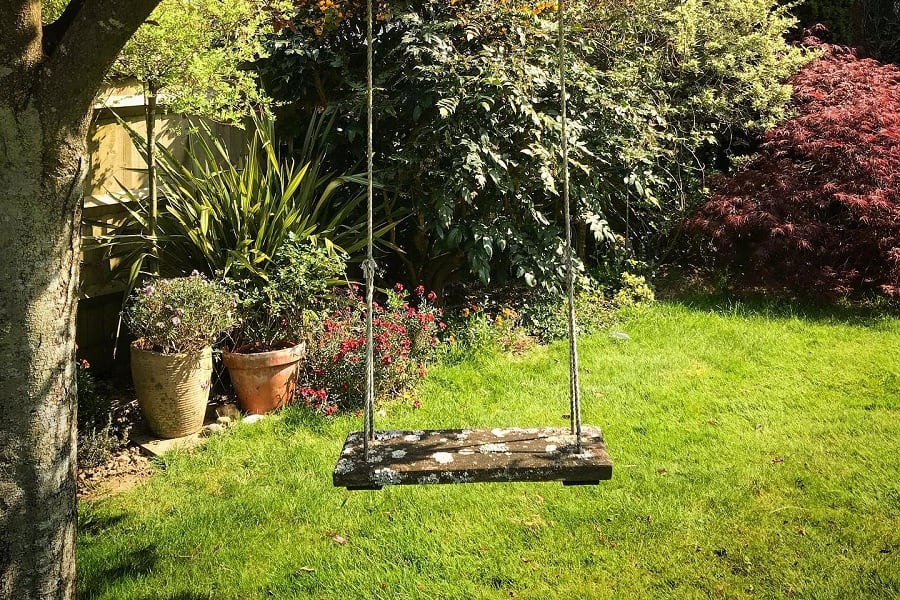
Turning your outdoor space into a budget-friendly oasis is easier than you think. With creativity and a bit of time, you can create a charming garden without draining your wallet. Consider repurposing an old plank into a delightful tree swing for added backyard entertainment. Whether you’re looking to expand seating or introduce shade curtains, there are numerous cost-effective ways to enhance your garden’s allure.
Source: @boburke1 via Instagram
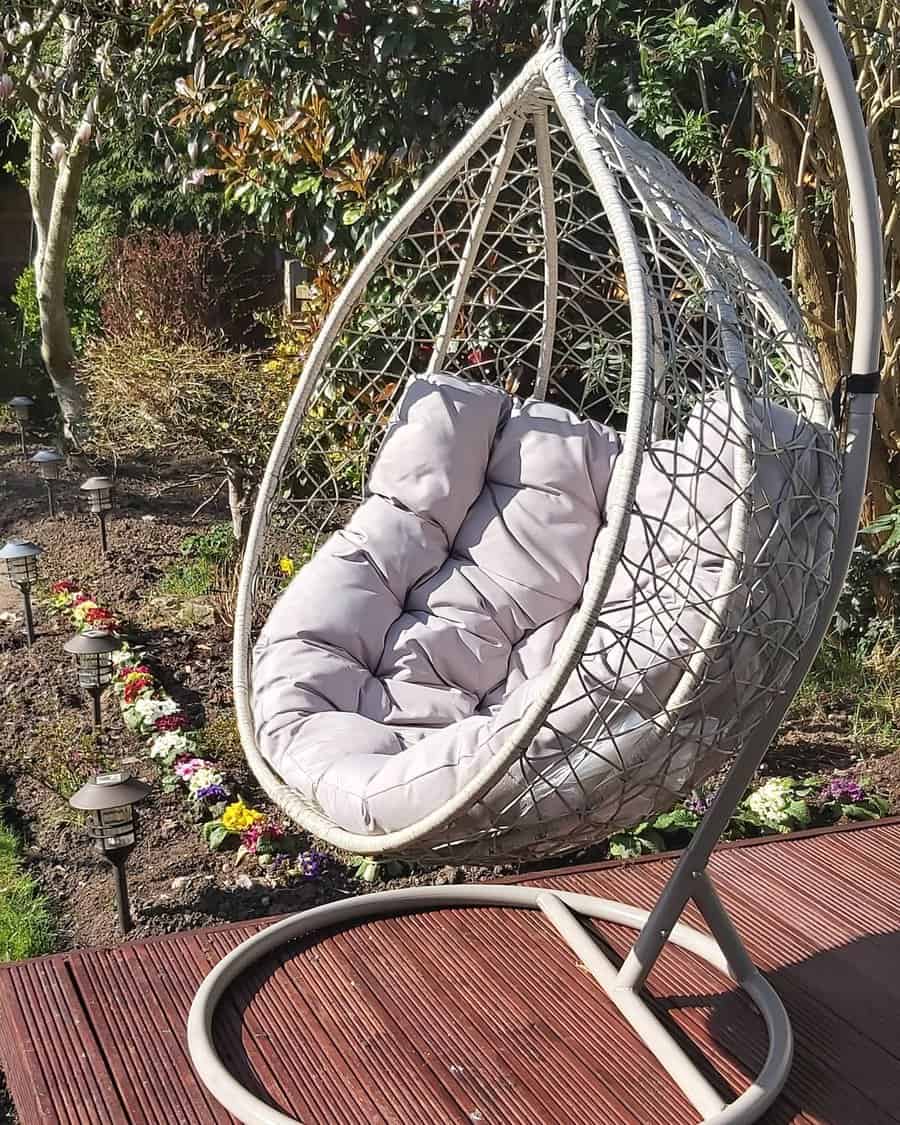
26. Install an Egg Chair for Outdoor Relaxation
Don’t let a tight budget deter you from enjoying the finer things in your garden. An egg chair can bring a touch of luxury to your outdoor oasis without breaking the bank. Whether suspended in a cozy corner or hovering above your garden blooms, this stylish furniture piece elevates the overall ambiance, creating a serene and elegant outdoor retreat.
“Spending time outdoors makes you feel great.” – Elizabeth Hurley
You’ve worked hard to turn your boring concrete patio into a lovely outdoor living space. Perhaps it’s an outdoor kitchen or a cozy outdoor room designed for entertaining with sofas, a coffee table, and a fireplace. There’s just one thing missing, a roof.
There are patio cover ideas that can help you turn your new outdoor space into a covered outdoor room that you can use year-round.
These covered patio ideas are durable, protective, and will improve the look of your patio.
[view_toc]
1. Aluminum Patio Cover
Aluminum patio covers are the most popular of the flat cover ideas. It’s affordable, lightweight, and corrosion-resistant. This helps your new roof investment to be a long-lasting one.
Aluminum patio covers require minimal maintenance and come in various colors and finishes to match your home’s exterior. Additionally, they are resistant to rust and rot, making them a long-lasting choice for any climate.
Source: @builtrightpatios via Instagram
2. Glass
If you want to turn your concrete slab into an enclosed patio, then consider glass. It’s a much bigger investment than the other patio cover options. It requires a solid structural frame to be built around your patio.
You’ll also want to consider the amount of sun your area experiences. An all-glass roof in Florida or Arizona will result in you creating a heat box that will be insufferable to be in.
A skylight in the roof with all glass walls is a better glass patio idea. Then you can add patio furniture and turn your enclosed patio into a sunroom or day room.
Source: @scandiacanadaltd via Instagram
3. Pergola
Pergolas look elegant and are freestanding outdoor structures. This makes it possible to erect one next to your house or out in the middle of your yard. While most pergolas are square, you could build yours in a triangle or rectangle. Then you have a pergola that’s just the right size and shape to cover your outdoor furniture.
A wood pergola will give your patio a traditional look. However, you can also have a solid patio cover that’s built out of vinyl or PVC. These are bright white and require less ongoing maintenance.
Source: @4kaluminum via InstagramSource: @decker_patio via InstagramSource: @rocknroll_stoneworks via InstagramSource: @littlelunaloft via InstagramSource: @egconstruction_ via Instagram
4. Plastic Sheeting
If you have a tight budget or want to do the roof addition project yourself, then consider using plastic sheeting. This isn’t the most elegant of the patio shade ideas, but it’s definitely effective.
The plastic comes in translucent or with a color tint. There are also opaque options if you want to completely block the light. However, if you block too much light, your patio can feel dark and depressing, even when it’s sunny out.
To prevent your backyard patio from getting too dark, try using a combination of translucent clear and opaque plastic corrugated sheets.
Source: @scandiacanadaltd via InstagramSource: @scandiacanadaltd via Instagram
5. Retractable Awning
If you have an outdoor space that’s connected to the side of your home, then a retractable awning will give you flexibility in your patio design.
When you don’t need the cover, you can retract it back. Then when you do need it, you can extend it out and have full coverage. With the push of a button, the awning will retract back and roll up and out of the way.
What’s nice about awnings is that they come in a range of colors and patterns. This lets you pick a custom design that will match your home and patio design perfectly.
Source: @awningscanada via InstagramSource: @seattleshadeandawning via Instagram
6. Solid Wood Patio Cover
Wood is a durable material that’s easily adaptable. This makes it a perfect solution for building your wood patio cover. First, choose the type of lumber you want to use.
Hardwoods are best because they are the most durable and beautiful. However, they are also more expensive. Treated softwood is an acceptable, more affordable alternative. Regular treatment and maintenance are necessary to protect the wood from weathering and pests.
Source: @dc_cruz_construction via InstagramSource: @helensroyalteahouse via InstagramSource: @studio_ddiseno_7 via InstagramSource: @thecheshiregreyhome via Instagram
7. Covered Pergola
Combining the charm of a traditional pergola with the practicality of a full cover, covered pergolas offer the best of both worlds.
Covered pergolas provide more substantial protection from sun and rain while retaining the pergola’s open, airy feel. This option is great for those who love the pergola look but need more shelter.
8. Shutter Panel
Shutter panels add a dynamic and flexible covering option for your patio. These panels can be adjusted to control light and ventilation, offering a balance between privacy and openness. Their sleek design suits various architectural styles, and they are particularly suitable for areas with changing weather conditions.
9. Jute Deck Shade
Jute deck shades offer a rustic and eco-friendly shading solution. Made from natural fibers, these shades bring an organic texture and warmth to your outdoor space. They are ideal for creating a cozy, shaded nook, perfect for relaxation while adding a touch of bohemian flair.
10. Sail Shade
Sail shades are a contemporary and artistic approach to patio covers. Resembling the sails of a ship, these shades are made from durable, weather-resistant fabric stretched across anchor points. They provide excellent UV protection and are perfect for adding a modern touch to your outdoor area. Their unique shape and design possibilities make them an eye-catching feature.
Having a pool in your backyard gives you the perfect summertime escape. Lay out on the deck and soak up the sun, then take a dip when you start to get too hot. Enjoy a relaxing lunch or cocktails on the patio. Add greenery and landscaping to dress up that plain concrete or paver patio.
These pool landscaping ideas will help you turn your backyard into the ultimate place to be when the weather gets warm.
[view_toc]
1. Pebbles & Concrete Pavers
Create a modern, minimalist look around your pool with a combination of pebbles and concrete pavers. The pebbles offer a natural, soft texture that contrasts beautifully with the sleek, geometric shapes of the pavers. This combination not only enhances the aesthetic appeal but also provides a practical, non-slip surface. To add a splash of color, intersperse with low-maintenance, drought-resistant ground cover plants.
Source: @fsg_southafrica via Instagram
2. Grass Landscape
Embrace the classic beauty of a lush grass landscape around your swimming pool. The soft, green carpet of grass creates a natural, inviting space, perfect for barefoot comfort. Choose a hardy, foot-traffic resistant grass type to ensure durability and ease of maintenance. For an eco-friendly twist, consider using artificial turf for a year-round green look without the need for watering.
Source: @kalkahomes via InstagramSource: @riverscapesperth via Instagram
3. Flower Bed
Introduce vibrant colors and delightful fragrances around your pool with a carefully curated flower bed. Opt for perennials like lavender or salvia that not only add color but also attract butterflies and bees. Arrange the plants in tiers with taller varieties at the back for a visually stunning display. Remember to choose flowers that thrive in your local climate and require minimal upkeep.
4. Hedges
Hedges offer a natural way to add privacy and structure to your pool area. Opt for evergreen varieties like boxwood or privet for year-round foliage. These can be trimmed to create geometric shapes or left to grow for a more organic feel. Hedges also serve as a natural windbreak and can help to reduce pool debris.
Source: @ashbrooklocationhouse via Instagram
5. Grass & Pavers
Combine the softness of grass with the stability of pavers for a harmonious landscape. This checkerboard pattern offers a playful yet elegant design, perfect for both contemporary and traditional pools. The grass softens the hardscape elements, while the pavers provide practical, easy-to-walk-on paths. This design is not only visually striking but also helps to prevent soil erosion and improves drainage around the pool area.
Source: @greenjaylandscaping via InstagramSource: @synlawn via Instagram
6. Tropical Plants
Transform your poolside into a tropical oasis with a selection of exotic plants. Palms, bird of paradise, and hibiscus can create a lush, resort-like feel. These plants thrive in warm climates and can be arranged in varying heights for a layered look. For an extra touch of the tropics, add a few ferns or bamboo plants in strategic spots.
Source: @sunwiseconstructions via InstagramSource: @legacylandscapeswaco via Instagram
7. Rock Garden
A rock garden around your pool can introduce an element of Zen tranquility. Use an assortment of rocks and boulders of different sizes and textures to create a naturalistic landscape. Incorporate drought-tolerant succulents and ornamental grasses among the rocks for a touch of greenery. This low-maintenance option is ideal for water conservation and adds a unique, sculptural element to your pool area.
8. Wooden Deck and Pebble Stone
Blend the warmth of a wooden deck with the natural appeal of pebble stones for a stylish, functional poolside. The wooden deck provides a comfortable space for lounging, while the pebble stone areas can be used for planting or as a decorative border. This combination is perfect for creating defined areas within the pool landscape, offering both beauty and practicality.
9. Coconut Trees
For a truly exotic and beach-like vibe, consider planting coconut trees around your pool. Their towering height and swaying fronds will cast gentle, moving shadows on the water, creating a serene and picturesque setting. Ensure that the trees are planted at a safe distance from the pool to avoid falling debris. Coconut trees are best suited for tropical or subtropical climates and add an instantly recognizable tropical flair.
“Don’t ever take a fence down until you know why it was put up.” – Gilbert K. Chesterton
You want to enjoy your backyard and take part in the outdoor living lifestyle. There’s just one problem. Your backyard lacks privacy, so any time you head out there, your neighbors’ spying eyes are curiously peering into your yard.
What you need is a privacy fence. It’s a not-so-subtle way of blocking the view onto your property so that you can enjoy your backyard in peace. You don’t have to build a standard wood fence, though.
Check out these privacy fence ideas and start enjoying your backyard in peace.
[view_toc]
1. Gabion Wall Privacy
The hallmark of modern construction is gabion walls. You see them as a part of the landscaping design for new neighborhood entrances.
Source: @heavywaithe via InstagramSource: @kuitlandscapes via Instagram
Gabion walls also happen to make great backyard privacy walls. However, this isn’t the type of wall that you’ll want to tackle as a DIY fence. While you can, it will be a lot of backbreaking work that just isn’t worth the minimal savings you’ll get from taking the DIY approach.
Instead, hire a professional to install your gabion wall. Your finished wall will have a wire exterior frame that either uses a mesh or chicken wire style of weave. Stones are then tightly stacked to fill the wireframe.
2. Green Natural Fence
Instead of building a fence, you could grow one. Add a green fence to your property by planting large trees. Trim them once or twice a year, and you have a fence that adds to the natural appeal of your home.
Source: @wildseedsgarden via Instagram
Instead of trees, you can plant evergreen shrubs. Keep the shrubs neatly trimmed, and they will give your home an elegant feel. A greenery fence is a growable DIY privacy fence that can last for years to come. As long as you keep the plants alive, you have a solid fence.
3. Decorative Lattice Style
A lattice backyard fence doesn’t create a solid wall as the nature of the fence has holes throughout. This style of fencing is ideal for your outdoor space if you want to maintain airflow.
If you’re concerned about people being able to see through the lattice, you could encourage a vine plant to grow onto the fence. It will weave its way through the lattice to fill in the holes but not create a solid wall.
Source: @davisfences via InstagramSource: @tony.belcher via InstagramSource: @wentworth_253 via Instagram
Traditional lattice yard fencing has a slanted design with the cross slats angled at 45 degrees. Modern versions of lattice position the slats vertically and horizontally at 90-degree angles.
4. Metal Fencing Upgrade
If you already have a chain link fence, you may not want to take it out just to install another fence. You can create an increased sense of privacy by adding fabric to the fence or weaving slats through the chain links.
Source: @murphy.fence via InstagramSource: @thornhamdeli via InstagramSource: @wisniowski_ua via Instagram
If you’re building a new fence, then consider solid metal fencing. Corrugated metal will give your fence a rustic or industrial feel. However, a stamped iron fence panel will elevate the look of your fence and give it a modern feel. The metal fence panels get mounted between the wood posts and have a wood top rail for an upscale feel.
5. Modern Sustainable Design
Modern privacy fence designs use environmentally friendly and sustainable fence materials. Bamboo fencing is a popular choice. It’s durable, sustainable, and looks elegant. Accent your bamboo fence with a metal fence gate that coordinates with the metal frame around the bamboo.
Source: @aspen_stone_construction via InstagramSource: @flawlesslandscapesltd via InstagramSource: @formation_landscapes via InstagramSource: @infinity_home2 via InstagramSource: @portphilliplandscaping via InstagramSource: @renatafairhallgardendesigns via InstagramSource: @sam.egan.gardens via Instagram
Aluminum fence panels are also popular. You can find translucent panels that allow for light to filter through. You could also use panels that have outdoor fabric stretched over them. You could also use a combination of materials to create a custom design, such as blending lattice inserts with horizontal planks.
6. Rustic Wood Charm
A rustic privacy wall will look like a natural barrier of plants growing around the perimeter of your property. You could do this with a vertical garden. Build a framework that has shelves for pots or rails for hanging pots from. The end result is a living fence.
Source: @custom_fence_and_pergola_llc via InstagramSource: @jessnosneb via InstagramSource: @thecraftycatsman via Instagram
This approach is more affordable than purchasing large plants to settle in the ground. Garden fence ideas will show you how to turn your fence into a gardening opportunity. You could have decorative blooms, herbs, or anything else that grows best in a small pot.
7. Sturdy Stone Privacy
Building your privacy fencing out of stones will give you a solid wall that will last for decades. You could build it out of stacked stones or pavers for a uniform and contemporary look. Bricks will create a traditional fence style.
Source: @pentablock via InstagramSource: @szrtimlim via Instagram
Natural stones stacked together create a wall with a more natural feel that can blend into the surrounding nature. When building your stone privacy wall, think about the size of the stones. Too big, and your wall will look awkward and lumpy. Too small, and it will be too complicated and time-consuming to build.
8. DIY Unique Fences
You can build your fence out of anything that’s stable and strong enough to stay standing. A trending option among DIY enthusiasts is to use shipping pallets. You could stand them up on end and add wood to fill in the holes. Or you can disassemble the pallets and use the wood to build a solid fence.
Source: @brigadoonsmart via InstagramSource: @renatafairhallgardendesigns via Instagram
Instead of using wood for your fence posts, you could replace them with metal or concrete posts. This gives your fence a unique design. Another option is to use fence panels made of bamboo shoots for a tropical feel to your backyard.
9. Vinyl Low Maintenance
The contemporary fence material is vinyl. It’s popular among suburban homeowners because it’s durable, low maintenance, and comes in attractive designs.
When building a vinyl privacy fence, it should be solid for the lower portion of the fence. Then add a decorative top that has a lattice design.
You could just have plain vinyl fencing that is solid with no decorative elements. Your vinyl fence will be white, as this is the standard color. However, manufacturers are developing innovative designs that mimic the look and texture of real wood.
10. Classic Wood Elegance
The original building material for any kind of fence is wood. Instead of building a split rail or white picket fence, you’ll use a design that creates more privacy. A vertical plank fence or a sleek horizontal fence is a better option.
Source: @sam.egan.gardens via Instagram
These wood fence ideas create solid fencing that prevents people from peering onto your property. It could have a traditional straight top line, arched, or scalloped design.
Elevate the look of your wooden fence by accenting the wood panels with metal panels that have decorative cutouts. Another option is to use horizontal slats of varying widths for your wood fencing. This gives your fencing a modern feel.
“The glory of gardening: hands in the dirt, head in the sun, heart with nature. To nurture a garden is to feed not just on the body, but the soul.” – Alfred Austin
When designing your garden, you need to think beyond the type of mulch you want to use and the plants you want to grow.
There’s one small piece of your garden that many people treat as an afterthought or don’t consider at all. This is a big mistake and, ultimately, will make your outdoor space look sloppy. Garden edging is a must to give your garden a crisp outline and make it look well cared for.
These creative garden edging ideas can help you figure out how to finish off the edge of your garden to give it a professional look.
[view_toc]
1. Red Bricks
Create a classic, timeless look in your garden with red bricks. Lay them flat in a single row for a sleek border, or stand them upright in a zig-zag pattern for a more dynamic edge. This versatile material complements both traditional and modern gardens, adding a warm, inviting tone.
Source: @gardening_succulent via InstagramSource: @revivedremains via Instagram
2. Curved Steel
For a contemporary, minimalist edge, consider curved steel. Its sleek lines and shiny finish offer a modern twist, bending easily to follow the natural contours of your garden. It’s also durable and low maintenance, resisting rust and weather elements.
Source: @straightcurvegardenedge via InstagramSource: @designerdirtalbany via Instagram
3. Stone Edging
Natural stone edging brings a rustic charm to any garden. Choose from various sizes and colors to match your landscape theme. Laying them in a staggered pattern can create a more natural, organic look, while a uniform height gives a cleaner, more formal appearance.
Source: @bnb__bookandbread via Instagram
4. Wooden Pallet
Repurpose wooden pallets for a cost-effective and eco-friendly garden edge. Dismantle them and use the slats horizontally for a country-style look or vertically for a more contemporary feel. Seal or paint the wood to enhance durability and match your garden’s aesthetic.
Source: @eco_garden_jr via InstagramSource: @ashs.backyardgarden via InstagramSource: @yuli_garden via Instagram
5. Repurposed Concrete Roofing Tile
Give old concrete roofing tiles a new life as garden edging. They offer a unique, rugged look and can be arranged in various patterns. Their weight keeps them in place, and their weathered appearance adds character to both flower beds and pathways.
Source: @wuland_is via Instagram
6. Grass Trimming
For a neat, manicured garden, precise grass trimming is key. Use a string trimmer to maintain a clean line where your lawn meets the garden beds. This simple, cost-effective method enhances the overall tidiness and definition of your garden.
Source: @dimofflandscapingllc via InstagramSource: @bellwayhometorhead via Instagram
7. Concrete Blocks
Concrete blocks are a sturdy and versatile option for garden edging. They can be laid in a simple row for a modern look or stacked for a tiered effect. Fill their holes with soil and plant small flowers or succulents for added beauty and functionality.
Source: @ezgatesngardens via InstagramSource: @jh_woodworksatx via Instagram
8. Wood Planks
Utilize wood planks for a straight, clean edge that adds a natural, rustic charm. They can be cut to any length, making them ideal for custom-shaped gardens. Treat the wood to prevent rot and termite damage, ensuring a long-lasting border.
Source: @lpmindustriesau via Instagram
9. Rocks
Rocks, whether large or small, add a natural element to your garden edging. They’re perfect for creating a relaxed, informal border and can be arranged in a single row or stacked for a more dramatic effect. Mixing sizes and colors can add texture and visual interest.
Source: @go_with_the_fro via Instagram
10. Wooden Fence
A low wooden fence not only serves as a garden edge but also as a decorative feature. Paint it to match your outdoor decor, or leave it natural for a more rustic look. This option is great for keeping small pets or critters out of your garden beds.
Source: @centenarylandsc via Instagram
11. Corrugated Steel
Corrugated steel offers a unique, industrial look for garden edging. Its wavy pattern adds texture, and its metallic sheen catches the light beautifully. This material is particularly durable, standing up to harsh weather conditions without needing much maintenance.