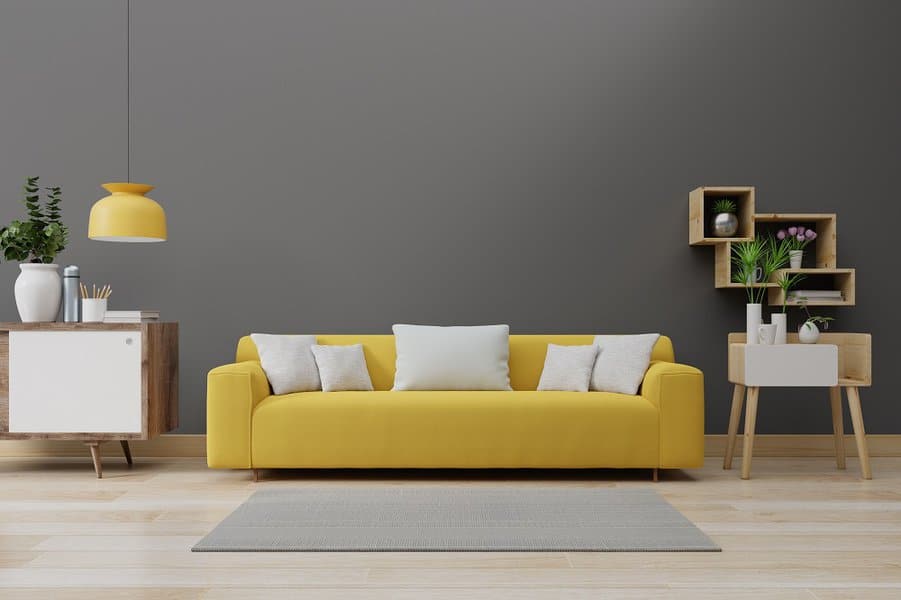
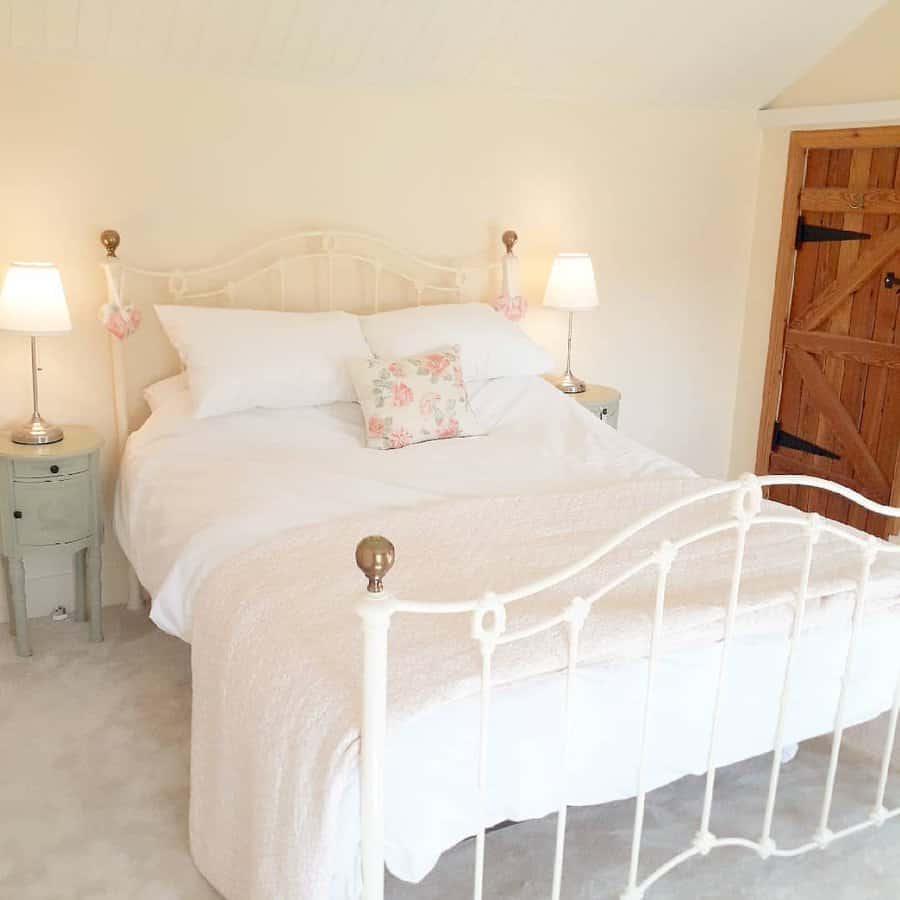
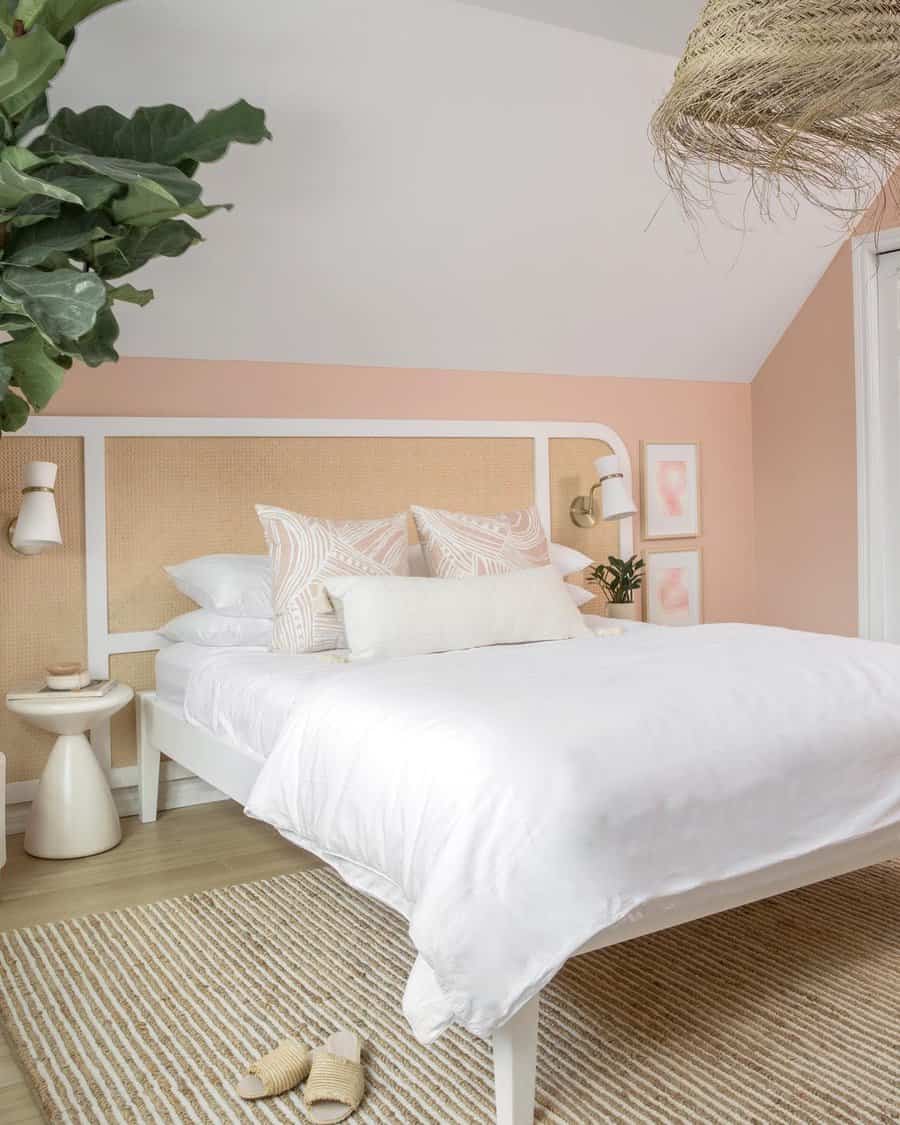
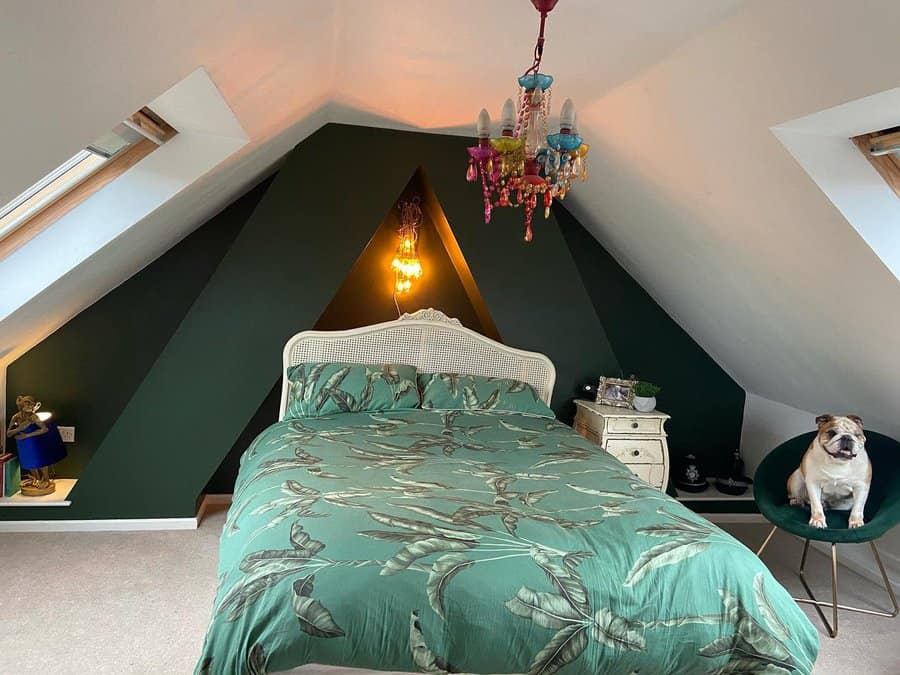
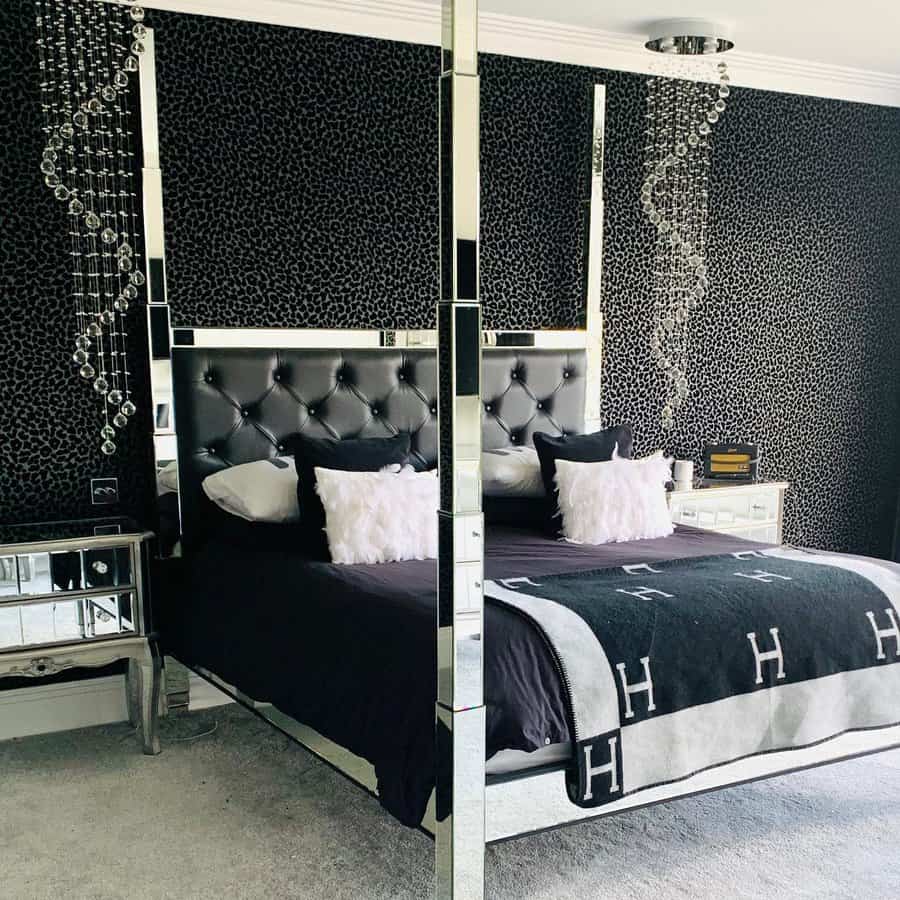
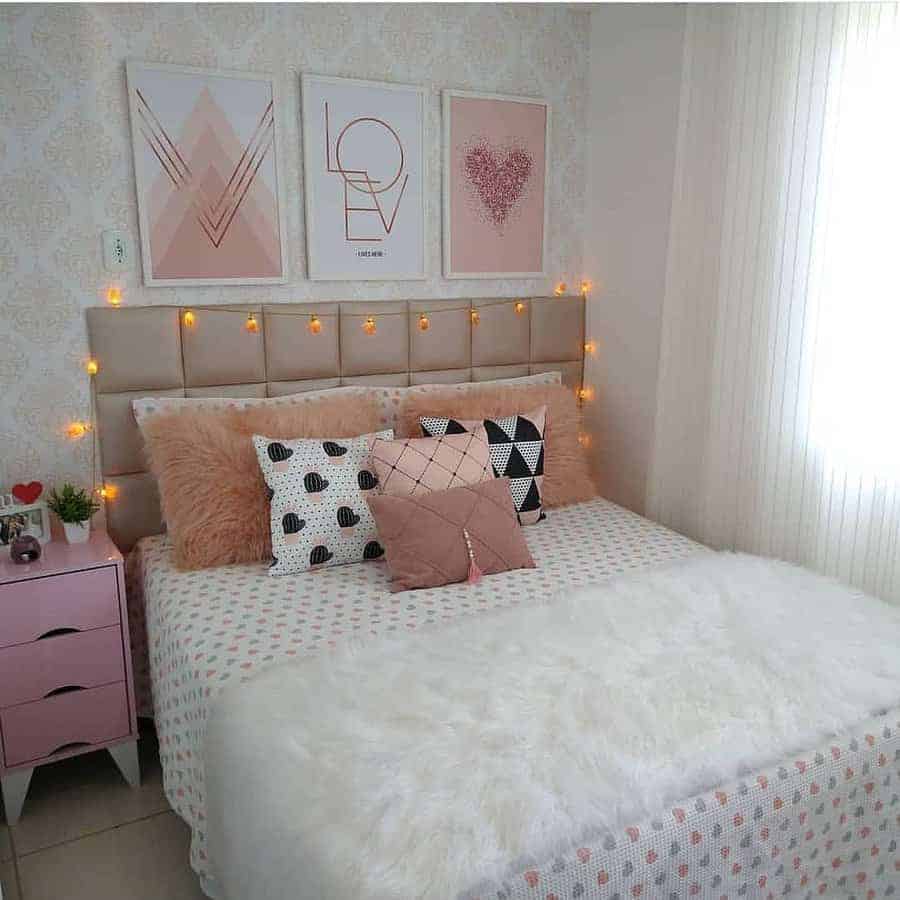
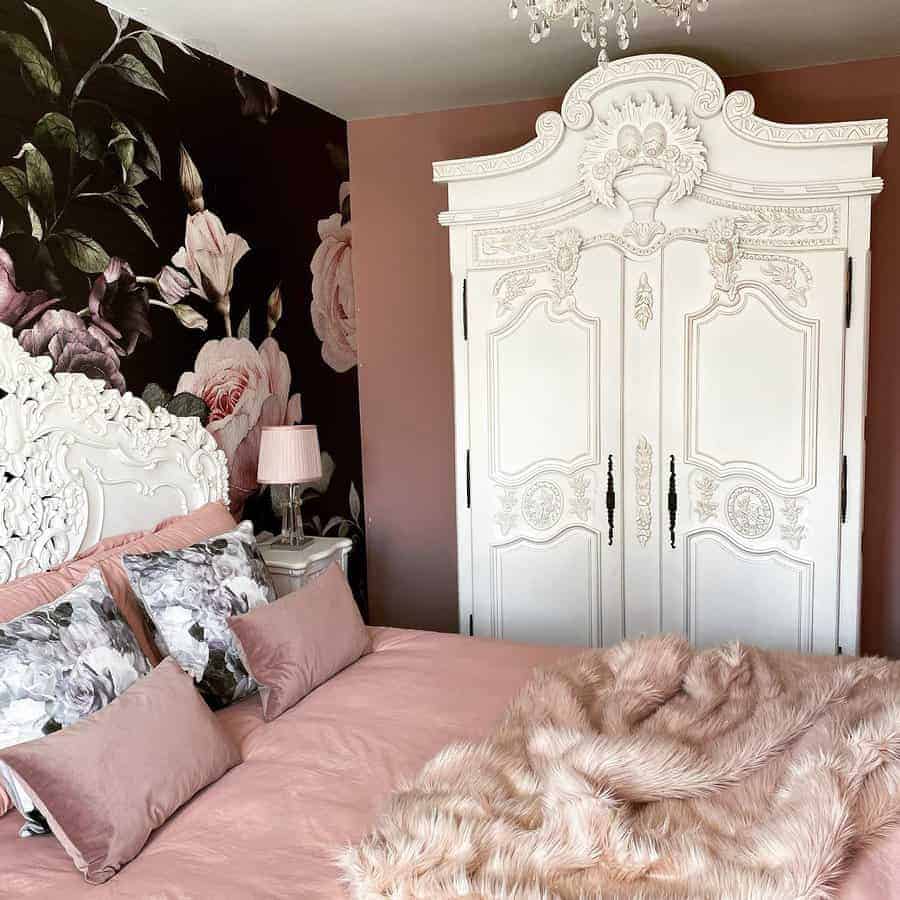
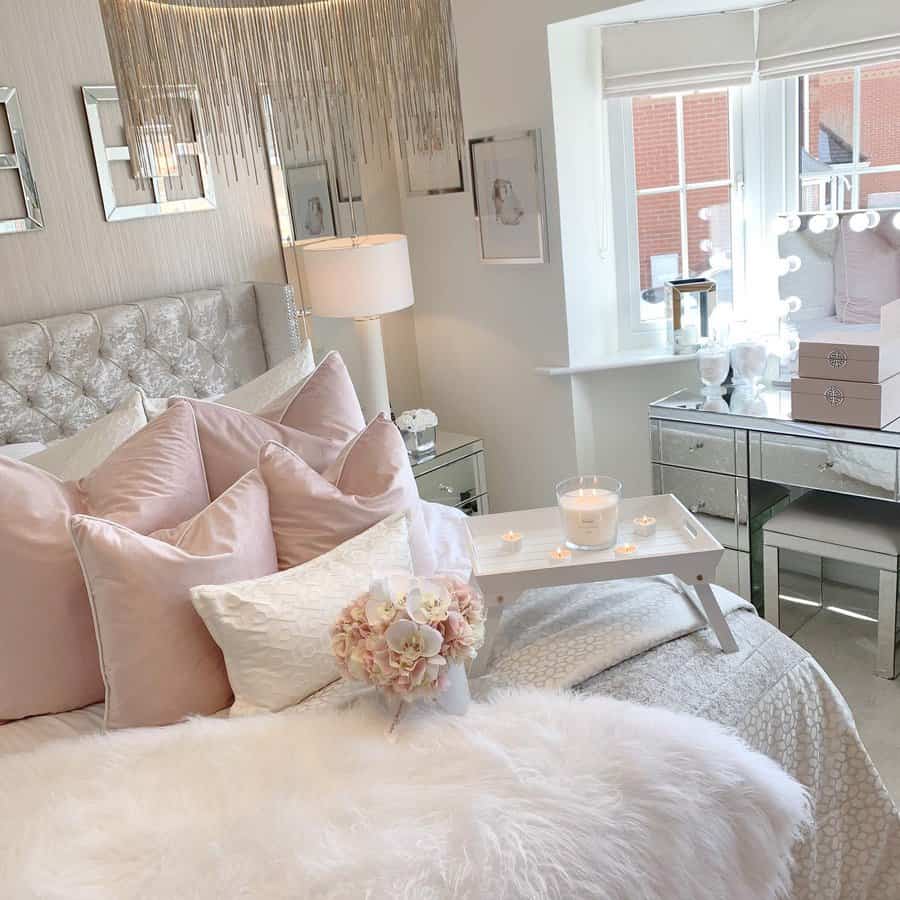
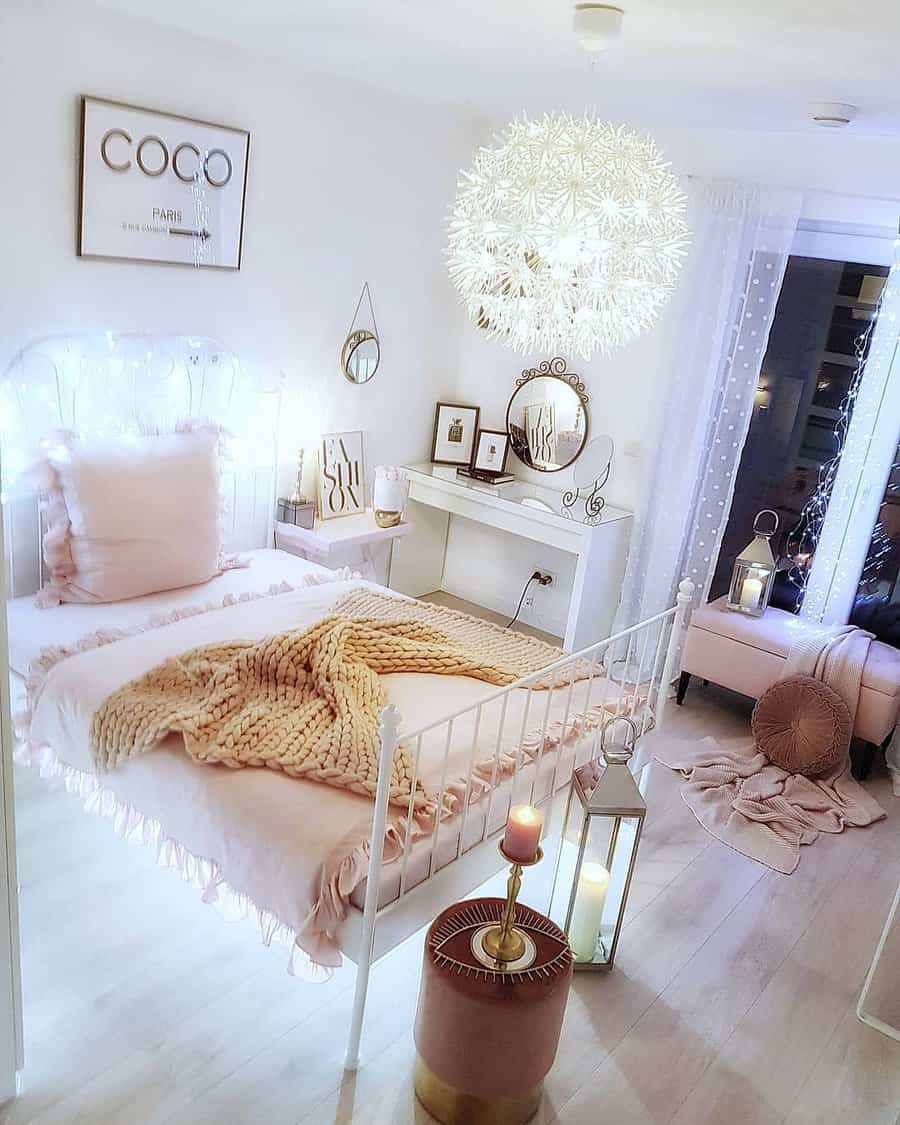
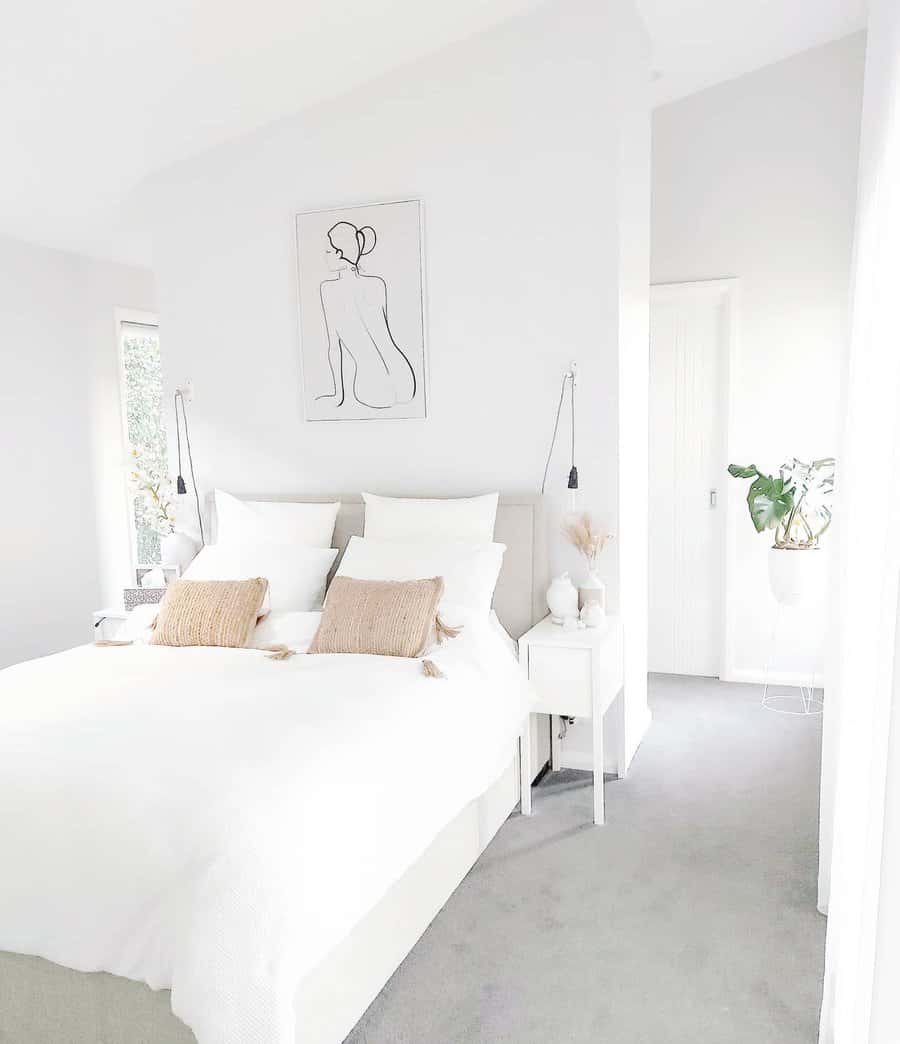
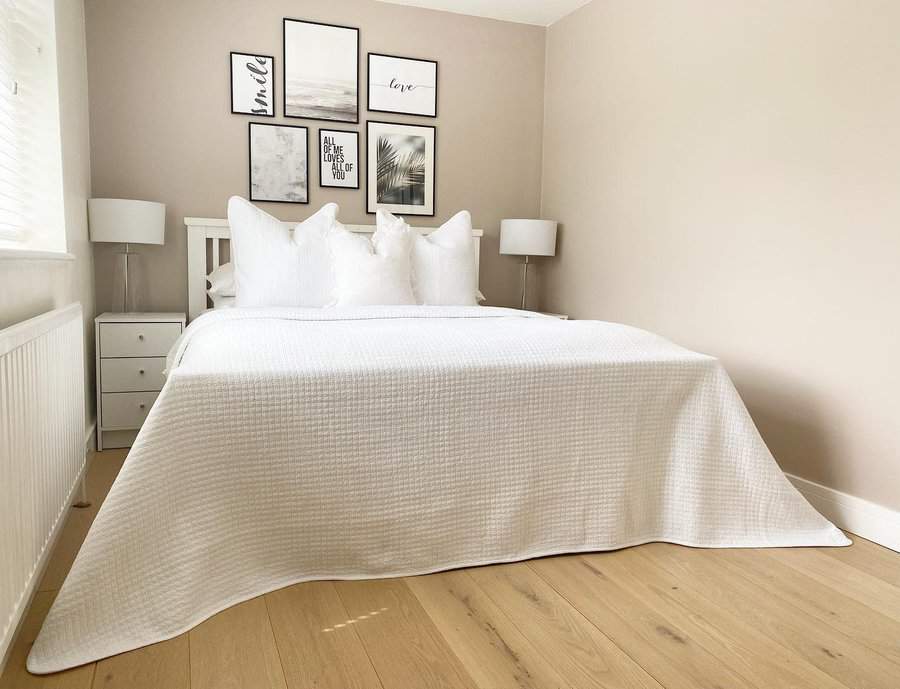
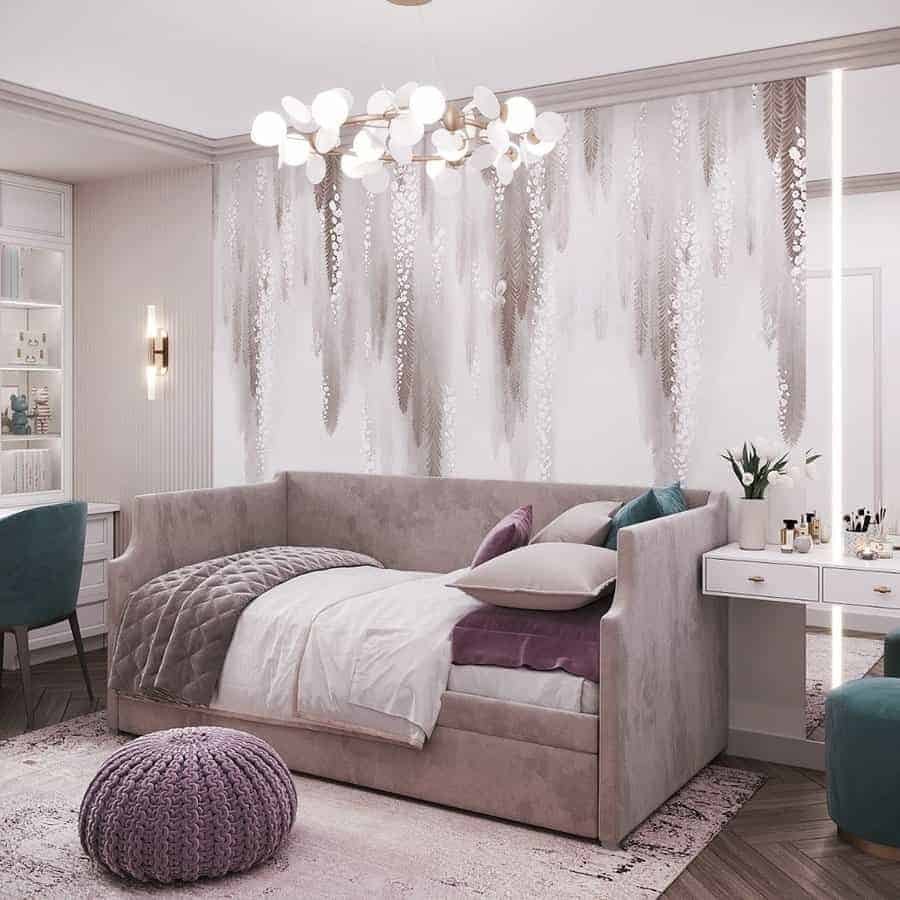
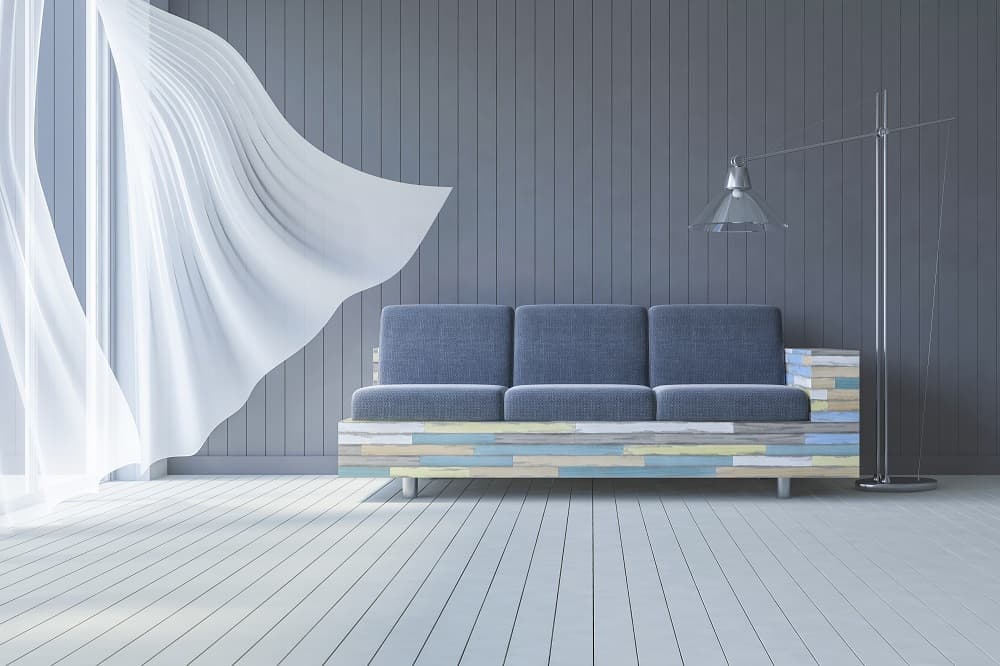
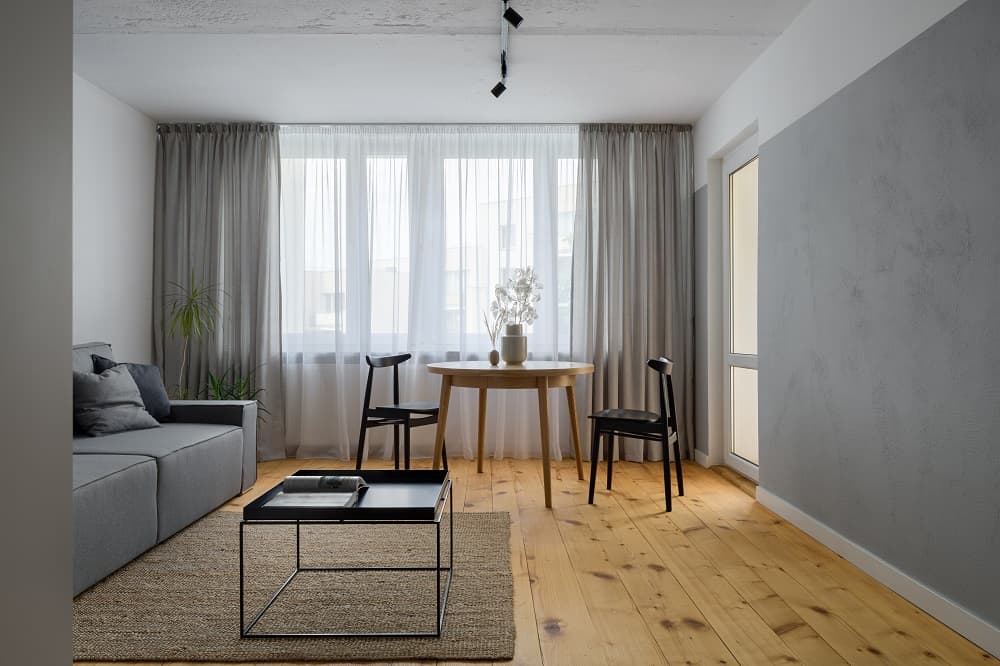
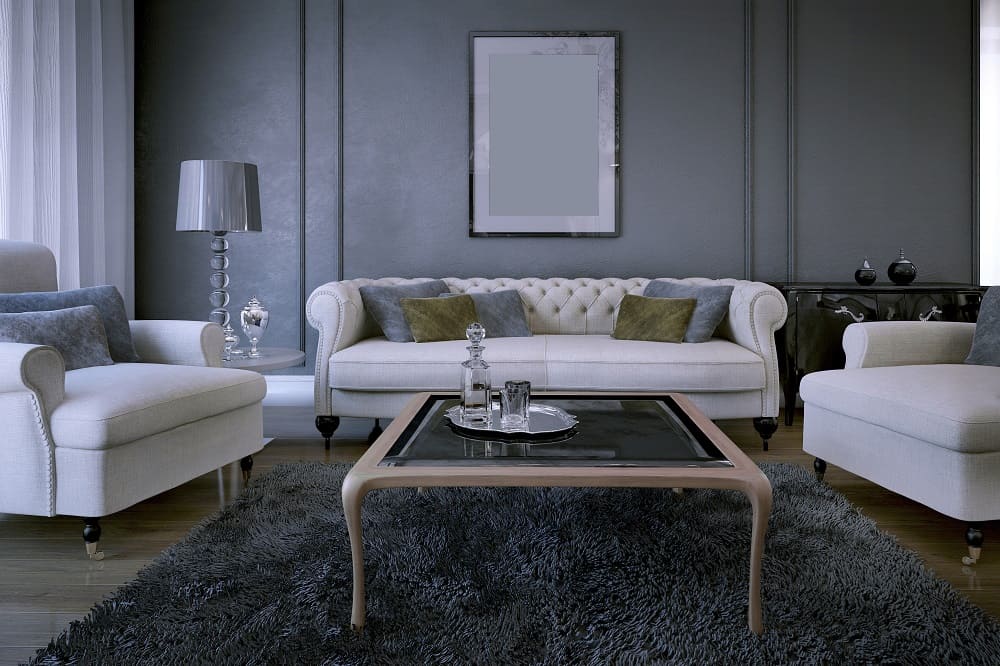
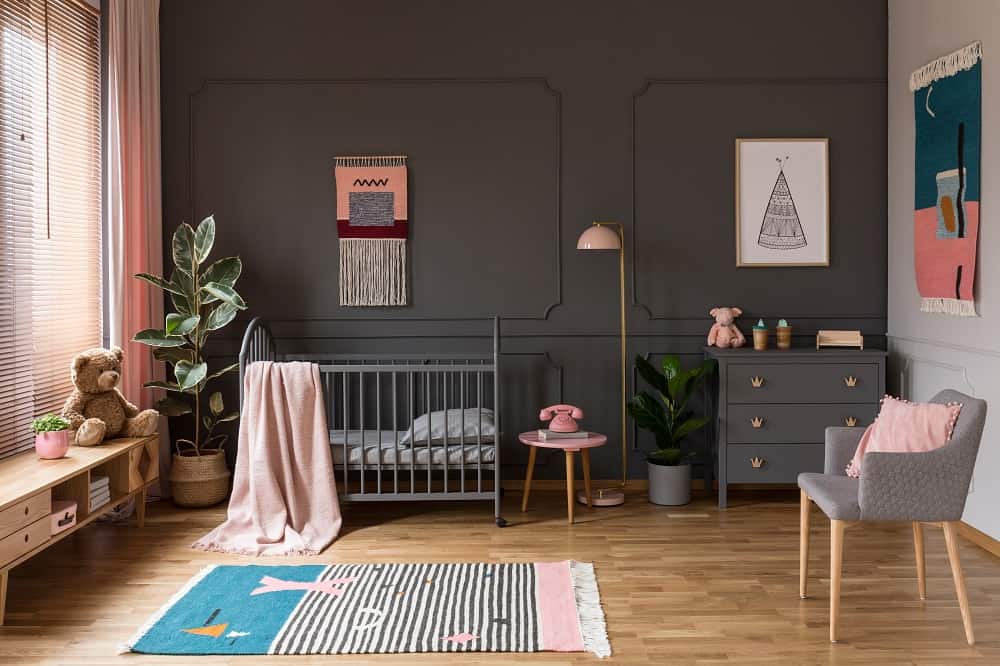
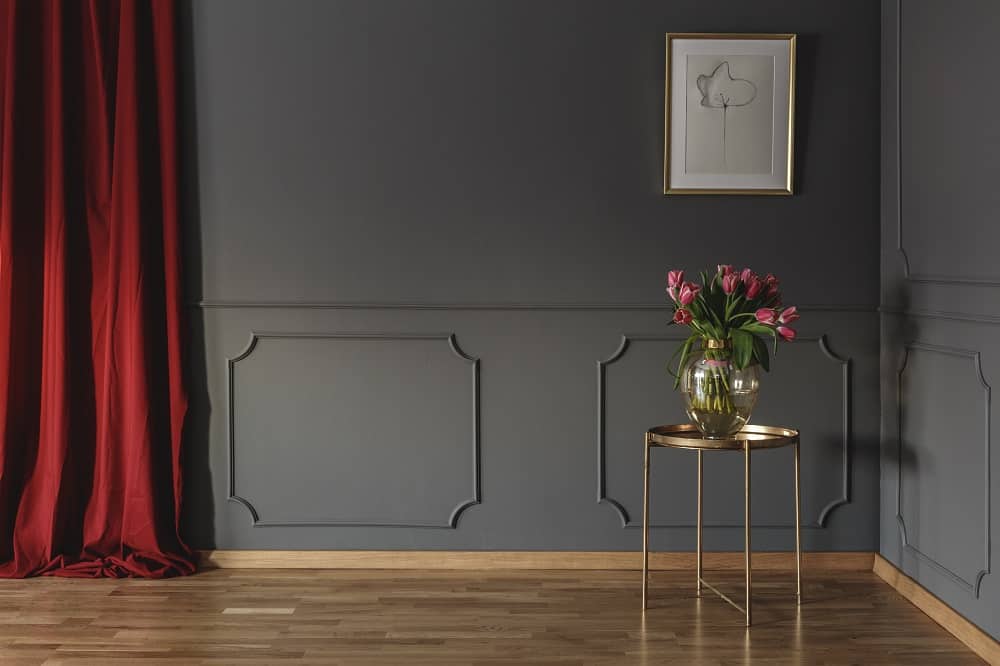
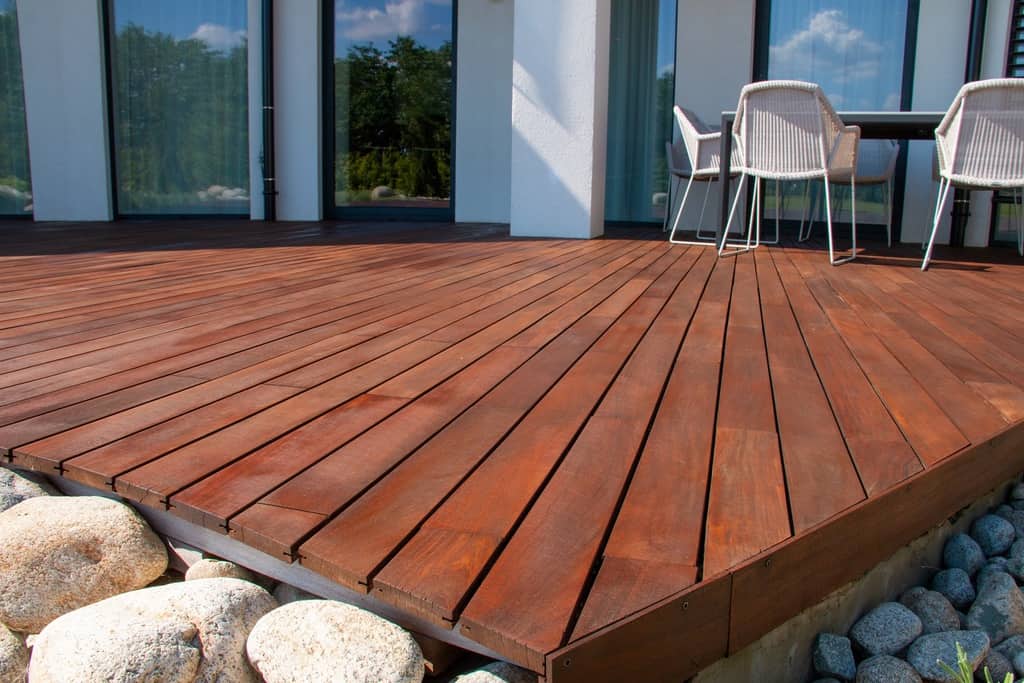
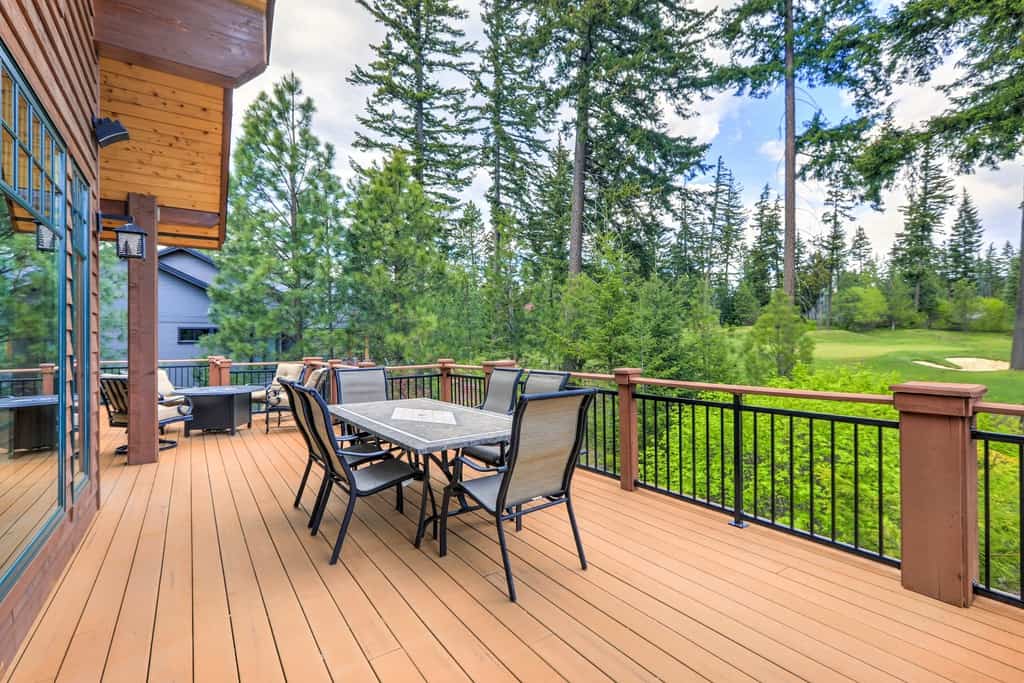
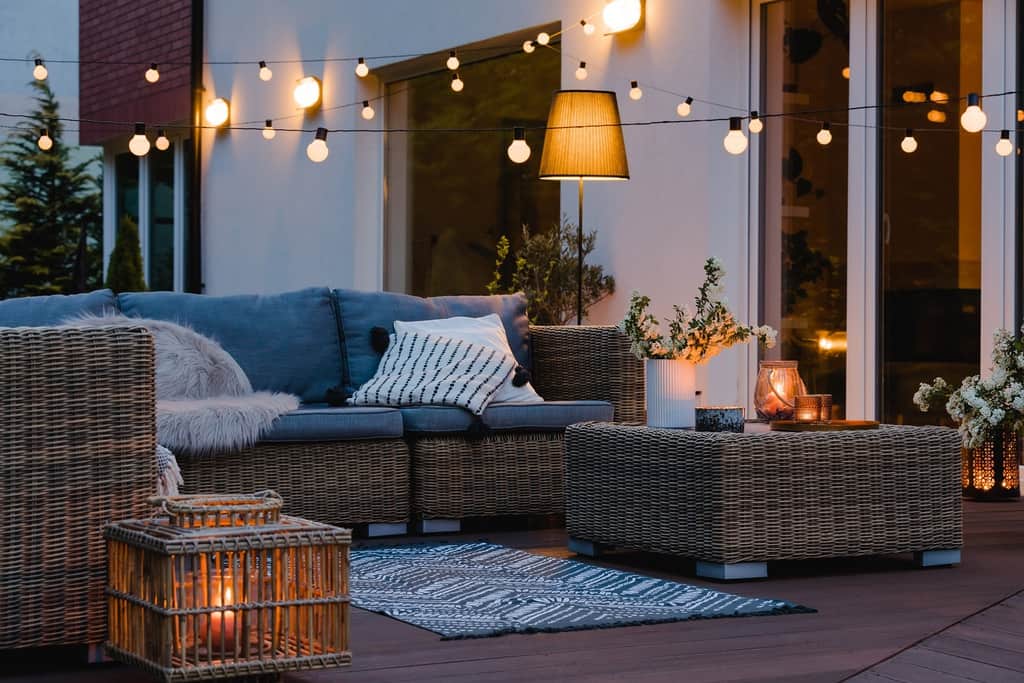
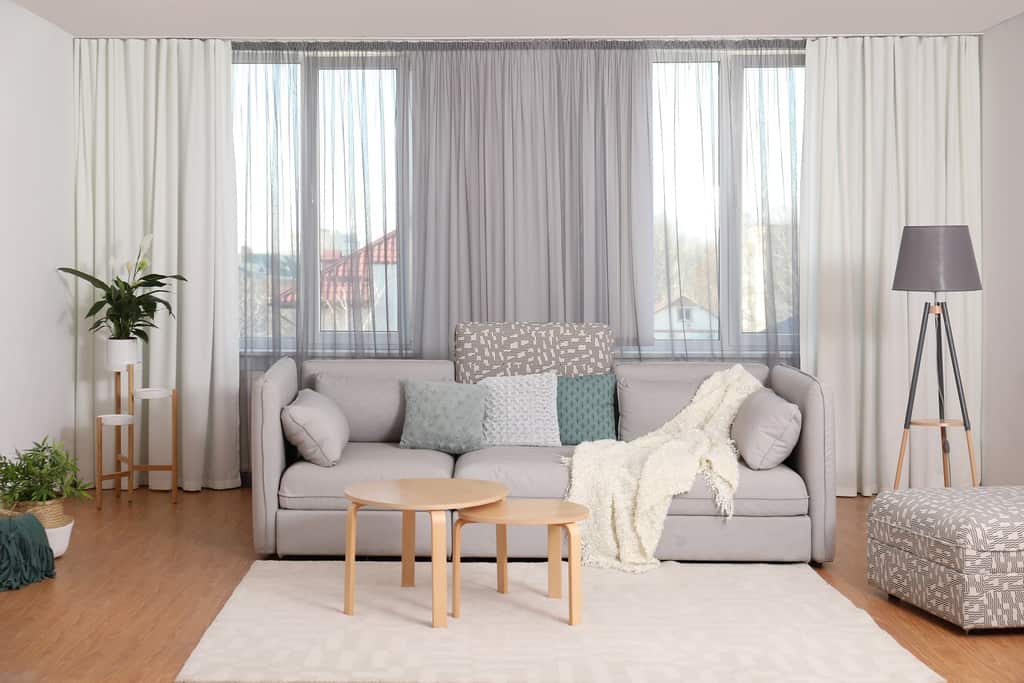
Grey is a hugely popular neutral color. It’s a color that comes in a huge range of shades, from dramatic charcoal to barely-there dove grey. Each grey color also has an undertone, which may be subtle or obvious. Warm greys have a red or yellow undertone while cool greys have a bluish tint.
So, what color furniture goes with grey walls? You really can’t go wrong with any color of furniture when grey is the background. However, some pairings seem to work a bit better than others. Choose from the following furniture colors to create an agreeable grey based room.
[view_toc]
Beige
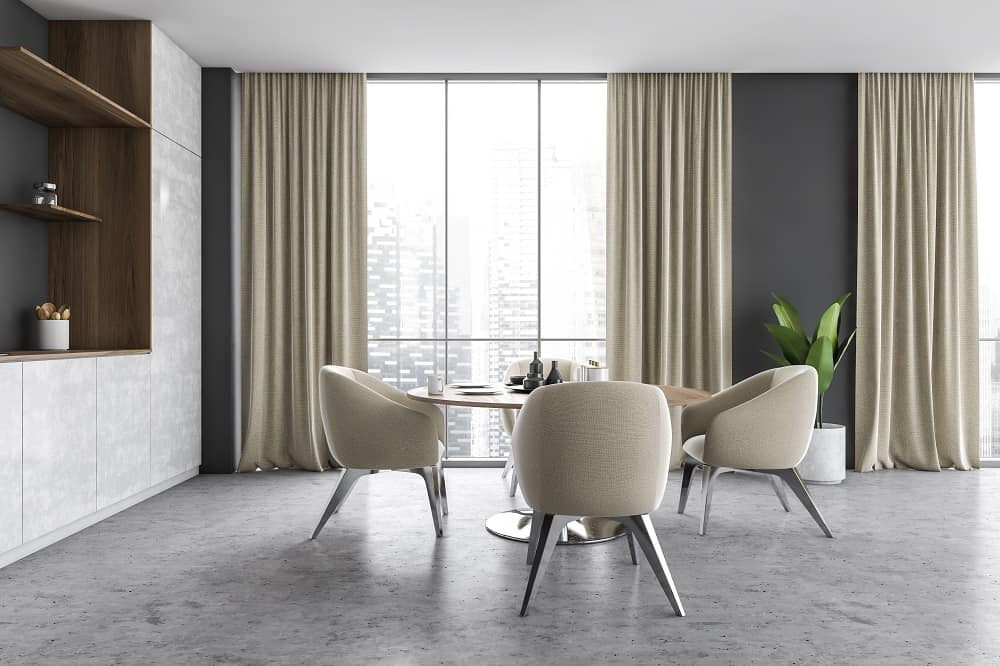
You might think beige or taupe is a bad pairing with another neutral like grey. However, depending on your interior designer skills, it’s possible for two neutrals to cohabitate nicely in one space.
Beige color furniture looks best against a warm grey wall color like Sherwin Williams’ Repose Grey. This color is a perfect “greige” or combination of grey and beige paint. To emphasize the grey in your color scheme, include a darker shade of charcoal grey in your area rug, throw pillows, and curtains.
Black
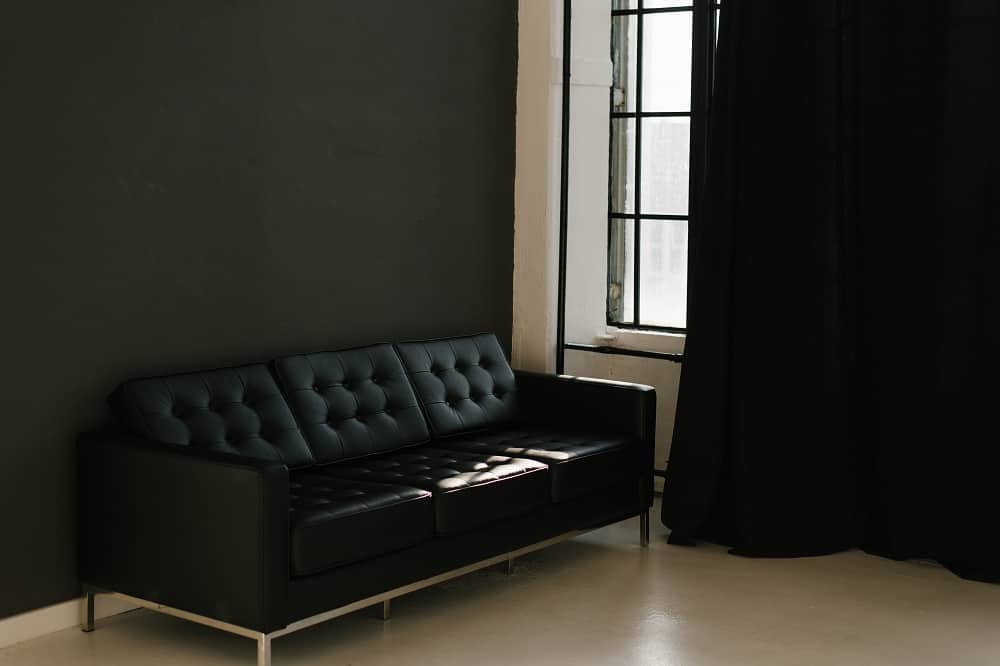
Black furniture always looks elegant next to grey walls. Black is a sophisticated color that, like grey, goes with virtually anything. Black color furniture is equally good with light grey or dark grey walls, depending on the look you’re going for. You can also mix and match black and grey furniture pieces.
Using black color furniture with grey walls creates a monochromatic color scheme, especially when grey is represented in several different shade options. Find an area rug that includes multiple shades of grey, black, and touches of white. A big area rug that includes these hues will bring together your monochromatic color scheme.
Blue
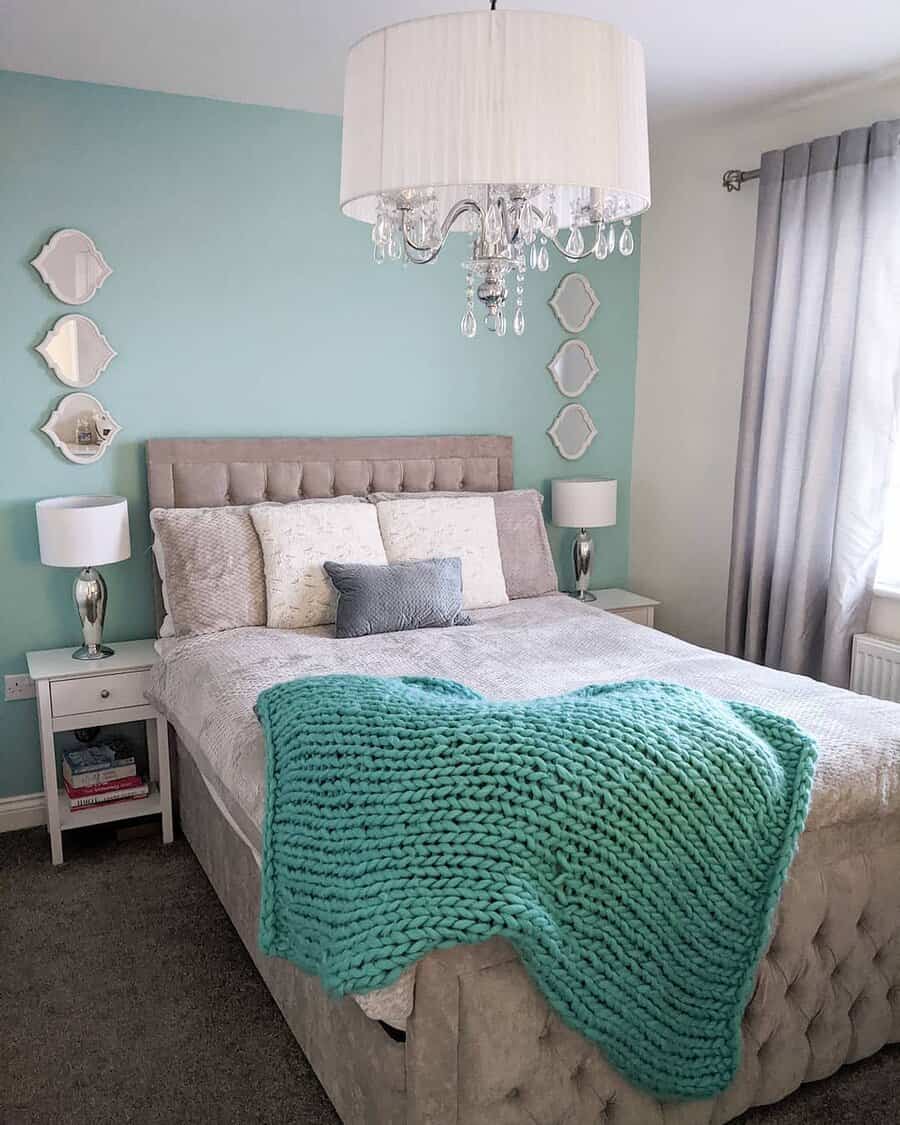
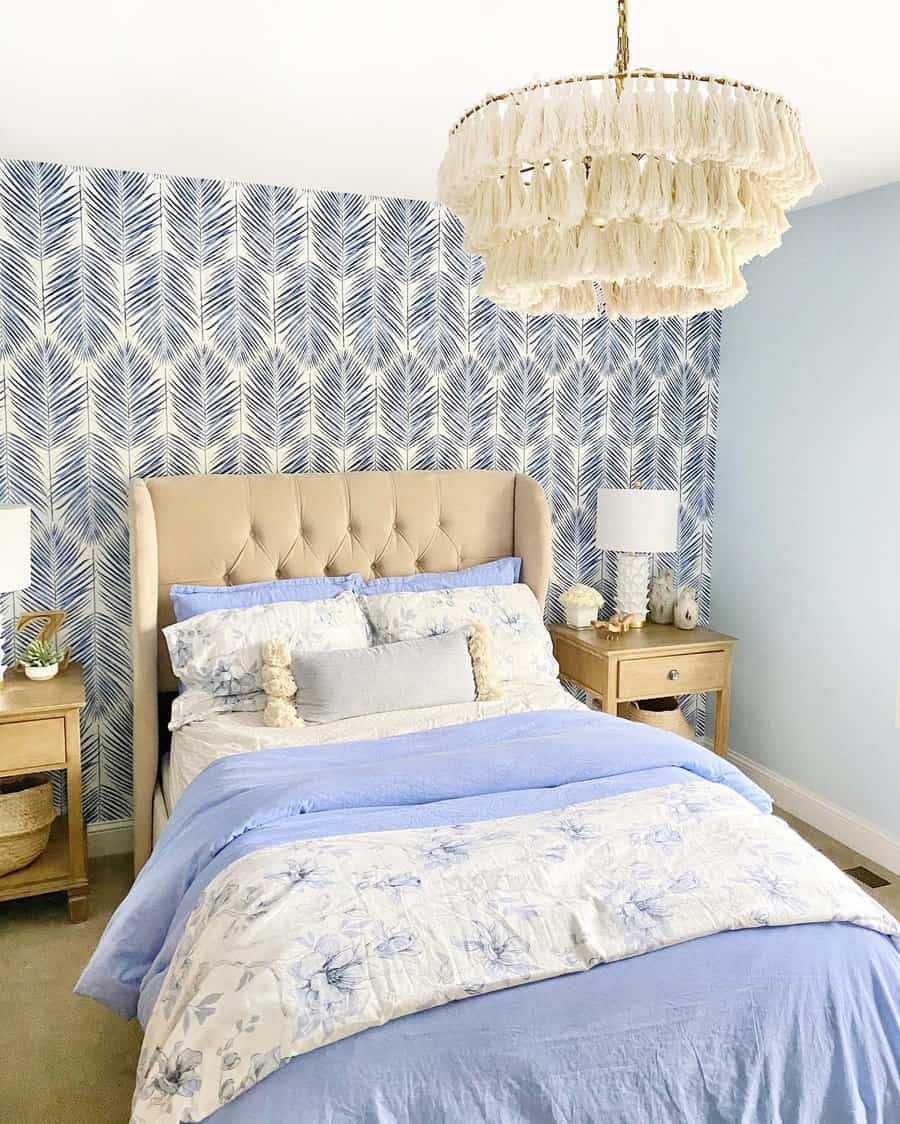
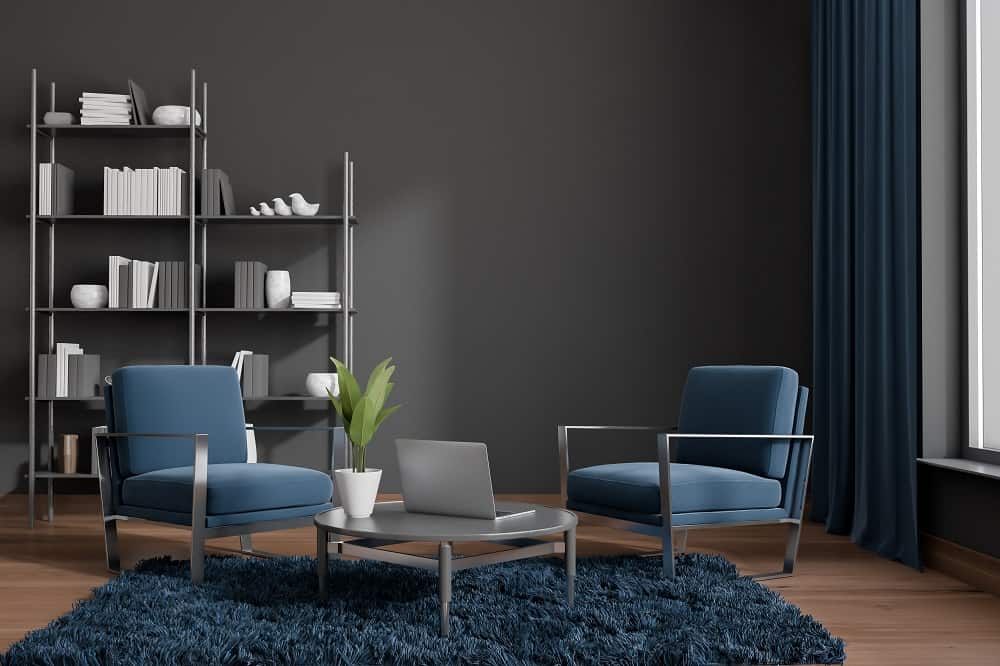
Blue is a peaceful color in its lighter shades, but can be dramatic when it’s dark or bright. Brilliant cobalt blue or sealike turquoise are two colors that really stand out, and either works well against dark grey or light grey walls.
For the best blue pairing, choose slate grey for its cool background tint. Slate grey comes in pale and dark grey versions. Light grey slate walls and soft powder blue are a soothing combination in a bedroom or living room.
Green
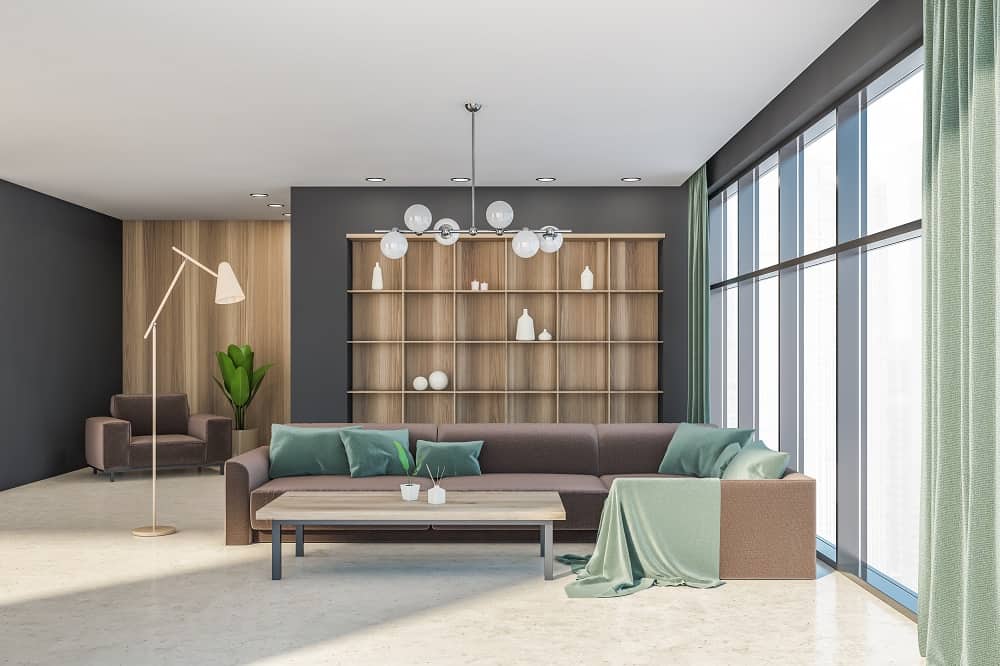
Earthy shades of green are a great choice when you’re wondering what color furniture goes with grey walls. Sage and other soft, soothing greens carry a calming vibe next to grey. Olive green furniture is excellent against grey walls, and you can add to that natural ambience with brown woods and other warm neutrals.
Brighter green furniture colors can also be used with grey walls. Think jade, emerald, or grass green against a neutral grey wall. Because red is on the opposite side of green on the color wheel, red is a good accent color for a green and grey living room. An earthy brick red or dark terra cotta accents will make the green stand out from the grey walls.
Grey
Grey might not immediately come to mind when you’re wondering what color furniture goes with grey walls. After all, as a neutral, grey furniture against a grey wall sounds dull. But the truth is that varied shades of grey make an elegant color scheme, especially in a formal living room or primary bedroom.
If you’re going for a grey monochromatic color scheme in the living room, choose at least one piece of grey furniture that has a highly textured or printed pattern. Pair a grey sofa with printed side chairs and hang shimmery grey color curtains on the windows. These features are what keeps a grey room from being boring, and are a fun way to add detail when you’d prefer not to introduce a whole new color.
Red
Choose red furniture if you want a bright, exciting look in your grey living room or bedroom. Red is also ideal if your grey wall room has an Asian flair, especially if you add gold accents.
Furniture upholstered with dark reds, like burgundy and maroon, have long been popular living room ideas. If a large red sofa seems a bit much, use smaller touches of red, such as a red bookcase or accent chair.
White
White will always be a top furniture or wall color choice when you’re going after a fresh, clean vibe. White walls with grey trim or grey walls with white trim are both good when you want to include white furniture in the living room. White furniture is a flexible design choice as it looks great against a light grey wall or a dark grey wall.
Warm grey color paint looks better with a warmer shade of white furniture, such as cream or ecru. Keep your warmer color palette consistent with an ivory curtain color instead of a bright white curtain.
Yellow is a bright color that adds a cheerful, whimsical ambience to a living room with grey walls. Pure butter yellow, bright primary yellow, or deep sunflower gold are all great upholstery living room ideas to pair with grey.
If you feel that yellow is a too bright color to use on a large piece of furniture, use it as an accent color. Perhaps paint one accent wall your chosen yellow color and include it in your curtains, throw pillows, and other home decor accents.
Creating the perfect women’s bedroom is far from being a cookie-cutter solution where you simply fill the space with lots of pink and lace. Because each woman is unique, each woman’s bedroom decorating ideas will also be highly distinctive.
Bedroom ideas for women can be dark, dramatic, modern, or Scandinavian. They can also be frilly, floral, delicate tributes to classic femininity. Whichever interior design style you prefer, here are some of our best bedroom ideas for women to get you started.
[view_toc]
1. Creating an Aesthetic Woman’s Bedroom
A woman’s bedroom decor should reflect the most genuine aspects of her personality. An aesthetic woman bedroom is one where her personality plays a major role in her home decor choices.
Source: @visitsummerhouse via Instagram
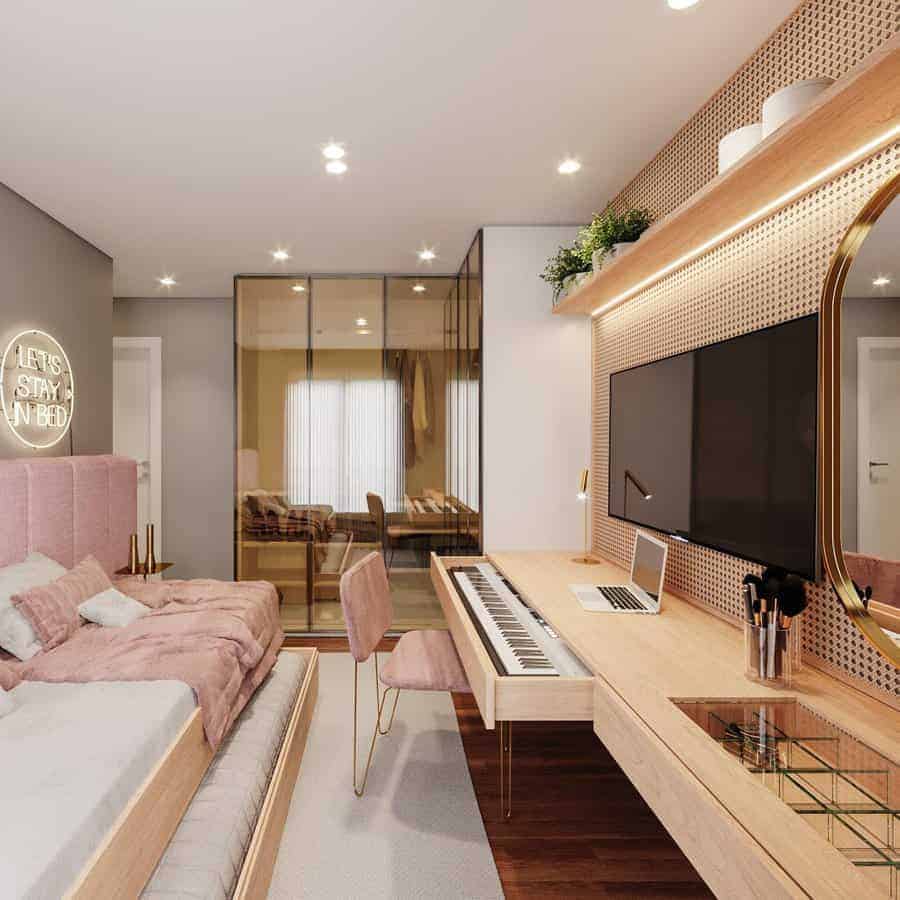
Modern aesthetic woman bedroom ideas include muted neutral colors and pinks, fairy lights and other fun light fixtures, and touches of greenery—real or faux. Wall decor may include photo collages, art prints, and simple motivational piece of word art. Moon phase garlands are popular in aesthetic bedrooms, often hung over the headboard.
2. Designing an Attic Bedroom with Unique Architectural Features
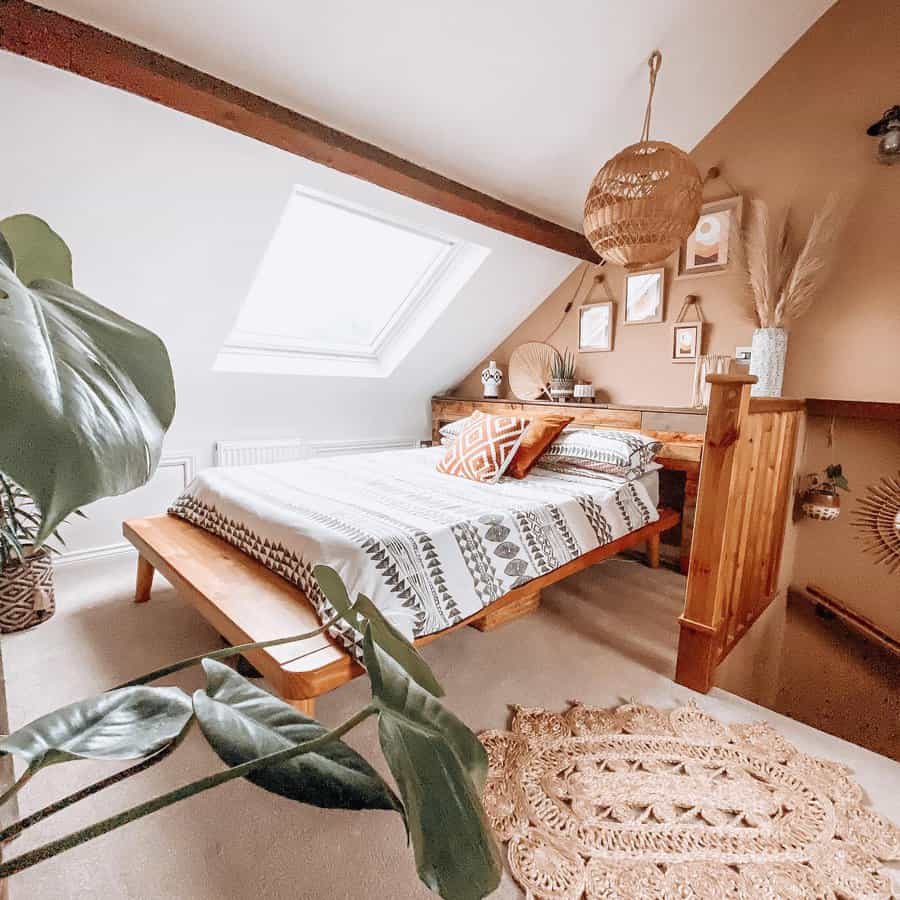
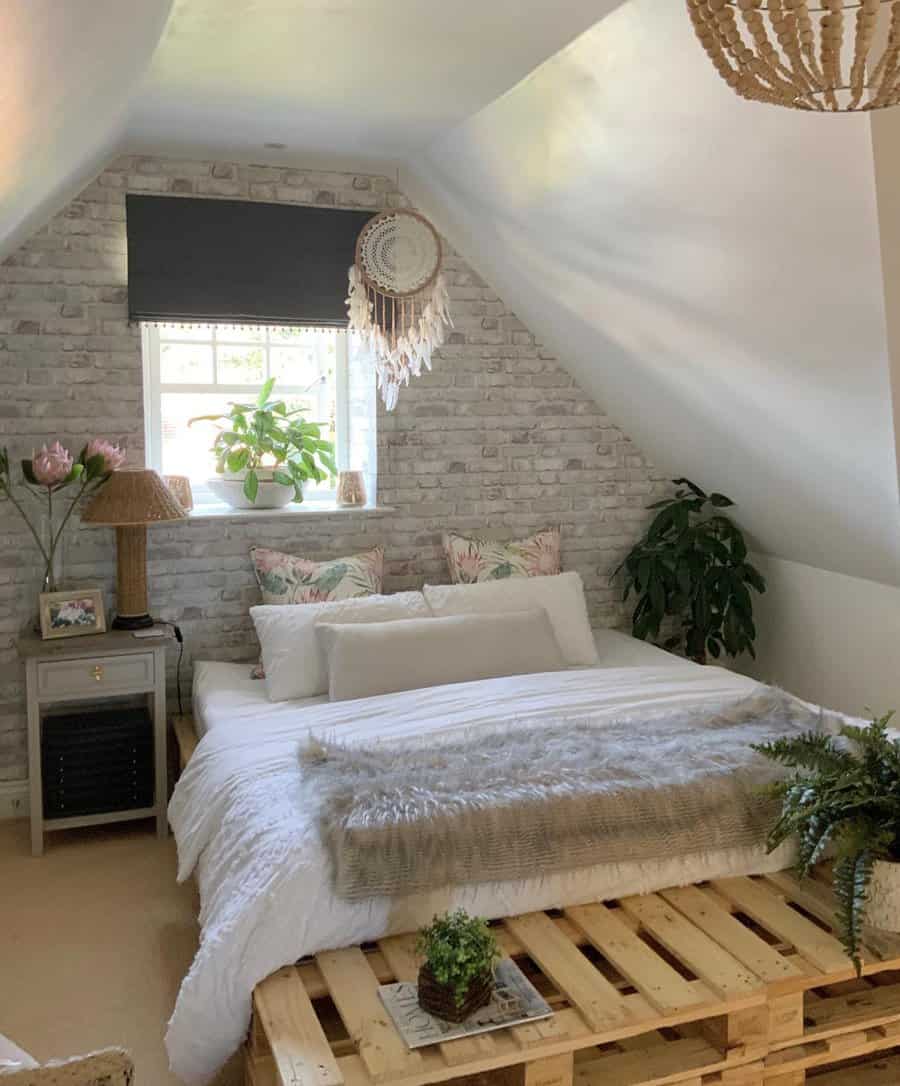
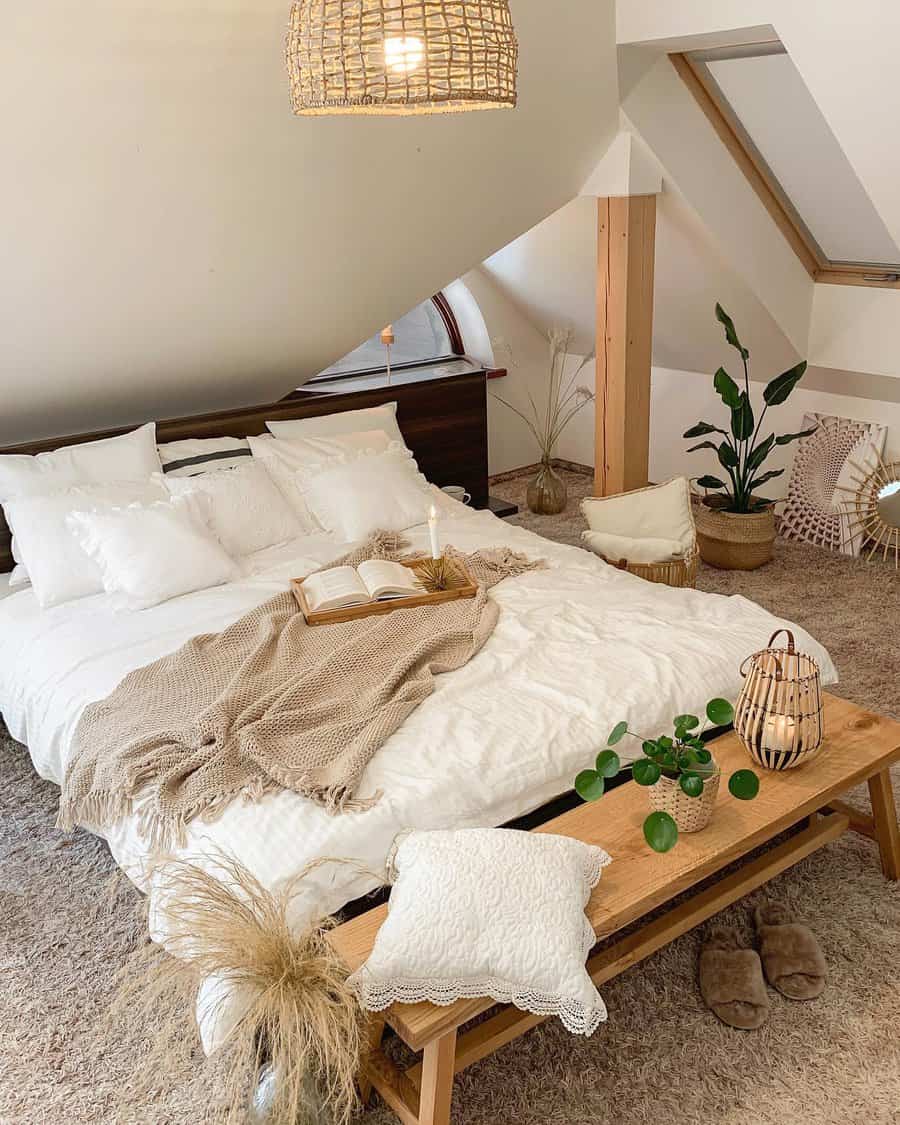
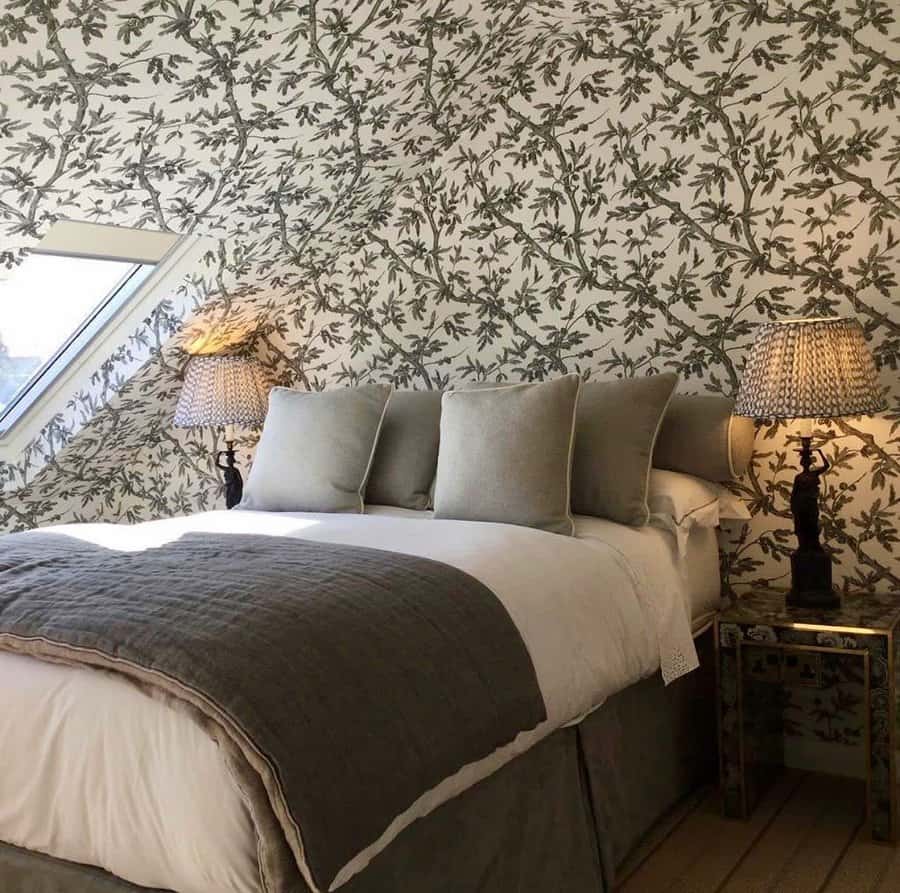
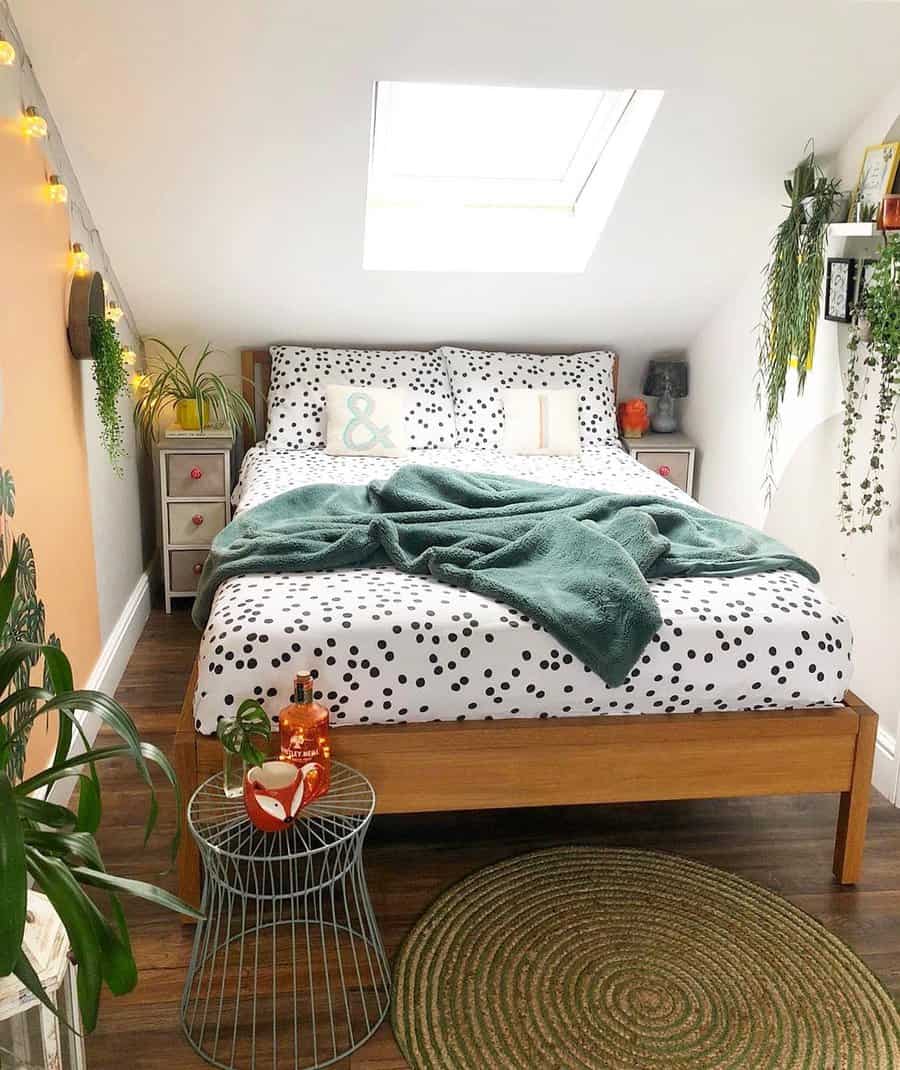
An attic bedroom may be a small room or quite spacious. Regardless of its size, an attic bedroom space often has unusual architectural features to work around, such as deeply angled ceilings, half walls, and irregularly shaped rooms. While this may be challenging, these features also help elevate your bedroom design.
Source: @finlayrobinshood via InstagramSource: @houseatnumber30 via InstagramSource: @lulu.loves.home via InstagramSource: @motkovo via InstagramSource: @teresagolpe via InstagramSource: @wakeupinworthing via Instagram
Sharply angled ceilings offer some creative bedroom decor options. For example, hang strings of white fairy lights behind a dark blue sheet tacked to the slanted ceilings. At night time, you will feel like you’ve been magically transported to a cozy valley, to sleep beneath a starry sky.
3. Creating a Vibrant Boho Bedroom with Natural Textures and Accents
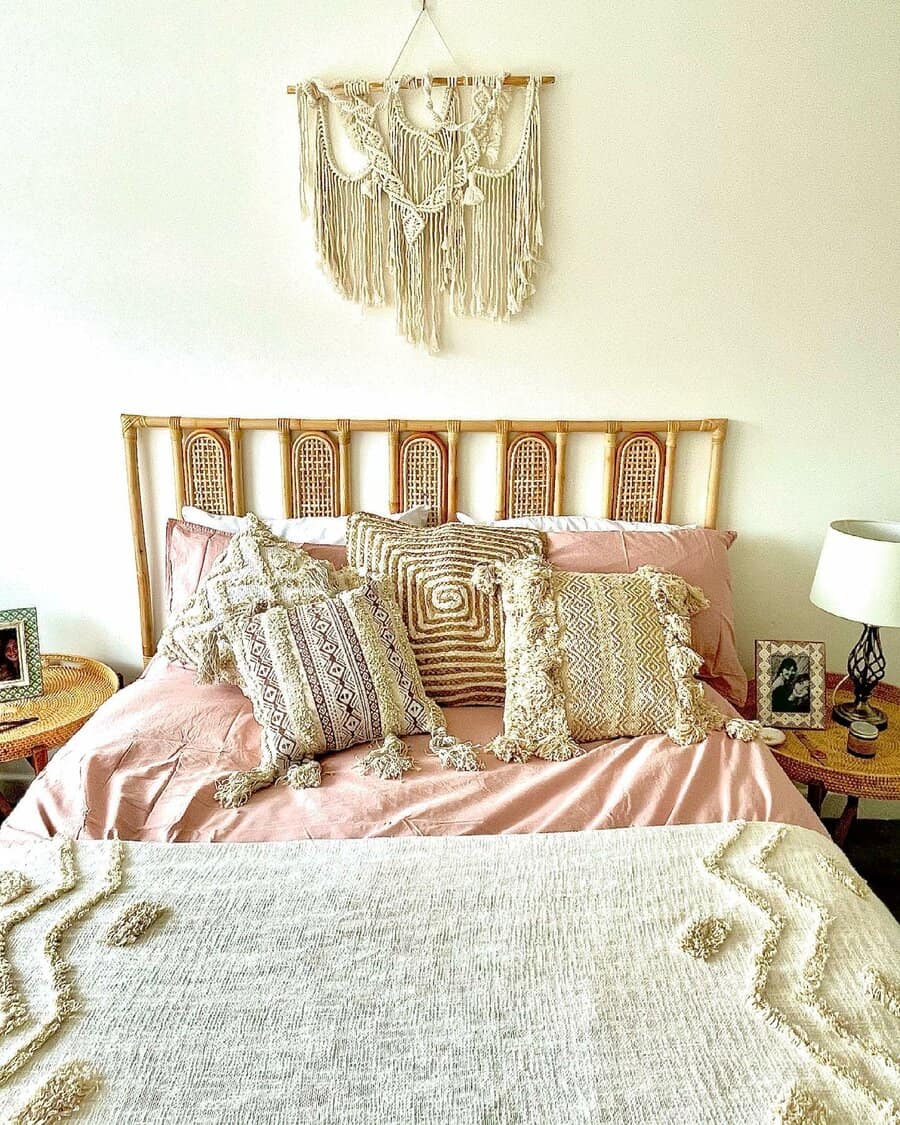
A boho bedroom features bright colors on a neutral background, international decoration accents, and plenty of natural textures and materials. Shag carpeting and macrame wall hangings bring forth that 1970s boho vibe, further accentuated with vintage wicker headboard and rattan fans used as bedroom wall art.
Source: @chloee_woods via InstagramSource: @lacasitahappy via InstagramSource: @ourboathouse via Instagram
Whimsical boho touches may include an assorted floor cushion and throw pillow collection with fun embellishments like pompoms and fringe. If you have a small bedroom, make sure your furniture is to scale—not oversized. Scatter colorful rugs in different sizes between your bedroom furniture for a fun bohemian touch.
4. Elevate Your Master Bedroom with Chic Neutral Tones and Natural Textures
Create a chic master bedroom by focusing on a neutral color palette—but fill it with inviting, natural textures and prints. For example, pair a velvet upholstered bed with white faux fur pillows and a leopard print throw. Add affordable texture with a DIY faux brick accent wall and whitewash it, as shown in this video:
Source: @bloomsanddreams via Instagram
Mirrored furniture or an oversized framed floor mirror propped against the wall are chic ways to help a small bedroom look bigger. Add a designer overhead light fixture and complementary table lamps to round out your chic, feminine bedroom design.
5. Embracing Contemporary Bedroom Trends with a Touch of Vintage
Contemporary bedroom ideas for women embrace today’s trends, with a clean, sophisticated ambience. Contrasting colors are a common contemporary bedroom idea. Pair black and white with a bold shot of orange, or decorate your space with colors opposite each other on the color wheel.
Source: @allthingshomestyle via InstagramSource: @stylingmyhouse_ via InstagramSource: @urbanstayatx via Instagram
Even if you love contemporary bedroom decor, it’s not an all-or-nothing situation. Add a few softer, vintage decoration embellishments if it suits your personality. For example, sleek metal lamps with Edison bulbs are a fantastic marriage between contemporary and traditional decor ideas.
6. Exploring Cottage Style Bedroom Ideas: From Rustic Tudor to Beach Chic
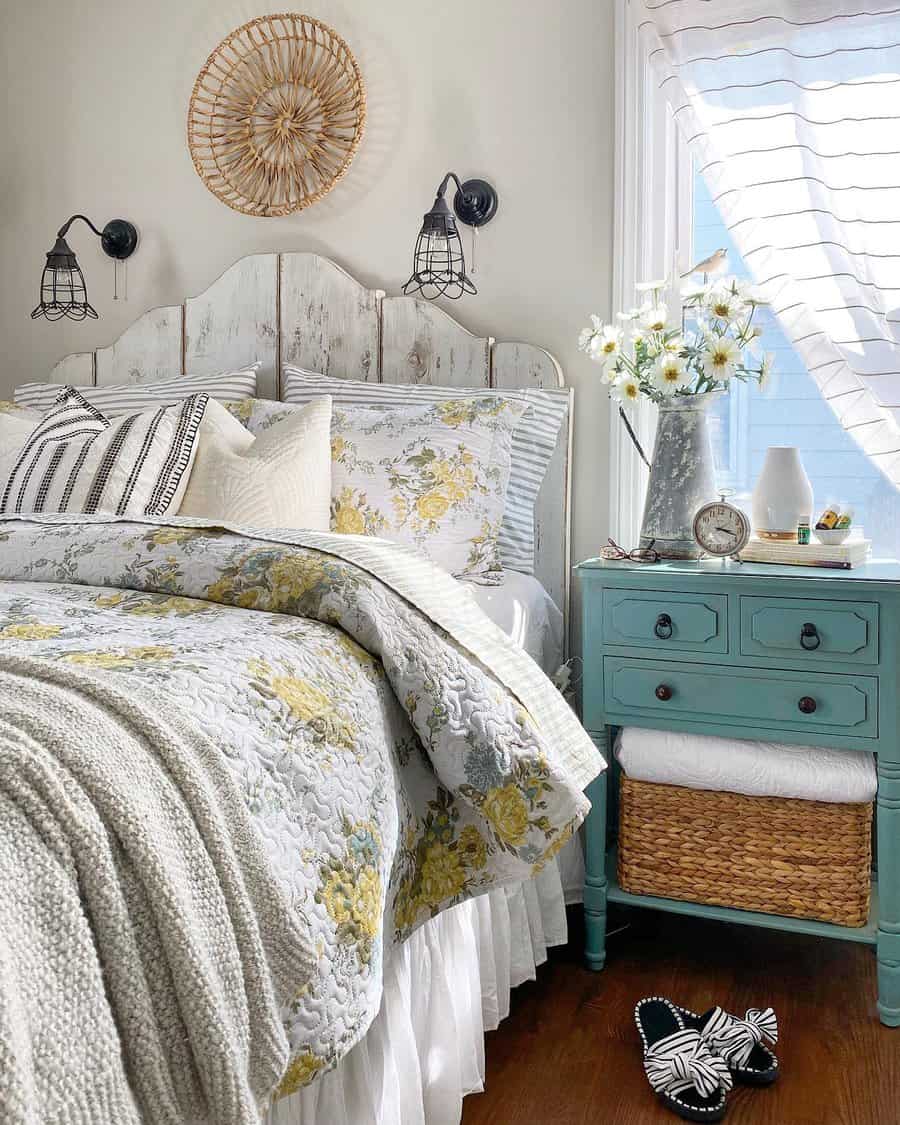
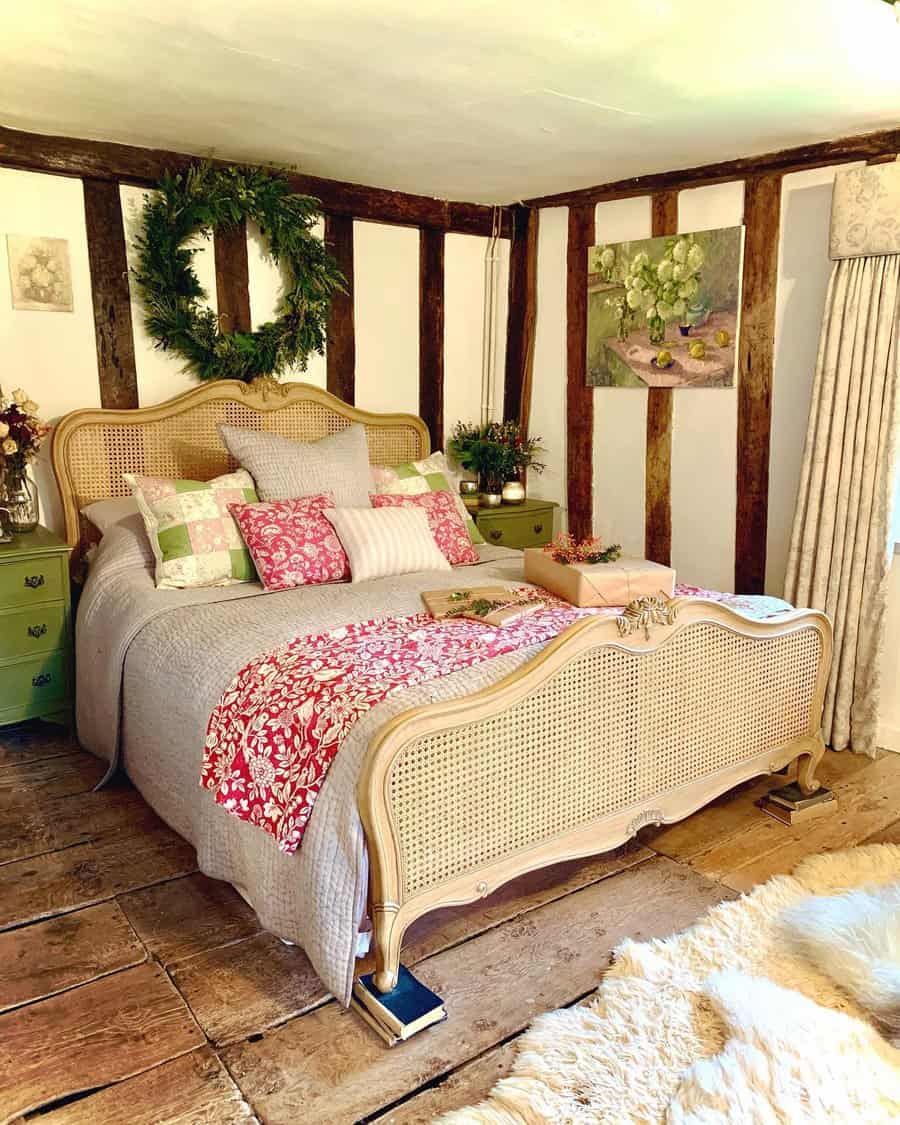
If you have an idea for a cottage style bedroom, there are several directions you choose from to style your space. Go rustic English Tudor if you already have vintage touches in your living room and kitchen. Or go beach cottage with a sand and water color scheme atop a white bedroom foundation.
Source: @ahappyandaproudhome via InstagramSource: @betsyblairhome via InstagramSource: @my.purposed.place via InstagramSource: @myenglishcountrycottage via Instagram
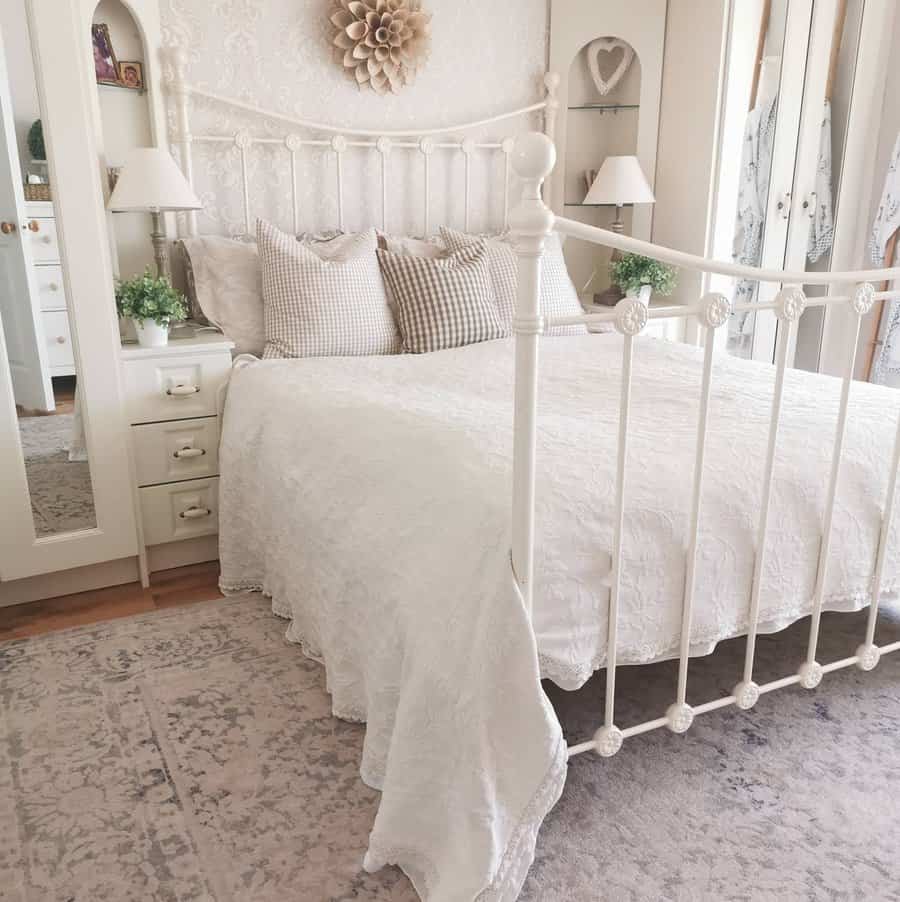
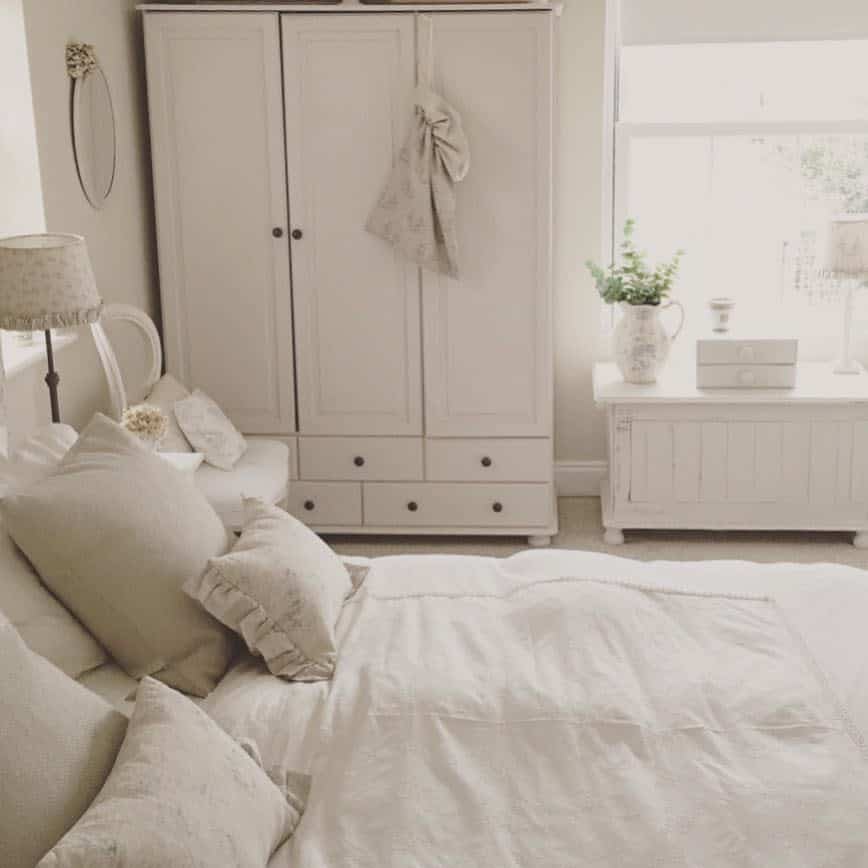
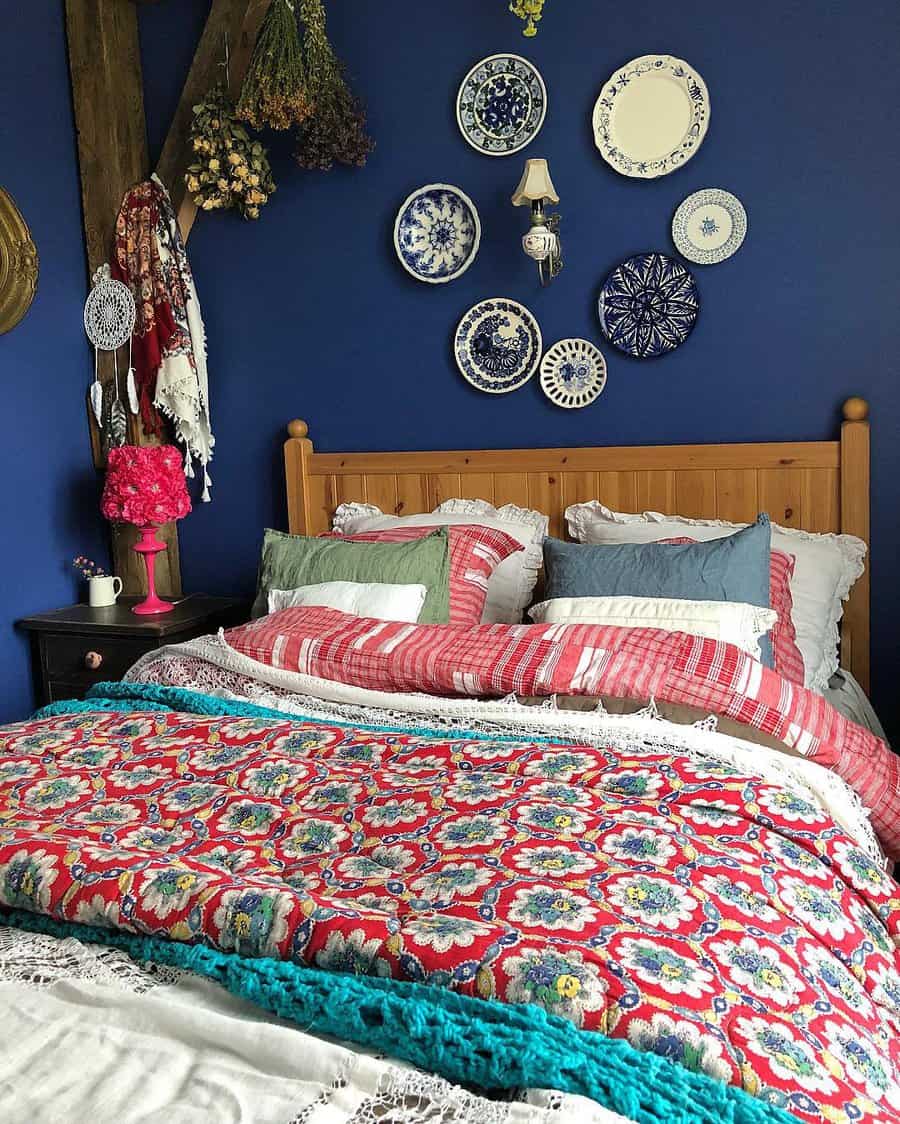
Shabby chic is another cottage-inspired idea if you love floral fabrics, lace, crystal lamps, and other distinctly feminine touches. Cottage style—no matter which idea you choose—should always feel comfortably worn and welcoming. A crocheted bed cover is a homespun bedroom idea that works great with cottage style.
7. Elevating Femininity with Dark Colors in Bedroom Decor
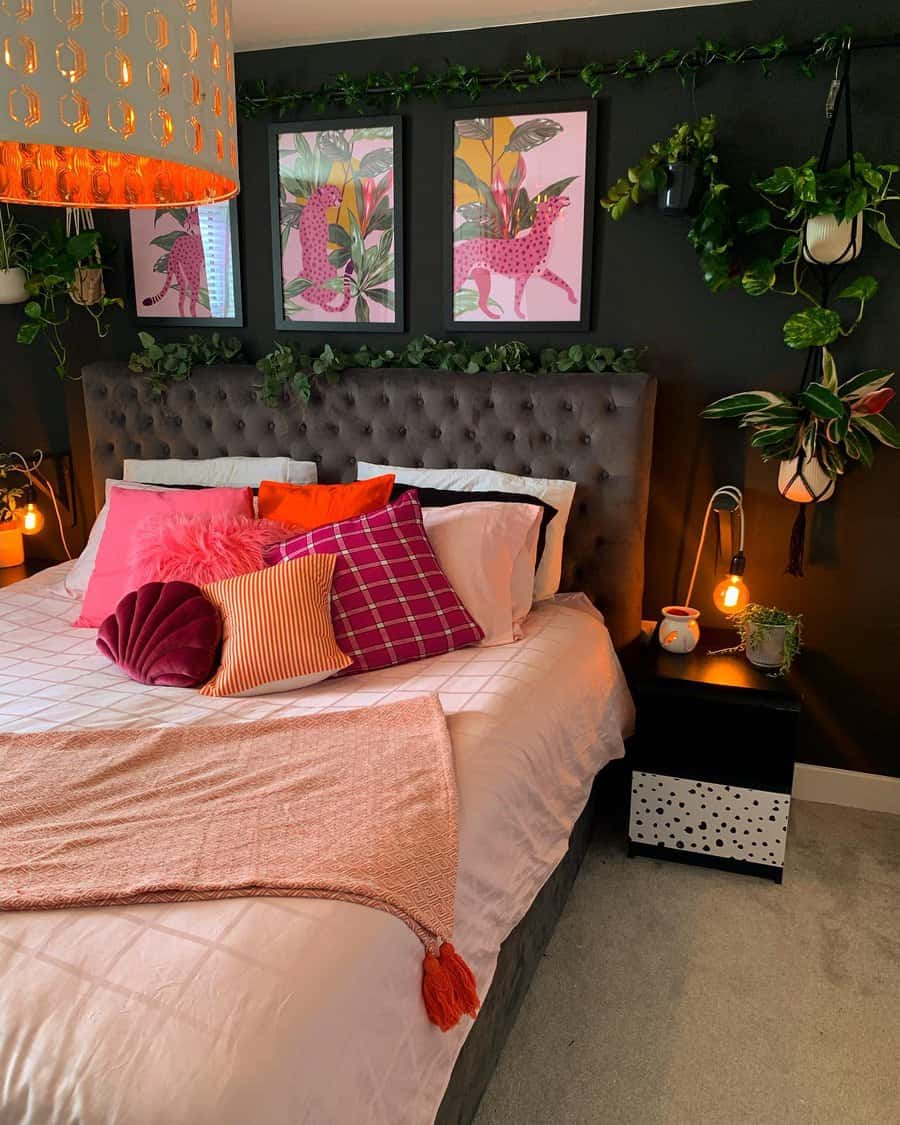
Dark colors might not initially come to mind when you think of women’s bedroom ideas. But dark hues of grey, brown, green, and burgundy can all be delightfully feminine when used in the right ways. For example, charcoal or black wall paint may be too much if used on all four walls. But a single dark color bedroom wall can add just the right amount of drama to a large or small bedroom.
Source: @homeofgetkooky via Instagram
Dark furniture is a great accent in an otherwise light color feminine space. Pair dark walnut or even black furniture with pale walls and soft textiles as it will help ground the space. Place a fluffy pink pillow on a deep navy chair and park it next to a delicately designed lamp.
8. Enhancing Your Bedroom with a Stylish Accent Wall and Decorative Elements
An accent wall is a great bedroom decor idea when you want to introduce a new color without it taking over the space. Be sure to include that color in other elements, such as on decorative pillows or wall art. Consider painting one piece of furniture in your chosen accent color, such as a chair or dresser.
Source: @aniutkowo via InstagramSource: @creativetonic via InstagramSource: @interiorsbyjendavidson via InstagramSource: @our_meadow_hill_home via InstagramSource: @thecopperbarnsuffolk via InstagramSource: @whenahousebecomesahome via Instagram
Stacks of books are an excellent bedroom decoration for a bibliophile. Shop antique stores and thrift shops for old books with covers that coordinate with your bedroom design, then stack them on windowsills, shelves, or as a base beneath your nightstand lamp.
9. Adding a Feminine Touch to Your Bedroom with Flowers and Greenery
Flowers are nature’s feminine touch, whether they appear in the living room, home office, bedroom, or garden. It’s almost always a good idea to include flowers in a woman’s bedroom, whether it’s living flowers, faux flowers, or a simple floral idea replicated on furniture upholstery.
Source: @atticusmanor via InstagramSource: @metrowardrobes via Instagram
If a vase of real flowers feels over-the-top feminine for you, get the same soft natural aesthetic with potted plants. Line a windowsill with succulents in beautiful pots, or hang a trailing vine in the corner beside your bed.
10. Transforming Your Space with Glamorous Bedroom Decor for Women
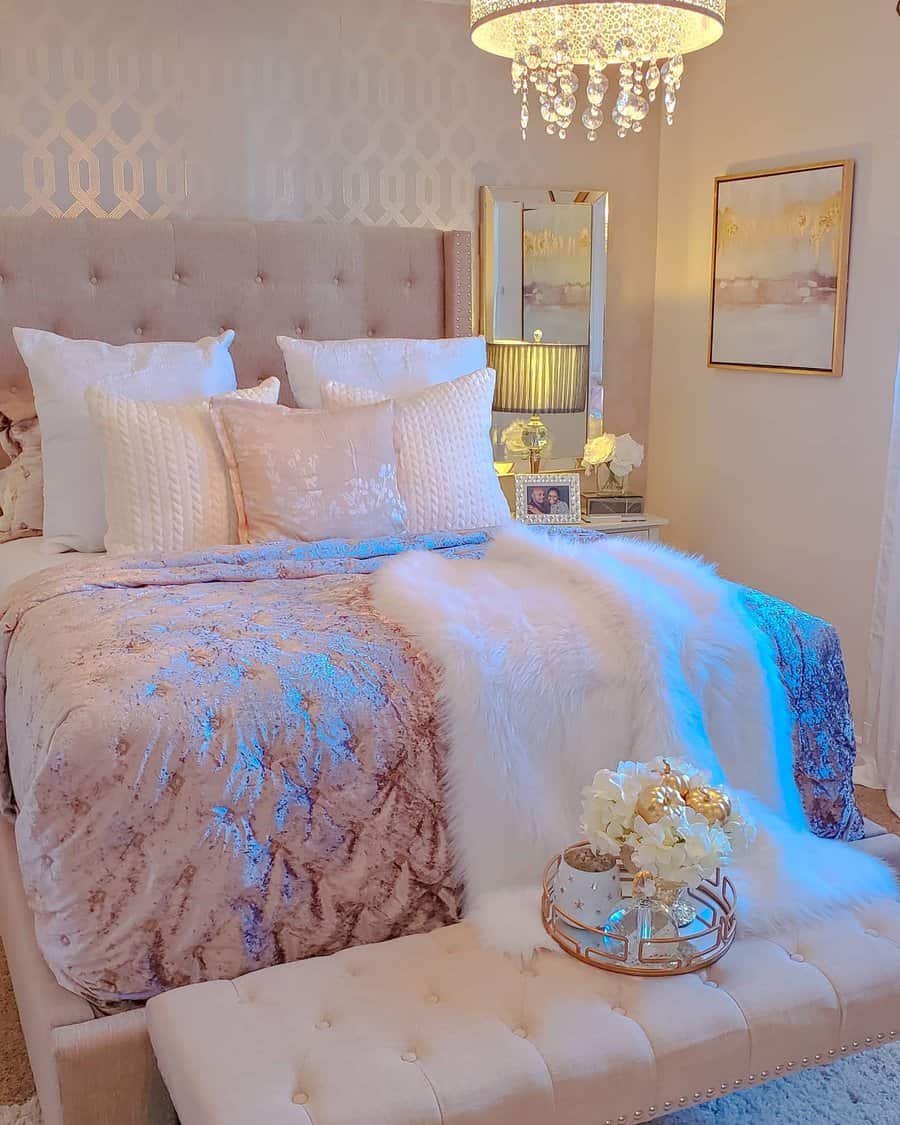
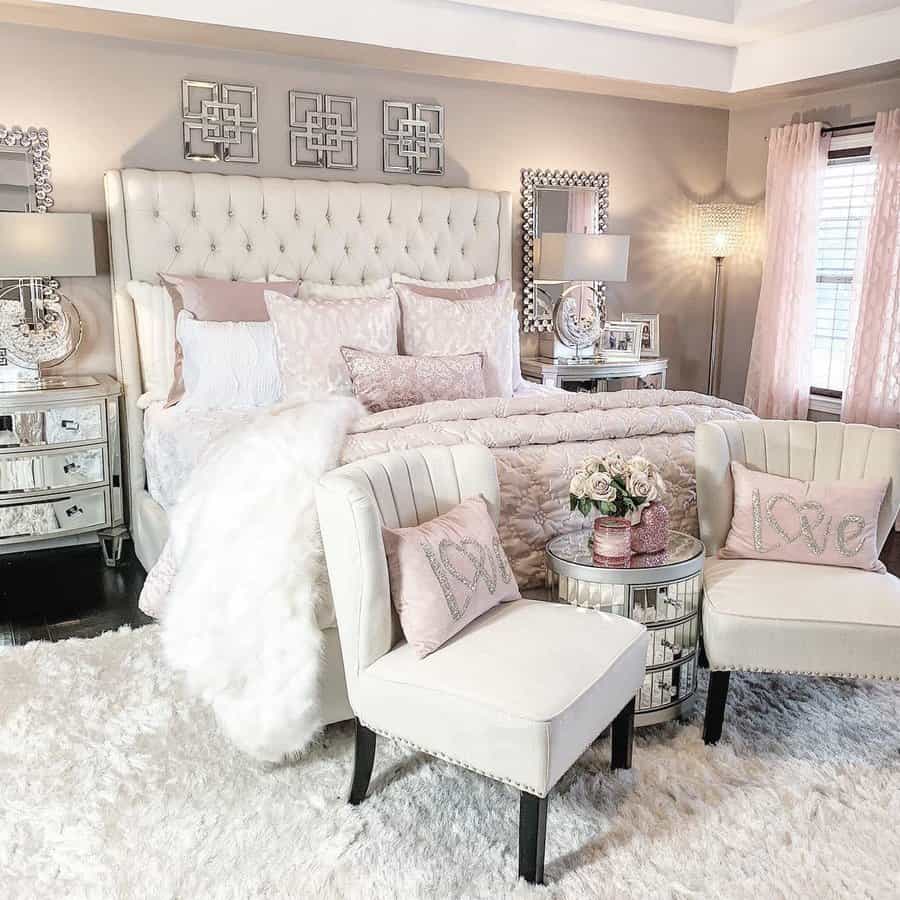
Glamorous decor is ideal for women who live life loud. Metallic finishes, elegant details, and luxe fabrics are all part of putting together the perfect glam space. Faux fur, velvet, satin—anything that feels lush and fabulous should be included in a glam bedroom.
Source: @housinginfo via InstagramSource: @prettymyadecor via InstagramSource: @styled_by_mlc via Instagram
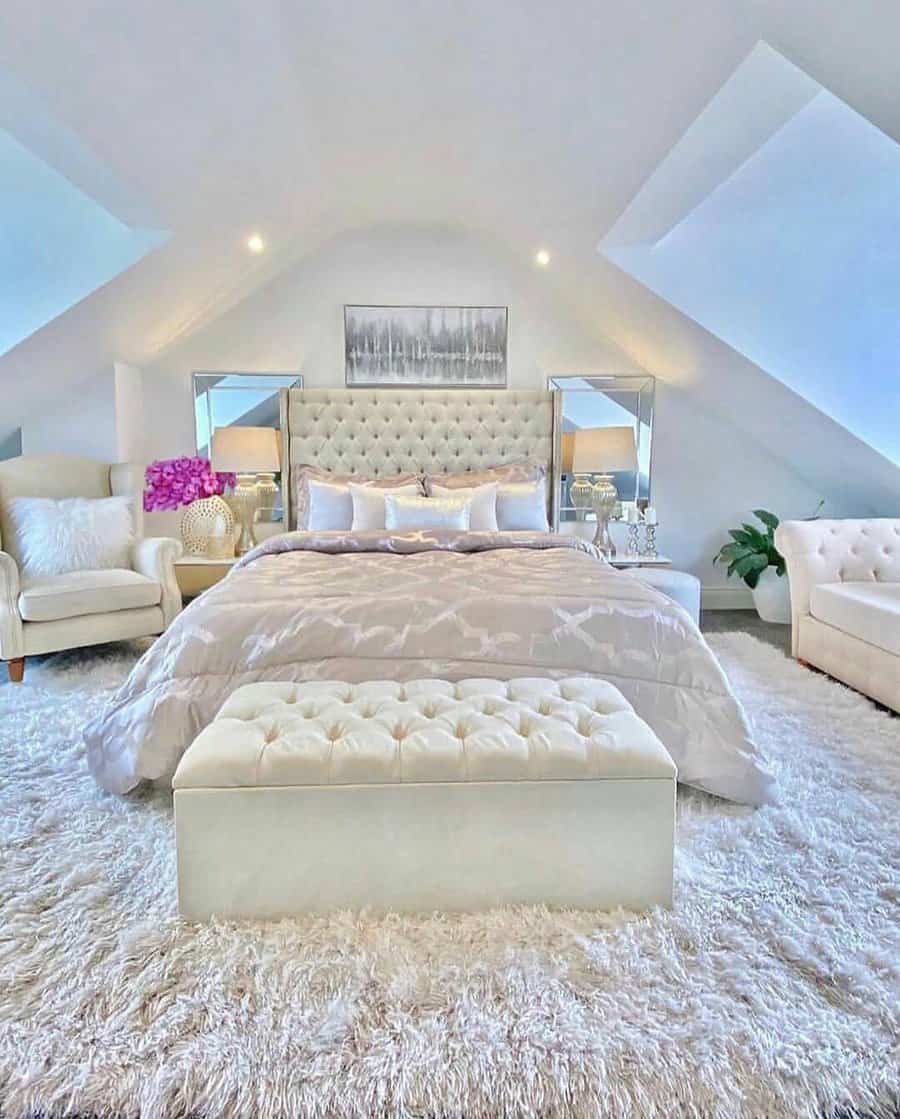
Glam small bedroom ideas can make a tiny bedroom have a huge impact. A tall tufted headboard can be the room’s focal point regardless of its color. While any color is appropriate with glamorous decor, white, silver, and barely-there pink appear often.
11. Creating a Luxurious Women’s Bedroom with Opulent Textures
A luxurious women’s bedroom is all about the textures—which is an interior design element that novice decorators often forget. Silk, velvet, high-thread-count cotton sheets, flokati, and chenille—all of these textile options add so much luxury to the best woman bedroom ideas.
Source: @hallsyhome2018 via Instagram
If you’re drawing a blank on what a luxury bedroom means, think of your favorite high-end hotel’s interior design choices. Whether it’s a suite living room or bedroom, you’ll see fine art, overstuffed throw pillows, heavy drapes, and lots of open space.
12. Elevating Femininity with the Timeless Allure of Pink
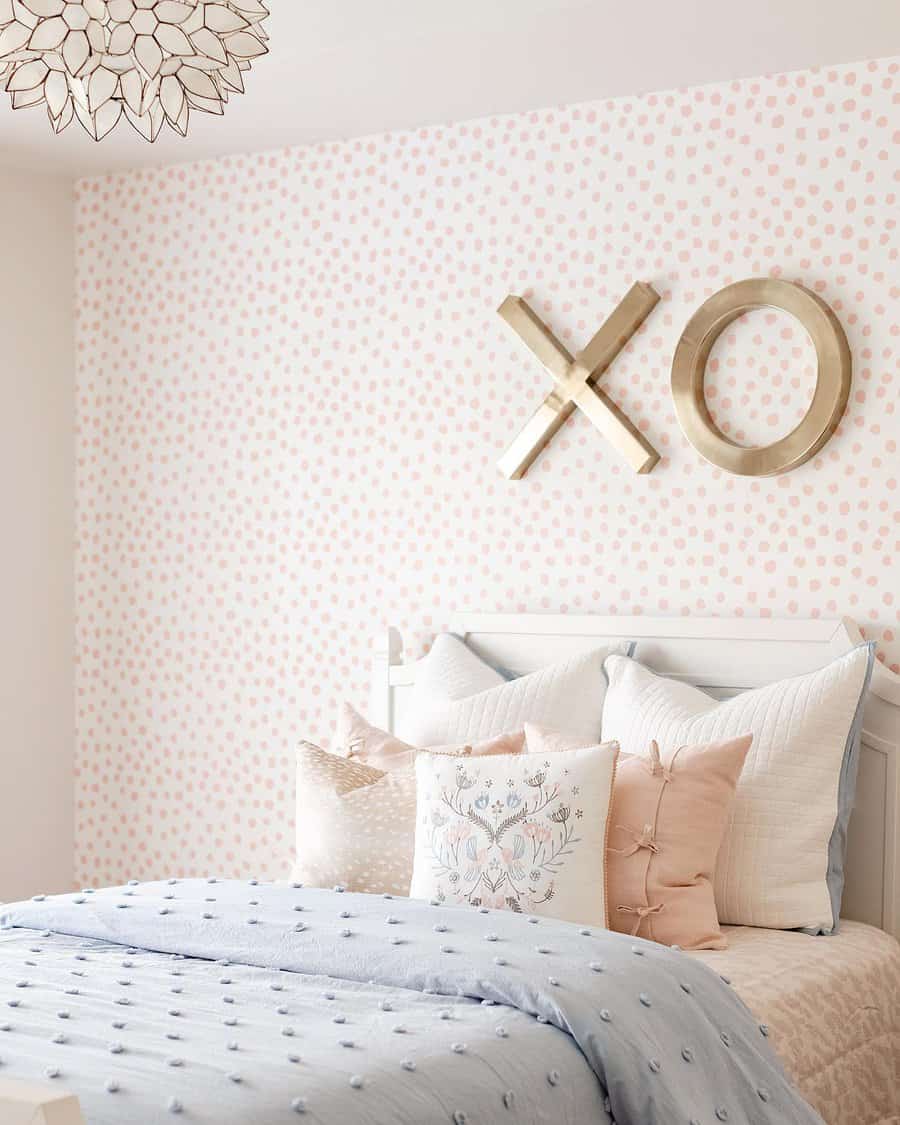
Pink is often thought of as a color for little girls, but there are plenty of adults that are drawn to this soothing hue. Whether it’s a pale blush or a deeper dusty rose, pink is perhaps the most feminine color of them all.
Source: @mari_docedelar via InstagramSource: @houseofgaffar via Instagram
Brighter pinks also work well in feminine bedrooms. Hot pink paired with black and white pops like few other color combinations. Lighter shades of pink also look amazing on a black and white background, especially when accented with touches of gold.
13. Crafting a Cozy and Romantic Bedroom Ambiance
Warm, welcoming, cozy—these are all concepts to incorporate if your goal is to create a romantic bedroom. A neutral color scheme is fine, but there should be darker elements as well.
Source: @blossom_home_interior via InstagramSource: @interior_by_deniz via Instagram
A romantic bedroom should look as beautiful by candlelight as it does in daylight. Candles play a huge part in creating a romantic vibe, not only for the warm flickering light they emit, but the fragrances that add to the atmosphere. If you prefer not to have live flames inside your home, choose electronic candles and add an essential oil diffuser to fill the air with lovely scents.
14. Embracing Scandinavian Elegance for Your Feminine Bedroom
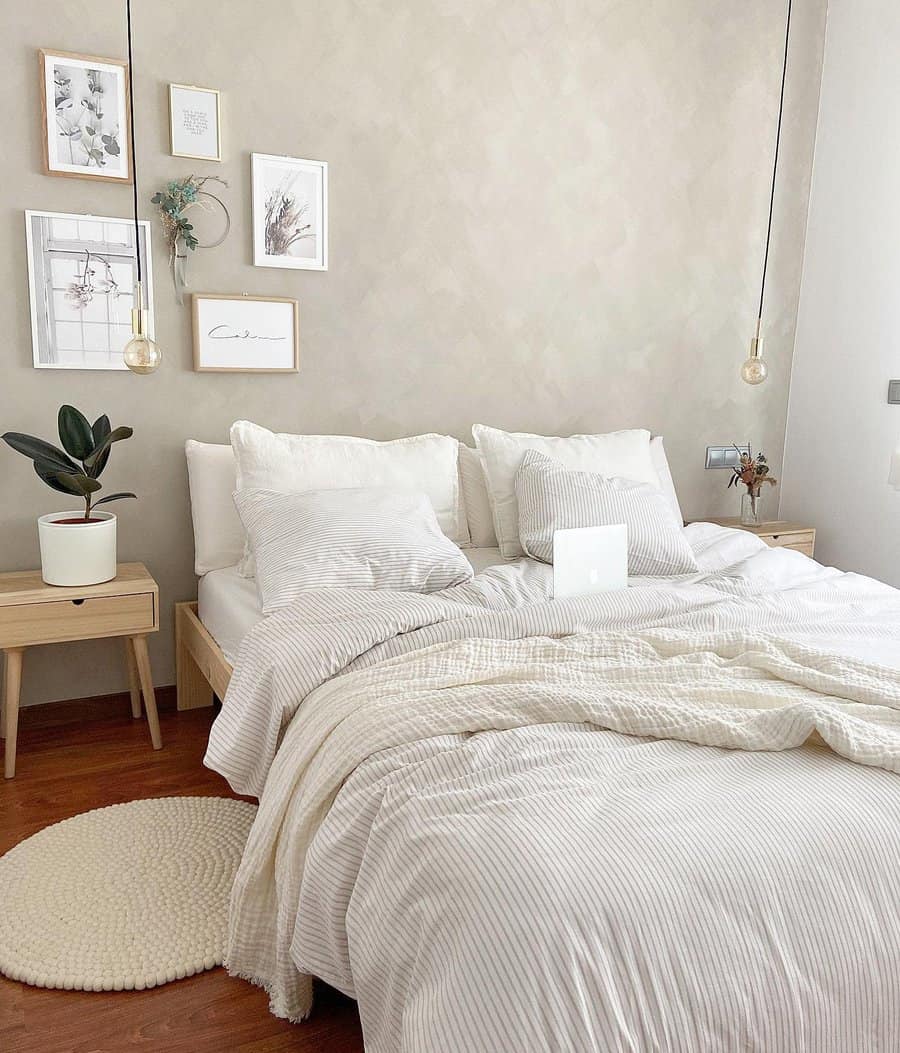
Scandinavian style is a great feminine bedroom idea if a clean, light, and airy space best reflects your personality. This style bedroom must be uncluttered and uncomplicated to accurately capture the Scandinavian aesthetic.
Source: @coastalhome_tasmania via InstagramSource: @morricehome via Instagram
A simple, light colored hardwood bed frame is an example of furniture that looks great with Scandinavian decor. Soften the often austere lines of Scandinavian interior design with woven rattan lamps or baskets.
15. Creating a Youthful and Whimsical Feminine Bedroom
A young woman who wants a feminine bedroom can follow all the advice for older women’s bedroom decor—but perhaps with a more casual touch of whimsy. Fairy light strands are a must, as well as fun touches like a fur-covered lampshade or a daisy-shaped overhead light fixture.
Source: @design_by_oksana_m_ok via InstagramSource: @dudiduarte via Instagram
For a practically free bedroom wall decor idea, tear pages from your favorite magazines and create a wall collage. Feature your favorite fashion models or K-pop stars, or beautiful scenery shots from places you dream of visiting. If you can, keep your collage within your bedroom color scheme for a more refined appearance.
16. Transforming Your Bedroom with the Perfect Wallpaper
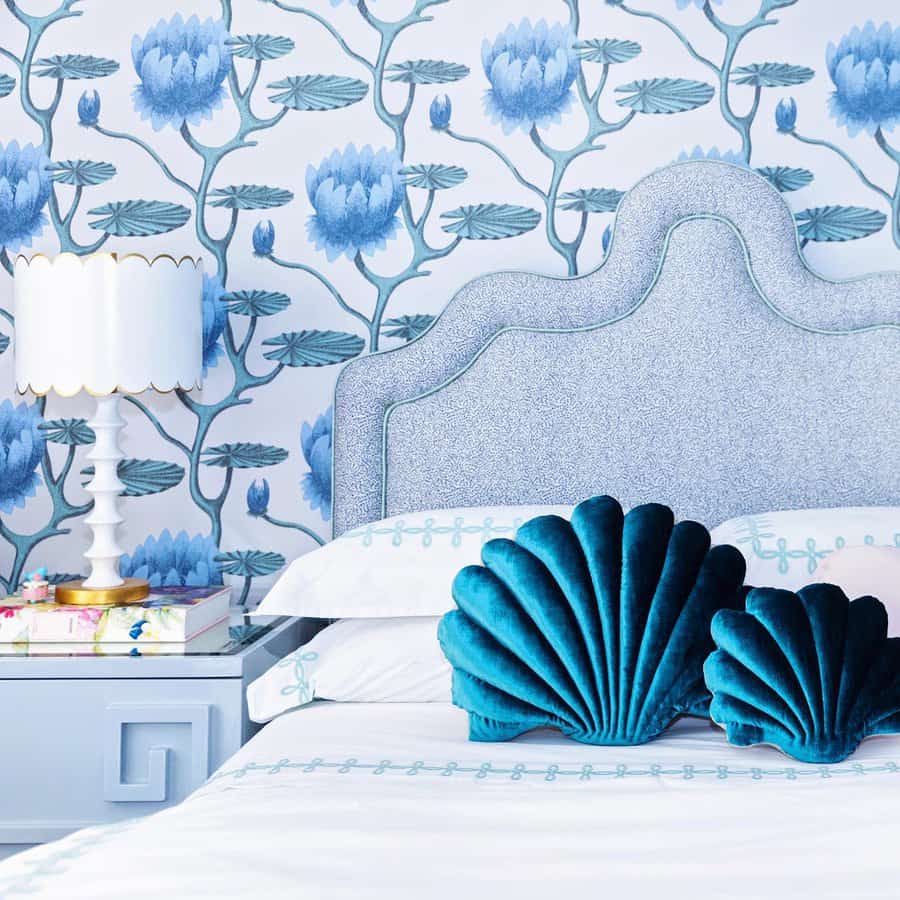
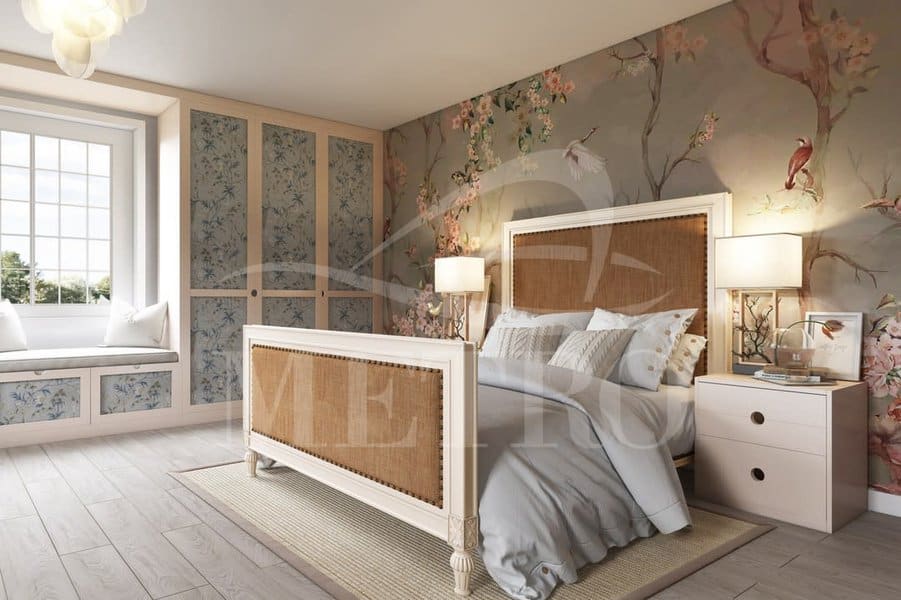
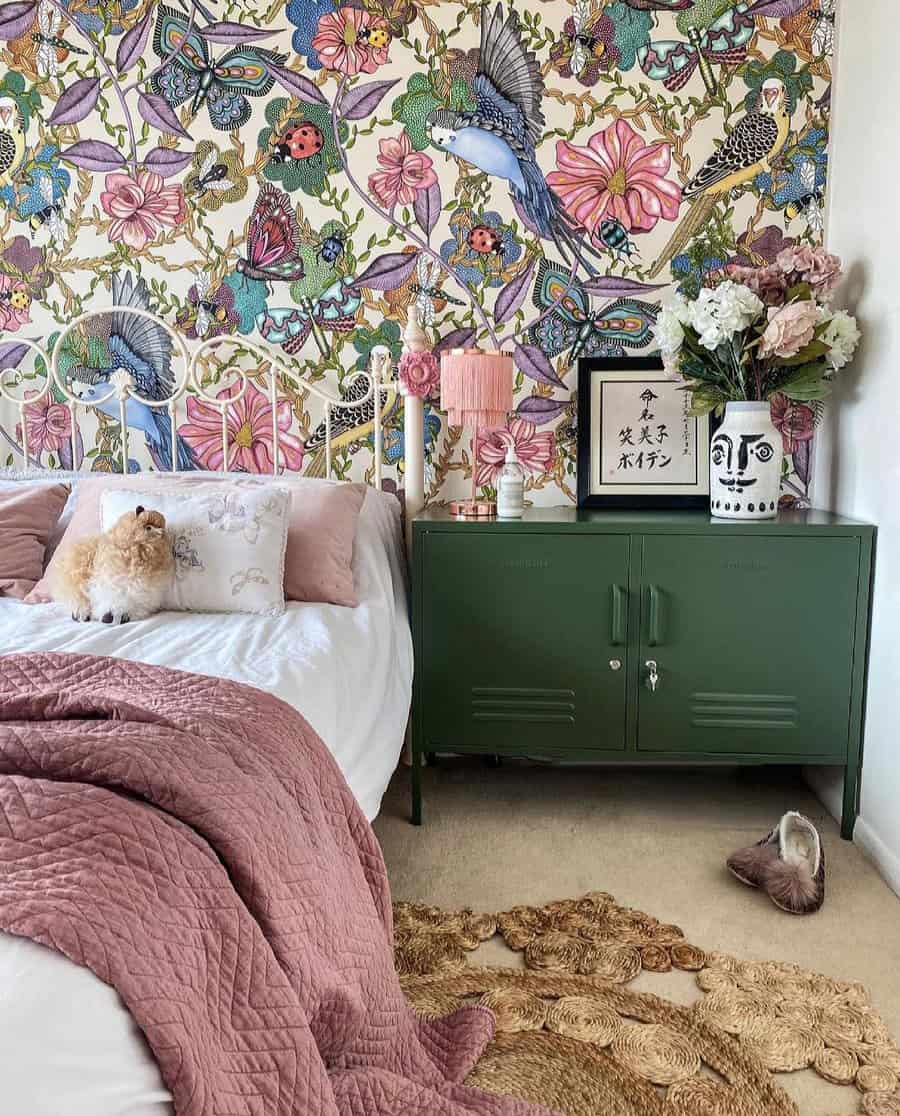
The right wallpaper can be just the key to tie your furniture and decor choices together. Look for an abstract floral or botanical design, or a simple geometric print. Echo your wallpaper colors throughout the space, choosing furniture and accessories that coordinate.
Source: @melaniejadedesign via Instagram
Metallic or pearlescent wallpaper adds shimmer and motion to the wall, as its appearance changes as the bedroom light shifts. It’s a great dramatic idea in a small space, where you may not have room for as many creative accents.
What’s better, a patio or a porch? Is there really any difference between the two?
When it comes to architectural definitions, patios and porches share a lot of similarities. But they also have different features. Keep reading to learn the nuances between the two types of outdoor living space and answer the question of patio vs porch.
[view_toc]
Basic Differences Between Patios and Porches
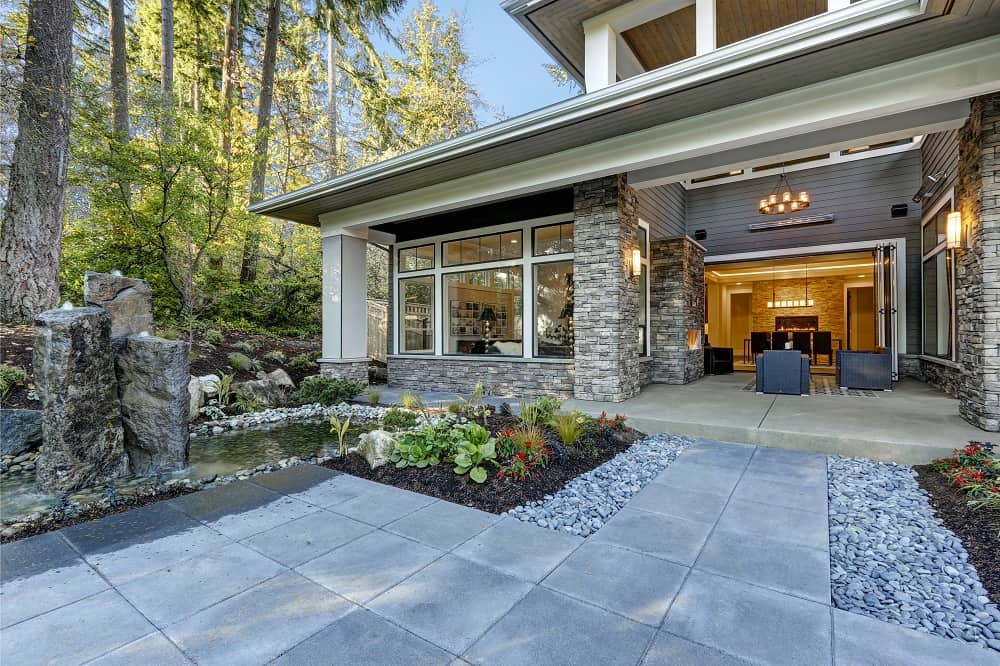
The main difference between a porch and patio is its attachment to the house. A patio is usually detached from the home itself. It’s built at ground level behind the home and often is uncovered. A patio is almost always located behind the house.
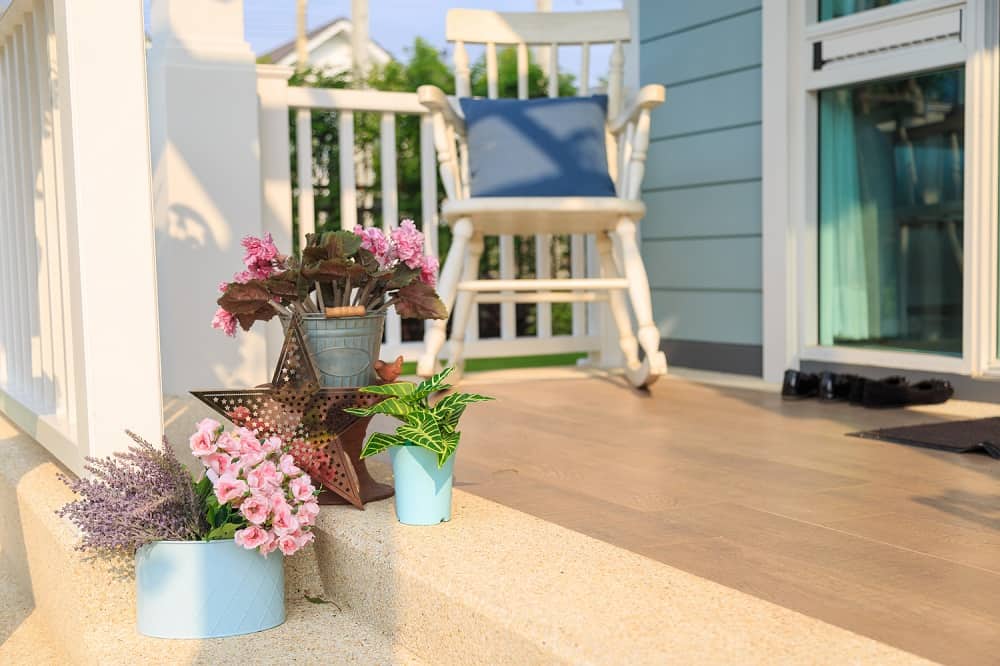
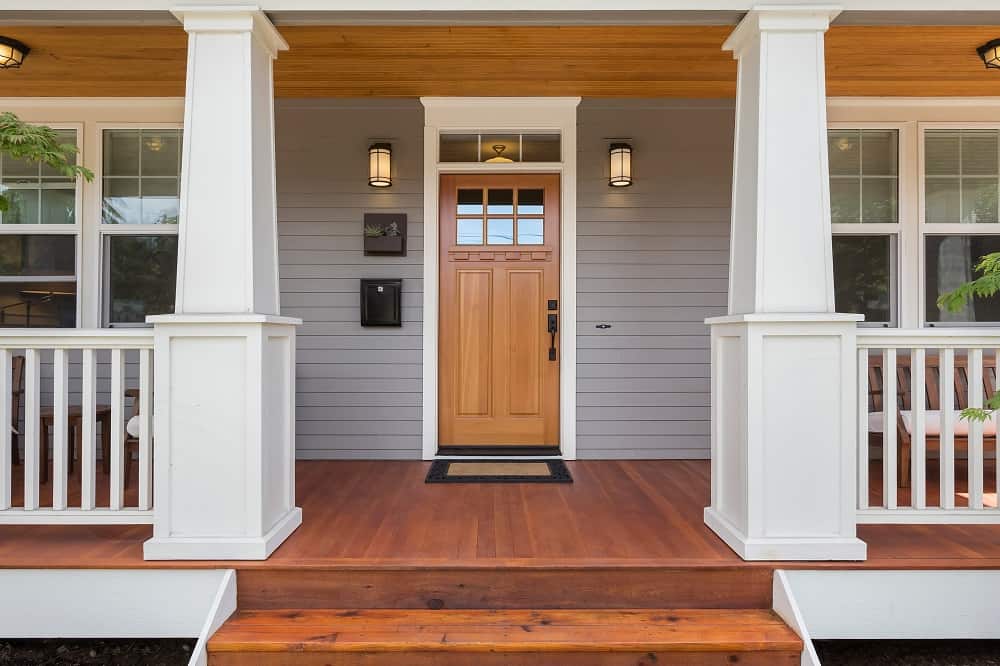
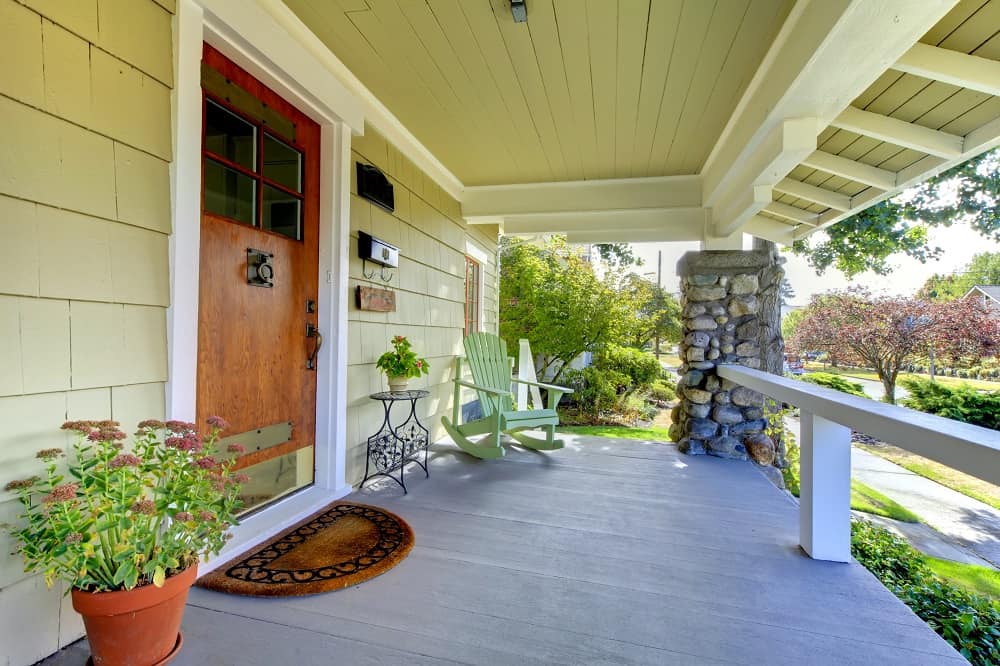
A porch is attached to the home. It’s level with the home’s exterior doors and may be built up off the ground. It usually has a roof and railings that also connect to the home’s main structure. A porch is usually along the front of the house, but it can also be located behind it. Some farmhouses have a wraparound porch that goes around the entire home.
Different Types of Patios
Although many patios are uncovered, plenty of people build a covered patio so that at least part of the patio deck has a roof over it. This is a helpful source of shade in the summertime and it also shields your patio furniture from the elements. Others obtain shade with a temporary patio cover, such as a pop up tent, umbrella, or shade sail.
A patio can be made of concrete, bricks, pavers, tile, or even gravel. Because patios must be built at ground level, there may be steps between the patio door and deck surface. A wood deck—even if built at ground level—is not technically a patio, though it might be used as one.
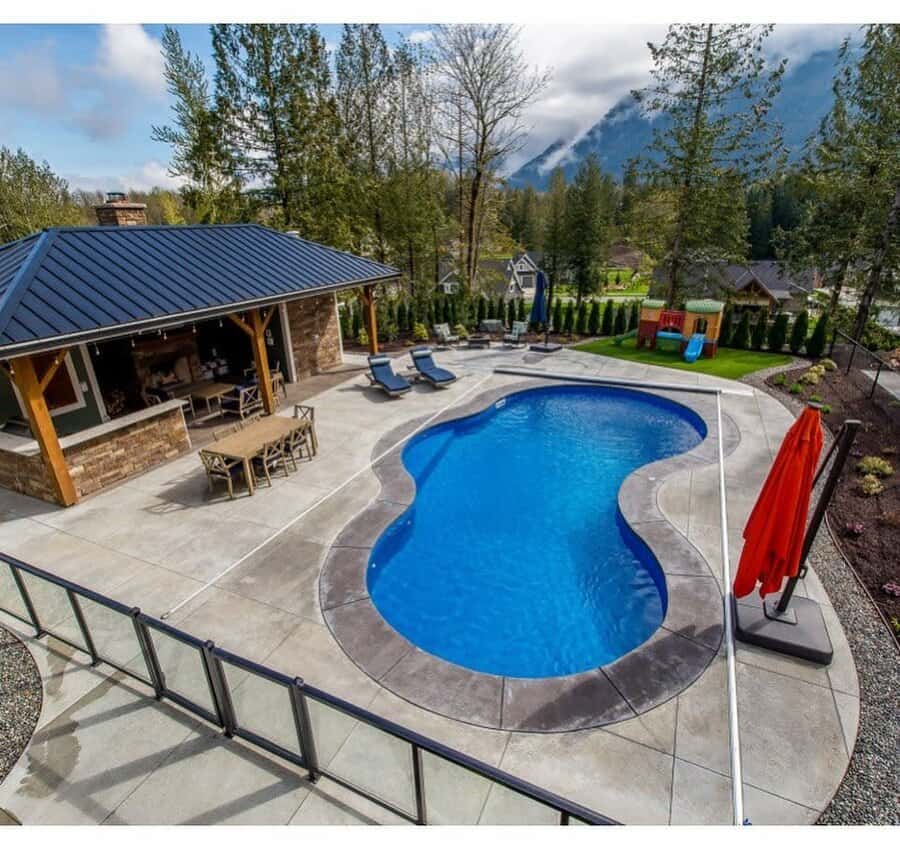
A patio may be built several yards away from the main building, with a path connecting the home and concrete deck. This is often the case with patios that surround a swimming pool.
Different Types of Porches
Like a patio, a porch can be covered or open to the sky above. A covered porch is the most common type, and usually reflects a continuation of the home’s architectural style. The porch roof usually matches the home’s roof, and the porch deck may even have the same style of wood flooring used inside the home. Porches are often thought of as an outdoor living room and used as such.
A screened porch has screen panels over any open sides. These panels extend from the porch roof to the deck and help keep insects and other pests from invading your home. Instead of a screen porch enclosure, some people install windows, turning their backyard porch into a sunroom that can be used year-round.
A patio can be turned into a backyard porch with the addition of a roof and railings. An upstairs balcony may be called a porch if it is covered and blends into the home design.
Patio vs Porch: Factors to Consider
If you’re building a new home, or simply looking for an outdoor home improvement project, building a patio or porch is a good idea. Not only will you gain outdoor living space, this type of home addition will increase your property value. If you like both options, here are a few factors to take into consideration before deciding which outdoor structure to build.
First, consider how much living space you have for a porch or patio. If you have a spacious lot, building a large porch or patio should not be a problem. If you have a small backyard, you’ll need to keep your patio on the smaller side. If you have a small front yard, a front porch may make you feel too close to the street to enjoy relaxing there.
Second, take a realistic look at your budget. A simple concrete patio or one made from pavers costs less per square foot than a porch or veranda. This is largely due to the labor costs involved in building a wood porch, roof, deck, and railings. You will also need to pay someone to paint Many a homeowner has learned how to DIY concrete pavers to build their own simple patio.
Third, consider the type of climate you’re working with. An open patio or veranda will probably get year-round use in a warm climate. However, if you live where winters are long, your patio might not get much use beyond the summer months. In that case, an enclosed porch will be more useful, especially if it is a sun room with windows to close when it’s chilly.
Finally, think about how you plan to use your outdoor space. A front porch offers little privacy, but it’s great if you’re friends with your neighbors and enjoy socializing in your front yard. Since a patio is usually located in the backyard, it provides more privacy for intimate outdoor dinners or big parties. If your plan includes an outdoor kitchen, a concrete slab patio or veranda is an ideal foundation.
Other Names for Outdoor Living Spaces
With so many names for an outdoor living space, how do you know which one to use? Unless you’re writing a real estate listing, feel free to call your outdoor space whatever you like. But if you’re curious about the nuances between different names, here’s a guide.
Balcony: A platform that is built out from the side of a building, on a second floor or higher. A balcony is enclosed by a railing or half-wall.
Deck: A deck is a raised horizontal platform supported by beams or columns. It’s usually made of wood or a composite decking material. A deck doesn’t have a roof or walls, but must have a railing if it’s more than two feet above the ground.
Lanai: The word “lanai” is commonly used in Hawaii, South Florida, and other tropical areas to describe an enclosed porch. A lanai usually has a concrete or tile floor and sits at ground level beside or behind the home. It may feature screens or windows instead of open sides.
Portico: This type of covered outdoor area predates the modern porch or veranda. Popular in ancient Greece, a portico is usually positioned directly in front of the home’s entryway. Porticos are often supported by columns.
Sunroom: A sunroom or sun porch features large glass windows. It’s as visually open as a traditional porch, but it’s an enclosed space that can be used year-round.
Terrace: A terrace is similar to a patio in that it’s a paved or tiled outdoor area. It may be located on a rooftop instead of ground level.
Veranda: Also spelled “verandah” this term for an outdoor seating area is most commonly used in the southern United States. Unlike an elevated balcony or deck, a veranda is located at ground level. Sometimes southerners will use the word veranda to describe any type of porch or patio, even if it’s not at ground level. A veranda will usually be bigger than an average porch or patio. Historically in the south, the veranda was used as a gallery room or for entertaining guests.
A small backyard is still a backyard, and you don’t need a giant garden to make a huge impression. So many landscaping ideas work equally well in small or large backyards.
Even a tiny backyard can be transformed into a charming outdoor living space. Scroll through our best small backyard design ideas and see how simple it is to maximize the space you have.
1. Transform Your Backyard with a Charming Tiki Bar
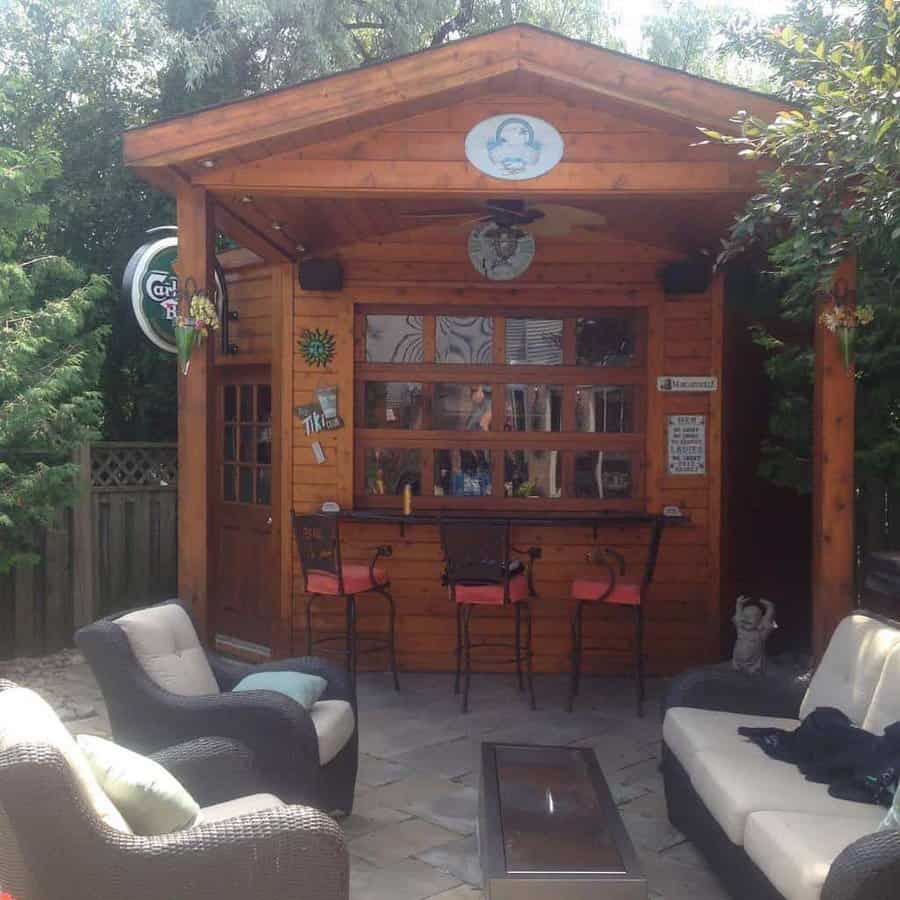
A backyard bar makes outdoor entertaining fun. Even a simple bar idea provides extra seating and an inviting place for you and your guests to sip and sit a while.
Source: @dottycx via InstagramSource: @dukesdecorli via InstagramSource: @m.mart.71 via InstagramSource: @tonyconnect via Instagram
Try building a small bar on an existing patio or porch, or attach one to a backyard shed or other outbuilding. Make it feel like a vacation year-round by going for a tiki bar design complete with a thatched grass roof and island decor.
2. Elevate Your Small Backyard with a Cozy Fire Pit or Chiminea
Nothing adds nighttime ambience to an outdoor space quite like a fire pit. If there’s room to add one to your list of small backyard ideas, try to make it happen. Firepits don’t have to be big or expensive. In fact, anyone can build a simple fire pit out of concrete blocks, as shown in this video:
If you’d rather not build a fire pit from scratch, a chiminea is a good alternative. It occupies a smaller footprint than a traditional fire pit and adds rustic, western charm to your yard or patio.
Source: @bbqbills_nv via InstagramSource: @home_is_where_the_bart_is via InstagramSource: @realstonegranitefirepits via InstagramSource: @turquoiseandtrine via Instagram
Another affordable backyard fire idea is to purchase a small metal firepit. You can find basic models for under $50, and some double as a charcoal grill. Others include a cooler insert that’s great for holding beverages when it’s too hot for a fire.
3. Furnish Smart for Your Small Outdoor Space – Measure, Choose Wisely
Anytime you’re trying to furnish a small space, it’s vital to keep scale in mind. Oversized outdoor furniture will make a small backyard space feel cramped and crowded. To avoid this, be sure to measure before ordering any type of patio furniture, including sofas, tables, and chairs.
Source: @backyarddiscovery via InstagramSource: @chairkingbys via Instagram
When you’re measuring for furniture, leave enough open space to walk around comfortably. A bar and barstools are ideal for a small patio because they occupy less space than an ordinary dining set.
Take your local weather into consideration when buying furniture for an outdoor living space. If it’s particularly windy in your neighborhood, choose weightier pieces. If sun beats down on your patio all day, choose lighter-colored furniture that’s not prone to fading.
4. Create a Beautiful Garden in a Limited Space
It’s easy to get carried away when you see all the lovely plant and greenery options at your garden center. And it’s really easy to overestimate your planting space when planning small yard landscaping ideas.
Source: @thehollygrovegarden via Instagram
Do a little homework before you hit the garden center. Find out how much planting space you have in the yard, then research the kind of plants that you like—and that will grow well in your area. Design your garden accordingly, remembering to include concrete pavers, garden bed edging, and other landscaping touches.
5. Maximize Your Small Yard with a Lush Green Lawn
A green lawn is a beautiful addition to any yard. However, space for growing grass might be limited in a particularly small backyard. Even if that’s the case, planting grass—even just a small section—is one of the best traditional landscaping ideas. If you have a dog or small children, a little patch of green lawn is practically a must.
Source: @suncitylandscapingllc via InstagramSource: @suncitylandscapingllc via InstagramSource: @suncitylandscapingllc via InstagramSource: @suncitylandscapingllc via InstagramSource: @suncitylandscapingllc via InstagramSource: @suncitylandscapingllc via InstagramSource: @suncitylandscapingllc via InstagramSource: @suncitylandscapingllc via Instagram
Grass adds valuable open space to your garden design, something that’s vital to keep your backyard ideas from visually crowding a small yard. Fine fescue grass is a good low-maintenance choice for a small backyard.
You may prefer to install rolled turf instead of waiting for grass seed to grow and fill in naturally. If you want a truly no-maintenance grass in your small backyard, shop for artificial turf.
6. Transform Your Small Yard with Strategic Landscaping and Hardscaping
Small backyard landscaping might initially feel challenging, especially if you don’t have a lot of experience with yard work. However, limited space is actually a blessing in disguise because it drives you to focus on what you feel is most important to include in your backyard design.
Source: @lopez.landscape via Instagram
A layered landscape design mimics nature, with low groundcovers, flowers, shrubs, and trees lining up from short to tall. This is a great design starting point regardless of your yard’s size. Choose greenery, flowers, and other plant options based on how tall they will be when full grown.
Don’t forget to budget for hardscaping when you’re finalizing your small backyard ideas. Path pavers, fences, walls, and borders provide the boundaries for your garden and are an important design element.
7. Elevate Your Small Backyard with Thoughtful Outdoor Lighting
Most people use their patio as an outdoor room, enjoying comfortable seating and dining space day and night. Just as with interior home decor, your outdoor space needs adequate lighting. This means including task lighting and accent lighting sources.
Hard-wired patio light fixtures can provide your main source of task lighting. Place weatherproof lamps on patio end tables, and stake lanterns on posts for other big light sources.
Source: @sagelantern via InstagramSource: @alyssabmomof3 via InstagramSource: @jcantertx via InstagramSource: @lns0214 via Instagram
String lights come in so many creative shapes and styles now and add a magical glow to night gatherings. Hang them over your seating area, along a fence, or string them between trees for a lighted canopy.
Path and step lights are crucial for safe navigation through the yard at night. Install a few spotlights to illuminate your garden focal point, such as a sculpture or arbor.
8. Revamp Your Small Backyard with a Stylish Concrete Paver Patio
If your small backyard lacks a patio, it’s fairly easy and inexpensive to hire a contractor to lay a simple concrete paver patio. Make it a design feature by choosing beautiful pavers and borders, perhaps adding a paver path leading to a water feature or bench.
Look around the patio for creative small garden ideas. Attach window boxes to your railings or windows, and hang potted plants from the rafters. Both are great small backyard ideas for adding pops of color without taking up any square footage on the ground.
Source: @creeksidenwi via InstagramSource: @fiveacrehome via InstagramSource: @howtohardscape via Instagram
Consider hanging a vertical garden on one or more of your patio walls. It’s a beautiful backyard idea that adds greenery to an otherwise blank vertical space. You can make a vertical garden by hanging up a wooden pallet and arranging small potted plants in the gaps. Succulents are also particularly beautiful in a vertical small garden.
9. Enhance Your Small Yard with a Charming Wooden Pergola
A pergola may seem too large to be included as a small yard idea, but remember: in a small outdoor space, scale is everything. A wood pergola or arbor may be just the focal point your small garden needs.
Source: @cospiconsa via InstagramSource: @skyliftroofriserhardware via InstagramSource: @jenbenshoof via InstagramSource: @qphia via InstagramSource: @the_sumpter_house via InstagramSource: @truetimbercraftco via Instagram
A simple square pergola with open rafter roofing is gorgeous over an outdoor dining area. It also provides a frame for hanging light strings. Grow climbing plant varieties around the pergola posts if you want the structure to provide shade in the future.
10. Elevate Your Small Backyard with the Tranquil Beauty of Water Features
Water features are fantastic backyard landscaping ideas. A well-designed small pond can add sound, motion, and life to your little outdoor retreat. It also provides a place for different plant varieties to grow, such as cattails and water lilies.
Source: @bethanyem via InstagramSource: @dayleenvann via InstagramSource: @growwithitgarde via InstagramSource: @ladylandscape via InstagramSource: @michael.workman.1088 via InstagramSource: @plantingdirt via InstagramSource: @switchloaf via InstagramSource: @wildmancrowe via Instagram
A small waterfall is relaxing to observe, with its flowing water and gentle splashing sounds. Koi fish are a great addition to a small backyard water feature, but do require a bit more maintenance. Even without fish, a backyard pond will draw water-seeking wildlife to your yard including frogs, dragonflies, and birds.
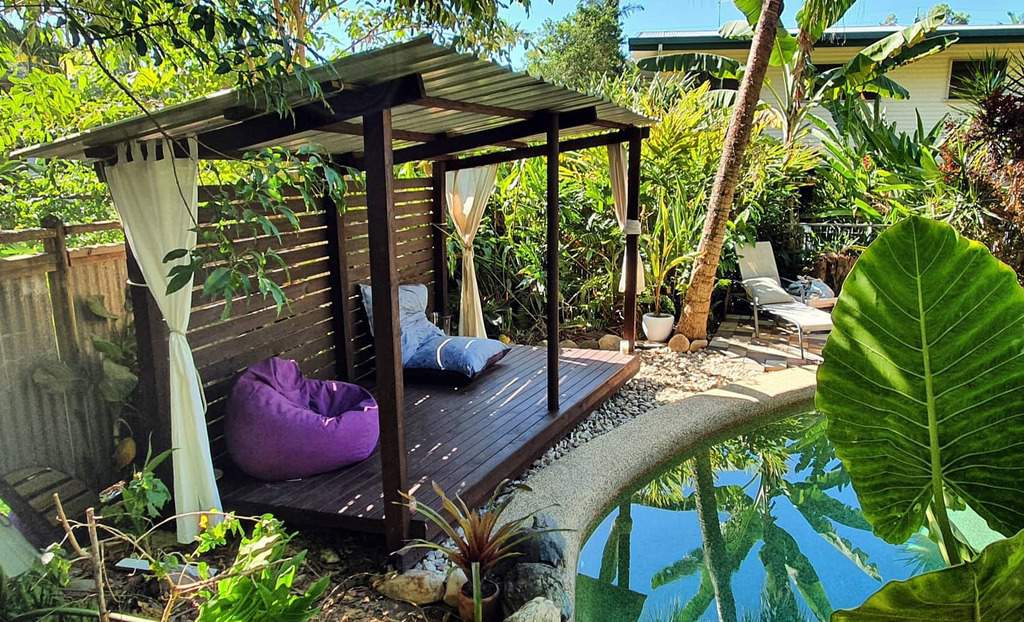
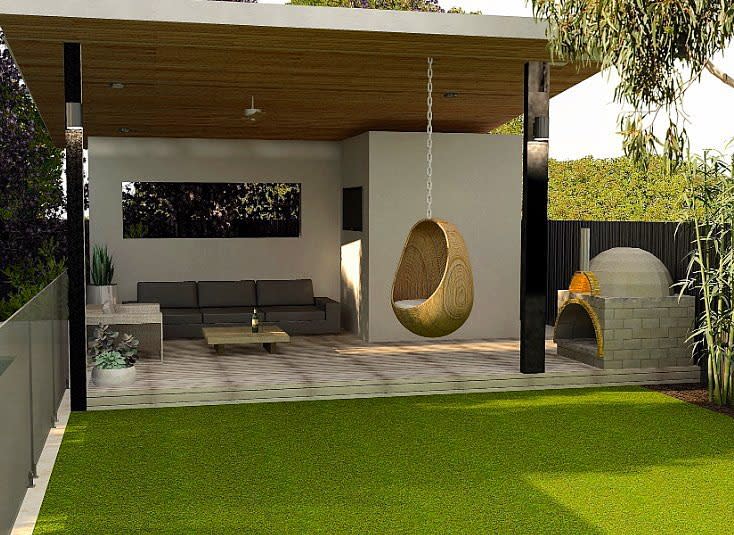
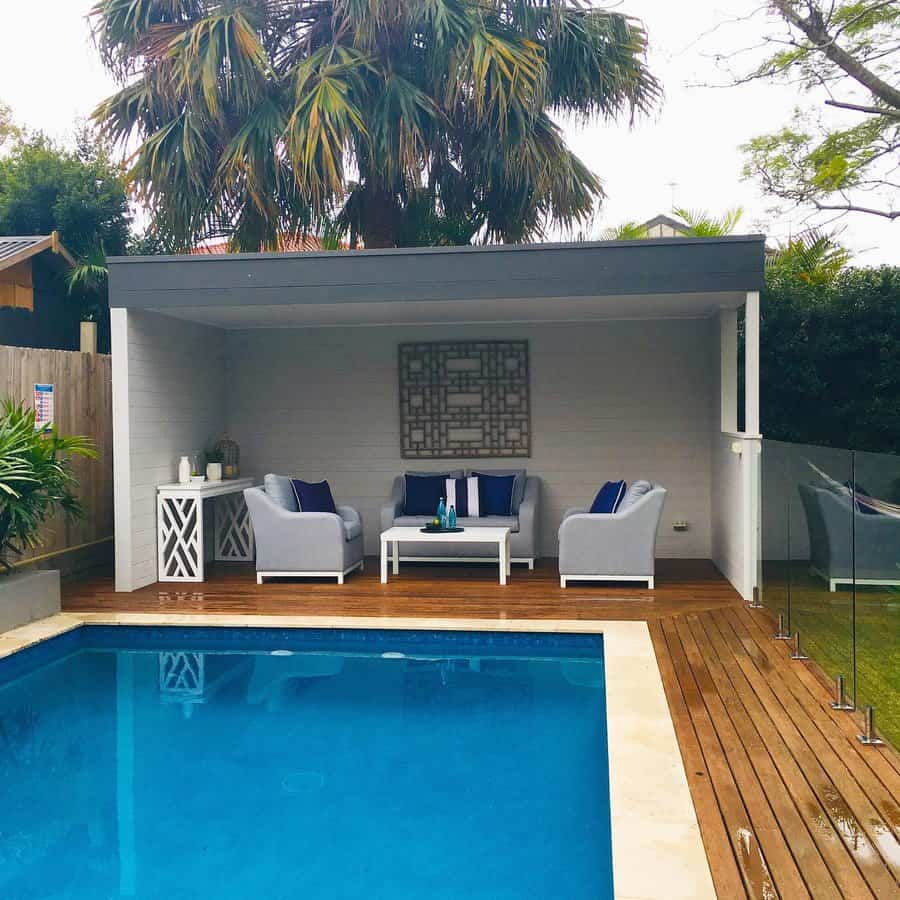
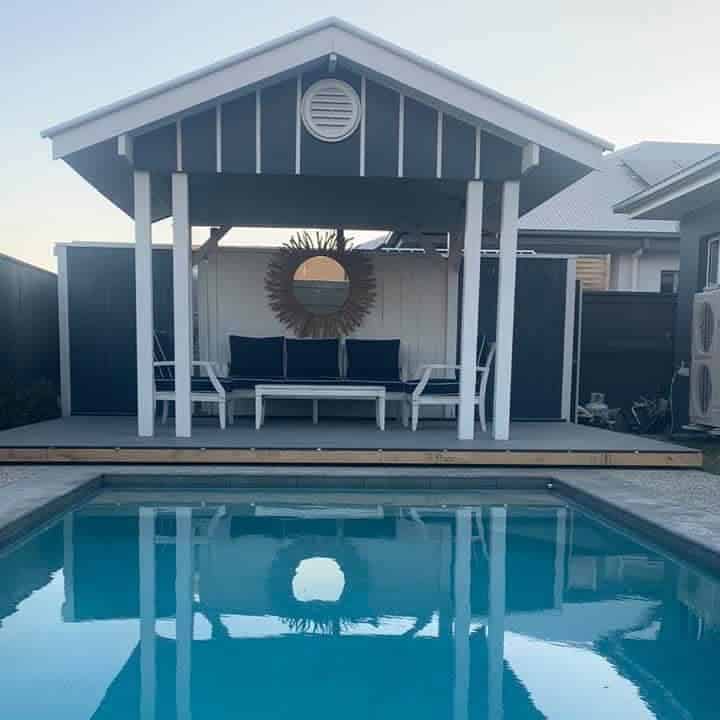
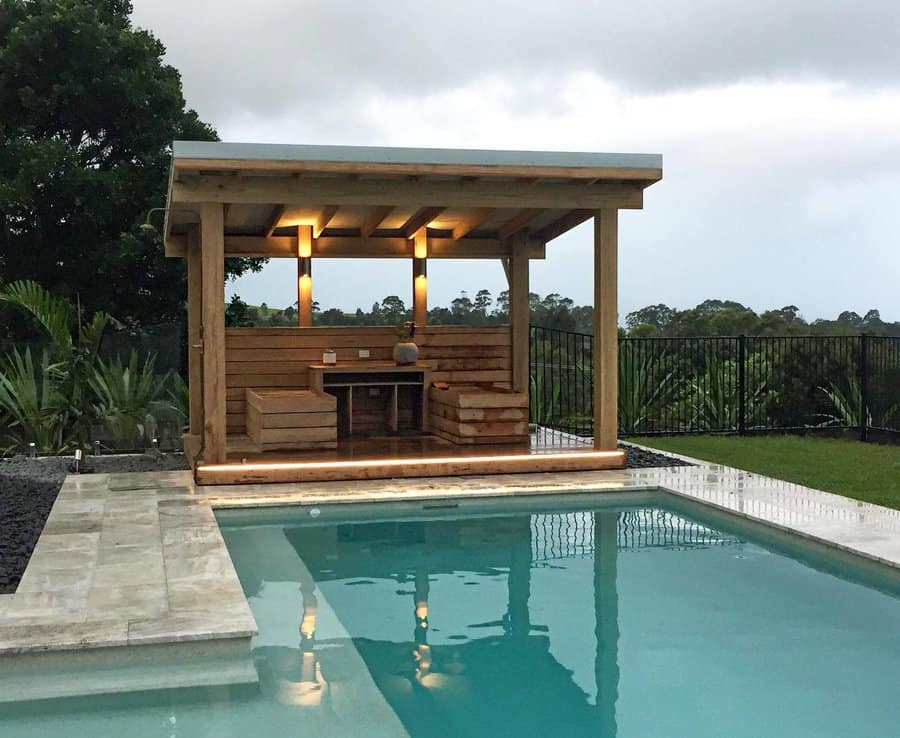
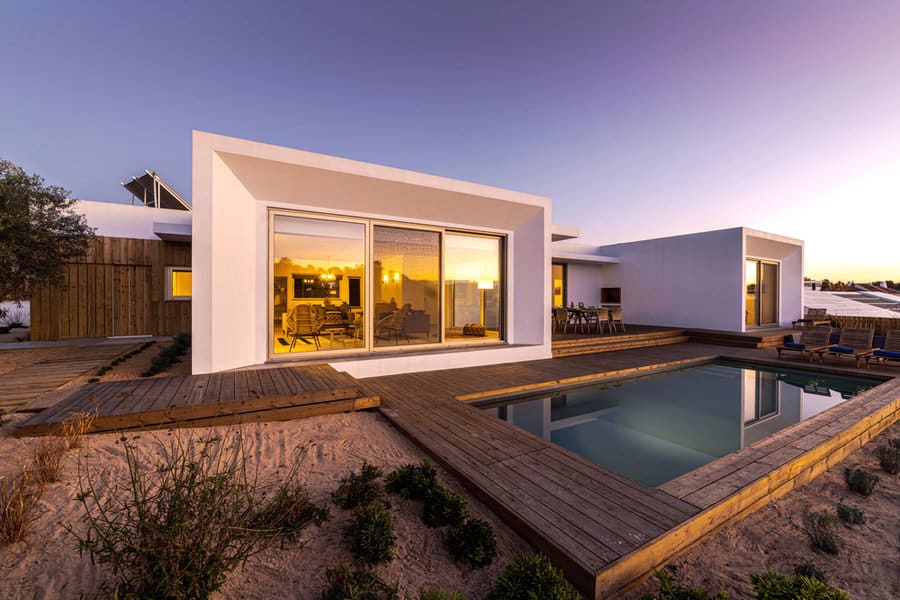
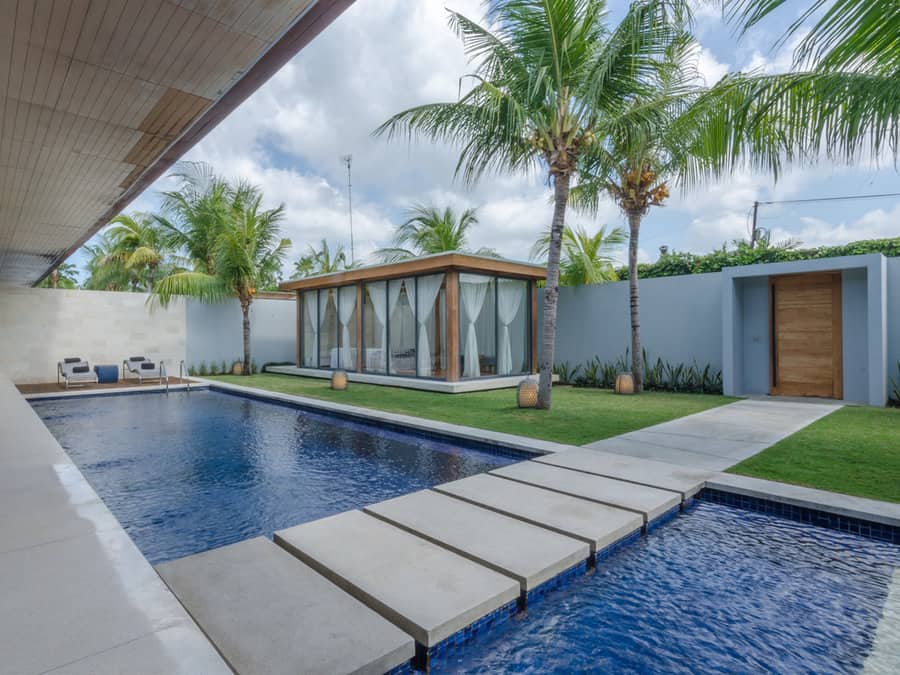
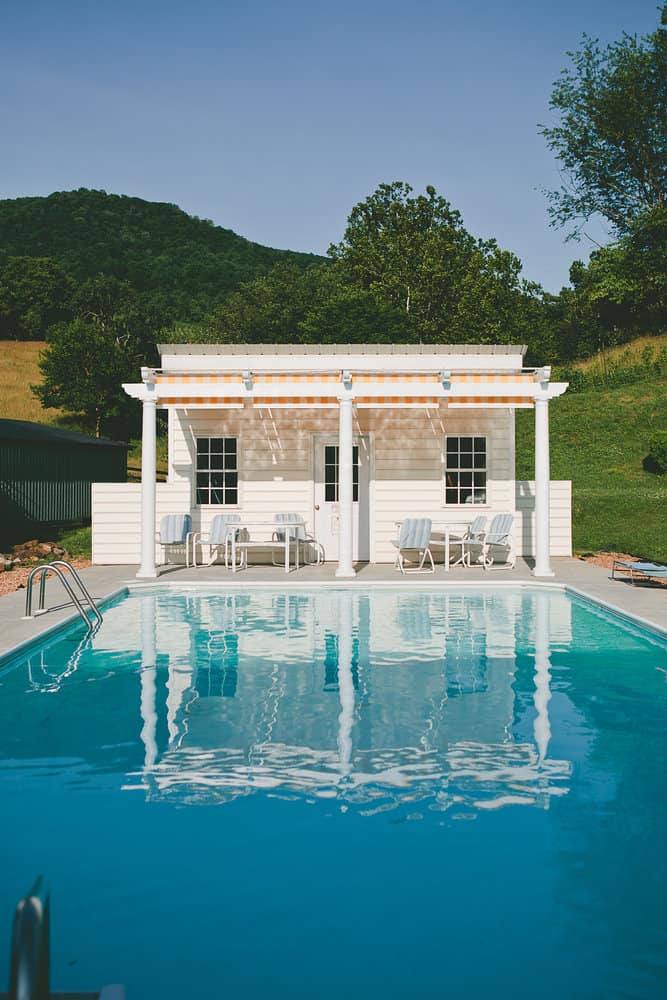
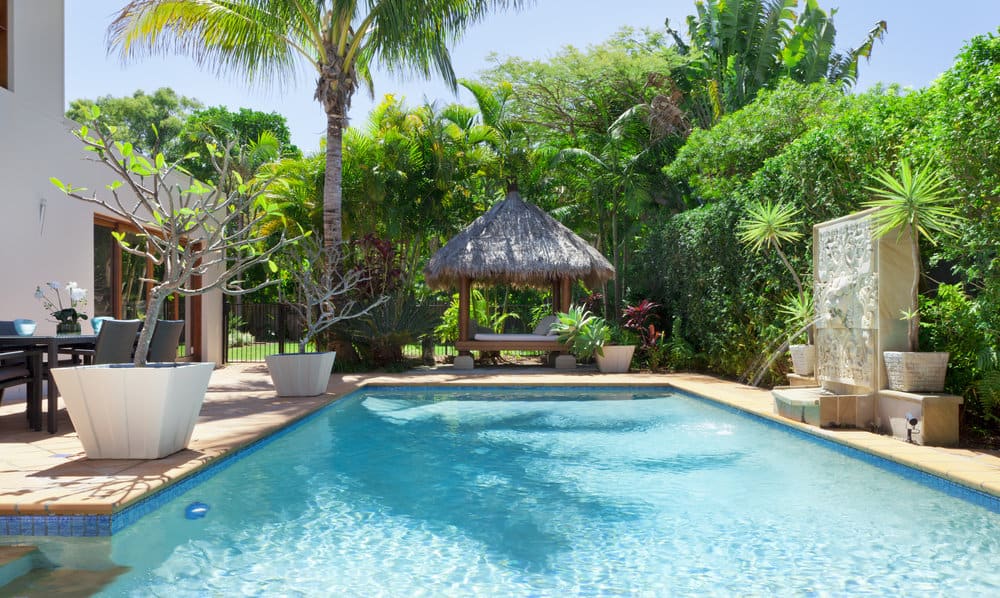
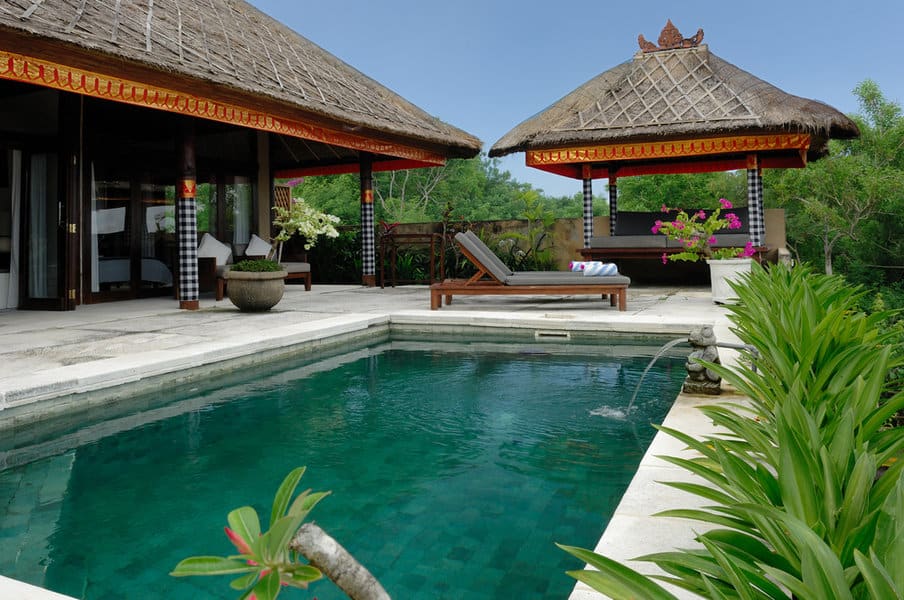
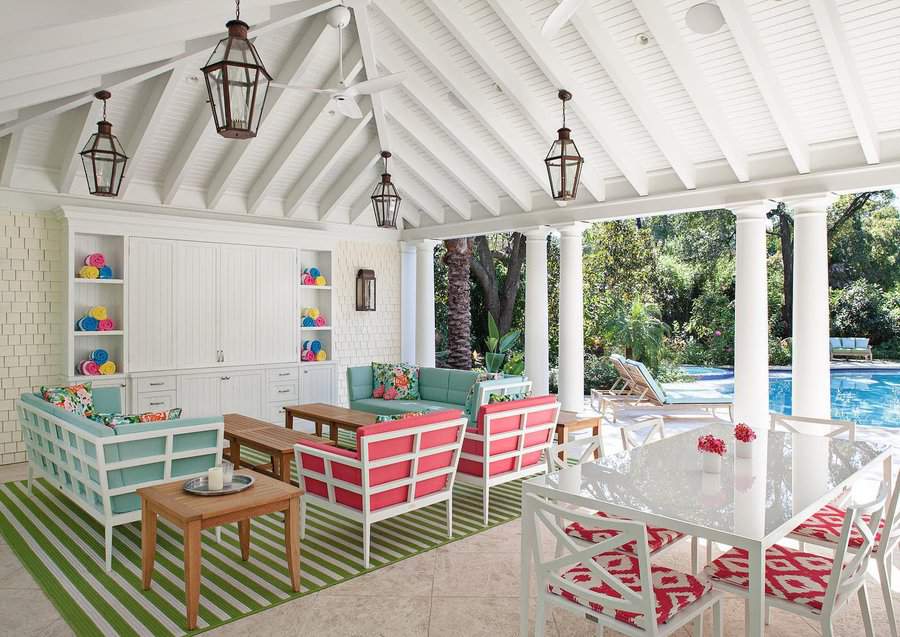
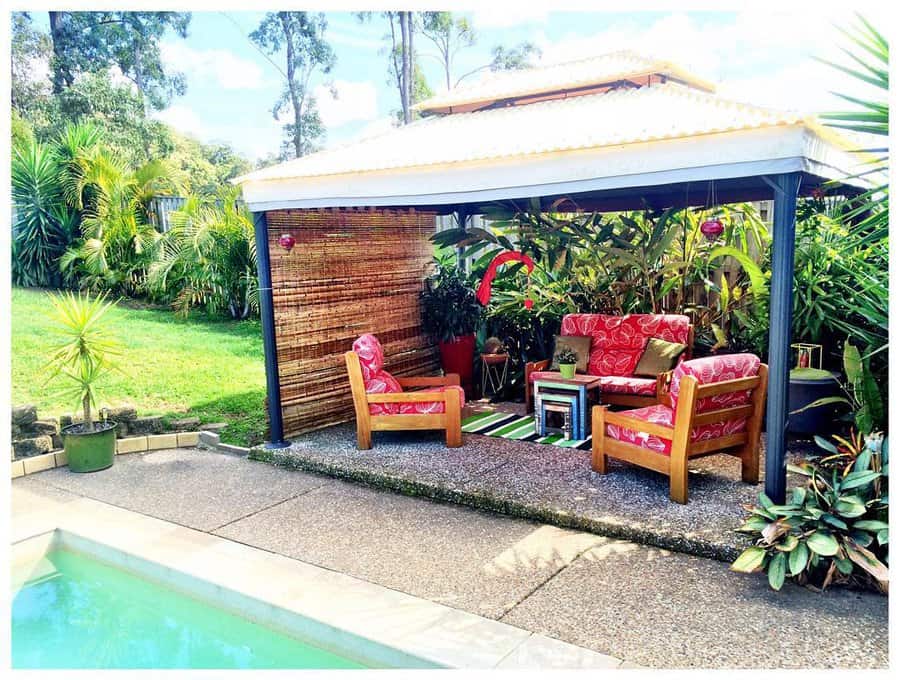
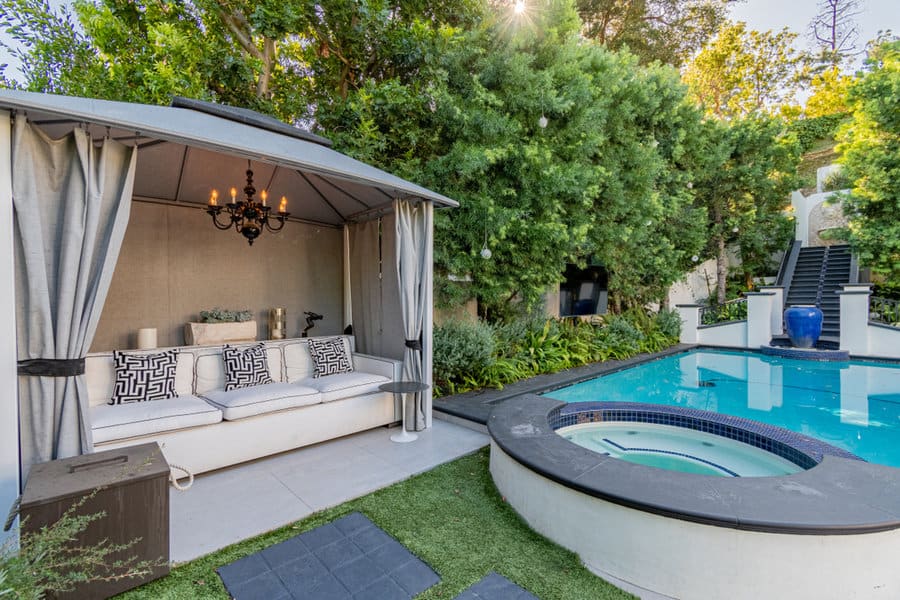
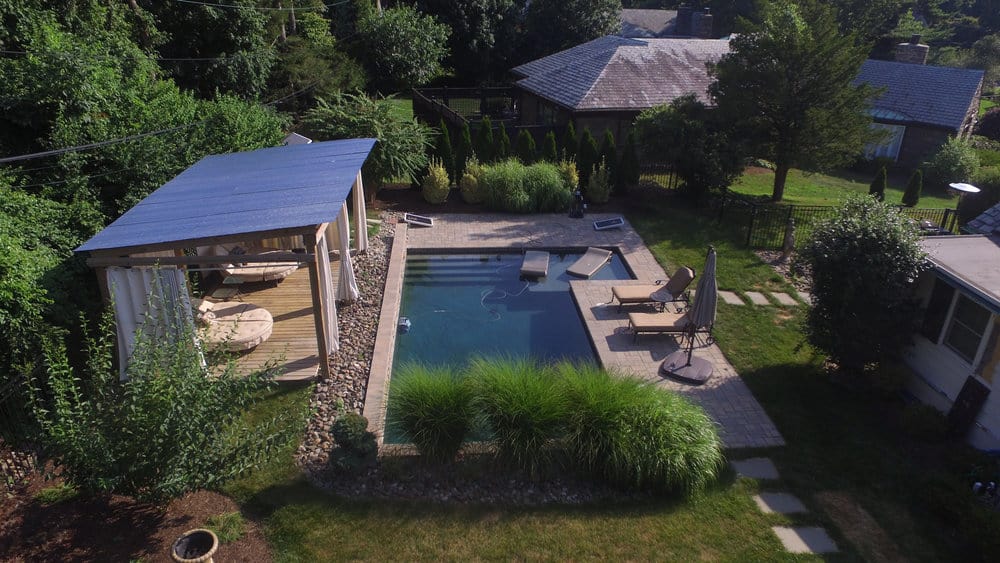
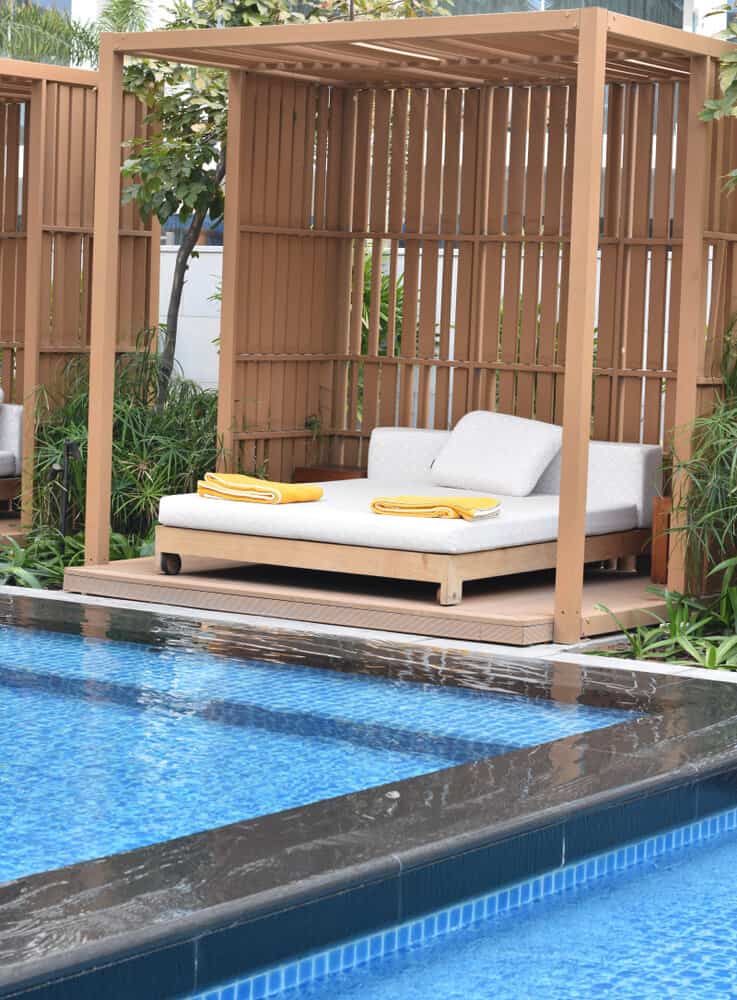
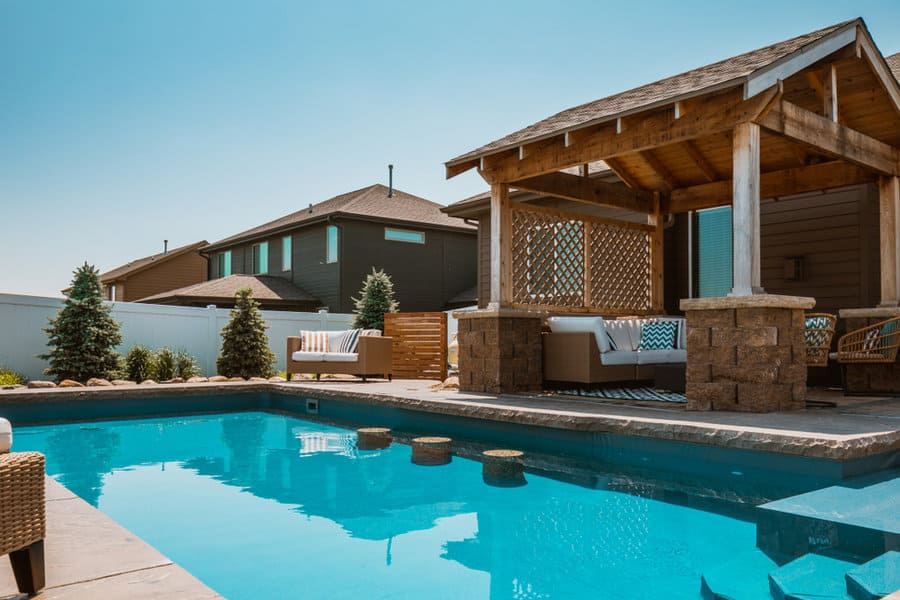
A cabana or pool house adds a lot to your backyard pool area. Not only is a cabana a welcome source of shade on hot summer days, it can include a changing room and space to store pool equipment.
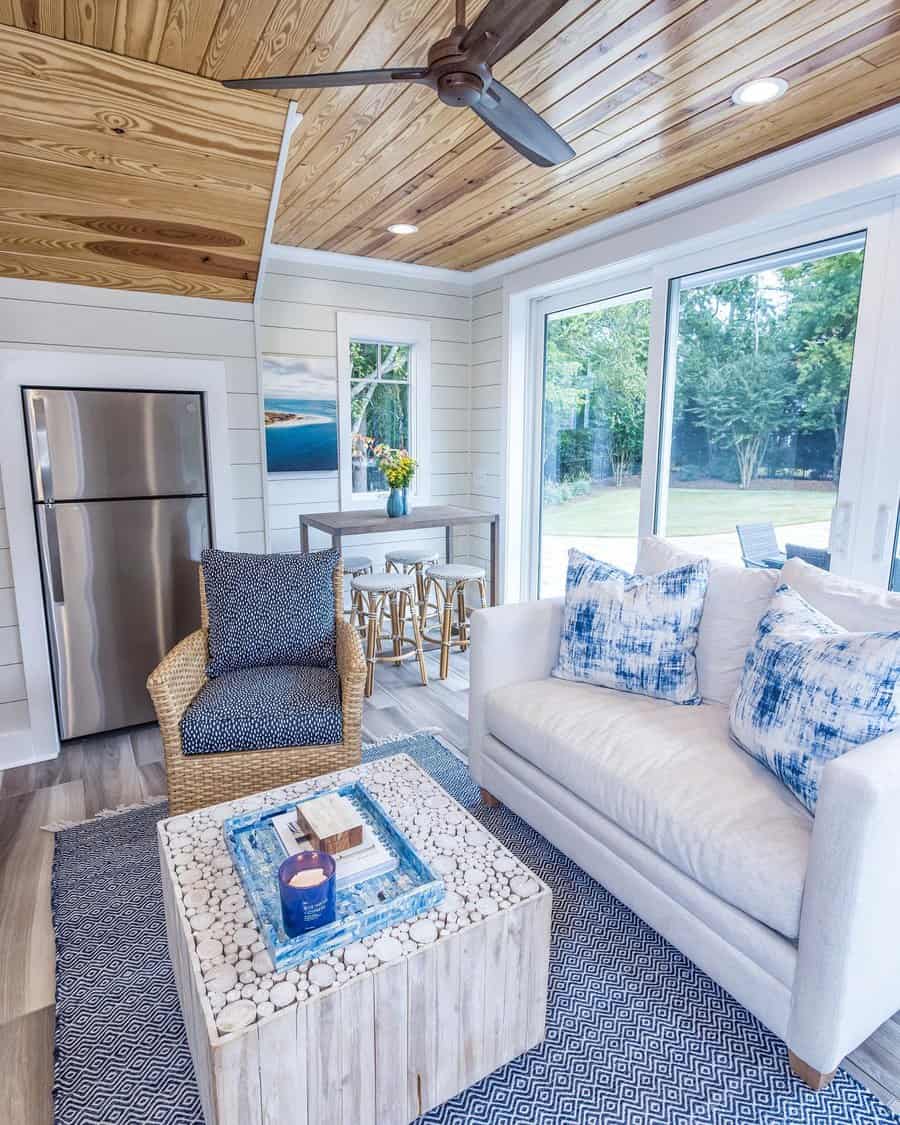
Before settling on a pool cabana design, it’s important to consider what functions you expect it to fulfill. If you want a full miniature house with a bathroom and kitchen, you’ll need to look at pool house design plans instead of a basic cabana.
Whatever your intent for this poolside structure, check out our favorite cool pool cabana ideas. They will guide you in designing the perfect backyard cabana.
[view_toc]
1. Deck-Friendly Pool Cabana
A pool cabana can be built directly on top of your existing pool deck. Or, you can plan to build it atop its own separate deck located near the swimming pool.
Source: @artepatio via InstagramSource: @ascher_smith via InstagramSource: @ildesign_irislev via InstagramSource: @our_hamptons_dream_in_aura via InstagramSource: @pep_build via Instagram
Whether you have a wooden, stone, tile, or concrete deck, choose a pool cabana style that complements the existing decking material. Unlike a pool house, a cabana’s three-sided construction will leave the deck material visible so make sure it’s something you love. It’s a bonus if it feels good under bare feet.
2. Enclosed Pool Cabana Design
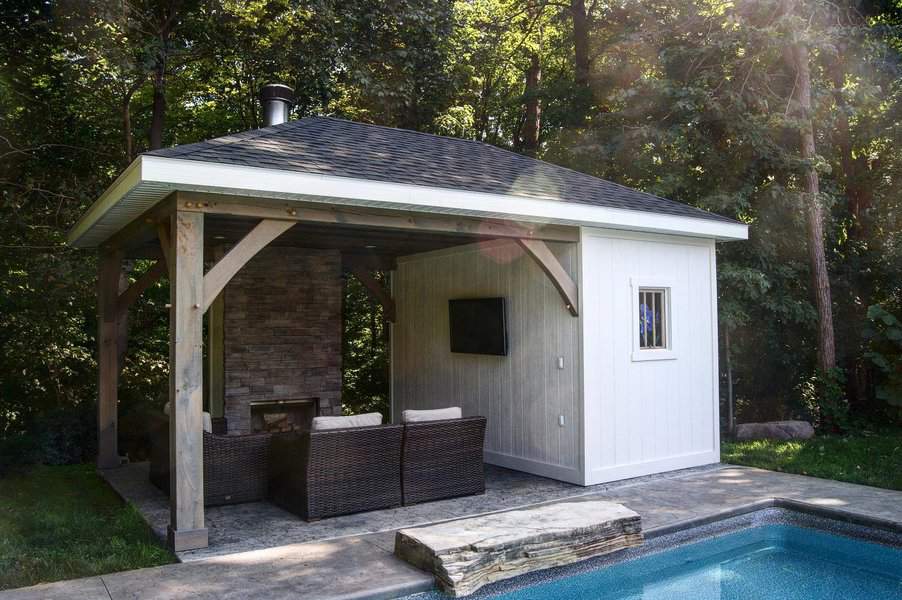
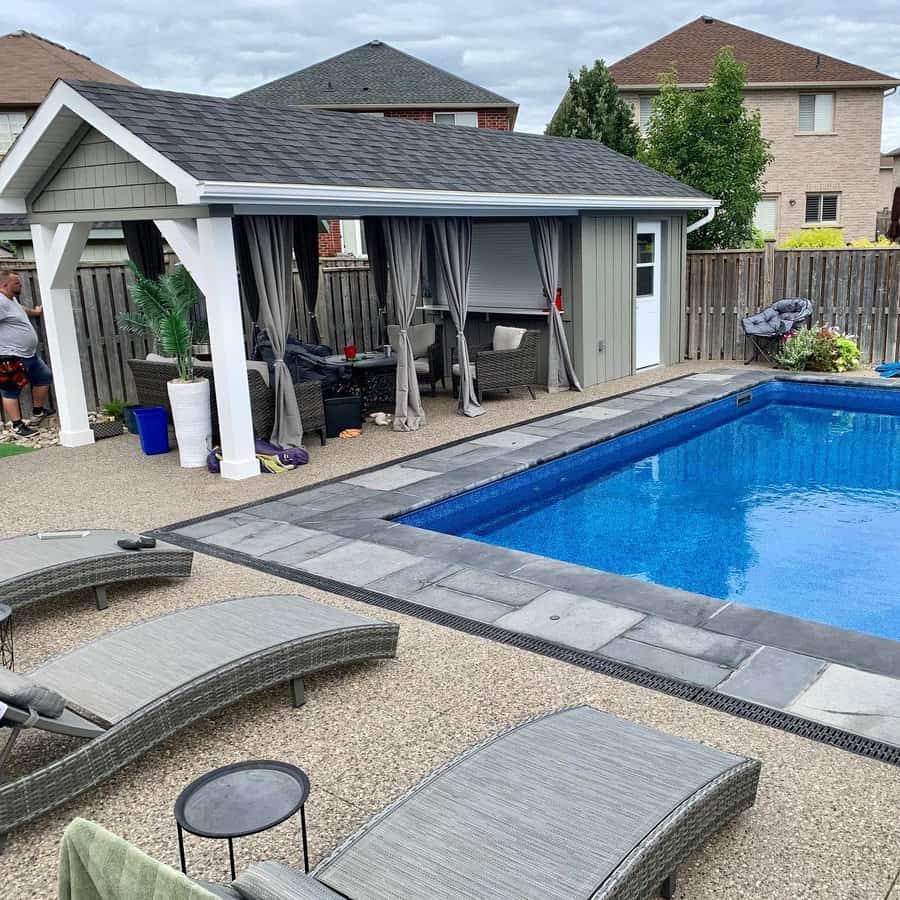
By definition, a cabana has a roof, three walls, and one open side. However, some cabanas could be called a pool house cabana, with a fourth wall instead of a totally open side.
Source: @lizcarpenterinteriors via InstagramSource: @phoenixprince99 via Instagram
These enclosed style cabanas usually have large French doors or retractable doors along the front. This makes a particularly stylish pool cabana that’s open when you need it to be, but looks more like a pool house when the doors are closed.
Even classic three-walled cabanas often have a small enclosed area for privacy while changing clothes. Some also include an enclosed storage room for pool supplies.
3. Hut-Style Cabana for Your Poolside Oasis
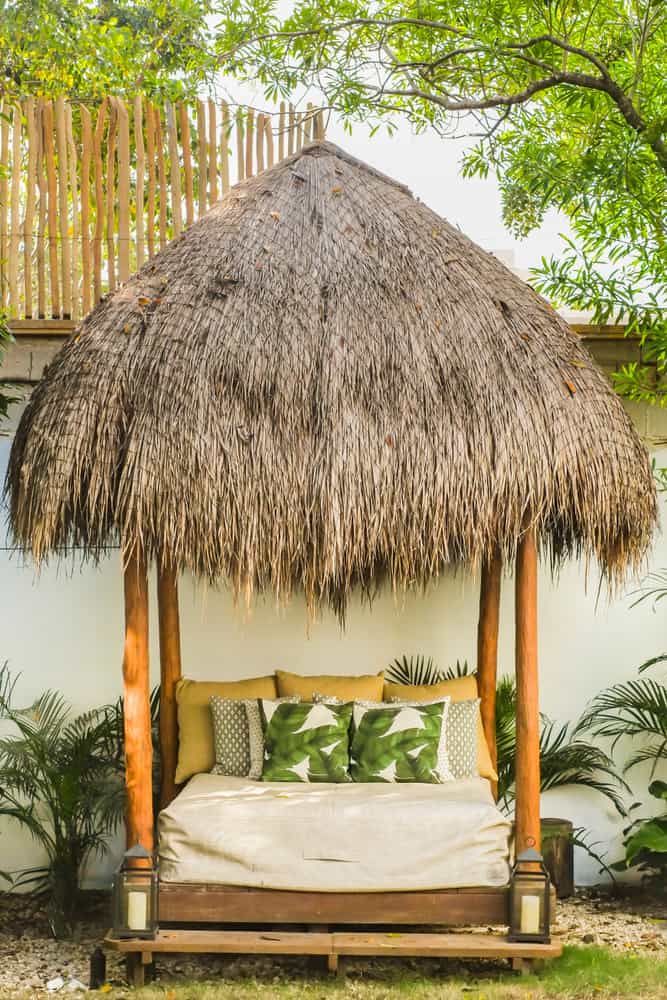
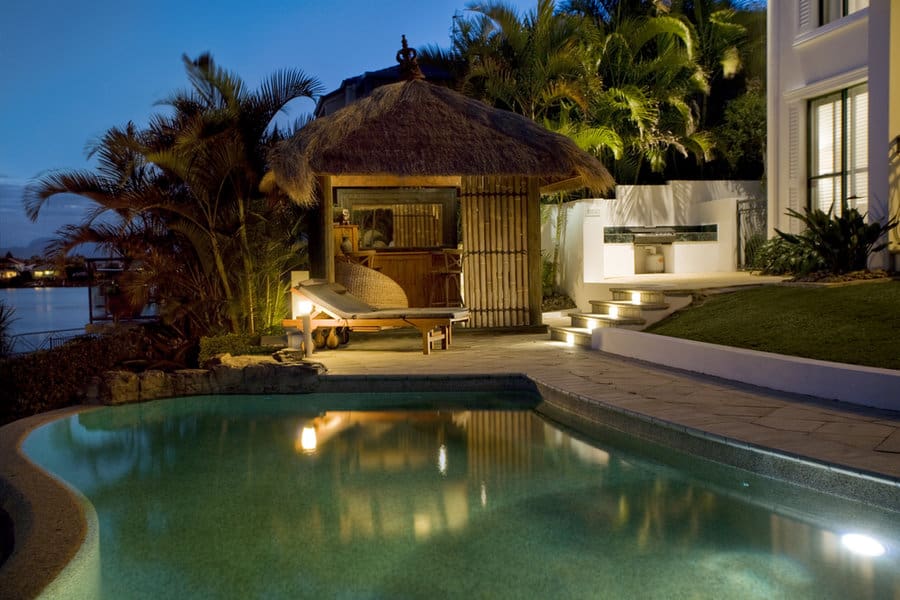
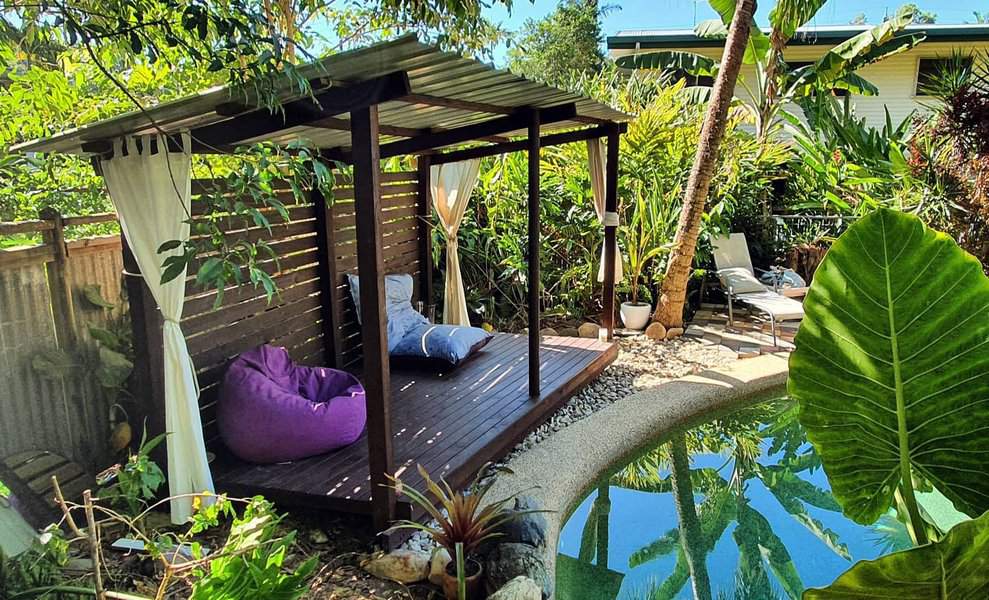
A hut-style cabana brings a decidedly tropical flair to your backyard. Instead of three walls and one opening, a cabana hut is often styled more like a pergola, with a thatched roof held up by four posts. If there are walls, they’re often made of bamboo or woven mats.
This kind of tiki hut outdoor space is also a great shelter over an outdoor kitchen or poolside bar. A hut cabana with an outdoor bar can make you and your guests feel like you’re visiting a favorite beach retreat.
4. Spacious Backyard Pool Cabana
Because there are no limits on how big a backyard cabana can be, some end up being quite large. If you have a large inground pool and hot tub—and are a frequent pool party host—a large cabana might be exactly what you need. After all, if you have a lot of guests, you’ll need a lot of patio furniture to accommodate everyone, and plenty of covered porch space to provide shade.
Source: @paulnbrowarchitect via Instagram
It’s common to build in extra storage into a larger cabana or pool house. You can include open attic space and use it to store all types of backyard toys and garden equipment.
With a large cabana space, consider screening part of it—especially if you live in an area with lots of mosquitos or stinging insects. A screened outdoor living space will allow you to relax in the shade without being bothered by pests.
5. Budget-Friendly: From DIY Pavilions to Pop-Up Tents
It’s possible to have a great poolside cabana even on a tight budget. A simple roofed pavilion or pergola can suffice, whether built by scratch or from a kit.
Source: @philipsmithphotography via InstagramSource: @swedish_eliza via Instagram
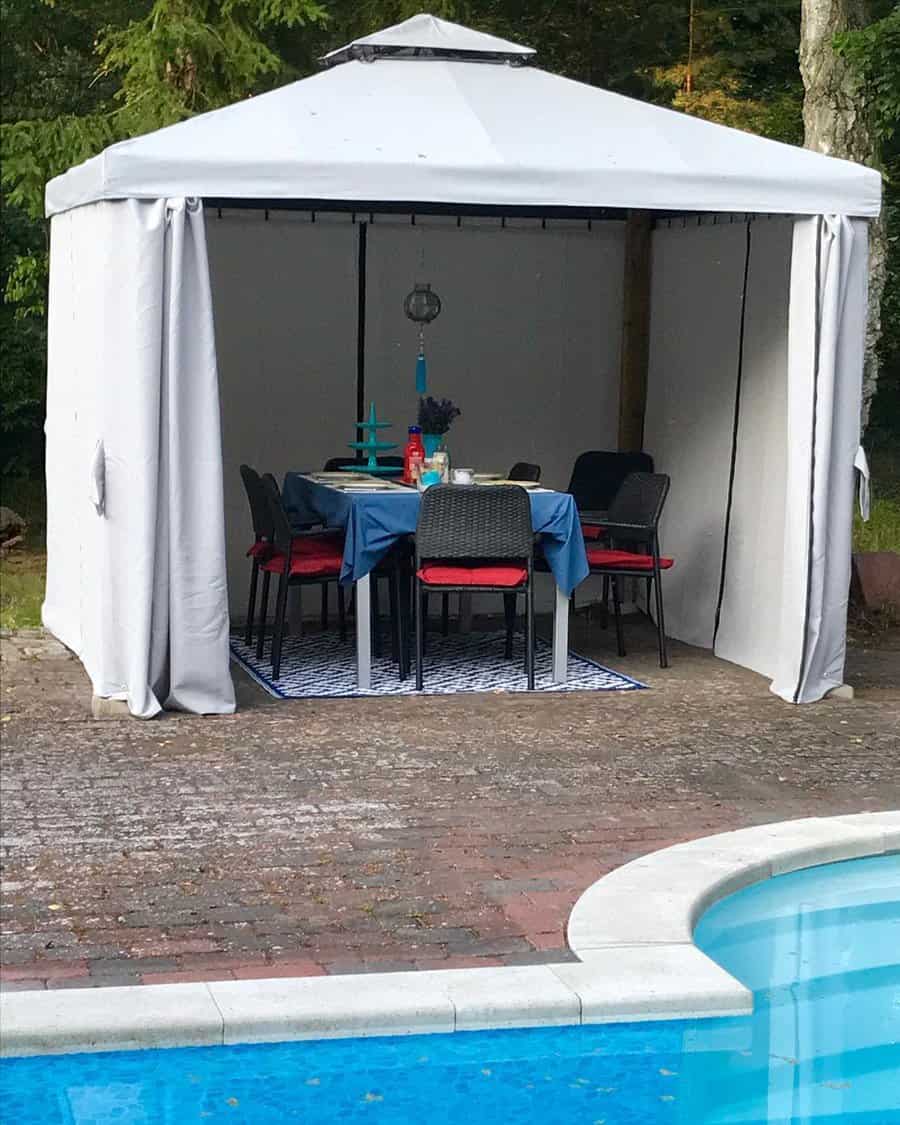
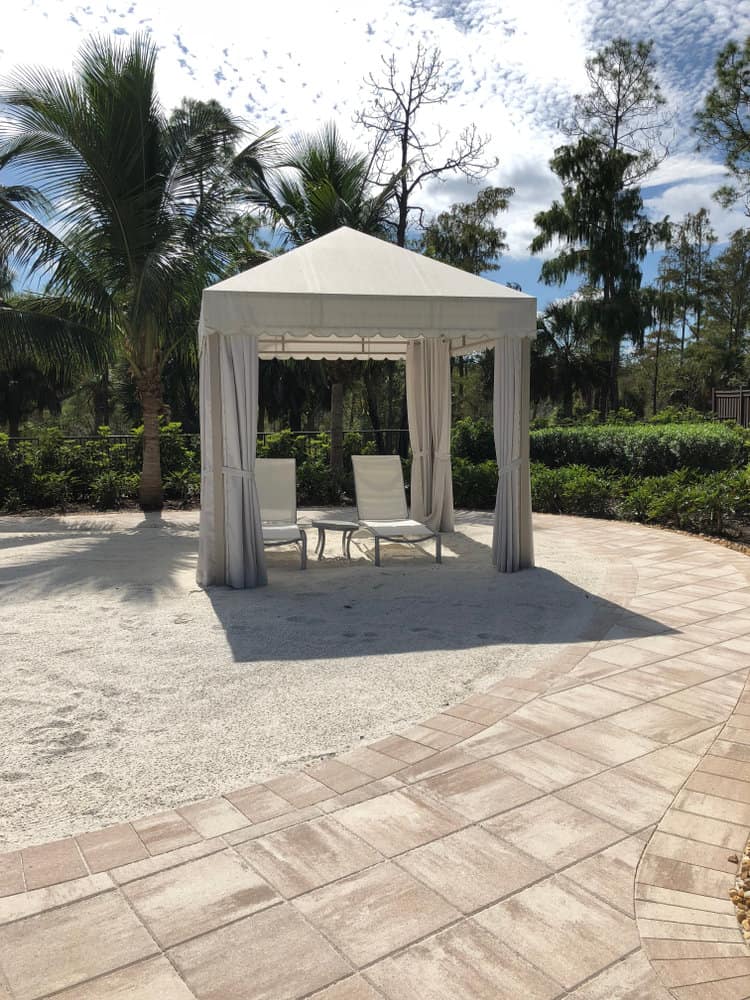
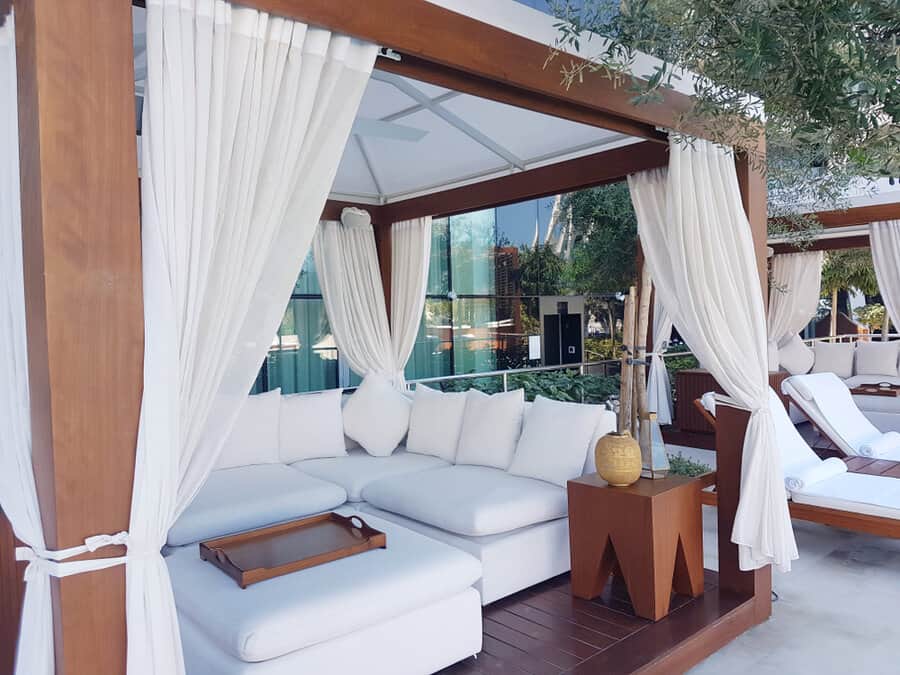
One of the cheapest ways to achieve the shade and ambience of a cabana is to purchase a 10’ x 10’ pop up tent. Available for around $100, these temporary structures are easy to put up and take down. Some even come with fabric curtains or sides that give the tent a true pool house cabana vibe.
6. Luxurious Pool Cabana Retreat
Luxury pool cabana ideas are usually big open spaces with multiple outdoor room features. These custom pool house hybrids might include a firepit with vent, a changing room, bathroom, kitchen, and bar.
Source: @jba_interiordesign via Instagram
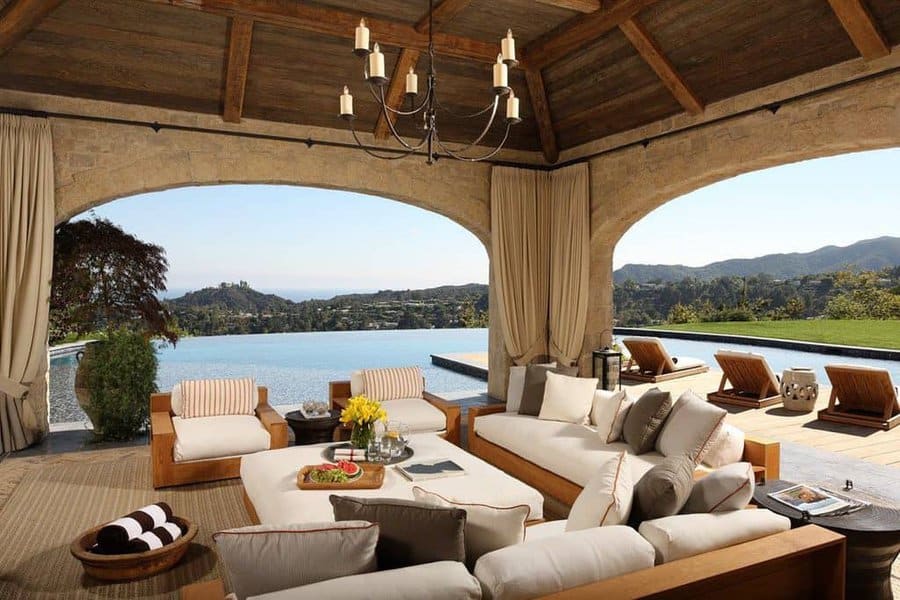
A luxury pool cabana is made from high-end materials, such as teak, mahogany, or other imported exotic hardwoods, and surrounded by lavish landscaping. Often, such impressive structures are adjacent to an infinity pool positioned above a breathtaking view.
7. Contemporary Cabana Design for Modern Pools
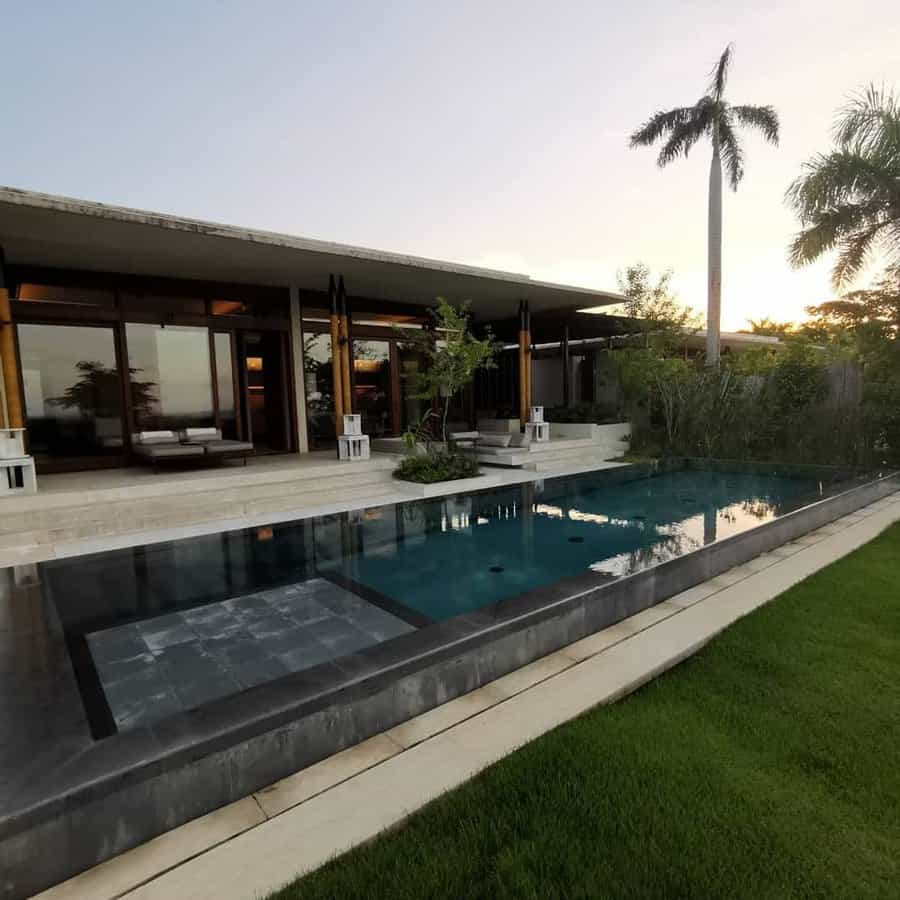
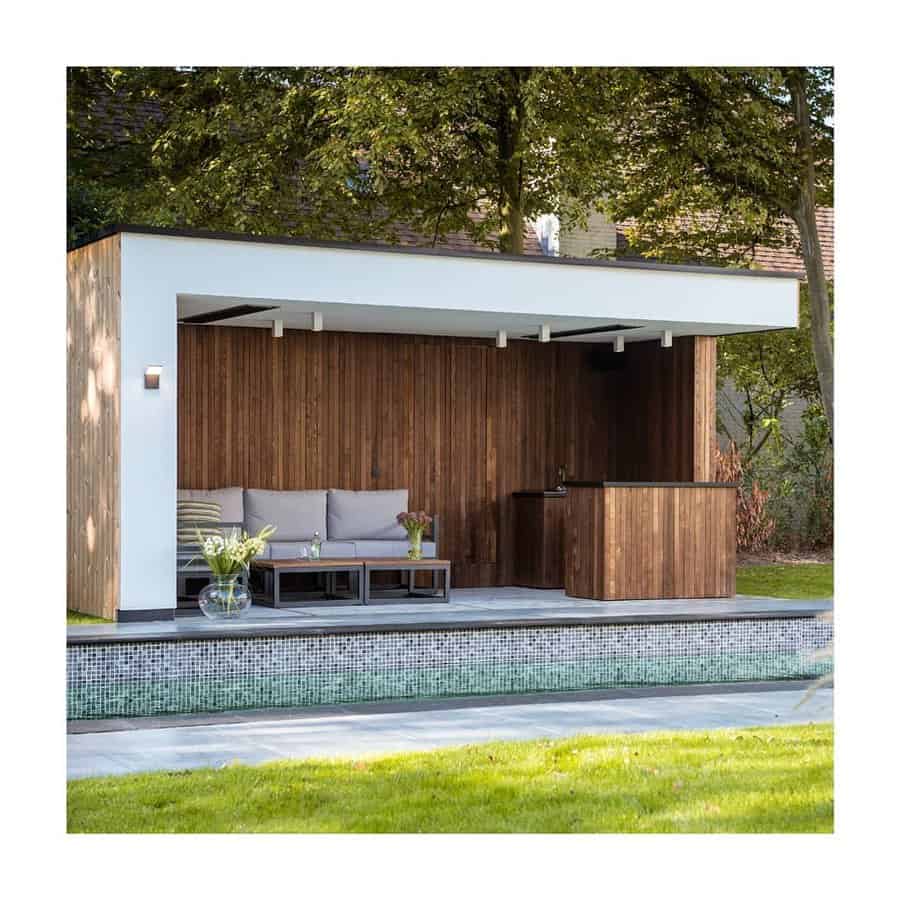
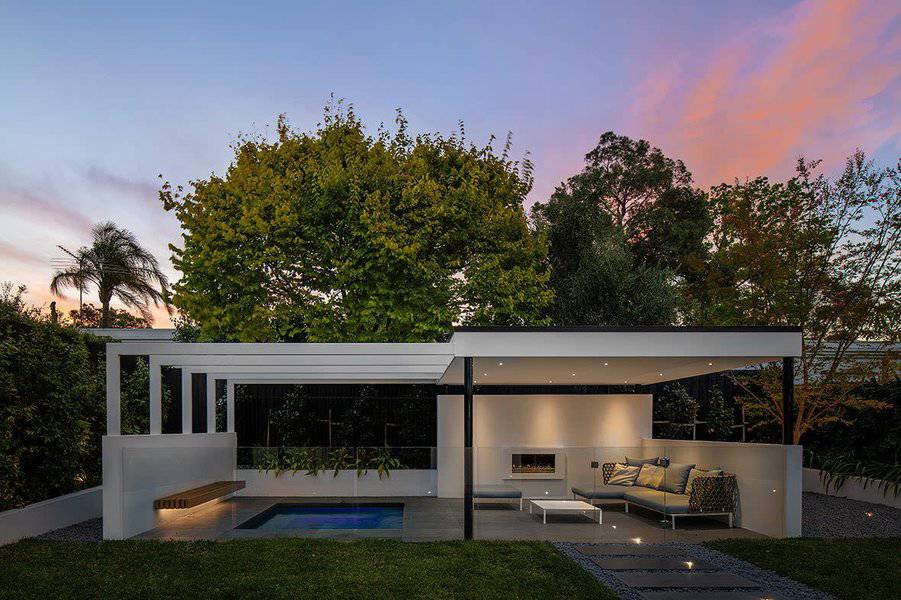
Like other forms of modern architecture, a contemporary cabana will be designed with clean lines and minimalist materials. It looks best beside a modern pool design that features a similar type of simplicity.
Source: @livinlodge_by_carpentier via InstagramSource: @out_from_the_blue via Instagram
Open beams are a stylish pool cabana accent for modern architecture. Make part of the roof solid material and part open beams to add character to your minimalist design.
8. Outdoor Furniture Essentials for Your Cabana
Outdoor furniture is a must in any outdoor living space. A backyard cabana should include several patio chairs and perhaps a dining set. If it’s a particularly spacious cabana, a hammock is a welcome place to relax poolside.
Source: @armjub via InstagramSource: @weoholidaybali via InstagramSource: @lundersrealestate via InstagramSource: @mark.kaufman_architect via Instagram
If you have a small pool cabana, you may wish to use pop up camping chairs instead of full size outdoor furniture. That way you have extra seating when guests visit, but can enjoy a more open space when it’s just you and your household in the backyard.
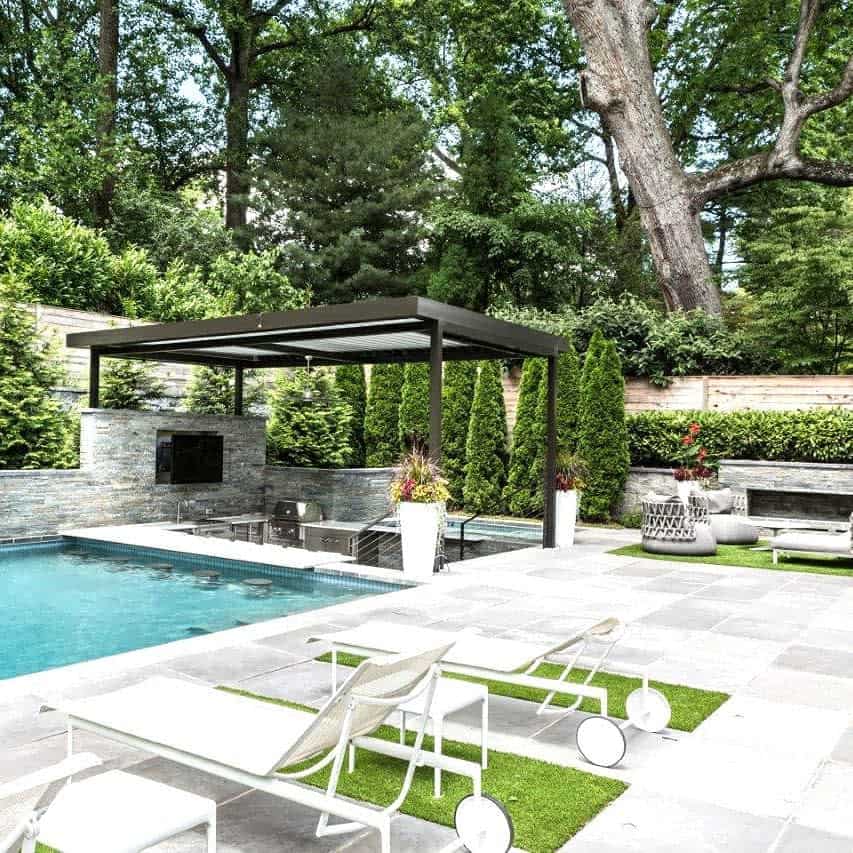
Consider buying lounge chairs that have wheels on the back. This will make it easier to move them beside the swimming pool when you want to bask in the sun, and roll them back into the shade again.
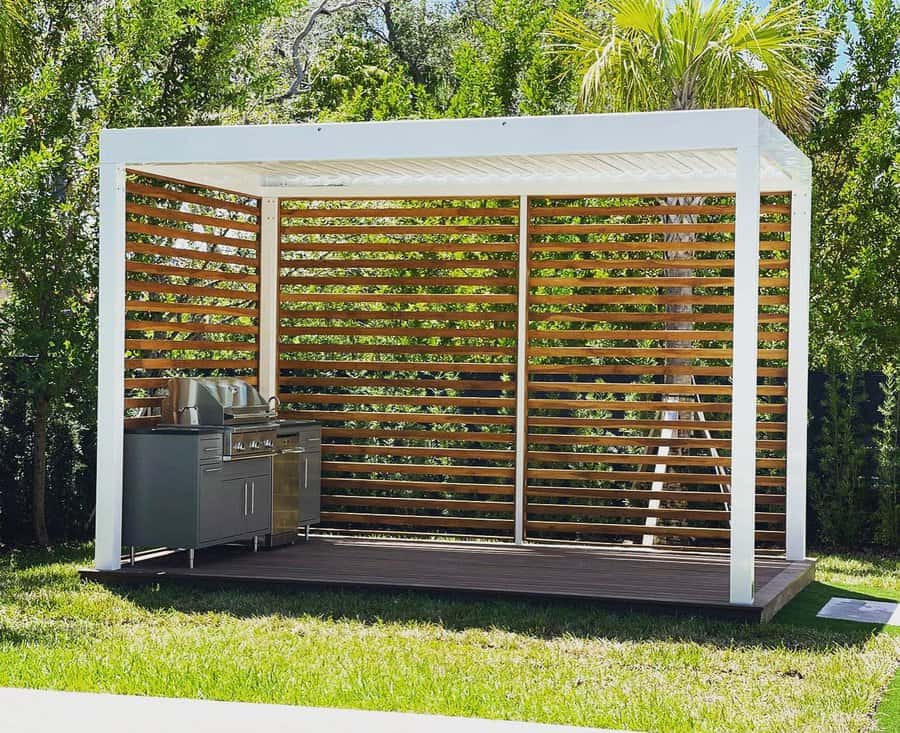
9. Set up an Outdoor Kitchen Bar
Cooking outdoors is a fun change of pace from cooking inside. Although grills and smokers have long been popular ways of preparing food outside, modern outdoor kitchens are stocked as well as their interior versions.
Source: @caldwellpainting via Instagram
It’s important to choose weather resistant appliances specifically designed for outdoor kitchen use. You can find outdoor ranges, ovens, refrigerators, and even dishwashers to create a full kitchen on your backyard pool cabana.
If you don’t have electricity in your outdoor pool area, a bar would be a more reasonable choice than a kitchen. Chill beverages in a large cooler or galvanized tub filled with ice. Store liquor and barware in cabinets or shelves surrounding the bar. Add a gas or charcoal grill for outdoor cooking.
10. Pool Pavilions: Versatile and Open-Air Cabana Alternatives
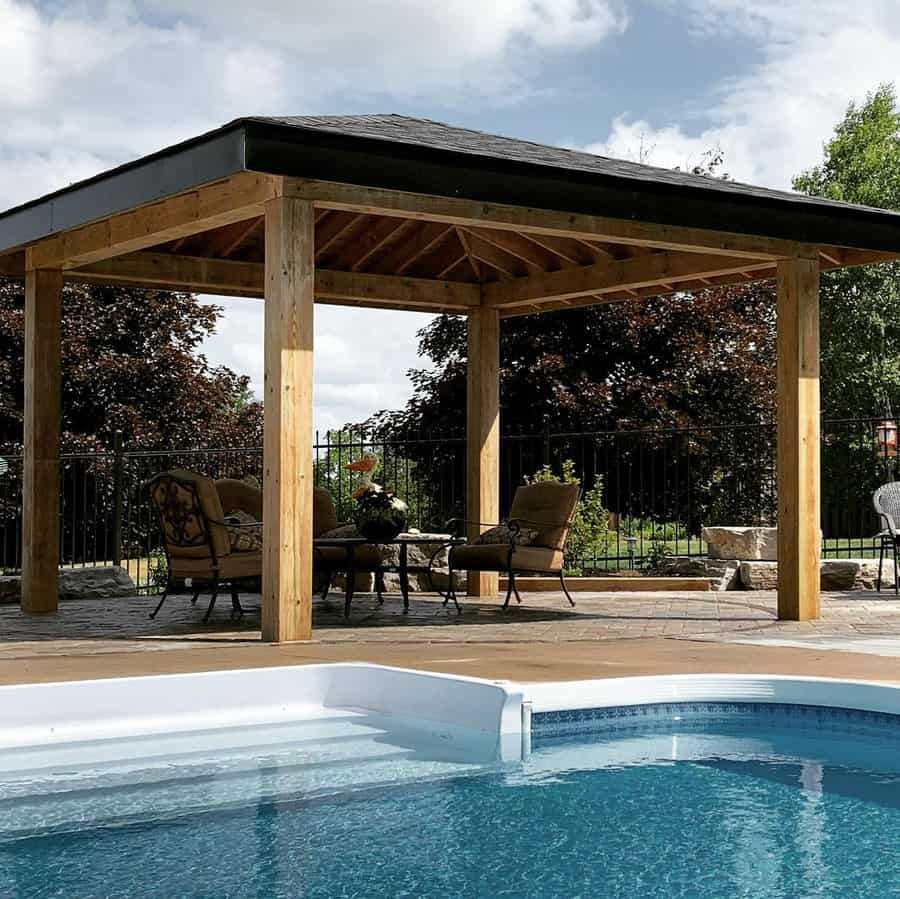
A pool pavilion is essentially just another type of cabana idea, although by definition, a pavilion has four open sides. Like park pavilions, a swimming pool pavilion is used for shelter or entertainment.
Source: @rhi_customcontracting via Instagram
A pavilion can have a hard roof or a more tent-like covering. While a cabana usually has three walls and one open side, a pavilion may have one wall and three open sides. The solid wall is usually along the back of the pavilion and is a great place to mount a big screen TV for watching movies from the swimming pool.
11. Prefab Pool House
Prefab pool house and cabana kits can be more cost effective than building the structure yourself. They can also be customized to match your home’s exterior, available in everything from modern minimalist to barnlike design.
Source: @backyard_getaways via InstagramSource: @davlocontracting via InstagramSource: @ontario.exterior.solutions.inc via Instagram
You could probably use any prefab storage shed as a small pool house, but it would lack certain features most people want in a pool cabana. Look for a prefab building that has an enclosed storage or clothes-changing area and a porch for lounging in the shade. Some prefab cabanas include a bar, bathroom, or outdoor shower.
You can order prefab buildings online or from a local company. The 10’ x 20’ Sanara pool cabana by Summerwood Products is a great example of a modern, stylish prefab pool house.
12. Creating a Rustic Cabana with Natural Flair
A rustic cabana will be made from natural materials, such as a wood frame with a stone base, topped with a vintage tin roof. If rustic cabana has curtains, canvas, linen, or thin burlap are good fabrics to use.
Source: @littleprawn3 via InstagramSource: @scott_design_build via InstagramSource: @sdstyle via InstagramSource: @vonbumannhomes via Instagram
Decorate the walls with vintage signs and add wrought iron accents wherever you can. For a fun, whimsical touch, hang simple rope swings from the cabana’s open rafters. Rustic lighting options include metal lanterns and strings of Edison light bulbs.
13. Maximizing Your Space with Small Pool Cabana
Even a small pool house is better than no pool house at all. Where else can you lounge in the shade beside the pool, or store all your pool equipment? Additionally, a pool house or cabana adds value to your home because it turns a basic backyard pool into a multi-purpose outdoor living zone.
Source: @nadinesucculents via Instagram
If you have a tight budget, it’s a good idea to keep your cabana small—but build one that includes the features you need. Of course, you might need a small cabana due to space restraints. If so, choose a narrow design that provides the most shade possible.
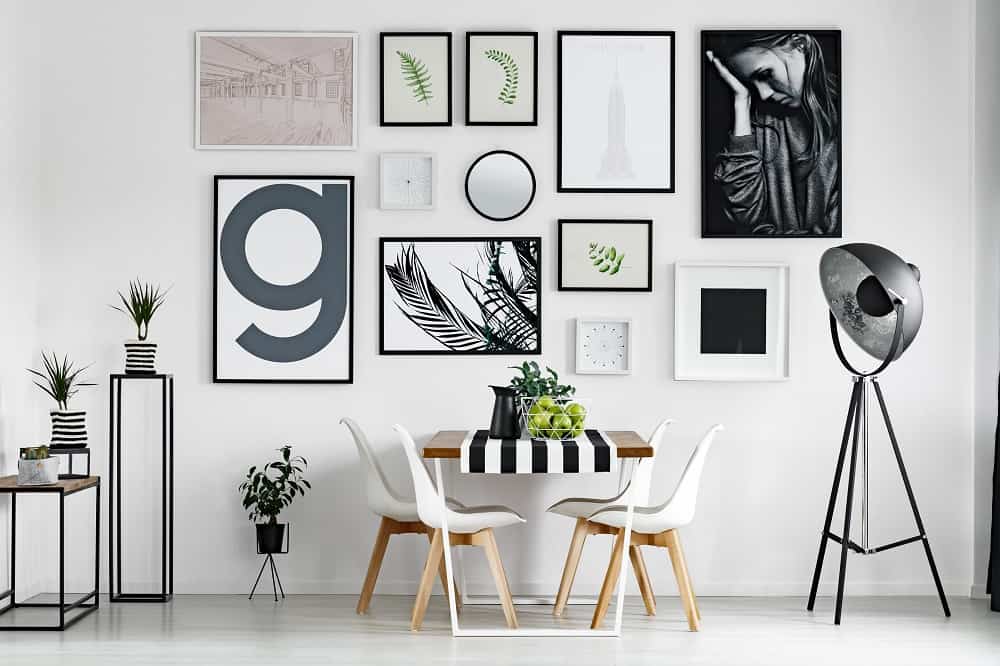
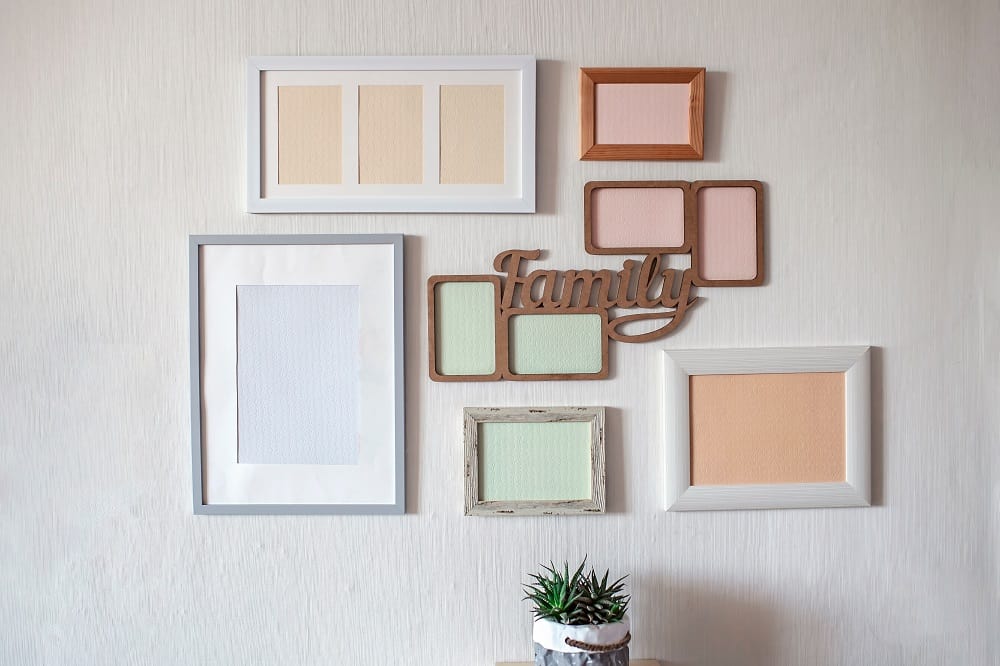
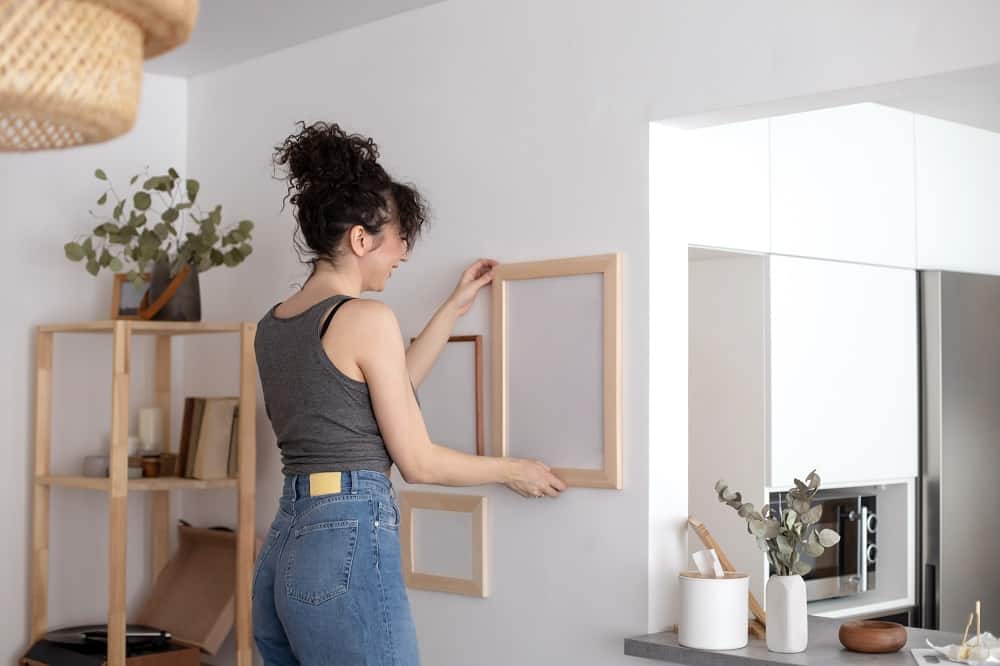
A gallery wall—or photo and artwork collection—is a great way to showcase your favorite memories. Although many gallery wall layout ideas include pictures that are all the same size, most have pictures of different sizes. Putting them together in a way that’s pleasing can feel like trying to solve a difficult puzzle.
If you’re wondering how to arrange pictures on a wall when they’re a mishmash of different shapes and sizes, certain techniques will help you out. Here are some of our favorite ways to create the perfect picture arrangement on your gallery wall.
What type of wall is the best to arrange pictures on? Any bare wall is a good candidate for an impressive art display. Factor in the size of your artwork and the number of pieces you want to hang up. You may discover that you don’t need a large wall to display your artwork collection.
In the living room, over the sofa is a logical place to locate a gallery wall. Look for blank wall space over other pieces of furniture, and consider wrapping your picture display around a corner for an interesting effect.
Don’t forget the staircase wall when planning where to hang pictures. It’s a great idea to hang family photos in a timeline that you get to relive as you go up and down the stairs each day.
Remember that you don’t have to hang pictures on every bedroom or living room wall. In fact, it’s a good idea to leave some blank wall space in every room. This keeps the space from looking cluttered and gives your eyes a chance to rest.
Choose a Theme
While there are no hard rules for filling a space with picture groupings, adhering to one central theme per wall is often preferable. For example, a symmetrical grouping of botanical art prints adds traditional elegance to a space. For a more casual theme, choose family photos, perhaps mixing professional portraits with favorite casual shots.
As a rule, black and white family pictures look more formal than the color version of each photo. For landscape photo collections or even drawings, black and white conveys a more modern home decor style.
Keep in mind that virtually every visitor to your home will see the wall art in your living room, so keep the images professional and appropriate. While silly or low-brow artwork may accurately reflect your personality, it’s better to leave those images in your bedroom or another more private space.
Coordinate Frames
Depending on your home decor style, all the frames on a gallery wall don’t necessarily have to match. If you have a casual, bohemian style, each picture frame can be different. However, for a more refined look, go with frames that coordinate.
Matching frames makes it clear that all the images were meant to be displayed together. If you choose a simple frame design, it will be easier to find the same white or black frame in different sizes.
Whether you choose wood, metal, black, or white frames, make sure they look good with both the artwork and the rest of the room’s decor.
Practice Composition
Sketch out picture groupings before you commit to hammering nails into the wall. Creating a rough blueprint of your gallery wall is a good way to get an idea of how many pieces you want to include and exactly where each piece should go.
Focus on big pictures first. A larger picture deserves a prominent place in the gallery wall. Surround it with smaller picture frames and related articles that go with your theme. For example, intersperse metallic starburst wall medallions between photos of the night sky.
Making paper templates is an easy way to see how all your hanging pictures will look on the wall. Lay your pictures on a roll of craft paper and trace around each frame with a pencil. Cut them out and label them so you don’t get confused about which piece is which.
Using a loop of painters tape, attach the paper templates to your gallery wall in the same arrangement you sketched out earlier. If you don’t like the way it looks, it’s easy to reposition them until the arrangement suits you.
You can also have someone hold up each piece to the wall while you stand back and see how it looks. Make sure you cover the picture hook with masking tape first, to keep it from scratching the wall.
Seek Symmetry
Arranging pictures in perfect symmetry can be rather boring, but some degree of symmetry is necessary to keep the room from looking unbalanced. Think of each frame as carrying a weight related to its overall size. Especially with traditional or formal decor, you want to balance weights along each side of the wall.
For example, place a large piece in one of the lower corners of your gallery wall space. Put the second-largest picture in the upper corner diagonal from the biggest piece. Then arrange the remaining multiple pictures in the unoccupied corners to balance the overall space.
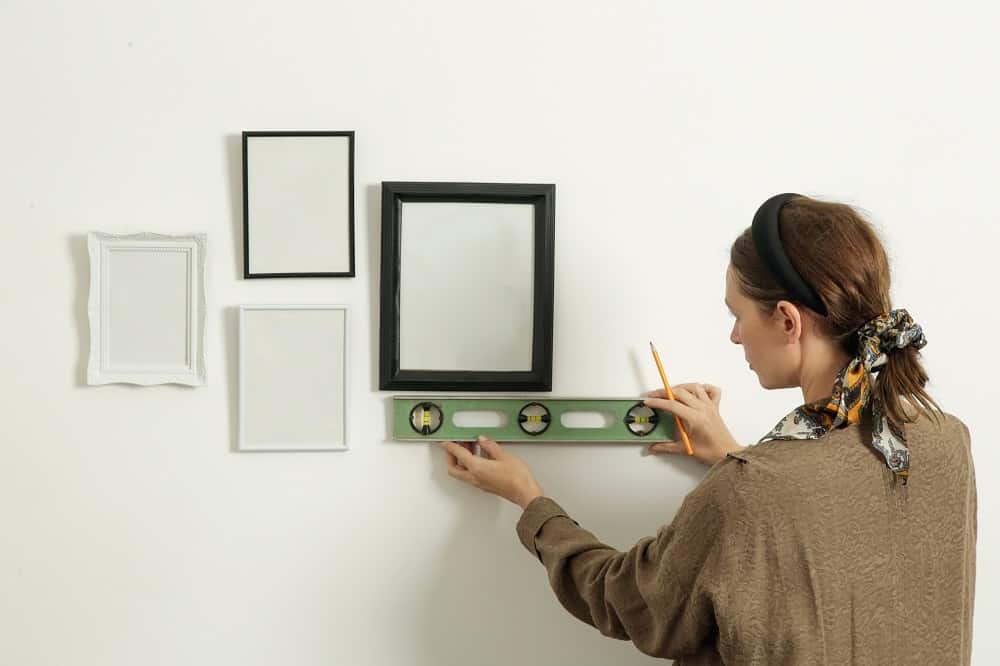
Another visually pleasing space for hanging pictures is a few inches above a chair rail. It may seem too low initially, but this positioning serves the dual purpose of showing off your artwork while drawing attention to the architectural trim. Use your carpenter’s level to ensure each piece is neatly aligned.
Gather Supplies
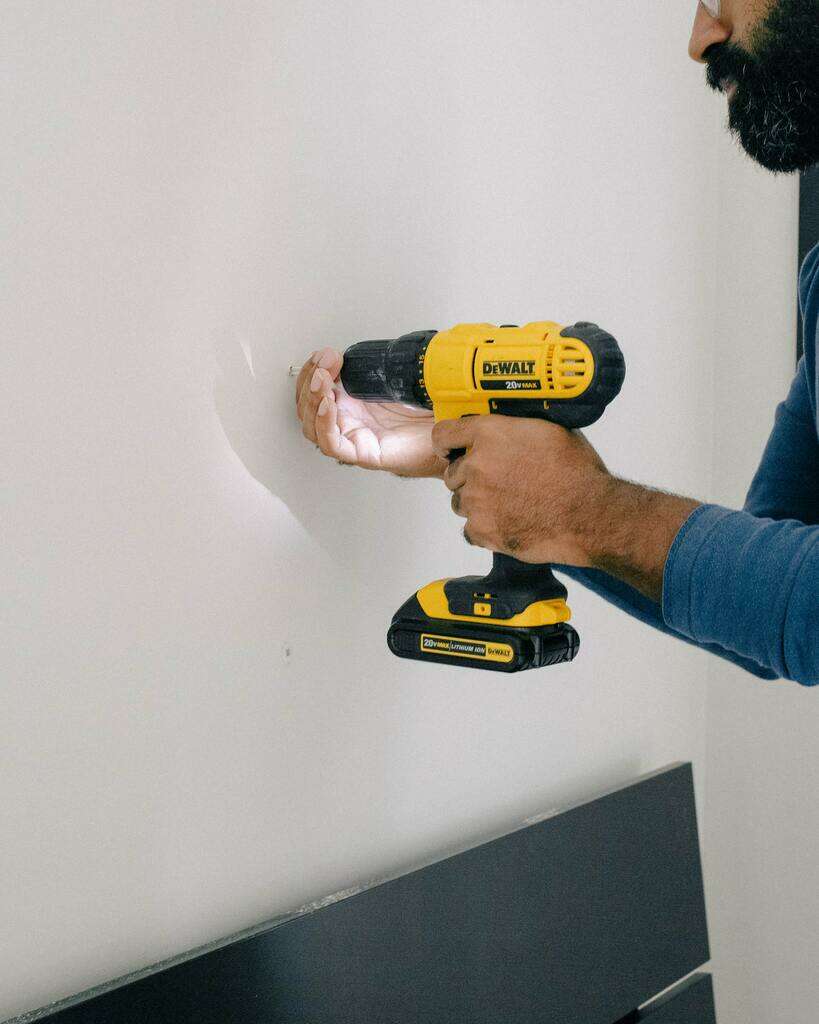
In addition to kraft paper, painters tape, and a pencil, you’ll need a measuring tape and a level to professionally hang your wall decor. You’ll need a picture hanger for each frame, screws and a screwdriver, and/or a hammer and nails.
Many interior designers recommend using two picture hangers on each piece—especially large artwork—to keep them from tilting or swinging. Wall plugs and drywall anchors provide extra support, especially in brittle drywall.
A wall anchor is better than an ordinary nail or screw for supporting heavier artwork and decorative wall art pieces. Drywall anchors are a screw that includes a spring-loaded winged nut that spreads open behind the drywall. Its “T-shaped” design keeps the weight of your art piece from pulling the screw out of the wall.
Unless your gallery idea is a freeform, organic layout, you shouldn’t leave measurements to guesswork. Accurate measurements are what makes your display look professionally installed. You must use measurements if you’re creating a grid or even row of frames.
Follow the instructions in the “Formula for Hanging Pictures” section below. Use a tape measure and a carpenter’s level to determine where each nail, screw, or wall anchor should go. Mark each spot lightly with a pencil.
A Formula for Hanging Pictures
Hanging pictures can feel like trying to solve a puzzle—especially if your wall art is in different shapes and sizes. If you bought a hanging art set from Pottery Barn or another retailer, it’s easy enough to just copy the way they had the pieces displayed. But if you’re creating your own photo wall from scratch, this formula can help ensure a balanced composition.
To hang artwork at average eye level, the center of the piece should be between 57 and 60 inches above the floor. Find the center by dividing the height of the frame by two. Then measure the distance from the top of the frame to the hanging hardware and subtract that from the first number.
Add that figure to 57, 58, 59, or 60. This final sum is the height where your nail or wall anchor should go, as measured from the floor.
How to Hang Eclectic Groupings
Although it’s recommended to have a common thread tying your gallery wall picture collection together, it’s not required. In fact, the beauty of your particular grouping might be its whimsical diversity. It’s perfectly acceptable for photos, sketches, paintings, macrame, wall sculptures, and baskets to occupy the same wall space.
It can be a bit more challenging to make an eclectic collection flow together harmoniously. Start by hanging pictures that mean the most to you at eye level—but feel free to move them higher or lower to work around your furniture and architecture. Extend your collection into the rest of the space by hanging a small picture or decoration above a door or window.
Remember that your instinct is the most important factor when it’s time to hang pictures—or do any type of home decorating. You live in the space. If your picture display makes you happy, that’s all that matters.
Grey might just be the ultimate neutral color. Dark enough for drama, but light enough to convey spaciousness, grey walls are the perfect background for just about any colour curtains.
Grey is a suitable color in everything from a modern condo to a sprawling farmhouse. It might be easier to ask what colors don’t go with grey than to ask, “What color curtains go with grey walls?” Here are a few of our favorite pairings of grey walls and colored curtains.
There are far more than 50 shades of grey when it comes to paint color choices. Grey is like its own rainbow, with warm brownish grey at one end and cool bluish grey at the other.
Grey also shows up in a wide value spectrum. There are pale shades just a notch above white, and deep charcoals just a few steps below black. So choosing grey curtains is a great option, especially if you’re into chic monochromatic decor.
Choosing a textured or patterned grey fabric is a good way to add sophisticated detail to the room. Look for a floral grey monochromatic window treatment, or a classic pattern like stripes or plaid. Silvery grey sheer curtains are a great choice to hang behind heavier curtain panels.
You can break up the grey a bit by including some white walls in the room. For example, install wainscoting up to chair rail height and paint that part of the room white.
Black
Black curtains are a classic choice when it comes to room decor. Not only is black a sophisticated hue that goes with anything, it is a popular color for blackout curtains and other thermal curtain options. Having black thermal curtains can help you save money on your air conditioning bill in the summertime.
Matching curtains to furniture is a good idea for maintaining a balanced color scheme. Pair black curtains with a black leather sofa and a rug that incorporates all the grey and black hues in the room. If black colored curtains feel too harsh for your decor, go with dark charcoal grey curtains for a similar but less drastic vibe.
White
White curtains always carry a fresh, clean vibe. Hanging white curtains on a grey wall is a classic combination favored by many an interior designer. This particular combination allows the furniture to be the focal point in the room.
With grey walls and white curtains, you have the freedom to choose a couch and accessories in any color you wish. White textured curtains add subtle detail to the room without taking anything away from your other design elements.
Warm grey color paint looks better with a warmer shade of white. Pair it with a soft ivory curtain color instead of a bright white curtain.
Blue
Blue colored curtains are a peaceful, impactful choice in just about any room with grey walls. Blue and grey are a classic color duo, whether you have blue curtain panels on grey walls, or blue walls behind grey curtains.
Navy or light blue curtain panels stand out against grey walls, especially when the room includes other blue accents. Teal curtains also look great against a medium grey wall, as its warm bluish-green looks extra brilliant against a solid neutral.
Light grey walls and pale blue curtains give the room the cooling ambience of a cloudy day. Brushed nickel curtain rods look amazing with this color combo.
Pink
Choose pink curtain fabric to add a soft warmth to a room with grey walls. Grey wall paint looks amazing with all shades of pink, especially blush pink or dusty rose. Hang sheer white curtains behind your pink drapes to soften daylight filtering through the window. This will look especially nice if your room has white furniture.
Light grey wall paint and pale pink decor has long been a favorite in a baby nursery or little girl’s room. However, this color scheme is also soothing in any room and can be quite sophisticated. Pink is one of the colors that will go equally well with warm or cool grey wall paint.
Green
You can probably get away with any green color curtain against your grey wall, but earthy shades of green look particularly good next to grey. Olive green curtain panels merge well with a grey based wall color and adding brown and other warm neutrals completes the look.
Emerald, jade, and other brighter green curtain choices can also work well with grey, provided that the color is included in the room’s accessories, rugs, and wall decor.
Beige
Like grey, beige has its own color spectrum. From pale oatmeal to deep tan, it’s one of the best curtain colors if you want a room that’s neutral but warm. Greige is a new color that combines the best of beige and grey and is a good companion to both.
Warm grey walls and beige curtains are a great background color scheme if you have a lot of brown furniture in the room. Warm grey walls and beige curtains go great with a brown leather sofa and natural wood finishes on tables and bookshelves.
Bright Colored Curtains
Most bright color options look great beside neutral grey walls, so don’t be afraid of this curtain and wall pairing. Purple, orange, hot pink, or red curtains add a cheerful, whimsical vibe to a room. Putting these brilliant hues next to calm grey makes them pop even more.
Yellow is another bright color that looks amazing with grey. While a soft, buttery yellow is a classic color to use with grey, brighter hues can work as well. Mustard yellow curtains or deep golden drapes stand out nicely against charcoal and other darker shades of grey.
Bright floral patterns, colorful plaids, and batik prints are also great in a grey room—especially if they include a bit of grey that goes with the wall color. Just be sure to use the printed fabric’s main color other places in the room, such as on throw pillows, rugs, and wall art.
Two words for outdoor living spaces are frequently interchanged: deck and patio. Both are homeowner favorites and add value to the home. Decks and patios provide excellent space for outdoor relaxation and entertaining.
What exactly is involved in making a deck vs patio decision? First, you need to understand the differences between the two, as your property may be better suited for one over the other. Second, you should consider the full pros and cons of each option before settling on an answer to the deck or patio debate.
[view_toc]
Deck Basics
A deck is a raised platform that’s supported by structural materials, such as beams, posts, and joists. They’re usually made of wood or a composite material that looks like wood.
A deck may be one level or multi-leveled, with stairs between each platform. Decking is usually open to the sky above. Decks are a great choice if your backyard has sloped or uneven terrain.
Patio Basics
A patio is an outdoor living space that rests directly on the ground. It may be attached to the back of your house or built further out in the yard. Patios are usually made of concrete, pavers, or natural stone. Patios can have a roof or other patio cover, or may be uncovered.
Because it is a paved area on the ground, a patio is best for a homeowner with a level lot. However, it’s possible to build a retaining wall and add fill dirt to create an even outdoor space for your patio.
Deck Pros and Cons
Pros
A new deck is a great choice if your yard has uneven surfaces. Because decking is supported by columns or posts, it’s the best way to create a level outdoor living space over jagged terrain. However, you can also build a wooden deck on flat, even terrain. A ground level deck is just as beautiful and functional as an elevated wood deck.
Because wood or composite deck surfaces are usually elevated, their height can help you enjoy a beautiful view. Just make sure that your contractor has a valid building permit and adheres to all building codes.
An elevated deck has storage space beneath it, usually hidden by an attractive deck skirting material. It can also be a good place to store weatherproof items such as kayaks, plastic snow toys, garden hoses and sprinklers. You can also store lumber or firewood under raised decks, stacked on an elevated rack and covered with a tarp.
A composite deck can last as long as a concrete patio, but provides the similar beauty of an authentic hardwood deck. Although you will pay more per square foot at installation, it will add strong resale value to your home.
Cons
Even though wood decks are built from pressure-treated lumber, it’s still an organic material prone to weathering and moisture damage. If you have a natural wood deck, it will fade over time and need to be sanded, stained, and sealed every few years.
Wood is also prone to staining from spilled liquids or accumulated leaves. It can crack, splinter, or warp from extreme weather exposure. Additionally, moisture damage can result in mold, mildew, and rot.
Because most wood decks include stairs, they can be challenging for a mobility-impaired homeowner or guest to navigate. They can also pose a fall risk for small children.
Composite decking is far more durable than natural wood, but can still be prone to damage from temperature-related expansion and contraction. Composite decks can also become unbearably hot from sun exposure, especially if they are dark-colored.
Patio Pros and Cons
Pros
A well-made paver patio or concrete patio can last for several decades with proper maintenance. It can support heavy outdoor furniture. If you want a fire pit or outdoor kitchen, concrete slab patios and paver patios are durable and fireproof foundations.
Patios offer more privacy than decks because they’re at ground level. Add trees or shrubs to enhance a patio’s cozy privacy.
A patio may not require a building permit because it doesn’t affect the home’s structure—but check with your city before you start to build one. Because it’s not elevated, you don’t have to worry as much about weight limits or inspections as you would with a deck.
Patios are usually much more cost effective than decks. You might even be able to DIY a simple patio and save on labor costs.
Cons
A smooth concrete or stamped concrete patio can be prone to cracking if the foundation is uneven. This is especially true if it’s a raised patio and you live in a climate that experiences extreme weather conditions.
Concrete pavers and other porous materials can stain easily—although sealing the surface can help prevent stains. They are also prone to hold in moisture, resulting in mold and mildew growth.
It can be challenging to keep a backyard patio made from brick pavers or stone weed-free. You’ll need to spray the spaces between pavers with weed control during the spring and summer.
Deck vs. Patio Maintenance
Generally speaking, decking material is more high maintenance than patio material. Whether you have a wood deck, composite deck, concrete or stone patio, they should be swept frequently and sprayed clean with a mild soap and a garden hose.
Deck and patio maintenance includes keeping the decking free from leaves, as they will eventually stain the surface if allowed to pile up. Always clean up spills immediately, especially if they are oily or highly pigmented.
Other Outdoor Living Space Terms
There are other names for outdoor living spaces, including “porch” and “veranda.” Depending on where you live, you might find your neighbors using these terms instead of deck or patio.
A porch is defined as a covered shelter projecting from a building. It’s more often used to describe an open structure along the front of the building, although back porches are also common. A wrap-around porch is one that goes around the entire perimeter of a house.
“Veranda” is a word used mostly in the south. Also spelled “verandah,” it describes a roofed platform on a home’s exterior that’s at ground level. It often has a railing around the perimeter and may extend around more than one side of a home.
You’ve designed the perfect room, and now it’s time for the finishing touches. You know you want a stylish window treatment and have narrowed down your curtain fabric choices.
But one question remains: should curtains touch the floor? Unfortunately, there’s no one easy answer. Even interior design experts are split on the right length for a curtain panel to extend from the rod. Keep reading to find out why, and get help on deciding the right curtain length for your room.
[view_toc]
Different Curtain Lengths
The main reason there’s no one set answer for, “Should curtains touch the floor?” is that there are many length options for ready made curtains. Each curtain length is appropriate with different types of home decor. The most common curtain length options are:
45 inches
54 inches
63 inches
84 inches
90 inches
96 inches
108 inches
120 inches
Some curtain brands offer other length curtain options, and you can always hire someone to custom sew your window treatments. If you have a room with a short window or a room with a higher ceiling, you will obviously need different curtain lengths in each room.
Standard Curtain Style and Length Options
Most standard curtains come in the styles below. They’re listed in order from shorter curtain styles to longer floor length curtains.
Café Curtains
Café curtains are half-length curtains that cover the bottom half of a window. Traditionally found in kitchens and bathrooms, café curtains provide partial privacy and light blocking. They’re often paired with a valance hung on a separate rod above the window frame.
Café curtains allow sunlight to shine through the space between the curtain panels and the valance. Although it’s not common for this curtain length to reach the floor, it is possible to buy longer curtains and hang them a foot or so below the top of the window, if desired.
Sill Length Curtains
Sill length curtains end about ½ an inch above the window sill. Like café curtains, they add a casual and charming vibe to whatever room they’re in. Many designers feel that sill length window curtains are a good place to show off a strong patterned fabric or bright color curtains that might overpower the room if they were longer.
Short curtains that fall just above the window sill are most commonly found in kitchens and bathrooms. They’re also a good choice in some bedrooms, breakfast nooks, or anywhere that floor length curtains would block a countertop, heating vent, or piece of furniture.
Apron Short Curtains
A window apron is a piece of decorative trim located just under the window stool or window sill. An apron accents the look of a window, much like how crown moulding accents the ceiling.
An apron length curtain extends from the rod to one inch below the apron window trim. Not as popular as they used to be, this curtain length is still a practical choice when you don’t want to block a window seat, radiator, or other room feature. They’re a good curtain length if you need shorter curtains but feel that sill length curtains are a bit too short.
Floor Length Curtains
Floor length curtains are a favorite curtain length for many interior designers. They are also called hover length curtains because of how they just barely hover above the floor.
Curtain drop is the term used to describe the exact length of a curtain. With hover or floor length curtains, the curtain drop should be ½ inch above the floor surface. If your drapery rod uses curtain rings, measure from the bottom of the curtain rings to the floor, then subtract half an inch.
When you hang curtains at floor length, you make the most of your beautiful drapery fabric but retain the convenience of a shorter curtain drop. Because the fabric doesn’t puddle up on the floor or touch it in any way, you don’t have to worry about collecting dust every time you open or close the drape panels.
Breaking Long Curtains
When you hang curtains at breaking length, they will be long curtains that measure ½ to 1 inch longer than the length between the rod and the floor. This style projects a tailored elegance with just the slightest fold or break where the drapery material makes contact with the floor.
A breaking curtain has a more casual feel than trouser or puddle curtains, but they’re more sophisticated than curtains that don’t touch the floor. Ideal fabric choices for breaking length curtains are cotton or linen.
Trouser Length Curtains
Like a great pair of trousers, this curtain length creates a fold at just the right spot. Trouser length curtains extend about 2 inches longer than the length between the rod and the floor. This makes a fashionable crease that’s a little bolder than breaking length, but lacks the full drama of puddle curtains.
Trouser length curtains are good for heavier, thicker fabrics, including blackout curtain cloth. The extra length helps ensure that your room will be fully dark when you need it. That makes it an ideal bedroom curtain length. Pair your heavy trouser curtains with an inner sheer curtain set so you can still enjoy a bit of light filtering when you open your drapes.
Puddle Curtain Length
A curtain puddle is exactly what it sounds like: a puddle or pile of drapery fabric that rests on the floor beneath each curtain panel. It may not initially seem logical to hang long curtains that are so much taller than the room itself, but puddling curtains creates a luxurious look.
Use puddle curtain length in rooms where an extra dose of drama is desired, such as in a formal living room or dining room. Sheer curtain material is good for puddling, as are thinner cotton or cotton blend fabrics. Stiff or heavy long curtains will not fall into a luxurious puddle and will instead give the impression that you mistakenly ordered the wrong size panels.
When Long Floor Curtain Lengths are a Problem
Excessive floor curtain lengths can sometimes pose a problem. With a high ceiling curtains can be longer than in standard ceiling height rooms, but that doesn’t always mean that long curtains are the best choice.
If you have pets, puddled curtain panels can quickly attract pet hair from the floor. If you have cats, they will likely be drawn to hide behind or nap on top of the puddled fabric. Long curtains always pose a higher cat-climbing risk than short curtains, but puddled curtains give kitty a head start.
If you have small children, the extra material can also gather crumbs and dirt. Since drapery fabric often needs dry cleaning, trying to have puddled—or even breaking—curtains in the wrong environment can be a frustratingly expensive design choice.
The Final Answer
Clearly, the answer to, “Should curtains touch the floor?” is a matter of personal preference. Curtains provide much more than style; they also maintain your privacy and even help your thermostat to not work overtime heating and cooling your home.
Sometimes a shorter curtain is the perfect choice, but a longer curtain will always look more refined than shorter versions. Floor length curtains are a perfectly acceptable long curtain length for those whose lifestyle makes curtain puddles impractical.
Additional Curtain Length Tips
If you hang curtains at puddle or trouser length and decide you don’t like them, you may still be able to use them without paying for expensive alterations. Try moving the curtain rod and brackets higher, just a few inches below the ceiling. Hanging curtain panels higher also makes the room feel taller and bigger.
Ideally, you should choose a curtain rod that allows you to hang curtains wider than the window itself. Position the rod so that no part of the window is hidden when the curtains are open. Not only will this let in the maximum amount of light, it will make your windows seem bigger than they actually are.
If you’re choosing to puddle curtains made of a heavy fabric, make sure your curtain rod, brackets, and rings are sturdy enough to support their weight. Save delicate curtain rods for shorter and lighter window treatments.
If you’re trying to decide on the right length for patio curtains or other outdoor drapes, allow 2 or 3 inches of clearance above the ground. That will keep your outdoor curtain hems from getting dirty or soaking up water puddles after a storm.
Finally, order fabric swatches before committing to a specific curtain style or color. You may very well find that the material that was so pretty online doesn’t work at all with your walls, flooring, or furniture. The amount of natural light in your home can also make fabric look quite different than it appeared in a showroom or catalog.
What is a daybed and why would you want one? Day beds are a classic yet innovative idea for obtaining extra sleeping space without giving up any of a room’s square footage. They’re like the perfect furniture marriage between a couch and a regular bed.
Modern daybeds have three sides, with the front open so that it provides the same seating as a sofa. They come in a huge variety of styles to fit every type of home decor. Keep reading to find out why this multi-purpose piece of furniture could be a great way to make your house beautiful and functional.
[view_toc]
Daybed Details
Daybed History
Nearly all cultures have utilized some version of a daybed. Ancient Greeks called them “klines” and placed them in areas where people would congregate at home. This type of furniture was shaped like a modern chaise lounge.
Ancient klines had a wooden frame and a seat made from woven leather straps—not too different from modern daybed construction. In areas where lumber was scarce, klines were made of stone or marble. Throughout history, this type of furniture has been topped with a cushion or pillow collection for comfort.
Modern Daybed Features
Modern daybeds have a headboard that extends along one long side and wraps around both short ends. Like other headboards, this part may be made of metal or wood and possibly covered in upholstery. The frame is made from metal or wood. No box spring is needed on a daybed as it includes a mattress foundation made from wood slats or metal link springs.
Most daybeds are built to hold a standard twin size mattress (38 inches wide by 75 inches long). However, you may be able to find a daybed that holds a full size mattress (54 inches wide by 75 inches long). Queen or king size mattress daybeds are not unheard-of, but they usually must be custom made.
A trundle—also called a trundle bed—is often tucked underneath. The trundle is similarly fitted with a twin mattress and can be rolled out when an extra bed is needed. Some day beds have drawers underneath instead of a trundle.
Spaces Where a Daybed Makes Sense
Day beds are a logical choice in a small space. There are lots of additional places where it makes sense to buy one instead of a traditional bed.
Studio Apartment
A studio apartment is a true open concept type of housing, where the living room and bedroom are combined in one space. Since studio apartment dwellers have to sleep in the same space they use for entertaining and dining, multi-purpose furniture is a huge help.
Other dual purpose sit/sleep furniture includes sleeper sofas and futons. As explained below, a daybed offers benefits that the other pieces can’t duplicate.
Guest Room
A day bed is one of the best single bed options for a guest bedroom. It only occupies the same amount of floor space as a twin bed, and can be placed against the wall to make the guest room feel more open and airy.
If you choose a daybed with a trundle bed beneath, you’ll have space for a couple to sleep comfortably. Be sure to put good quality daybed mattresses on the main bed and the trundle, and include a warm daybed cover if it gets chilly at night. Line up each bed’s pillow set along the back of the daybed to create a faux sofa back for daytime relaxation.
Kids’ Room
If a bunk bed is too rustic or bulky for your child’s bedroom, you might find a daybed a perfect choice. However, even the best daybed might not be ideal in a room shared by two children as it quickly becomes inconvenient to roll a trundle bed out every night.
A daybed with a trundle is a great option for sleepovers in a single child’s room. Look for a daybed with drawers instead of a trundle if your child needs storage space under the bed.
Living Room
A traditional couch or sofa is probably your first choice when buying living room furniture, but if you know you’ll need extra sleep space on a regular basis, a daybed could be a good idea. There are now daybeds with upholstered backs and sides that look less like a bed and more like a traditional sofa.
Of course, if you’re into whimsical or bohemian decor, any type of daybed could fit right in to your casual living room space. And you really can’t beat a daybed when it comes to living room sleeping comfort.
Home Office
One of the most common places to find a daybed is in a home office that doubles as a guest room. A daybed looks more attractive than an ordinary bed, and can provide extra storage space if it has drawers beneath. If it has a trundle mattress instead of drawers, then you have room for an additional overnight guest without taking up any of your vital office space during the day.
The Differences Between a Daybed, Sofa Bed and Futon
A daybed, sleeper sofa, and futon are all variations of the same theme: a sleeping space that can double as a daytime seating area. There are pros and cons to each type of furniture.
A daybed is usually far more comfortable to sleep on than a sleeper sofa or futon. You can top it with a luxurious memory foam mattress—something that isn’t possible with most sleeper sofas or futons. The downside? Most daybeds look more like a bed than a sofa, which may be an issue for some.
A sleeper sofa—also called a pullout sofa—is popular because it looks like a regular couch. However, their mattresses are notoriously uncomfortable, especially if someone plans to sleep on it every night. Even higher-end sleeper sofa mattresses are thinner and wear out faster than traditional bed mattresses.
A futon is the most affordable dual-purpose type of living room furniture. It has a platform that folds in the middle to become a sofa during the day, and folds out flat for sleeping at night. Futons have a modern style that some people love. However, their mattresses are also thin and become uncomfortable with regular use.
What is a daybed mattress like? One of the best things about a day bed is that you can put your favorite type of mattress on top.
Of course, the right size mattress depends on the bed frame size, but you can pick the best mattress type for the person who will be sleeping on it. Generally, you should buy the best memory foam mattress or pillow top mattress you can afford.
Daybed Bedding
What is a daybed covered with? You can buy special daybed sheet and blanket sets, or use regular twin size bedding. Daybed slipcovers are available to give the piece a more sofa-like appearance.
While throw pillows are a nice home decor touch on a couch or normal bed, they’re a necessity on top of a day bed. A twin daybed has a depth of 38 inches—much deeper than the average sofa depth of 18 to 22 inches. Therefore, a generous row of throw pillows is necessary to create a back that supports you like a regular sofa.