“Ceilings must always be considered. They are the most neglected surface in a room.” – Albert Hadley
It’s true—the ceiling is one of the most neglected surfaces in home design. But have you noticed that when you enter a room with a particularly unattractive ceiling, it really stands out?
Spending some time on your basement ceiling ideas is important if you want to create a cohesive, welcoming bottom floor. Ceiling manufacturers have gone far beyond basic industrial drop ceiling tiles, as you can see from our extensive gallery of best basement ceiling ideas.
[view_toc]
1. Drywall Ceiling
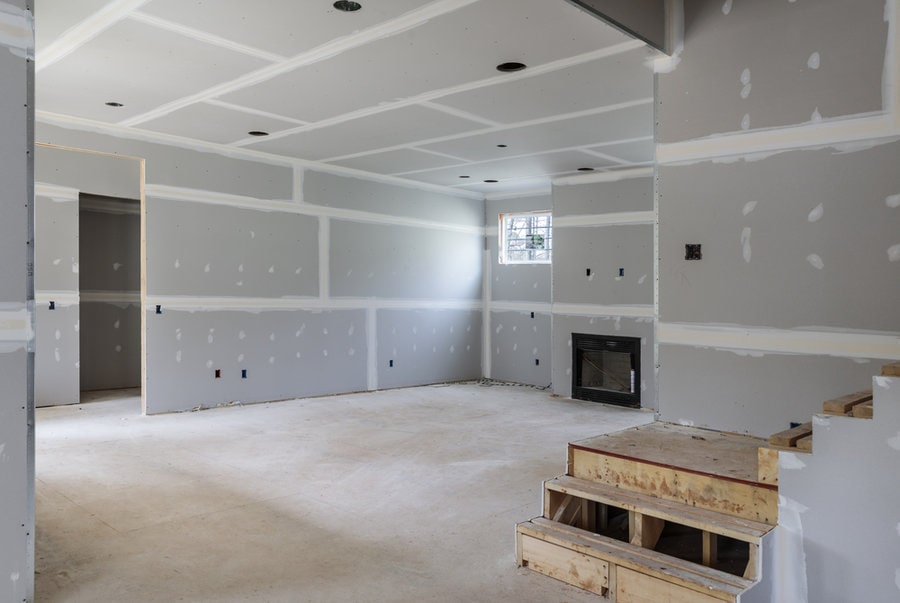
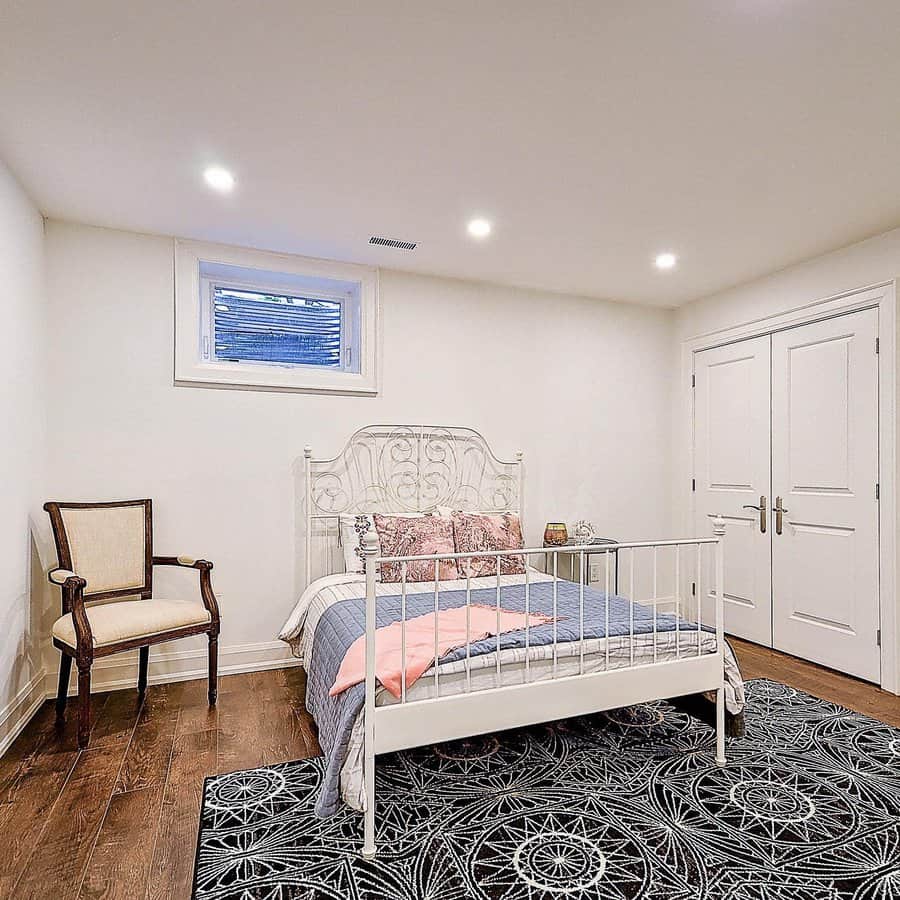
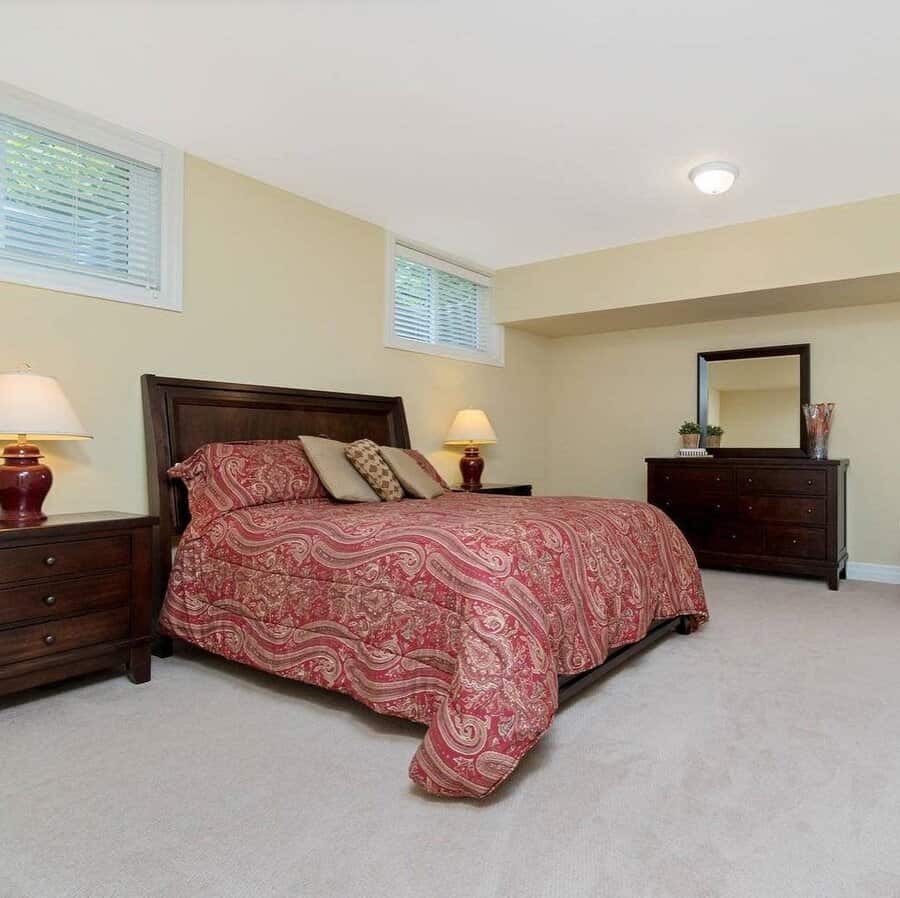
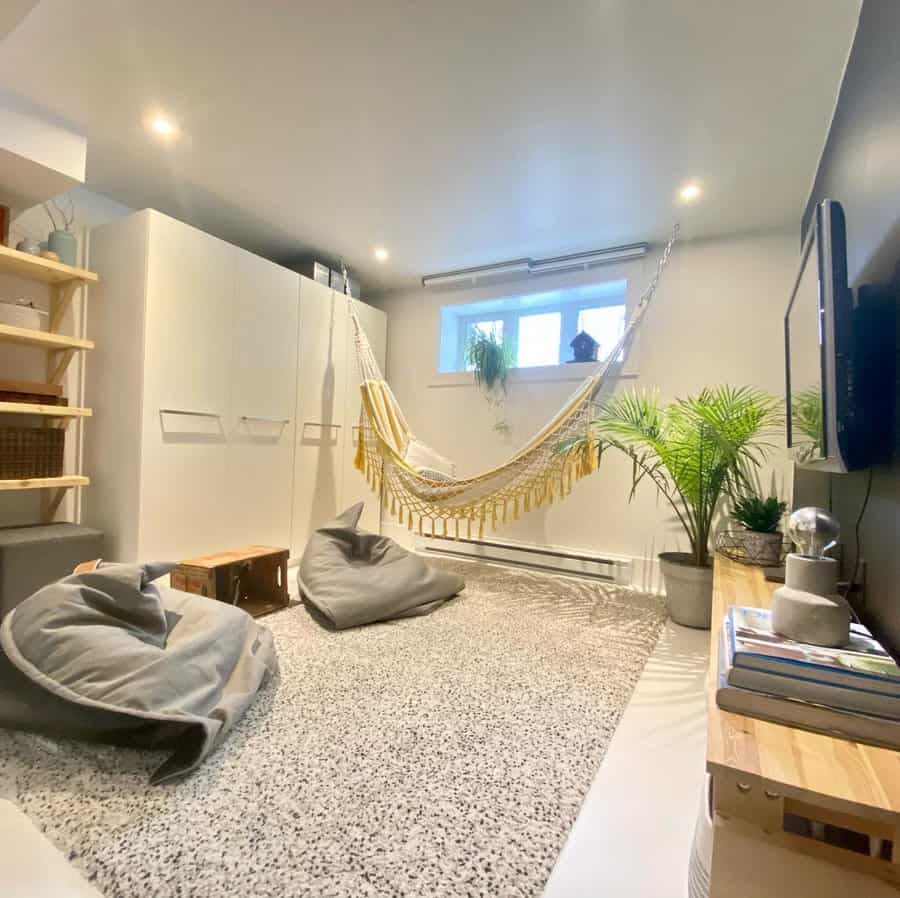
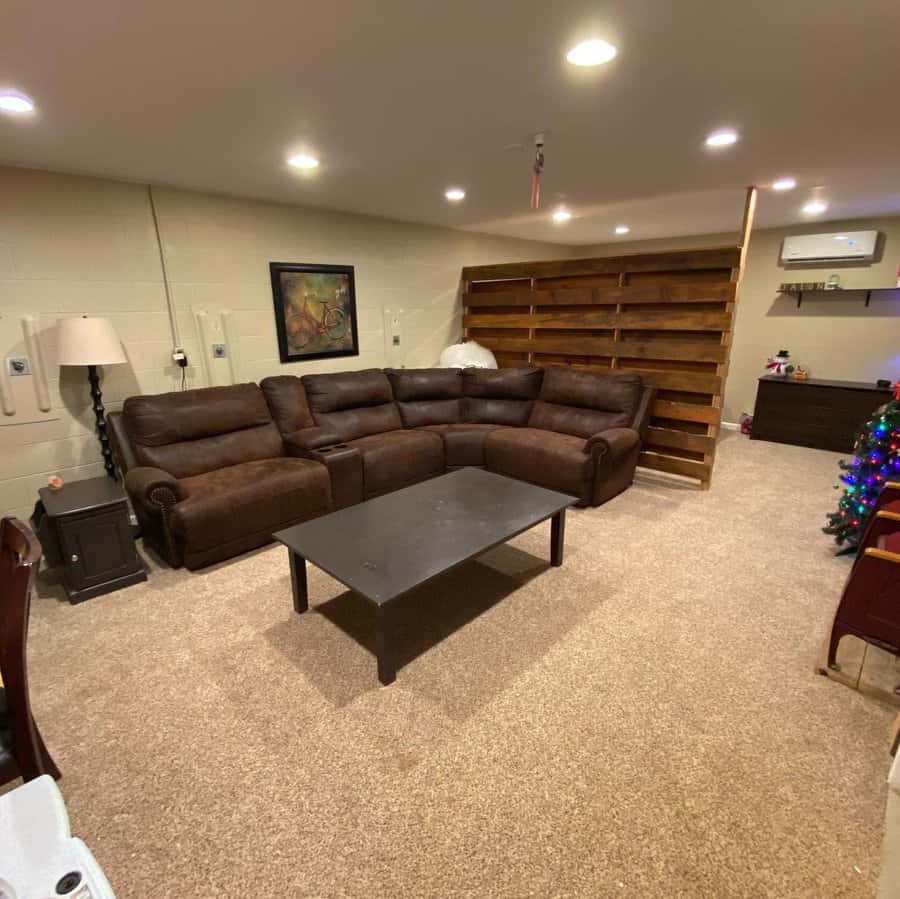
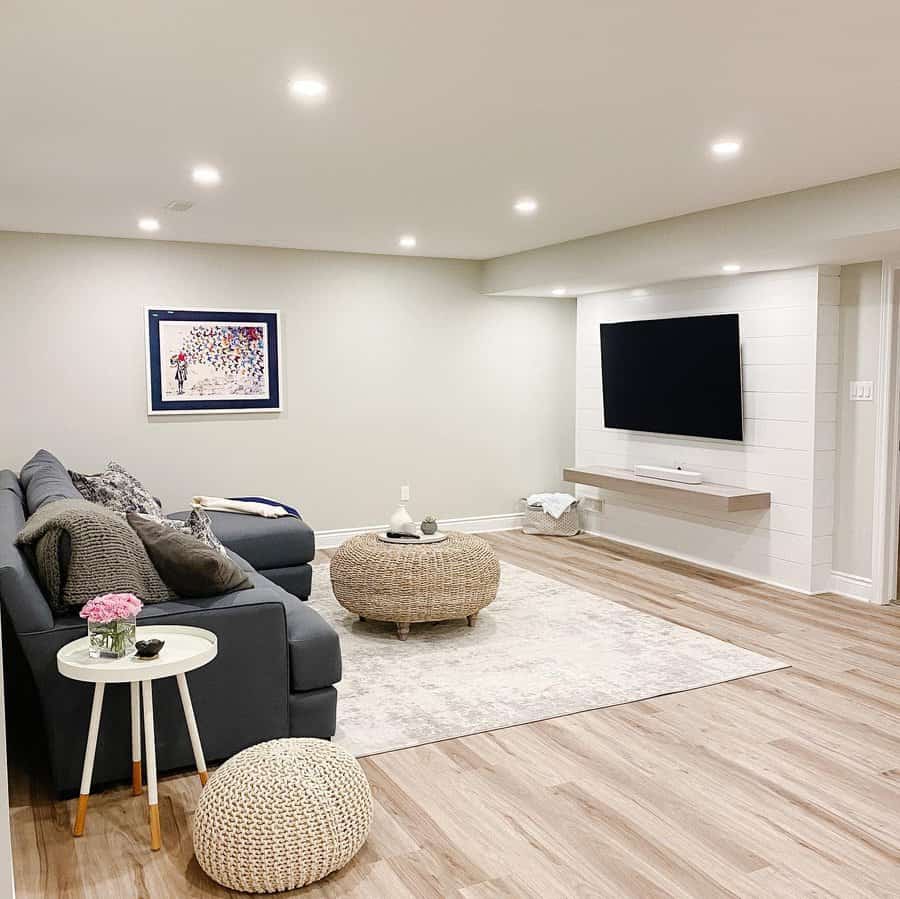
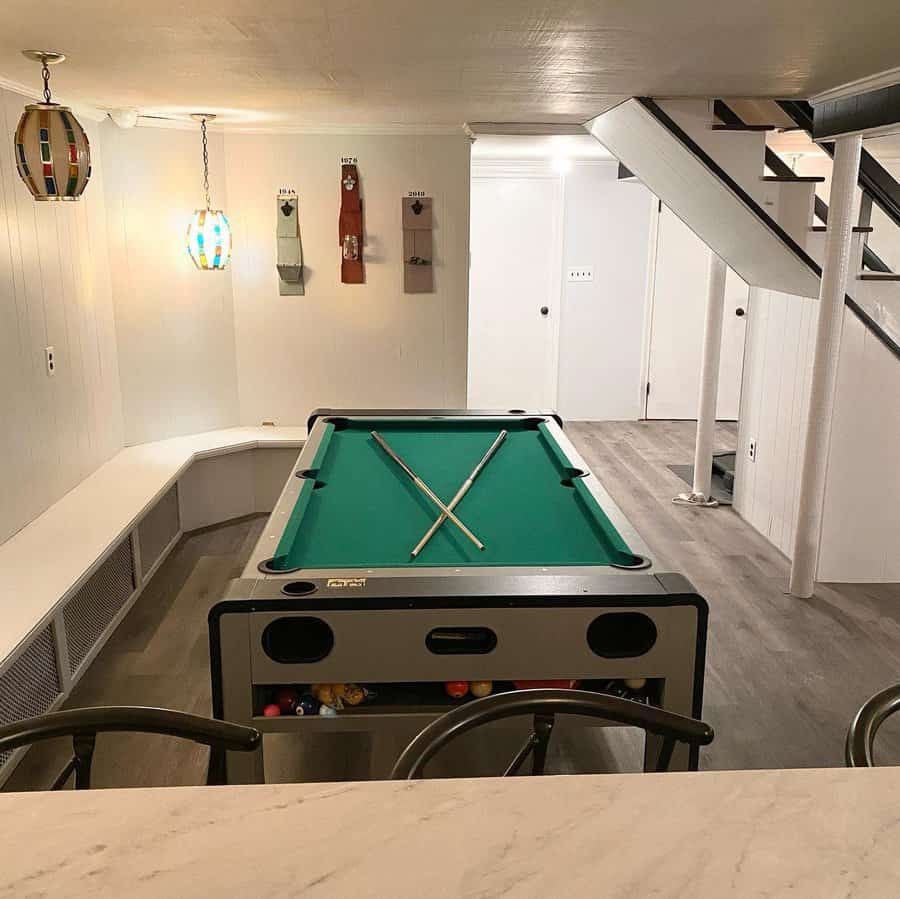
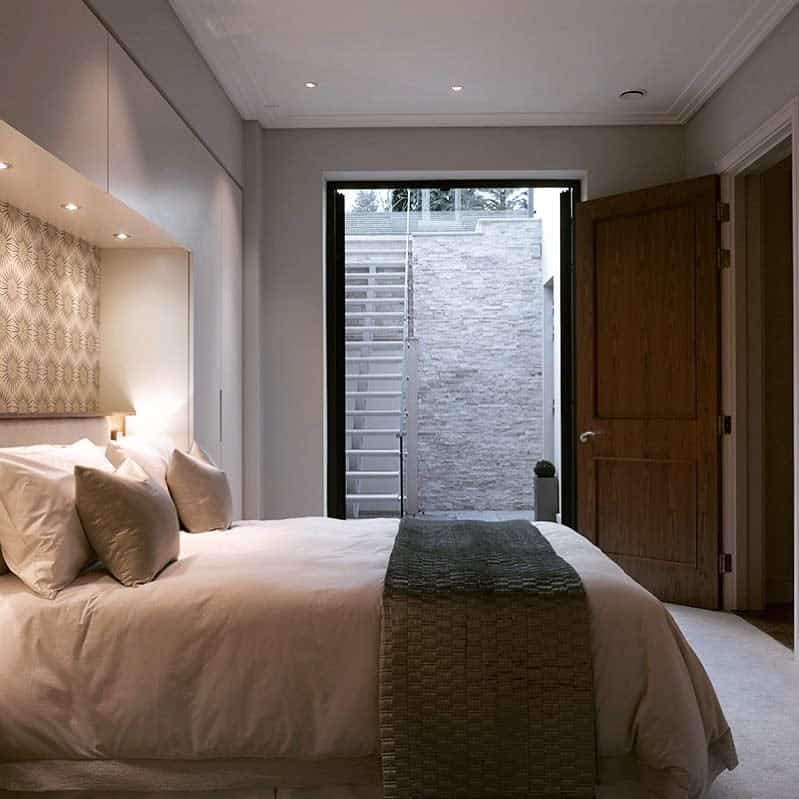
A drywall ceiling offers a sleek, seamless look for your basement, creating an illusion of more height and space. It’s a cost-effective solution that’s also versatile in terms of finishing and painting options. This type of ceiling is particularly suitable for basements that are converted into living spaces and bedrooms, as it provides a smooth, traditional home aesthetic. Additionally, drywall assists in soundproofing and can be fitted with recessed lighting for a modern touch.
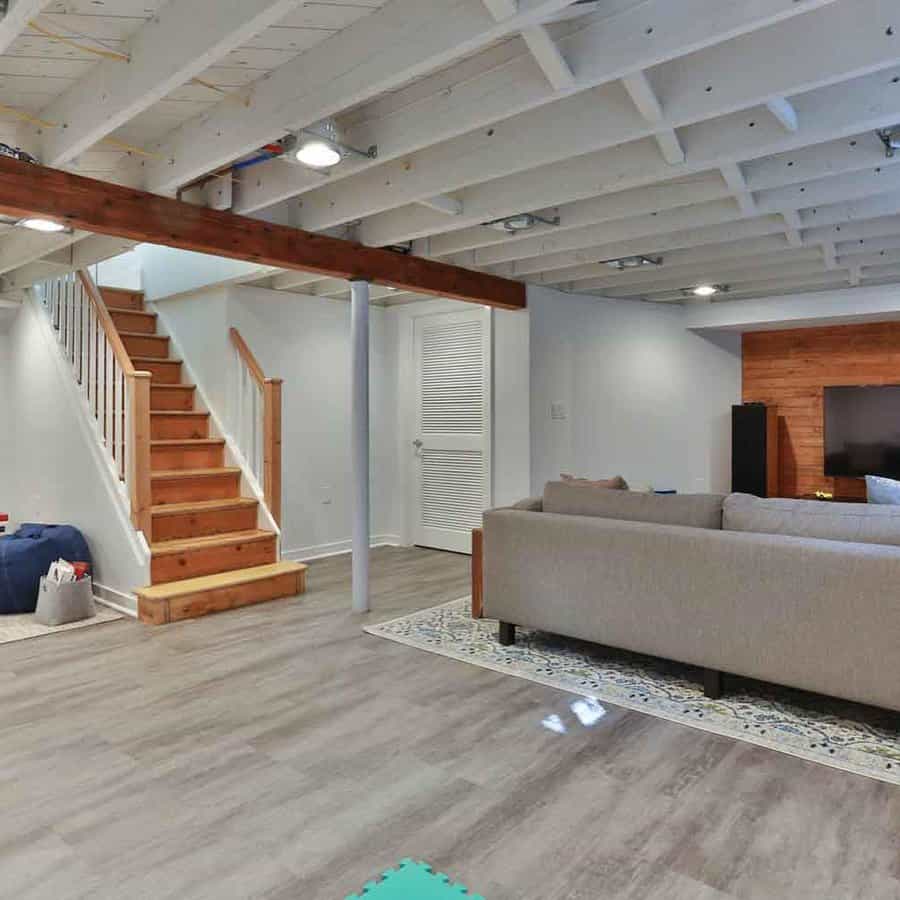
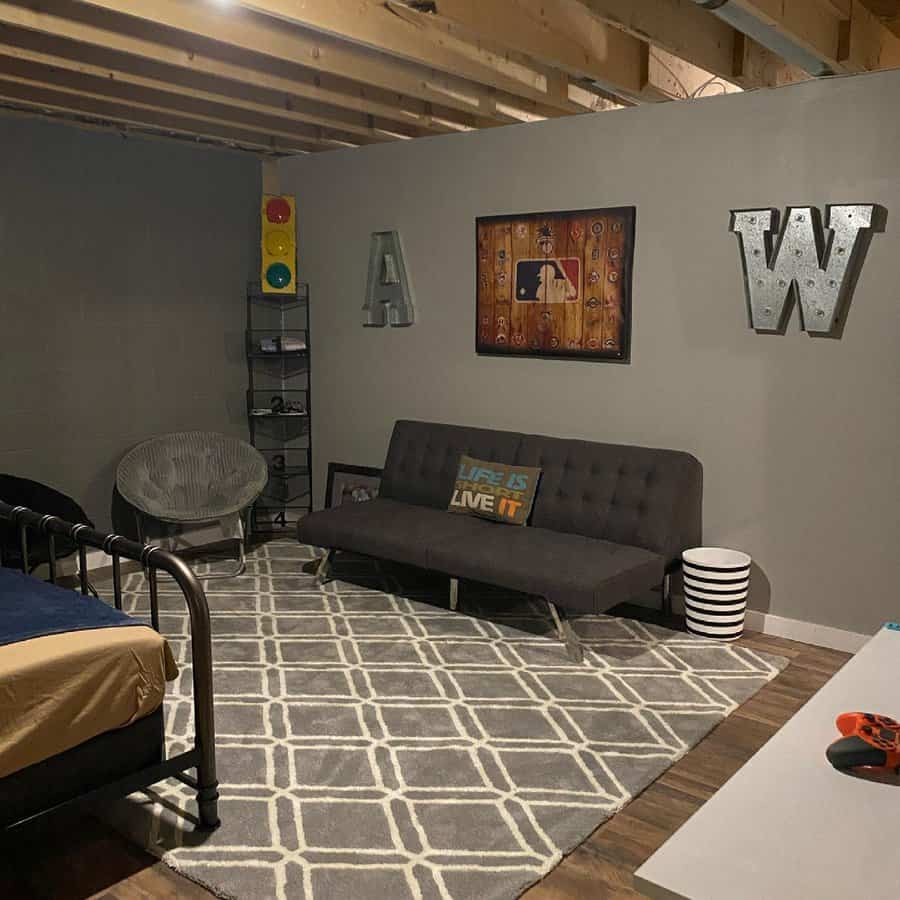
2. Exposed Beam Ceilings
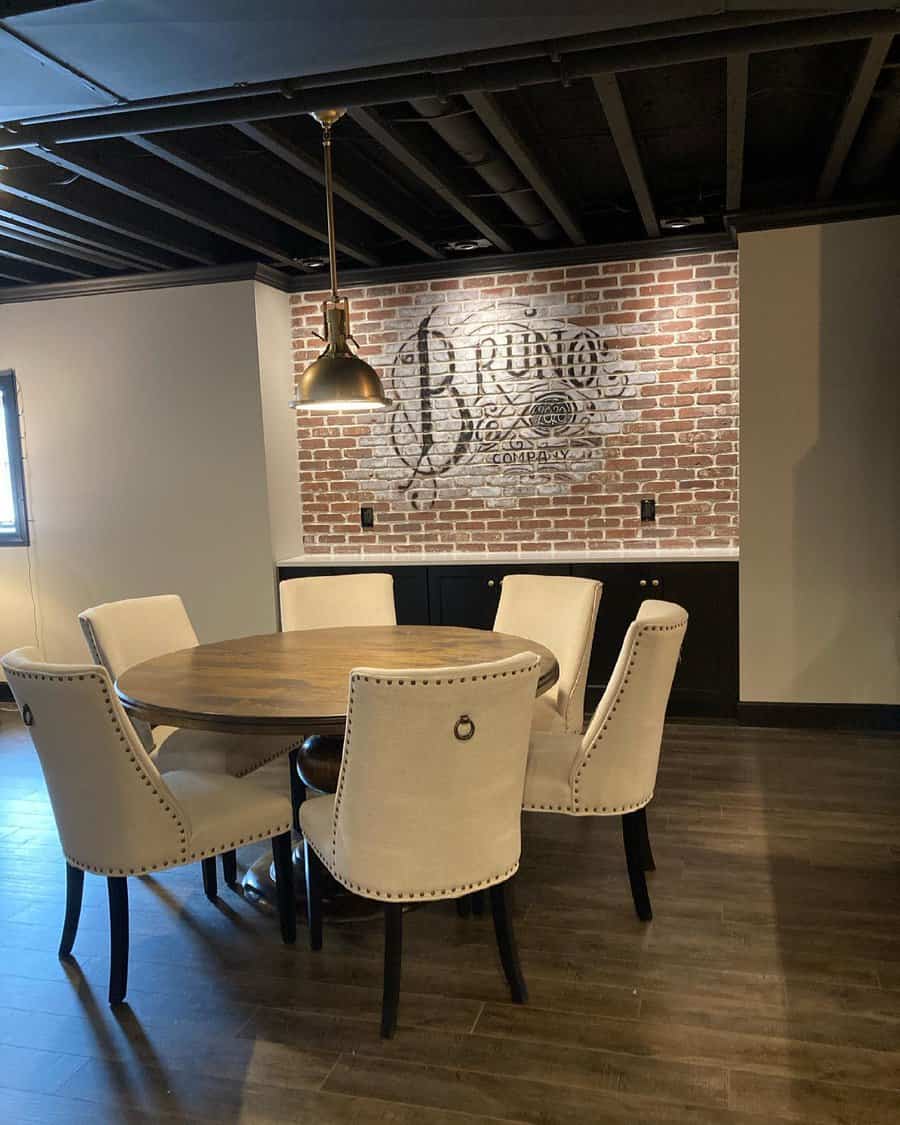
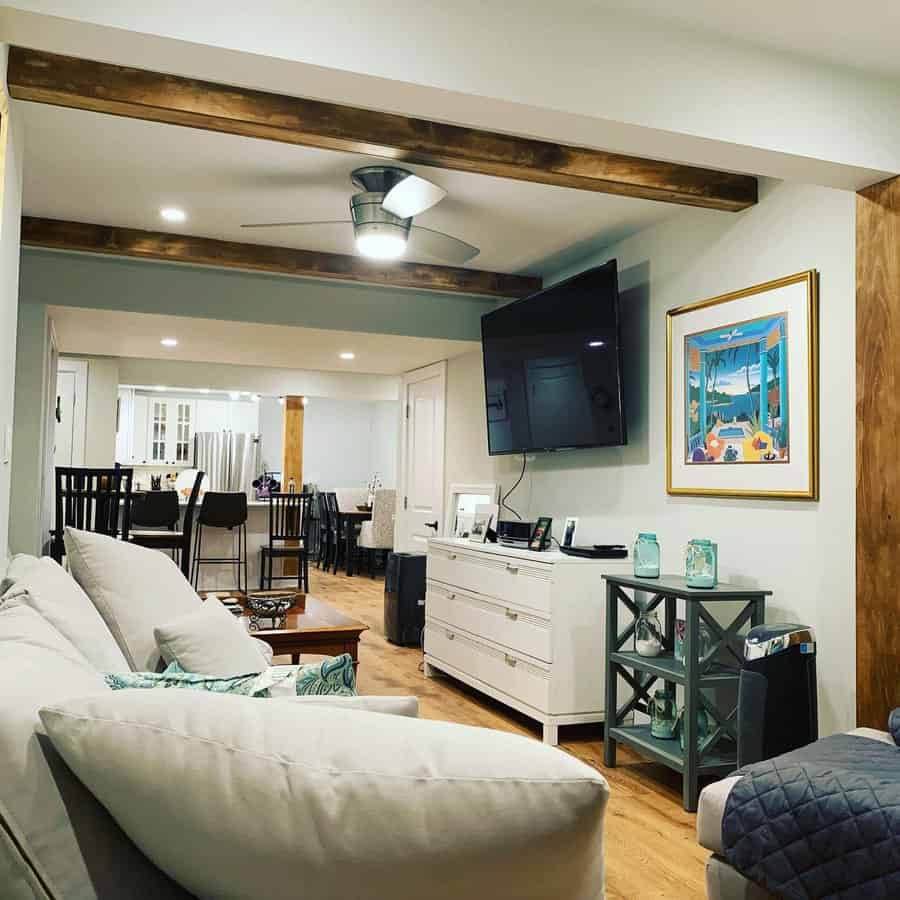
Exposing the beams in your basement ceiling adds a rustic charm and architectural interest to the space. This design choice not only celebrates the structural elements of your home but also provides an opportunity to play with lighting and decor. Exposed beams work well in larger basements, as they can visually break up the space and add warmth. Consider pairing this style with pendant lights or uplighting to accentuate the beams’ texture and dimensions.
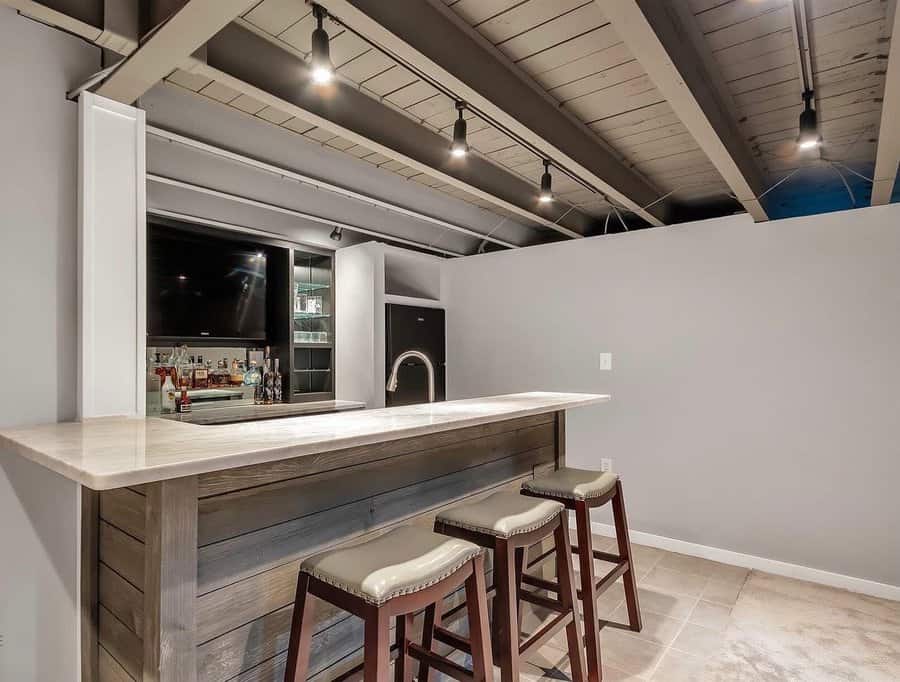
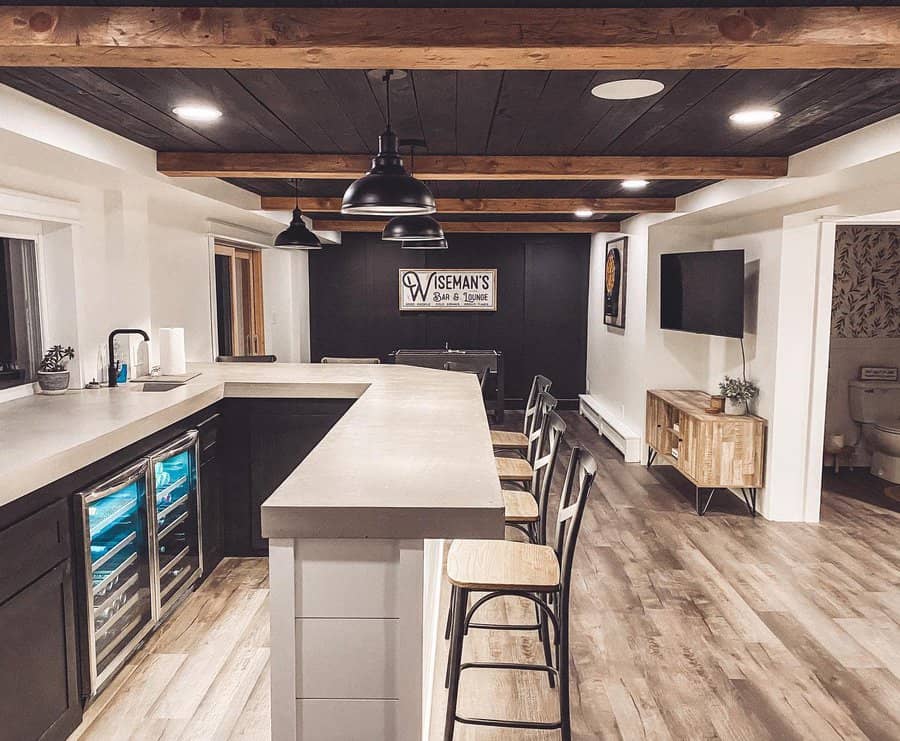
3. Beadboard Ceiling
Installing a beadboard ceiling introduces a cozy, cottage-like feel to your basement. This style is characterized by its distinctive, grooved panels, which add texture and visual interest. Beadboard ceilings are ideal for homeowners seeking a blend of traditional and casual aesthetics. You can paint beadboard in any color to match your decor, and it’s relatively easy to install, making it a great DIY project. It also pairs beautifully with crown molding for a more finished look.
4. Ceiling With Trimming
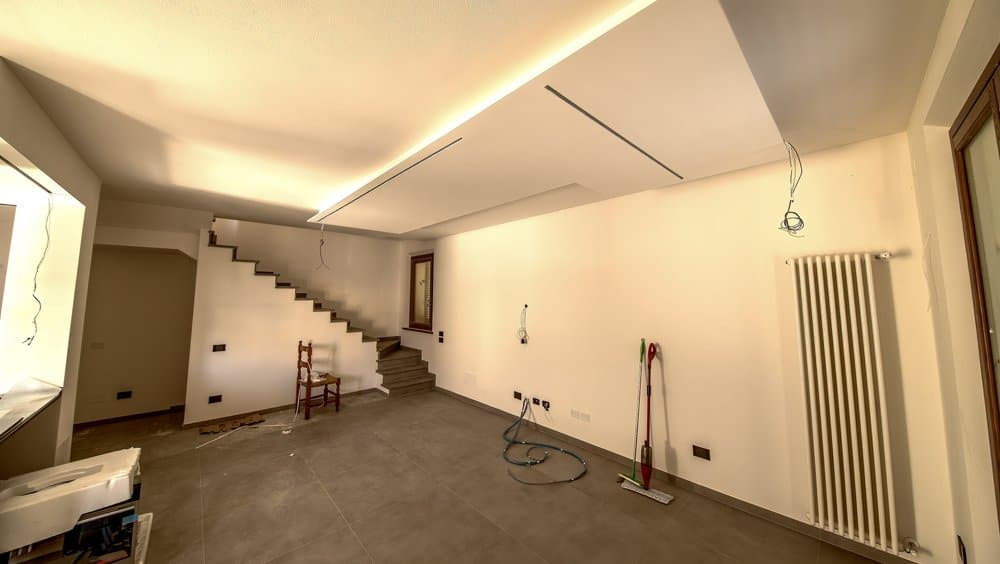
Adding trim to your basement ceiling creates a refined and customized appearance. Whether it’s crown molding, medallions, or decorative strips, these elements add depth and character. This option suits basements that are designed for entertainment or relaxation, as the trimming can be used to frame lighting fixtures or to create geometric patterns on the ceiling for a more dynamic visual effect. Choose trim styles that complement the overall design theme of your basement.

5. Drop Ceiling
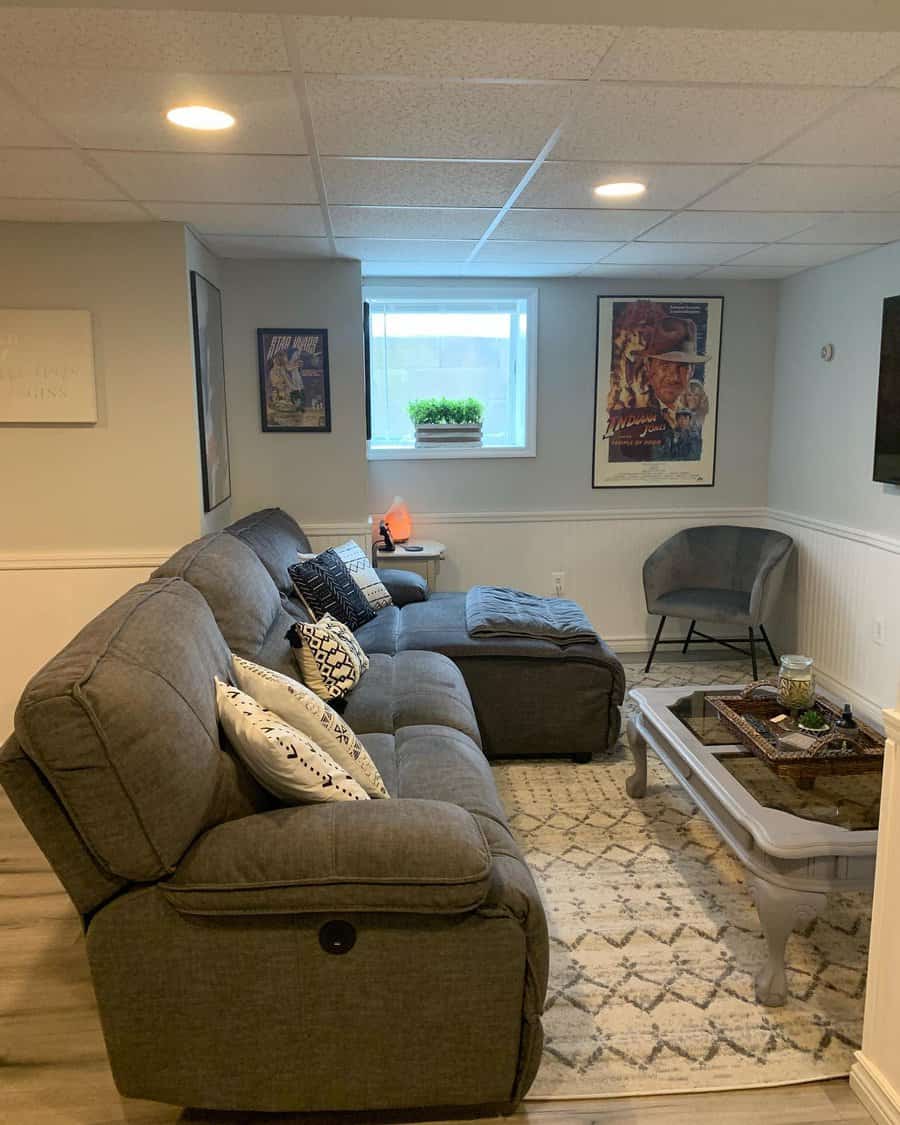
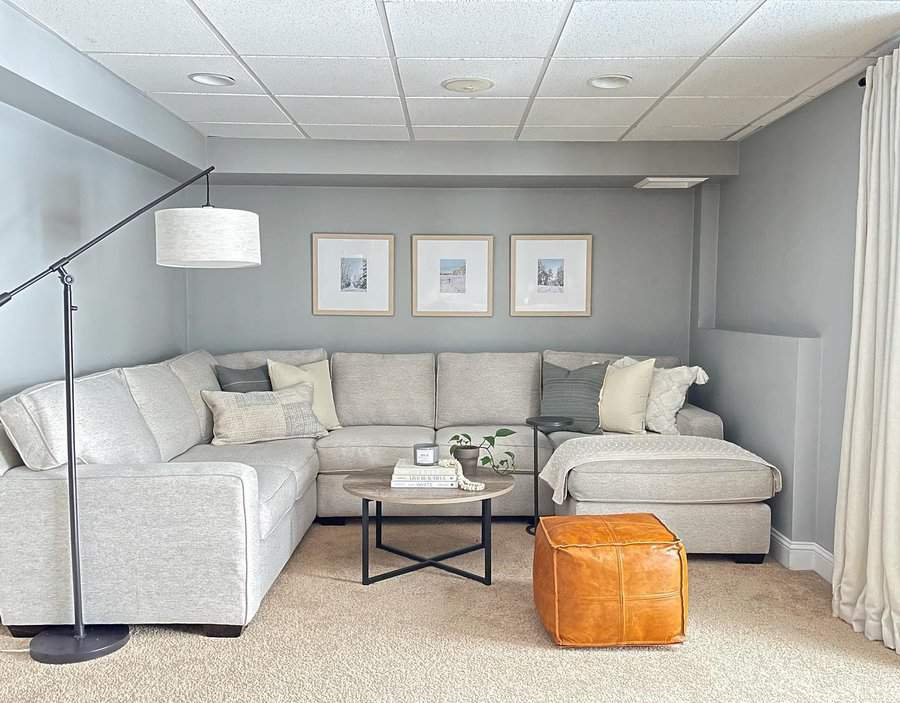
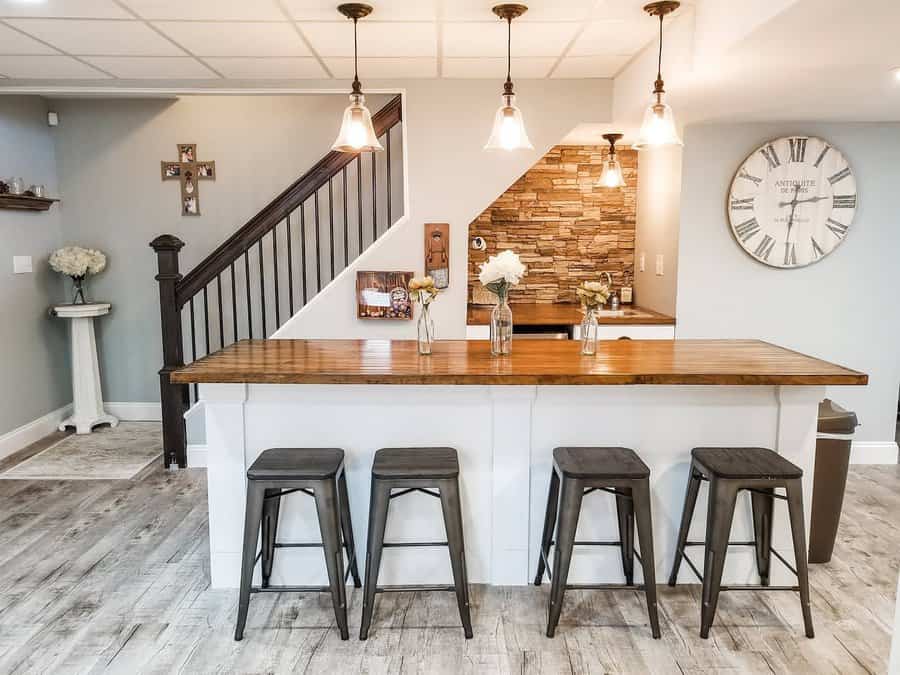
A drop ceiling is a practical choice for basements where access to pipes and wiring is necessary. It consists of a grid system that holds lightweight tiles or panels. This design allows for easy maintenance and soundproofing, while also providing a neat, tidy finish. Drop ceilings have evolved, with a variety of modern and stylish tile options available to fit any design preference. They’re especially suitable for basements used as home offices or media rooms, where sound control is important.
6. Plywood Ceiling
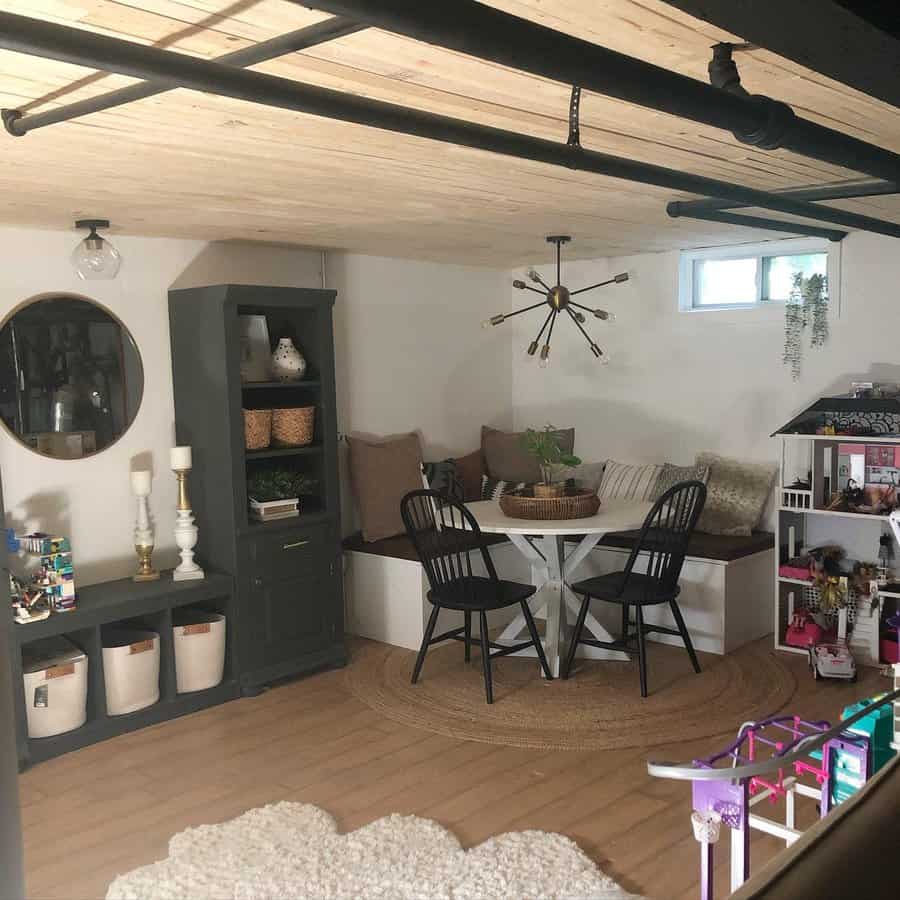
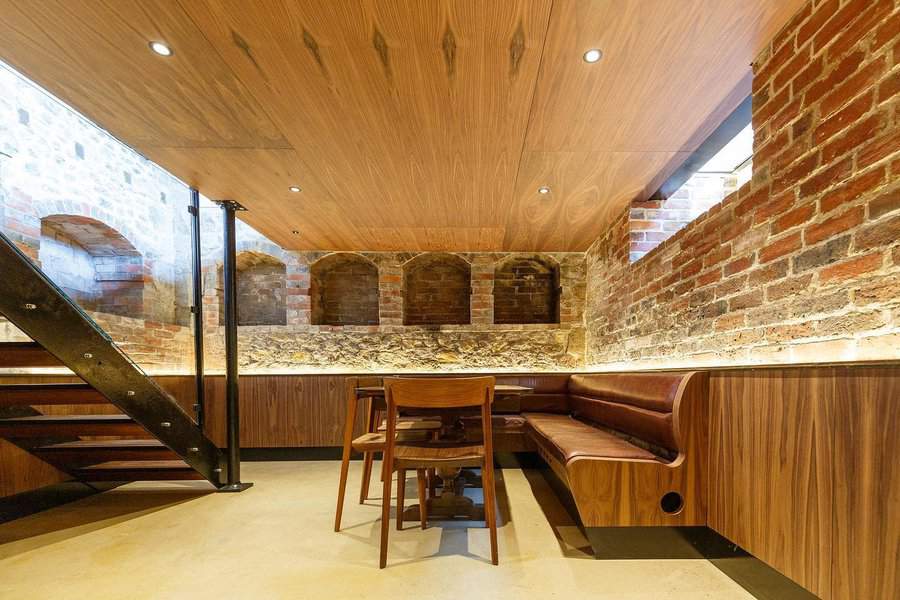
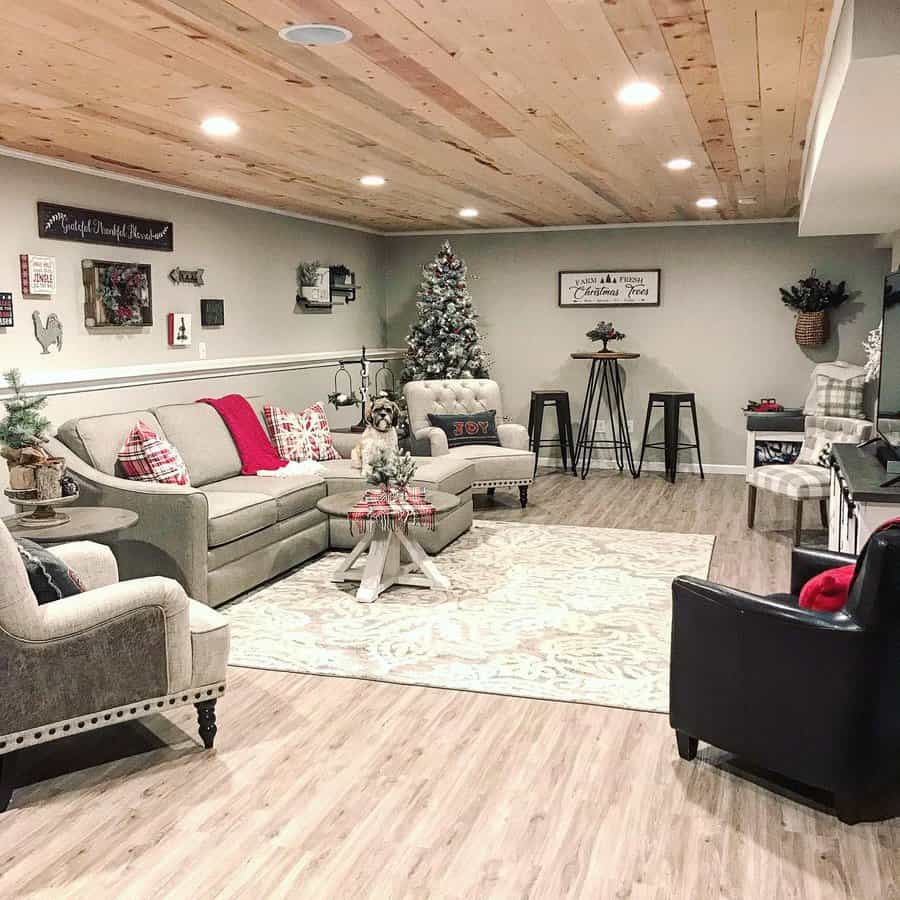
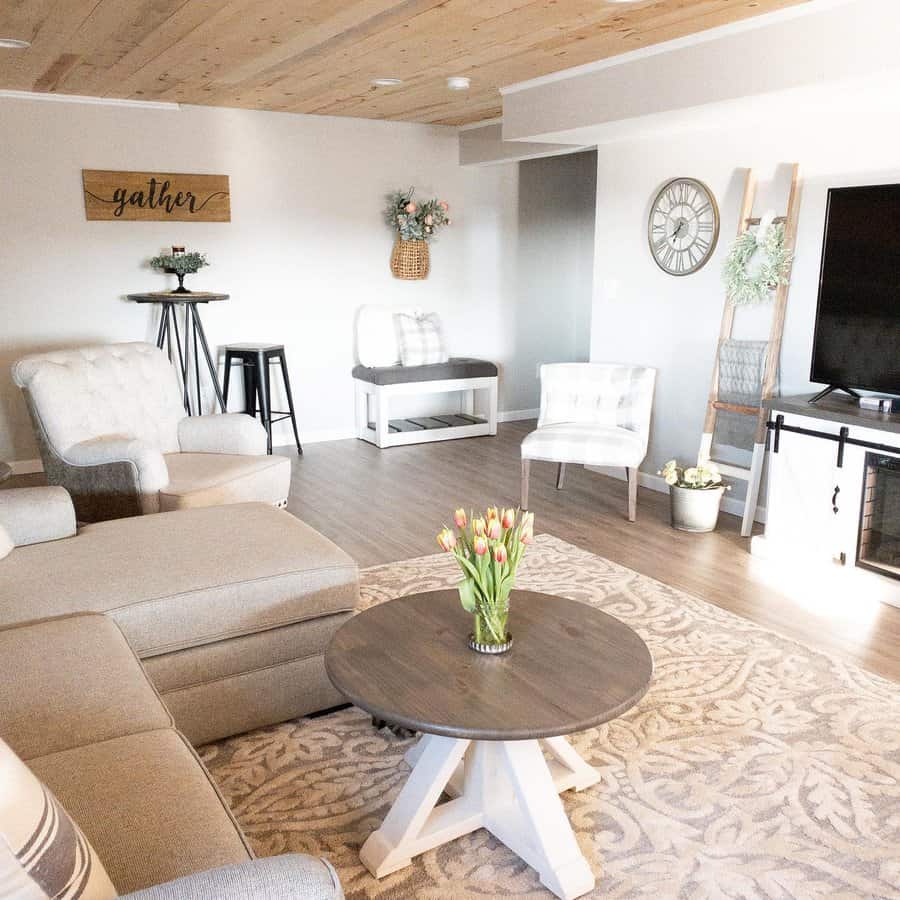
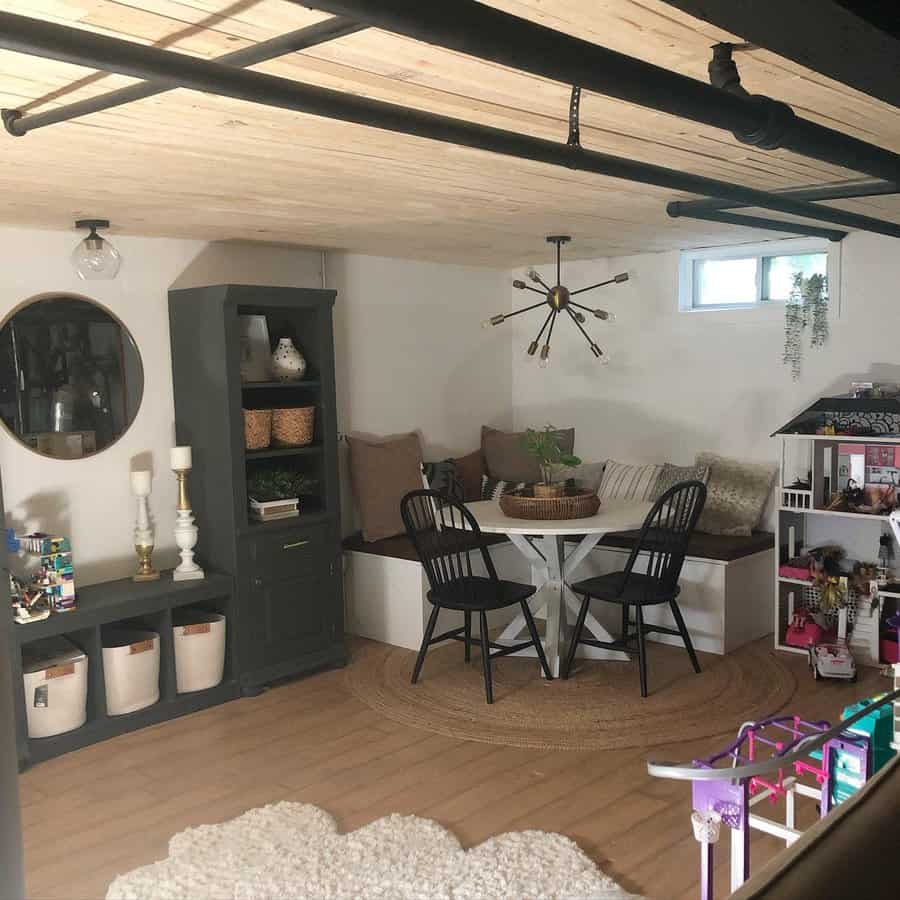
A plywood ceiling adds a warm, natural element to your basement. It’s an affordable option that brings a unique, minimalist aesthetic to the room. Plywood can be left in its natural state for a more rustic look, or it can be painted or stained for a more polished appearance. This ceiling type is a good match for basements that lean towards a modern, industrial, or Scandinavian style. Plus, it’s lightweight and easy to install, making it a popular choice for DIY enthusiasts.
7. Stamped Ceiling
Stamped ceilings, often made of metal or Styrofoam tiles, offer a decorative approach to basement design. These tiles come in various patterns, ranging from classic to contemporary, allowing you to add an artistic flair to your space. They are an excellent choice for homeowners looking to create a statement ceiling without extensive remodeling. Stamped ceilings are also practical for hiding imperfections and can be easily installed over existing surfaces.